
domingo, 20 de diciembre de 2020


sábado, 19 de diciembre de 2020
viernes, 18 de diciembre de 2020
Interview: Eric Ferreira da Silva - Head of Engineering of Urban Air Mobility at Airbus Helicopters
https://www.linkedin.com/pulse/interview-eric-ferreira-da-silva-head-engineering-urban-alex-scerri
jueves, 17 de diciembre de 2020

miércoles, 16 de diciembre de 2020


martes, 15 de diciembre de 2020
EHang | EHang 216 Receives Long-term Trial Flight Permit across Austria National Airspace


(Guangzhou, China, December 14, 2020) EHang Holdings Limited (Nasdaq: EH) ("EHang" or the "Company"), the world's leading autonomous aerial vehicle ("AAV") technology platform company achieved a significant milestone on the path to offering Urban Air Mobility ("UAM") services worldwide. On December 9, the Civil Aviation Authority of Austria issued a trial flight permit for the EH216 passenger-grade AAV. The permit allows trial operation of full unmanned flights in Austrian national airspace. This is the first flight permit for EHang's passenger-grade AAVs within the European Union.
Through the joint efforts of the Civil Aviation Authority of Austria, the EHang European team, and local partners, the Company has achieved another important regulatory breakthrough in the geographical heart of Europe, enabling more people to experience its safe, green and comfortable UAM solutions. This achievement should enable EHang to accelerate commercial operations in Europe. The trial permit and flight operations will support EHang's growth in the European Market by demonstrating the benefits of its UAM solutions to regulators, customers, and partners.
Autonomous Aerial Vehicles are poised to change the way people and cargo move from point A to point B. Whether for commuting within a large city or traveling from rural to metropolitan areas, aerial travel will dramatically change how mankind perceives distance and travel time. What is a reality today in Asia also comes closer in Europe.
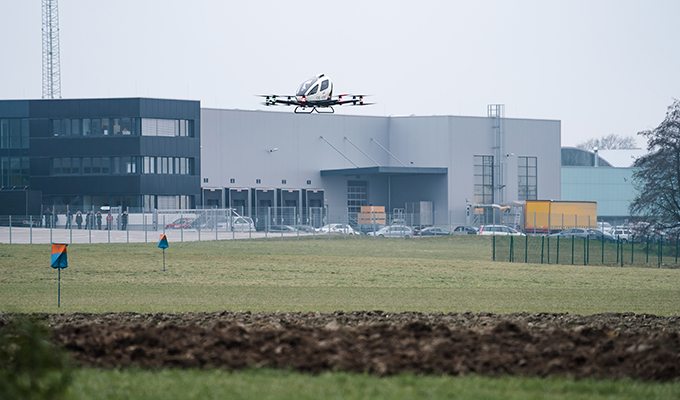
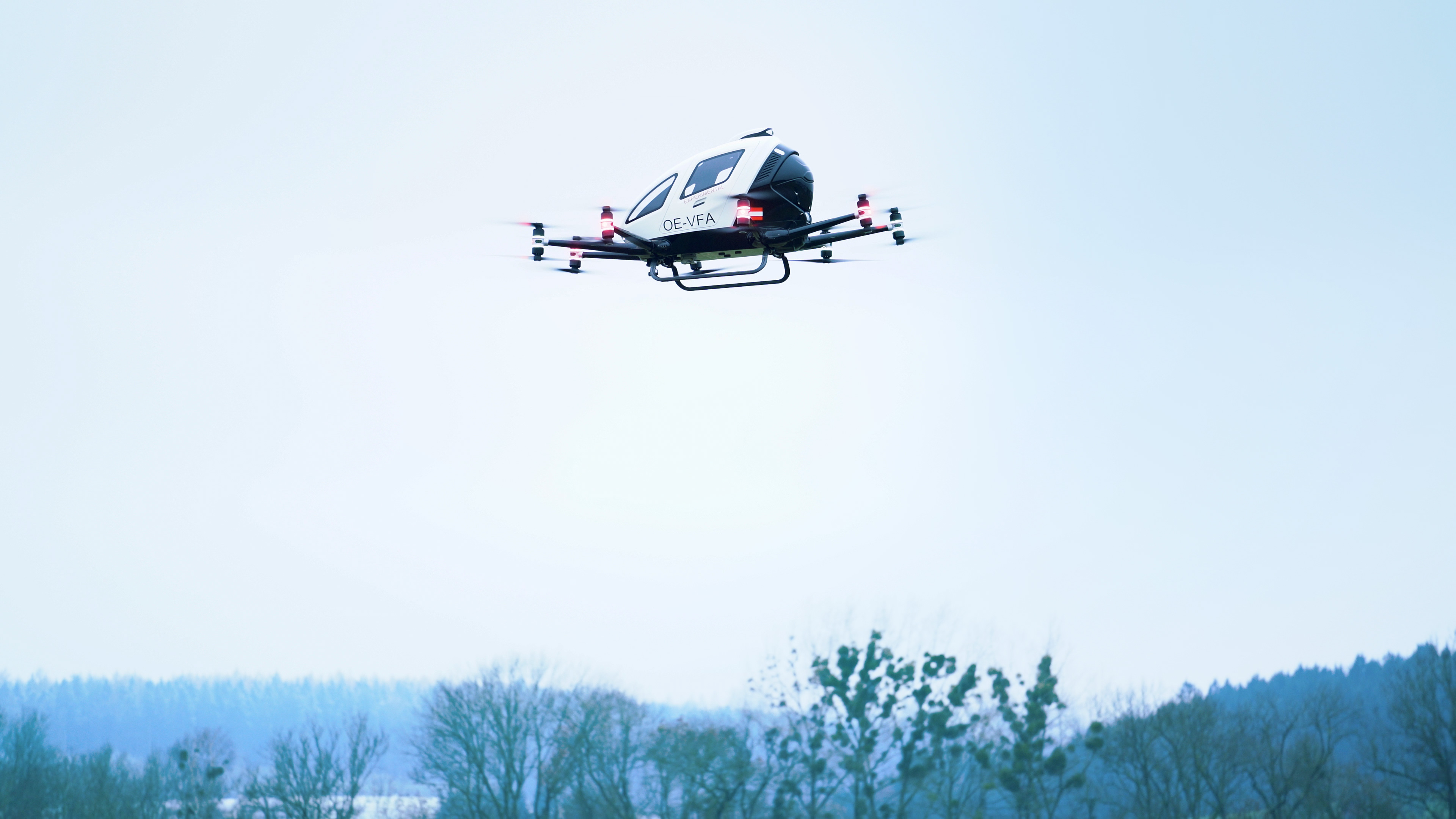
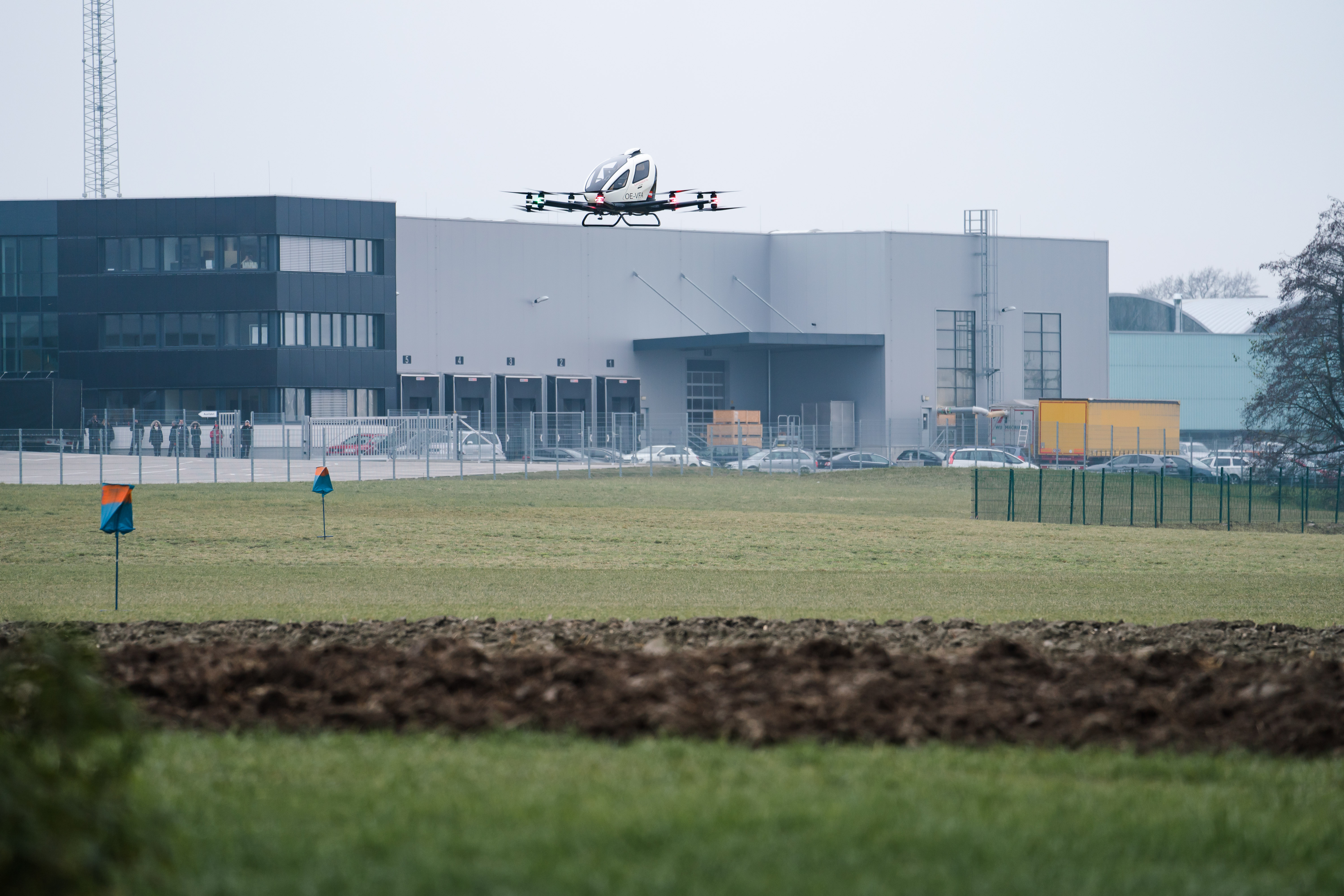
As part of the process, a test flight occurred in November 2020. It was the first flight ever in open EASA airspace. After a Specific Operational Risk Assessment (SORA) procedure, an EH216 AAV with the registration number OE-VFA took off in St. Martin im Innkreis, in the province of Upper Austria. Under the supervision of the Civil Aviation Authority, the unmanned aircraft took off for several minutes via automatic flight programming and then safely landed, despite harsh weather conditions of severe cold and high wind speed.
The permit was obtained together with EHang's strategic partner FACC AG. Technical experts from both companies worked for several months with the national regulators to meet the national and European requirements.
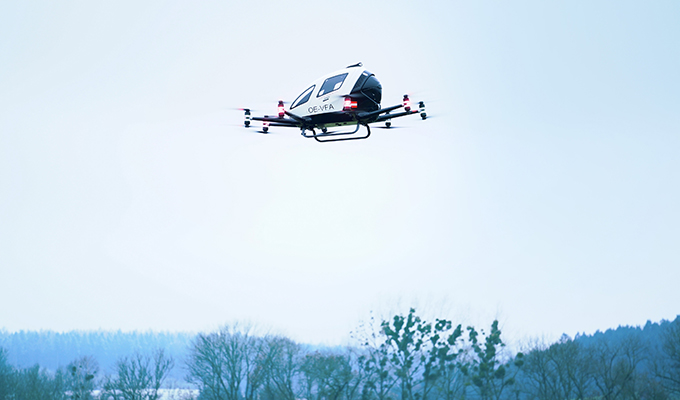
The EH216 first flight took place in November 2020 in St. Martin im Innkreis, Upper Austria.
About EHang
EHang (Nasdaq: EH) is the world's leading autonomous aerial vehicle (AAV) technology platform company. Our mission is to make safe, autonomous, and eco-friendly air mobility accessible to everyone. EHang provides customers in various industries with AAV products and commercial solutions: air mobility (including passenger transportation and logistics), smart city management, and aerial media solutions. As the forerunner of cutting-edge AAV technologies and commercial solutions in the global Urban Air Mobility (UAM) industry, EHang continues to explore the boundaries of the sky to make flying technologies benefit our life in smart cities. For more information, please visit www.ehang.com.
Safe Harbor Statement
This press release contains statements that may constitute "forward-looking" statements pursuant to the "safe harbor" provisions of the U.S. Private Securities Litigation Reform Act of 1995. These forward-looking statements can be identified by terminology such as "will," "expects," "anticipates," "aims," "future," "intends," "plans," "believes," "estimates," "likely to" and similar statements. Management has based these forward-looking statements on its current expectations, assumptions, estimates and projections. While they believe these expectations, assumptions, estimates and projections are reasonable, such forward-looking statements are only predictions and involve known and unknown risks and uncertainties, many of which are beyond management's control. These statements involve risks and uncertainties that may cause EHang's actual results, performance or achievements to differ materially from any future results, performance or achievements expressed or implied by these forward-looking statements.
LiquidPiston's "inside-out" rotary X-Engine wins Army research contract
Beyond Tube-and-Wing | free book by NASA
Flying Forward 2020 officially launches - Urban Air Mobility News


lunes, 14 de diciembre de 2020
Trustworthy artificial intelligence: Rolls-Royce publishes pioneering bias-control AI ethics toolkit
press release
Rolls-Royce has released its breakthrough work on artificial intelligence (AI) ethics and trustworthiness to help support the future health, wealth and growth of the world.
The comprehensive ethical framework and trustworthiness process is free to download from the Rolls-Royce website. Once fully implemented, businesses that follow the checks and balances within it can assure themselves that their AI projects are fair, trustworthy and ethical.
We have called this toolkit The Aletheia FrameworkTM, after the Greek goddess of trust and disclosure, and believe it will help address one of the biggest barriers to the widespread use of AI – mistrust.
Warren East, Chief Executive Officer, Rolls-Royce, who announced the breakthrough in September, said: “I hope today’s publication will become a watershed moment for artificial intelligence. As we move rapidly to a more digital world, people have a right to expect that AI is used ethically and that it is a trustworthy partner for people and society.
“The Aletheia FrameworkTM provides the foundations for that to happen, so business leaders, academics, technologists and even philosophers can now move from simply talking about the potential of AI, to unlocking its benefits for the health, wealth and growth of the world.
“It’s with that objective in mind that Rolls-Royce has decided we need to make this free for anyone to access and we will seek to build partnerships with interested organisations to support its widespread application, so that we can all build trust in AI.”
The Aletheia Framework™ is a checklist that invites organisations to consider the impacts of using artificial intelligence prior to deciding whether to proceed. It looks across a total of 32 facets of societal impact, governance and trust, and transparency and requires executives and boards to provide evidence that these have been rigorously considered.
Once the AI has been applied, the framework includes a five-step continuous automated checking process, which, if comprehensively applied, tracks the decisions the AI is making to detect bias or malfunction and allow human intervention to control and correct it.
Caroline Gorski, Group Director of R2 Data Labs, the data innovation team for Rolls-Royce, said: “Rolls-Royce is a global industrial technology leader and has used artificial intelligence for decades to analyse more than 70 trillion data points across 26 dimensions on our jet engines so we can increase the amount of time they fly and improve their sustainability.
“We’re now developing AI for quality inspections of critical components and it’s in the justification of applying artificial intelligence technologies to this activity that we have had to challenge ourselves to ensure it’s the right thing to do, and that it’s trustworthy.
“It’s that deep safety culture at the heart of our business that has created the mindset to apply safety principles to data. We can’t wait to share The Aletheia FrameworkTM with everyone and collaborate on the benefits to our world that we believe it will bring.”
With a potentially significant contribution to make in the global conversation on AI, The Aletheia FrameworkTM has been shared with experts from UNESCO, which is undertaking a global consultation on AI ethics.
Gabriela Ramos, Assistant Director-General for the Social and Human Sciences sector at UNESCO said: “In an initial exchange, The Aletheia FrameworkTM has been shared with UNESCO, which has been working with experts from around the world to develop recommendations for human-centred AI.”
“AI will radically change our world, but it is ethics that will shape how it looks. All stakeholders, whether public or private, must work on this together.”
The Aletheia FrameworkTM has been extensively reviewed and it was during that process its potential was revealed.
Lee Glazier, Head of Service Integrity, Rolls-Royce, who led the assurance work around the use of data and built the framework, said: “During the peer review process of our work with experts in big tech, healthcare, pharmaceuticals, academia and government, it became clear that no other organisation had progressed as far as we had. It was also clear that the applications for what is now The Aletheia FrameworkTM went beyond our own area of industrial use and into consumer applications, healthcare, recruitment, security – basically any use of artificial intelligence.”
The open-access publication of The Aletheia FrameworkTM is also intended to invite critique and collaboration from the global AI community to seek improvements. The decision to publish it follows a recent breakthrough in speech software for people living with motor-neurone disease (MND), motivated by a Rolls-Royce colleague who had personal experience with the disease.
The software improves the quality of life of people living with MND who cannot speak, by using AI to learn their voice, idioms, emotional inflections and phrases, so they can interact quickly with those around them. The experience of developing this software was among the AI activities that fed into the development of The Aletheia FrameworkTM.
L-39NG on evaluation flights in Hungary
press release
http://www.aero.cz/en/media/news/l-39ng-evaluation-flights-hungary/
The L-39NG visited the 59th Air Force Base of the Hungarian Defence Forces in Kecskemét, to perform the evaluation flights with representatives of the Hungarian Air Force.
The L-39NG second flight prototype with MSN 7004 landed at the Hungarian air base on Tuesday, November 17. In the following days, a mixed Czech-Hungarian crew performed totally three evaluation flights. "Our well experienced pilots flew with the L-39NG and their impression of the aircraft was very positive. The L-39NG is a good and modern training aircraft with a great potential for the future," said the Chief of the Hungarian Air Force, Major General Nandor Kilian.
Aero Vodochody test pilot David Jahoda presented the new Czech aircraft to the Hungarian side. "First, there was an introduction of the aircraft on the ground and pre-flight preparation. Then two flight instructors from the Hungarian Gripen squadron flew the aircraft in the rear cockpit for instructor and Maj. Tibor Molnar also completed a flight in the front cockpit," said factory pilot David Jahoda.
The Hungarian Air Force has historically good experience with aircraft from Aero Vodochody production. Until 2009, this Central European country had operated a squadron of L-39 Albatros (since 1993, a total of 20 L-39 aircraft and then 12 aircraft since 1998). From 2007 to 2010, they also trained their pilots on leased L-159 aircraft. Both types made a very good impression in Hungary for their flight characteristics and operational capabilities.
L-39NG is a new aircraft from production of Aero Vodochody. It offer balanced aircraft characteristics and performance while using advanced aircraft technologies, an effective and sophisticated pilot and ground personnel training concept and easy maintenance. On the other hand, acquisition and operational cost of L-39NG are very reasonable. The L-39NG is able to cover multiple training phases In September 2020, the Military Aviation Authority of the Ministry of Defence of the Czech Republic has certified the L-39NG aircraft to the new supranational military standards, EMAR 21 and EMACC, which is recognized by all EU and NATO military authorities.
L-39NG
The L-39NG aircraft is a modern and effective light jet capable to serve in a role of light attack and/or unified, comprehensive training system for modern air forces. The L-39NG is based on the aerodynamic concept of the current L-39 with optimized features to reduce resistance and increase efficiency and utilizes the latest technologies and equipment. Power is provided by the modern FJ44-4M engine supplied with the TAP Blue engine support service to ensure unprecedented airworthiness and predictable maintenance costs. The aircraft's avionics are prepared to train future pilots of 4th and 5th generation aircraft and can be tailored to the customer's requirements. The L-39NG is equipped with five hard-points for weapons. The aircraft also features a broad range of simulation technologies, including the integration into high-tech tactical simulation centres with the goal to increase training efficiency. Strategic partner of the L-39NG project is the Czech company OMNIPOL by having 50% of share and financial contribution in the project.
AERO Vodochody AEROSPACE
AERO Vodochody AEROSPACE a.s. focuses on the design, manufacturing maintenance, overhaul and upgrade of military and civil aircraft and is the largest aviation manufacturer in the Czech Republic and with history since 1919 one of the oldest aerospace companies worldwide. In the field of military aircraft, Aero has been a reliable long-term partner to many of the world's air forces and it has a strong position on the market of military training and light combat aircraft.
With a track record of 11,000 aircraft produced over the last 100 years, a broad coverage of dozens of military operators and demo teams, a huge existing fleet of L-39 Albatrosses and with a brand new aircraft, the L-39NG now, Aero is maintaining its positioning as a leader in the jet training market. In the field of civil aviation, Aero collaborates with many of the world's largest manufacturers in a diverse range of projects. More recently, Aero became a full partner in several risk-sharing programmes, taking responsibility not only for the production of structures but also for development.
OMNIPOL
OMNIPOL is a Prague headquartered investment and trading group with more than eighty-five years of experience in both the domestic international markets. The company provides cutting-edge solutions for the defence and security sectors.
OMNIPOL is the owner of two very well known subsidiaries namely ERA and MESIT. They are both production companies with advanced technologies, which mainly focus on passive systems for monitoring air, land and naval targets, military communications, aircraft instruments and precision engineering production, including its own foundry together with galvanic processes. They also deal with related software products, but also cybersecurity, both for the military and civilian sectors. The entire OMNIPOL Group employs more than 1,400 professionals, of which over 200 employees are involved in research and development of new products.
EuroStar SLX and SL+ receives approval for MTOW 525 kg from the French Civil Aviation Authority

https://www.evektor.cz/en/news/eurostar-slx-and-sl-receives-approval-mtow-525-kg-french-civil-aviation-authority#.X9ewFLN7lPY
press release
Evektor-Aerotechnik announces receiving French Civil Aviation Authority (DGAC) approval for its innovated “EuroStar SLX” and “EuroStar SL+” aircraft models with increased MTOW to 525 kg. DGAC has approved “EuroStar SLX / SL+” according to the latest aviation regulations for ULM aircraft in France published by the authority in 2019.
With MTOW enhanced to 525 kg whiles keeping low empty weight “EuroStar SLX / SL+” offer one of the highest useful load among advanced ultralight aircraft on the market French. This together with range of 1300 km by “EuroStar SL+”, outstanding flight characteristics of training aircraft, state of the art Garmin G3X or Dynon SkyView Glass Cockpit and reliability proven by 20+ year of operation make “EuroStar SLX / SL+” popular aircraft for pilot touring, leisure flying and training in ultralight aircraft flight schools.
The first DGAC approved EuroStar SL+ with MTOW 525 kg was handed over to its owner in France by Evektor-Aerotechnik´s authorized distributor for “EV-97 Eurostar” product line in France and Belgium - the company Avianor from Lille on October 24. The aircraft, based at LFQO Lille-Marcq airport, is equipped with modern Garmin G3X Touch Flight Display, G3X Autopilot with GMC305 control panel, Garmin GTR 225 radio, Ballistic recovery system, 100 hp Rotax 912ULS and DUC Swirl 3-L propeller.
Evektor-Aerotechnik has under manufacturing other three EuroStar SL+ / SLX aircraft for France, which are scheduled to be delivered yet in November. The owner of the first 525 kg MTOW “EuroStar SLX” is pilot traning organization Aeroclub Saint Junien based at Aerodrome Maryse Bastié in the Haute-Vienne region. Aeroclub Saint Junien is going to operate “EuroStar SLX” for traning of ULM pilots.
Evektor-Aerotechnik supplies its two seat EASA certified, Light Sport Aircraft and ultralight aircraft to private pilots and flight training organizations in 50 countries globally. Fleet of “EV-97 Eurostar” in France has over 130 aircraft, making it one of the biggest ULM aircraft fleets in France.
UPS To Support Distribution Of Approved Vaccine As Part Of Operation Warp Speed
- Deployments began after federal mandate to distribute vaccine within 24 hours of emergency use authorization.
- UPS to help transport the initial Pfizer-BioNTech COVID-19 vaccine doses to support vaccinations of healthcare workers.
UPS (NYSE:UPS) today announced its involvement and full support of distribution efforts for Pfizer-BioNTech’s COVID-19 vaccine as part of Operation Warp Speed. Pfizer’s and BioNTech’s vaccine, approved through a U.S. Food and Drug Administration emergency use authorization (EUA), is the first to be deployed in a months-long global race to develop safe vaccines to combat the spread of the COVID-19 virus.
“Vaccine distribution is a key part of moving our world forward by delivering what matters,” says Carol Tomé, CEO of UPS. “We have dedicated and hardworking people around the world who have been trained to store, handle, transport and deliver vaccines. We’re pleased to support our healthcare partners with smart, efficient logistics for these vaccines that will protect communities and save lives.”
UPS will move the Pfizer-BioNTech COVID-19 vaccine within the first days to states designated by Pfizer, Inc. based on orders received by Operation Warp Speed and CDC officials.
“This is the moment of truth we’ve been waiting for at UPS,” says Wes Wheeler, president of UPS Healthcare. “We have spent months strategizing with Operation Warp Speed officials and our healthcare customers on efficient vaccine logistics, and the time has arrived to put the plan into action.”
Pfizer-BioNTech COVID-19 vaccines will originate from storage sites in Michigan and Wisconsin. The vaccines will be transported to UPS Worldport facilities in Louisville, where they will be expedited Next Day Air to select destinations, including hospitals, clinics and other medical facilities, to inoculate healthcare workers.
“This is undoubtedly a historic feat not only for vaccine development but also expedient deployment,” says Mike McDermott, President, Pfizer Global Supply. “We know that agile, world-class logistics is critical to get our products where they are needed, and we’re happy to partner with UPS in this historic effort to save lives and create healthier communities right now and well into the future.”
About UPS Healthcare
UPS Healthcare operates 128 facilities in 32 countries which are regulated under Good Manufacturing Practices (GMP). UPS Healthcare services include: inventory management, temperature-controlled packaging and shipping, storage and fulfillment of medical devices, labs and clinical trial logistics. UPS Healthcare’s global infrastructure, its newest UPS Premier visibility service, its track and trace technology, and its global quality system are well-suited to meet today’s complex logistics demands for the pharmaceutical, medical device and laboratory diagnostic industries. Visit ups.com/healthcare.
[España] Los aeropuertos de la red de Aena registran un 84,1% menos de tráfico que en noviembre del 2019
Nota de prensa AENA
- Se operaron 72.906 movimientos de aeronaves y se transportaron 77.289 toneladas de carga en toda la red
- El descenso continúa debido a las restricciones a la movilidad nacional e internacional por la propagación de la COVID-19
De la cifra total de pasajeros registrada en noviembre, 2.885.813 correspondieron a pasajeros comerciales, de los que 1.725.038 viajaron en vuelos nacionales, un 73,3% menos que en noviembre de 2019, y 1.160.775 lo hicieron en rutas internacionales, un 90,2% menos. El descenso del tráfico de pasajeros ha continuado este mes debido a las restricciones a la movilidad tanto en España como en el resto del mundo provocadas por la propagación de la COVID-19.
Tráfico por aeropuertos
El Aeropuerto Adolfo Suárez Madrid-Barajas registró en noviembre el mayor número de pasajeros de la red con 697.692, lo que representa un descenso del 85,4% con respecto al mismo mes de 2019. Le siguió el Aeropuerto Josep Tarradellas Barcelona-El Prat, con 341.502 (-90,7%); Gran Canaria, con 305.070 (-74,4%); Palma de Mallorca, con 198.580 (-80,2%); Tenerife Norte-Ciudad de La Laguna, con 189.058 (-59,8%); Málaga-Costa del Sol, con 157.089 (-86,6%); y Tenerife Sur, con 151.486 (-84,6%).
En cuanto al número de operaciones, el aeropuerto que registró un mayor número de movimientos en noviembre fue Adolfo Suárez Madrid-Barajas, con un total de 10.001 (-70,5%); seguido de Josep Tarradellas Barcelona-El Prat, con 5.324 (-78,7%); Gran Canaria, con 5.127 (-52,6%); Palma de Mallorca, con 3.478 (-60,5%); Tenerife Norte-Ciudad de La Laguna, con 3.739 (-38,9%); Málaga-Costa del Sol, con 3.164 (-64,9%); César Manrique-Lanzarote, con 2.325 (-51,8%); y Valencia, con 2.052 (-64,9%).
Además, los aeropuertos que tuvieron principalmente actividad no comercial y que contabilizaron un mayor número de movimientos en noviembre fueron Madrid-Cuatro Vientos, con 4.324 operaciones (+39,6%); Sabadell, con 4.105 (-6%); y Jerez, con 3.154 (-16,7%).
En lo que a mercancías se refiere, en el mes de noviembre se transportaron 77.289 toneladas de carga en toda la red, un 25,1% menos respecto al mismo mes de 2019, debido a que una parte muy importante de la carga habitual se traslada en aviones comerciales de pasajeros.
Los cuatro aeropuertos que registraron mayor tráfico de mercancías fueron Adolfo Suárez Madrid-Barajas, con 39.757 toneladas (-25,3%); Zaragoza, 15.270 toneladas (-27%); Josep Tarradellas Barcelona-El Prat, con 10.189 (-36,8%), y Vitoria, con 6.478 toneladas (+14,3%).
FAA: Pilots and Air Traffic Controllers May Receive Pfizer COVID-19 Vaccine, with Appropriate Precaution
WASHINGTON — Following the Emergency Use Authorization from the U.S. Food and Drug Administration for Pfizer, Inc.’s COVID-19 vaccine, the FAA has determined that pilots may receive the vaccine under the conditions of their FAA-issued airman medical certification. FAA Air Traffic Controllers, who are subject to FAA medical clearance, may also receive the vaccine.
To maintain the highest level of safety in the National Airspace System, the agency will require aviation professionals with medical certifications or medical clearances to observe a period of 48 hours following the administration of this vaccine before conducting safety-sensitive aviation duties, such as flying or controlling air traffic.
Because the Pfizer vaccine requires two doses, 21 days apart for maximum effectiveness, this waiting period applies after each dose.
The FAA anticipates taking no additional measures to ensure safety after the initial window for side effects closes. However, the agency’s medical professionals will continuously monitor the initial distribution of the novel vaccine and documented clinical results and will adjust these recommendations as needed.
The FAA will evaluate vaccines from other manufacturers as they receive FDA authorization in the coming weeks and months and will advise pilots and air traffic controllers of any waiting periods required for those vaccines.
The FAA applies similar brief waiting periods after administration of other vaccines, including those for tuberculosis and typhoid.
The FAA encourages Americans to receive COVID-19 vaccinations as authorized by FDA. This policy announcement pertains to a specialized group of FAA-certificated professionals who perform safety-sensitive aviation duties.
For more information, please visit the Medical Certification page at faa.gov.
Modular nuclear reactors promise cost-competitive hydrogen production
press release
NuScale Power Releases Updated Evaluation for 77 MWe Module Clean Hydrogen Production
12/09/2020
25 percent increase in NuScale Power Module™ power output leads to boost in cost-competitive clean hydrogen production
PORTLAND, Ore.--(BUSINESS WIRE)-- NuScale Power today announced updated evaluations for the technical feasibility and economics of producing hydrogen using heat and electricity from a NuScale Power Module™ (NPM) as a result of the recent announcement that an NPM can generate an additional 25 percent more power per module for a total of 250 MWt (or 77 MWe) per module. The hydrogen study was originally conducted in 2014 with the Idaho National Laboratory and has been updated with new production and economic parameters.
The updated analysis found that with the 25 percent increase in power output of an NPM, one 250 MWt NuScale module is capable of producing 2,053 kg/hour of hydrogen, or nearly 50 metric tons per day, an increase from 1,667 kg/hour of hydrogen or 40 metric tons per day for a 200 MWt NuScale module. Moreover, as a result of the lower levelized cost of electricity from the increased power output, hydrogen produced by a NuScale high-temperature steam electrolysis (HTSE) system is forecasted to be cost competitive with high capacity factor renewable hydrogen cost estimates while also providing continuous, controlled hydrogen production.
“The ability of our NPM to now produce even more clean hydrogen, in a smaller footprint, is yet another example of how NuScale’s technology can help decarbonize various sectors of the economy while providing additional revenue streams for customers,” said Dr. José Reyes, Chief Technology Officer and Co-founder of NuScale Power. “Coupled with our proven design, unparalleled safety, and load following capabilities, this analysis further demonstrates that NuScale’s design is the gold standard in helping meet the demand for innovative solutions to challenging global energy needs.”
In the analysis, energy from a single NPM in the form of superheated steam and electricity are directly routed to a HTSE system operating at 850°C. Only 2 percent of the electrical output (~1.8 MWe) of the NPM is used to increase the process steam temperature from 300°C at the NPM outlet to 850°C for the electrolyzer. NuScale’s innovative multi-module power plant design means that a NuScale plant could produce reliable clean electricity for the grid while allocating one or more modules to economically produce hydrogen when electricity demand is low.
According to a recent report from LucidCatalyst, in order for the world to meet the Paris goals of keeping warming between 1.5–2°C, sufficient, low-cost, clean hydrogen production is needed to replace oil and gas in shipping, aviation, and industry. Over 95% of the world's hydrogen is currently produced using fossil fuels, with the most common method being steam methane reforming from natural gas. Renewables cannot produce all of this hydrogen alone, and advanced modular reactors will be required to produce enough clean hydrogen to displace the 100 million barrels of oil that are currently consumed around the world each day. Using a single NPM to produce 50 tons of hydrogen per day would avoid about 460 tons of CO2 emissions per day, or 168,000 tons of CO2 per year, as compared to producing hydrogen from natural gas. Additionally, NuScale’s ability to produce clean hydrogen is perfectly suited to assist in decarbonizing transportation, since a single NPM can produce enough hydrogen to power 38,000 fuel cell vehicles or 1,500 long-haul fuel cell trucks at average annual fuel usage rates in the United States.
About NuScale Power
NuScale Power has developed a new modular light water reactor nuclear power plant to supply energy for electrical generation, district heating, desalination, and other process heat applications. This groundbreaking small modular reactor (SMR) design features a fully factory-fabricated NuScale Power Module™ capable of generating 77 MW of electricity using a safer, smaller, and scalable version of pressurized water reactor technology. NuScale's scalable design—a power plant can house up to four, six, or 12 individual power modules—offers the benefits of carbon-free energy and reduces the financial commitments associated with gigawatt-sized nuclear facilities. The majority investor in NuScale is Fluor Corporation, a global engineering, procurement, and construction company with a 60-year history in commercial nuclear power.
NuScale is headquartered in Portland, OR and has offices in Corvallis, OR; Rockville, MD; Charlotte, NC; Richland, WA; and London, UK. Follow us on Twitter: @NuScale_Power, Facebook: NuScale Power, LLC, LinkedIn: NuScale-Power, and Instagram: nuscale_power. Visit NuScale’s website.
View source version on businesswire.com: https://www.businesswire.com/news/home/20201209005943/en/
sábado, 12 de diciembre de 2020
jueves, 10 de diciembre de 2020
Airbus successfully qualifies Europe´s first five metre deployable reflector for radar satellites


Airbus has successfully qualified Europe´s first five metre deployable antenna reflector. The 70 kilogram deployable reflector will help enable higher resolution from a radar instrument for Earth observation. With its exceptionally lightweight design, its stiffness and high robustness, the semi-rigid reflector technology offers significant advantages compared to classic mesh reflectors.
With its large diameter, the reflector would not fit in any rocket fairing, so it must be compactly stowed. After the fairing is released, the reflector will unfold like a flower – from 1.6 to five metres. The unfurlable parabolic reflector concept enables Airbus to enter the market of cost effective and small radar missions or constellations.
After successful completion of the intensive deployment and environmental tests, the qualification model has now been delivered to the customer for further tests on the satellite system level. The flight unit will be delivered in 2021 and is currently scheduled for launch for the export customer in 2022.
Airbus quantum computing challenge helps advance sustainable flight
press release
Airbus has concluded its global Quantum Computing Challenge (AQCC) announcing the winning team of the competition. Machine Learning Reply - a leading systems integration and digital services company from Italy - won the challenge with their solution to optimise aircraft loading.
Airlines try to make the best use of an aircraft’s payload capability to maximise revenue, optimise fuel burn and lower overall operating costs. However, their scope for optimisation can be limited by a number of operational constraints.
By creating an algorithm for optimal aircraft cargo loading configurations, taking these operational constraints -payload, centre of gravity, size and shape of the fuselage- into account, the winners of the competition proved that optimisation problems can be mathematically modelled and solved through quantum computing.
“The Quantum Computing Challenge is testament to Airbus' belief in the power of the collective, to fully harness and apply quantum computing technology to solve complex optimization challenges facing our industry today," said Grazia Vittadini, Chief Technology Officer, Airbus. "By looking at how emerging technologies can be used to improve aircraft performance and boost innovation, we are addressing the advanced flight physics problems that will redefine how the aircraft of tomorrow are built and flown, and ultimately shape industry, markets and customer experiences for the better."
The winners are set to start working with Airbus experts, as early as January 2021, to test and benchmark their solution in order to assess how the mastering of complex calculations can tangibly impact airlines, enabling them, as predicted, to benefit from maximised loading capabilities.
With operations being made more efficient, the overall number of required transportation flights could be reduced, having a positive impact on CO2 emissions, thereby contributing to Airbus’ ambition for sustainable flight.
The AQCC was launched in January 2019, to drive innovation across the full aircraft life-cycle. By developing strong partnerships with the global quantum community, Airbus is taking science out of the lab and into industry, by applying newly-available computing capabilities to real-life industrial cases.
For more information on quantum computing and the AQCC: https://www.airbus.com/innovation/industry-4-0/quantum-technologies.html
Dassault Aviation Rolls Out Falcon 6X, New Standard in Long-Range, Ultra Widebody Segment
press release
The final assembly team at Dassault Aviation in Bordeaux-Merignac (France) opened the doors of Charles Lindbergh Hall today to show the world the company’s newest and most advanced aircraft, theFalcon 6X.
“Today’s rollout is a significant achievement. I am very pleased to present the addition of an all-new aircraft design within the Falcon family, the ultra widebody Falcon 6X,” said Dassault Aviation ChairmanEric Trappier. “The challenges posed by the Covid-19 pandemic required exceptional perseverance and cooperation on the part of Dassault and its partner companies.”
Though circumstances forced the company to stage a “virtual” unveiling, the event had global reach. Customers and operators from all over the world logged on to see the aircraft make its first public appearance. But despite the novelty of the setting, the live-streamed world premiere was a great success, attracting a record number of visitors. Viewers can watch a replay of the event at www.Falcon6XRollout.com.
“The Falcon 6X represents a major step forward for large-cabin business jet operators,” continued Trappier. “Its award-winning cabin — the tallest and widest in business aviation — provides levels of spaciousness, comfort, productivity and safety that will set a new benchmark in the long-range segment.”
The rollout paves the way for completion of the ground test program and the extensive systems checks that must be performed before the first flight, which is scheduled to occur early next year.
In recent months, Pratt & Whitney Canada completed ground and flight tests of the aircraft’s PW812D engine, clearing the path to first flight of the 6X.
With a 5,500 nm (10,186 km) range and top speed of Mach .90, the Falcon 6X can connect passengers to major business centers far and wide. It can fly from London to Hong Kong or from Los Angeles to Moscow nonstop. The Falcon 6X can also perform safe approaches as low as only 109 knots, slower than other business jets. This allows the 6X, like other Falcons, to safely access small airports equipped with ultra-short and hard-to-reach runways.
About Dassault Aviation
Dassault Aviation is a leading aerospace company with a presence in over 90 countries across five continents. It produces the Rafale fighter jet as well as the complete line of Falcons. The company employs a workforce of over 11,000 and has assembly and production plants in both France and the United States and service facilities around the globe. Since the rollout of the first Falcon 20 in 1963, over 2,500 Falcon jets have been delivered. Dassault offers a range of six business jets from the twin-engine 3,350 nm large-cabin Falcon 2000S to its flagship, the tri-engine 6,450 nm ultra-long range Falcon 8X and the new ultra-widebody cabin Falcon 6X.
About Dassault Falcon Jet
Dassault Falcon Jet Corp., is a wholly owned U.S. subsidiary of Dassault Aviation, France. Dassault Falcon Jet markets and supports the Falcon family of business jets throughout North America and South America.
Boeing’s Autonomous MQ-25 Completes First Test Flight with Aerial Refueling Store
press release
- Ongoing flights allow for development of software components and testing of the aerial refueling hardware MQ-25 will use operationally
Boeing [NYSE: BA] and the U.S. Navy have for the first time flown the MQ-25 T1 test asset with an aerial refueling store (ARS), a significant milestone informing development of the unmanned aerial refueler.
The successful 2.5-hour flight with the Cobham ARS – the same ARS currently used by F/A-18s for air-to-air refueling – was designed to test the aircraft’s aerodynamics with the ARS mounted under the wing. The flight was conducted by Boeing test pilots operating from a ground control station at MidAmerica St. Louis Airport in Mascoutah, Ill.
“Having a test asset flying with an ARS gets us one big step closer in our evaluation of how MQ-25 will fulfill its primary mission in the fleet – aerial refueling,” said Capt. Chad Reed, the U.S. Navy’s Unmanned Carrier Aviation program manager. “T1 will continue to yield valuable early insights as we begin flying with F/A-18s and conduct deck handling testing aboard a carrier.”
Future flights will continue to test the aerodynamics of the aircraft and the ARS at various points of the flight envelope, eventually progressing to extension and retraction of the hose and drogue used for refueling.
“To see T1 fly with the hardware and software that makes MQ-25 an aerial refueler this early in the program is a visible reminder of the capability we’re bringing to the carrier deck,” said Dave Bujold, Boeing’s MQ-25 program director. “We’re ensuring the ARS and the software operating it will be ready to help MQ-25 extend the range of the carrier air wing.”
The Boeing-owned T1 test asset is a predecessor to the engineering development model aircraft being produced under a 2018 contract award. T1 is being used for early learning and discovery, laying the foundation for moving rapidly into development and test of the MQ-25. Following its first flight last year, T1 accumulated approximately 30 hours in the air before the planned modification to install the ARS.
Earlier this year the Navy exercised an option for three additional MQ-25 air vehicles, bringing the total aircraft Boeing is initially producing to seven. The Navy intends to procure more than 70 aircraft, which will assume the tanking role currently performed by F/A-18s, allowing for better use of the combat strike fighters.
CT reinforces its presence in the naval sector with the acquisition of Mer Forte

CT reinforces its presence in the naval sector with the acquisition of Mer Forte, a naval engineering company and distributor of Dassault Systèmes software
· Mer Forte's naval architects experience in the sector will complement the activity of CT, leader in naval engineering and design services in Spain and France.
· The CT group, Value Added Reseller (VAR) and Platinum Partner of Dassault Systèmes products in Spain, enters a new stage becoming VAR for the Marine & Offshore French industry.
The CT group has taken a great qualitative leap in its international expansion by acquiring Mer Forte, a French naval engineering & architecture company created by Michel DESJOYEAUX and Denis JUHEL with more than 10 years of experience in the naval & competition sectors. These capabilities compliment CT's, reinforcing its position as a market leader, where its more than 200 engineers specialized in naval engineering develop all types of civil and military vessels.
CT covers the entire life cycle of a vessel, from conception to final delivery to the customer, and manages the digital transformation of its clients by integrating PLM solutions. The CT group is a Platinum partner and Value Added Reseller (VAR) in Spain of Dassault Systèmes products, which they have distributed for 30 years, particularly software such as CATIA, ENOVIA, SIMULIA and the 3DEXPERIENCE platform.
With this acquisition, CT reinforces its presence in France and continues to advance in the mission with which it was founded in 1988: to offer innovative technological solutions that help its clients to be more efficient and competitive. More than 30 years later, CT is the largest Spanish-owned business group dedicated to engineering services and a leader in technological innovation, with 1,800 engineers. "We are very proud to welcome Michel, Denis and the rest of the team to the CT family, and are excited about the expertise and capabilities they bring to our French and international projects. Their philosophy, focused on innovation and process optimization, fits perfectly with CT", says Jesús Prieto, president and founder of the CT Group.