
lunes, 23 de julio de 2018
TsAGI explores MC-21 motion on a slick runway
press release
The Zhukovsky Central AeroHydrodynamic Institute (TsAGI) continues MC-21 prospective aircraft testing. Now TsAGI scientists are studying the aircraft’s characteristics on a slick runway during a simulated rainfall.
Sediment on the runway leads to a reduced friction coefficient, additional slush force and even the wheel aquaplaning. The combination of these factors significantly affects the aircraft’s directional control and braking performance on the runway and, as a consequence, increases takeoff distance.
TsAGI Aerodynamics & Flight Dynamics Complex work objective is to define the impact of runway water depth, slush layer, ice on takeoff and increase in landing distances, as well as the change in characteristics of the aircraft’s stability and controllability.
TsAGI scientists created a mathematical model of the aircraft runway rollout with different states of runway surface. Scientists have developed new simulation models of the slush force, improved deceleration device and cornering force. The testing results identified the normal take-off distance, accelerate-shop distance and extended take-off at engine failure with various runway surface conditions. The Institute specialists identified the aircraft control characteristics at crosswind and thrust reversing.
"Our simulation program will be practiced at TsAGI flight simulators and will help pilots,” commented Viktor Bragazin, leading researcher of the TsAGI Aerodynamics & Flight Dynamics Complex . “The program will be improved after the MC-21 flight in different test conditions. In the future, the results may become the background for certificate tests on slick runways, and also provide the basis for aircrew recommendations.”
The MC-21-300 is a new generation aircraft with a capacity of 163 to 211 passengers and targets the largest segment of the aviation market. The aircraft provides passengers with a significant new level of comfort, due to the largest fuselage diameter in narrow-body aircraft. The aircraft is superior to existing counterparts in terms of flight-technical characteristics and efficiency. The major contributor to the enhancement of flight-technical characteristics of the aircraft is the wing made of polymer composite materials, the first-in-the-world, developed for narrow-body aircraft with a capacity of over 130 passengers. The use of composites in the MC-21 design exceeds 30% and is unique for this category of aircraft.


TSAGI completes hypersonic flight mode research of the Federation return vehicle
press release
Specialists of the Zhukovsky Central AeroHydrodynamic Institute (TsAGI) completed the research of hypersonic flight modes of the Federation return spacecraft.
Institute scientists tested the spacecraft model at Mach numbers 7, 5 and 10, 5 to define its heat-transfer performance. “We simulated the space vehicle’s entry into the atmosphere,” explained Sergey Drozdov, TsAGI’s High-Speed Aircraft Aerothermodynamics Department, and D.Sc. in Physics & Mathematics. “High-temperature loads (over 2000° c) become operative during the hypersonic flight segment. The spacecraft’s thermal protection shield should withstand the load.”
The obtained data will allow verifying the calculation methods and data on heat transport which were the basic parameters for the thermal protection adoption. The testing results will also help to clarify the impact of the real features of the spacecraft geometry on the heat transfer characteristics. This will help scientists and engineers to design the prospective return spacecraft rationally and reliably.
The study took place in TsAGI’s T-117 wind tunnel at Mach numbers 7, 5-18, 6 with temperature conditions from 630 to 3200°C. No wind tunnel in Europe has similar capabilities.
Federation is a new-generation reusable piloted spacecraft. A firm development contract was awarded to RKK Energia by S.P.Korolev. The spacecraft is intended to carry a crew and suppliers to destinations at and/or beyond low Earth orbit. The spacecraft will send cosmonauts into moon orbit with a plan to place a space station there. Unique technologies are used to create the spacecraft: it will be constructed with advanced composite materials and will have a multiple docking unit. Modern avionics will better deal with the challenges of rendezvous and docking; improve the safety of the crew at orbit insertion and descent to the Earth. Federation will be capable of carrying crews of four into Earth orbit and beyond on missions of up to 30 days. If docked with a space station, it could stay in space up to a year. The total spacecraft weight in flight to the space station will be 14, 4 tones (19 tones when flying to the Moon), the vehicle mass upon return is 9 tones. Federation length is 6, 1 meter
DOD opposes removing Turkey from F-35 programme, citing supply chain disruption [feedly]
DOD opposes removing Turkey from F-35 programme, citing supply chain disruption
http://www.flightglobal.com/news/articles/dod-opposes-removing-turkey-from-f-35-programme-cit-450558/
-- via my feedly newsfeed
http://www.flightglobal.com/news/articles/dod-opposes-removing-turkey-from-f-35-programme-cit-450558/
-- via my feedly newsfeed
US Army needs technical support for its rides | Introducing the ‘Cyber’ tank | KF-X gets more British parts [feedly]
US Army needs technical support for its rides | Introducing the 'Cyber' tank | KF-X gets more British parts
https://www.defenseindustrydaily.com/us-army-needs-technical-support-for-its-rides-introducing-the-cyber-tank-kf-x-gets-more-british-parts-040321/
-- via my feedly newsfeed
https://www.defenseindustrydaily.com/us-army-needs-technical-support-for-its-rides-introducing-the-cyber-tank-kf-x-gets-more-british-parts-040321/
-- via my feedly newsfeed
Empresas Andaluzas Aeronáuticas Buscan Oportunidades De Negocio Con Firmas Americanas En La Feria Farnborough De Londres
Nota de prensa

Extenda organiza varias sesiones de networking con compañías de Estados Unidos, mercado al que Andalucía ha multiplicado por cuatro sus exportaciones desde 2015
Un total de ocho entidades andaluzas del sector aeronáutico, presentes en la feria Farnborough International Airshow 2018 (FIA) de Londres, se han reunido con firmas norteamericanas para buscar nuevos lazos comerciales, en una acción organizada por la Consejería de Conocimiento, Investigación y Universidad, a través de Extenda-Agencia Andaluza de Promoción Exterior.
En el marco de FIA, la principal feria del sector aeronáutico y del espacio que se celebra en Europa en 2018, Extenda ha organizado la participación de las empresas andaluzas en varias sesiones de networking con las ocho firmas de la delegación del Estado de Connecticut, las 14 procedentes de Washington y las de Carolina del Sur, en las que han podido presentar su oferta comercial con el fin de buscar nuevas oportunidades de negocio en el mercado estadounidense, en el que Andalucía ha cuadruplicado sus ventas aeronáuticas desde 2015, con un alza del 312%.
Además, la consejera delegada de Extenda, Vanessa Bernad, ha mantenido varias reuniones con representantes de los citados estados norteamericanos para conocer de primera mano la industria estadounidense y plantear acciones conjuntas para ampliar las relaciones comerciales. “Nuestro objetivo es acercar a las empresas andaluzas a los mercados exteriores y a los inversores extranjeros para impulsar proyectos relacionados con la industria aeronáutica y con ello reafirmar el compromiso del Gobierno andaluz por este sector estratégico para la economía de la región”, aseguró Bernad.
En concreto, la consejera delegada de Extenda ha mantenido una reunión de trabajo con los representantes de Carolina del Sur, uno de los estados norteamericanos con una mayor presencia de contratistas del sector aeronáutico implantados, como Boeing o Lockead Martin. En este encuentro, se han establecido los primeros lazos de colaboración para promover la participación de estas empresas en la próxima misión inversa que Extenda organizará para el sector en el inicio de 2019, así como para la organización de una misión directa a este estado en la que se desarrolle una agenda de reuniones con compañías andaluzas interesadas en expandir su negocio al mercado americano.
Vanessa Bernad mantuvo igualmente un encuentro con los representantes de Connecticut, estado anfitrión en la última misión directa a Estados Unidos que organizó Extenda para este sector, y con los que se ha acordado que empresas locales acudan también como invitadas a la misión inversa que Extenda organizará para las empresas aeronáuticas andaluzas en 2019.
Más reuniones
Además, Extenda ha intercambiado información sobre las empresas andaluzas presentes en FIA con la delegación de Canadá formada por 91 firmas y con la cinco procedentes de la región francesa de Bretaña para promover una agenda de reuniones bilaterales entre ellas.
El objetivo de estas reuniones es seguir trabajando en la estrategia de diversificación de mercados dentro del proceso de internacionalización de las empresas andaluzas, apuntando hacia destinos de referencia en el sector aeronáutico como Canadá o Francia, así como otros con gran protagonismo mundial y en los que Andalucía aún tiene mucho potencial de crecimiento, como el mercado estadounidense, en el que la región ha experimentado una importante progresión en los tres últimos años, al cuadruplicar sus ventas aeronáuticas desde 2015.
En cualquier caso, se trata de un sector en el que Andalucía lideró las exportaciones españolas del sector aeronáutico en 2017, con 3.293 millones de euros, el 57% de las ventas nacionales, una cifra que supone que las empresas andaluzas han duplicado su facturación internacional en sólo tres años, con un alza del 112% respecto a las ventas de 2015 (1.553 millones de euros).
Apoyo al sector
Asimismo, en el marco de la feria, la consejera delegada de Extenda ha asistido a la recepción de la International Aviation Women Association (IAWA) en el stand de Airbus Hospitality Lounge, un encuentro en el que han participado empresas andaluzas como Sofitec, Grabysur y Ebas Group.
Además, Vanessa Bernad ha mantenido un encuentro de trabajo en Londres con la consejera económica y comercial de la Embajada de España, Inmaculada López Martínez, para avanzar en la mejor estrategia para estrechar los lazos comerciales entre Andalucía y Reino Unido, abordando cómo puede afectar el Brexit al comercio exterior de las empresas andaluzas y planteando qué acciones se pueden acometer de forma conjunta para apoyar a las firmas de la región en Reino Unido.
Participación andaluza
La delegación andaluza presente en FIA está formada por ocho entidades, cuatro de las cuales exponen de forma agrupada en el stand de Extenda. En concreto, se trata de la Fundación Hélice-Cluster Aeroespacial Andaluz, así como las firmas sevillanas Gazc, UMI Aeronáutica y Aerotecnic Metallic SLU. Además, otras cuatro empresas sevillanas exponen de manera individual en Farnborougn. Son Grabysur, Sofitec, Ebas Group e Idecam-DTE.
La organización de esta acción por parte de Extenda será cofinanciada con fondos procedentes de la Unión Europea a través del P.O. FEDER de Andalucía 2014-2020, dotado con una contribución comunitaria del 80%.
Estados Unidos, un mercado en expansión
Según datos de Extenda, las exportaciones andaluzas aeronáuticas a Estados Unidos se han multiplicado por cuatro en los tres últimos años, con un incremento del 312% desde 2015, hasta los 58 millones de euros de 2017.
La tendencia positiva se mantiene en el primer cuatrimestre de 2018, con un incremento de las ventas de 81% hasta los 24,8 millones de euros, con los que Andalucía pasa a liderar las exportaciones nacionales aeronáuticas a Estados Unidos, por delante de Madrid (12,8 millones, el 29,1%), y es la comunidad que más crece de las seis más exportadoras.
Con estos datos, Estados Unidos se convierte en el cuarto mercado de las exportaciones aeronáuticas andaluzas, ganando una posición sobre el mismo periodo de 2017. Sevilla concentra la práctica totalidad de las ventas, con 24,3 millones, con un alza del 84%; mientras que con cifras menores se encuentran por detrás Málaga, con 227.000 euros, que duplica su dato con un aumento del 153%; y Córdoba con 204.000 euros.
Andalucía exportó principalmente partes de los aparatos, con 24,5 millones y una subida del 86%. Además, el número de empresas exportadoras regulares (más de cuatro años exportando) se mantiene en el primer cuatrimestre con respecto a las registradas en todo 2017, con once firmas en total.
Acciones para abordar el mercado norteamericano
Extenda trabaja en una programación específica para potenciar la diversificación de mercados y mejorar la posición de las empresas andaluzas aeronáuticas en el mercado estadounidense. Desde 2015, ha organizado 28 acciones específicas para este sector enfocadas a mejorar su negocio en Estados Unidos, que han contado con 48 empresas, que han generado 93 participaciones.
Entre las más recientes, destaca en 2017 la organización del foro ‘Industrial Day’, que contó con la participación de un total de 21 firmas andaluzas en un encuentro empresarial con la compañía norteamericana General Atomics Aeronautical Systems Inc. (GA-ASI), que buscaba proveedores para un nuevo proyecto de fabricación de drones para la Armada Española.
Además, promovió una misión comercial inversa con directivos de cinco grandes fabricantes internacionales (OMEs) procedentes de Estados Unidos, Canadá y Suiza, que Extenda organizó en Sevilla y que contó concretamente con representantes de Boeing, Bombardier, Lockheed Martin, Textron Aviation y Pilatus Aircraft. En ella, participaron 29 empresas andaluzas del cluster aeroespacial.
A esta acción se sumó también una misión comercial directa del sector aeroespacial a Canadá y Estados Unidos, en la que participaron 19 empresas del cluster andaluz, que pudieron mantener reuniones de negocio con las principales tractoras de ambos países, Bombardier y Boeing, respectivamente.
Ya en 2018, Extenda organizó una misión comercial directa a la costa este de Estados Unidos, en la que las 15 firmas participantes tuvieran la posibilidad de conocer de primera mano las claves de la industria aeroespacial estadounidense. La agenda de trabajo, que se desarrolló el pasado mes de junio, incluyó las visitas a compañías locales como Sikorsky-Lockheed Martin, Pratt and Whitney (P&W), UTC Aerospace Systems, Embraer Executive Aircraft y Piper Aircraft, así como a la lanzadera de la NASA en Cabo Cañaveral.
CT featured virtual reality applications for the aerospace industry at Farnborough 2018
press release
CT attended the Farnborough International Airshow 2018 with the purpose of presenting virtual reality applications for the aerospace sector. This engineering solution allows a preview of ergonomic issues during the assembly process, understand the whole process as well as teach the operator how to proceed and react against issues. This virtual reality application contains design and manufacturing specifications with all the specific requirements.
CT is a preferred engineering services supplier (E2S) and a preferred provider of manufacturing engineering services strategic supplier (ME3S) to the Airbus Group. CT works with all Airbus divisions and their extended network of suppliers, Tier-1 and RSPs. Since 1994 CT has participated in the most important European aeronautical projects (A350XWB, A380, A320, A330MRTT, A400M,…) providing an engineering service that covers the entire product lifecycle, ie. structural design, stress analysis, manufacturing engineering, systems engineering, and after sales support engineering. CT is also working on an R&D project focused on the digital factory, drones, new materials and new manufacturing processes.
ELIMCO AEROSPACE Explora Nuevas Vías De Negocio En El Mercado Norteamericano
Nota de Prensa
Su participación en la misión comercial organizada por Extenda le ha permitido posicionarse en los sectores aeronáutico y naval
Elimco Aerospace, compañía andaluza especializada en soluciones tecnológicas de alto valor añadido para los sectores aeroespacial, defensa, ferroviario y naval, entre otros, ha participado en una misión comercial en la costa este de Estados Unidos, organizada por la Consejería de Conocimiento, Investigación y Universidad, a través de Extenda-Agencia Andaluza de Promoción Exterior. Esta acción le ha permitido establecer contactos para posicionarse como proveedor de calidad para acceder a los programas de ingeniería de sistemas en los sectores aeronáutico y naval en el mercado norteamericano.
La misión comercial ha servido para conocer en profundidad las necesidades de los principales fabricantes de helicópteros y presentarles la experiencia de Elimco Aerospace en la cadena de suministro de este tipo de aeronaves. Entre los contactos establecidos, destaca la compañía Sikorsky, una de las principales empresas de diseño y fabricación de helicópteros a nivel mundial, que además ha permitido acceder a su empresa matriz, Lockheed Martin, que colabora con Indra y Navantia en la construcción de la fragata F-110.
“Estamos muy satisfechos con esta misión comercial organizada por Extenda, ya que nos ha facilitado contactos de muy alto nivel que nos van a permitir mostrar nuestras capacidades no solo ante los principales agentes del sector aeronáutico estadounidense, sino también en el campo naval, de gran importancia en nuestros planes de negocio”, ha destacado el consejero de Elimco Aerospace, Juan Salas, que participó en la delegación de empresas desplazada a diversos puntos de la costa este estadounidense, como Nueva York, Hartford (Connecticut), Savannah (Georgia), Orlando (Filadelfia) y Miami (Florida).
Asimismo, el representante de Elimco Aerospace tuvo la oportunidad de encontrarse con el gobernador de Connecticut, Dan Malloy, en la ‘Presentación del Clúster de Connecticut y Foro de Empresas’, en la que participaron universidades, centros tecnológicos y empresas locales.
Sobre Elimco Aerospace
Elimco Aerospace es una compañía impulsada por la firma Ingemont que ofrece soluciones tecnológicas de alto valor añadido para los sectores aeroespacial, defensa, ferroviario y naval, entre otros. En el sector aeronáutico es un referente en la creación de soluciones customizadas en ingeniería, fabricación y servicios de sistemas eléctricos, electrónicos y aviónica, siendo experta en la gestión integral de productos o sistemas automáticos, simuladores, unidades de control de cabina, consolas y equipos embarcados de alta complejidad, apostando por el desarrollo de la I+D+i y la prestación de servicios en FAL. La compañía participa en los principales programas de Airbus, entre los que destacan los aviones A380, A400M, A330MRTT, Eurofighter y los helicópteros Tiger y NH90.
Farnborough Air Show 2018 – Day Four and Summary
TIM ROBINSON, BILL READ and KHALEM CHAPMAN provide a look at some of the most important news and highlights of the fourth trade day of the Farnborough Air Show 2018 – as well as a summary and analysis.
Press release
https://www.aerosociety.com/news/farnborough-air-show-2018-day-four-and-summary/
viernes, 20 de julio de 2018
jueves, 19 de julio de 2018
miércoles, 18 de julio de 2018
martes, 17 de julio de 2018
Rolls Royce: Electrifying the future
We’ve been changing the way the world is powered for the last 100 years. Now, with an increased focus on electrification, we’re set to revolutionize the next 100. Continue reading:
https://www.rolls-royce.com/media/our-stories/electrification.aspx
related:
https://www.rolls-royce.com/media/our-stories/electrification.aspx
related:
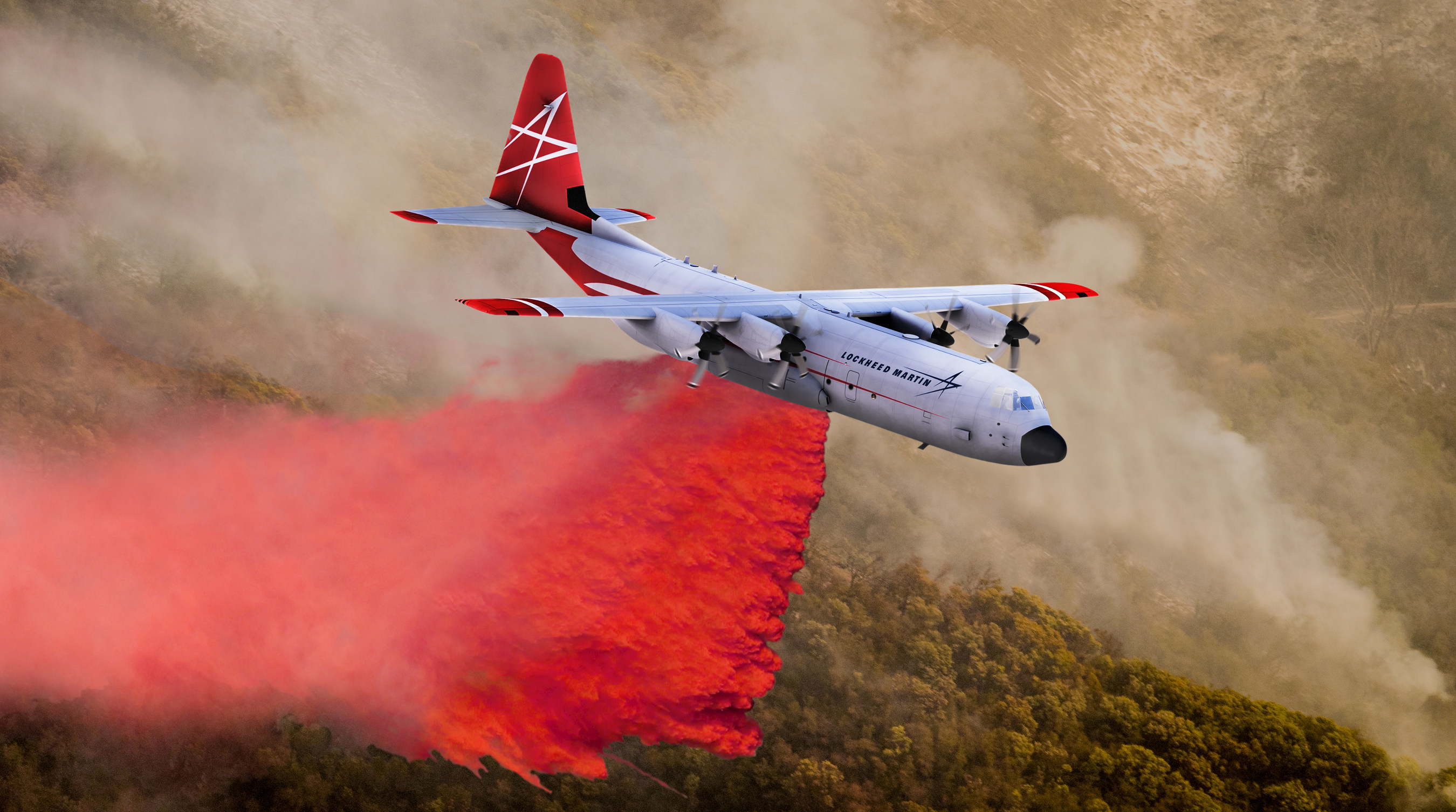
Lockheed Martin Introduces LM-100J 'FireHerc' At Farnborough International Airshow

press release
FARNBOROUGH, England, July 16, 2018 /PRNewswire/ -- Lockheed Martin (NYSE: LMT) today at Farnborough International Airshow (FIAS) introduced the LM-100J "FireHerc," a civil-certified firefighting airtanker variant of the proven C-130J Super Hercules that is the airlifter of choice for 18 nations around the world.
The LM-100J is the commercial freighter production model of the C-130J Super Hercules and an updated version of the legacy L-100 commercial Hercules freighter. The LM-100J is flying at and on static display at this year's FIAS.
C-130s — legacy Hercules, Super Hercules and L-100s — have flown millions of hours in support of missions for military and civilian operators around the world for more than 60 years, which includes supporting firefighting missions for more than 40 years. The LM-100J FireHerc builds on this proven experience and offers advanced capabilities to support aerial firefighting requirements for decades to come.
"With the presence of wildfires increasing on a global scale, there is a real-time need to provide more advanced assets to protect our people, communities and environment," said George Shultz, vice president and general manager, Air Mobility & Maritime Missions at Lockheed Martin. "As a variant of the C-130J Super Hercules, the FireHerc delivers a powerful combination of established performance advantages and innovative technology that will truly change the way we fight and defeat wildfires."
FireHerc-Performance
The Hercules plays a vital role in firefighting by dispersing retardant to contain and control fires in locations with complex terrain and compromised operating conditions. The FireHerc's straight-wing design and turboprop power plant allows it to excel in supporting this challenging low-level, low-speed firefighting mission profile like no other large airtanker in operation.
Additional FireHerc advantages include:
- Advanced flight deck avionics that provide outstanding situational awareness and modern safety features to protect and guide flight crews through challenging conditions.
- The ability to support two different retardant dispersion solutions: the gravity-drop based Coulson Aviation RADS Product Line or the pressure-type dispersal Modular Aerial Firefighting System II (MAFFS II). Both have been certified by the U.S. Forest Service on the Hercules platform to meet strict ground coverage standards.
- A path to support night firefighting with advanced integrated technology, allowing responders to combat fires on an unprecedented 24/7 cycle — providing an unmatched advantage against nature.
More information about the LM-100J FireHerc is available here.
Airbus: The future is electric
At the 2018 Farnborough Airshow, the UK government announces financial support for the pioneering Airbus E-Fan X hybrid-electric flight demonstrator.
The E-Fan X is the next step in Airbus’ electrification journey. This ambitious project, in partnership with Siemens and Rolls-Royce, aims to develop a flight demonstrator testing a 2MW hybrid-electric propulsion system. Continue reading https://www.airbus.com/innovation/The-future-is-electric.html
The E-Fan X is the next step in Airbus’ electrification journey. This ambitious project, in partnership with Siemens and Rolls-Royce, aims to develop a flight demonstrator testing a 2MW hybrid-electric propulsion system. Continue reading https://www.airbus.com/innovation/The-future-is-electric.html
Boeing Forecasts $15 Trillion Commercial Airplanes and Services Market
press release
20-year outlook projects rising demand for 42,700+ new airplanes, valued at $6.3 trillion
Services to outpace the world fleet; to grow 4.2% annually creating a $8.8T market
FARNBOROUGH, United Kingdom, July 17, 2018 /PRNewswire/ -- Boeing [NYSE: BA] lifted its long-term forecast for commercial airplanes as rising passenger traffic and upcoming airplane retirements drive the need for 42,730 new jets – valued at $6.3 trillion – over the next 20 years. The global airplane fleet will also sustain growing demand for commercial aviation services, leading to a total market opportunity of $15 trillion.
The company's annual forecast, renamed the Commercial Market Outlook (CMO) to include detailed analysis of the dynamic aviation services market, was presented today at the Farnborough International Airshow. Recognized as an industry benchmark for global air travel forecasting, the 2018 CMO projects the total number of airplanes increasing 4.1 percent over the previous forecast.
"For the first time in years, we are seeing economies growing in every region of the world. This synchronized growth is providing more stimulus for global air travel. We are seeing strong traffic trends not only in the emerging markets of China and India, but also the mature markets of Europe and North America," said Randy Tinseth, vice president of Commercial Marketing for The Boeing Company. "Along with continued traffic expansion, the data show a big retirement wave approaching as older airplanes age out of the global fleet."
According to fleet data, there are more than 900 airplanes today that are over 25 years old. By the mid 2020's, more than 500 airplanes a year will reach 25 years of age – double the current rate – fueling the retirement wave. Tinseth said the data explain why 44 percent of the new airplanes will be needed to cover replacement alone, while the rest will support future growth.
Including airplanes that will be retained, the global fleet is projected to essentially double in size to 48,540 by 2037.
The single-aisle segment will see the most growth over the forecast period, with a demand for 31,360 new airplanes, an increase of 6.1 percent over last year. This $3.5 trillion market is driven in large part by the continued growth of low-cost carriers, strong demand in emerging markets, and increasing replacement demand in markets such as China and Southeast Asia.
The widebody segment calls for 8,070 new airplanes valued at nearly $2.5 trillion over the next twenty years. Widebody demand is spearheaded, in part, by a large wave of replacements beginning early in the next decade and airlines deploying advanced jets such as the 787 Dreamliner and 777X to expand their global networks.
Additionally, Boeing projects the need for 980 new production widebody freighters over the forecast period, up 60 airplanes over last year. In addition, operators are forecasted to buy 1,670 converted freighters.
The massive fleet generates a strong and growing demand for aviation services ranging from supply chain support (parts and parts logistics), to maintenance and engineering services, to aircraft modifications, to airline operations. Over the next 20 years, Boeing forecast an $8.8T market for commercial aviation services with annual growth of 4.2 percent.
"The commercial airplane business fuels an enormous ecosystem of service providers. Our combined forecast shows the full picture of the $15T commercial market ahead of us," Tinseth said. "We see a market in which airlines outsource more and more, a market in which data and data analytics help aircraft and airline networks become more efficient and reliable, and a market in which new technologies provide new services solutions. All of these trends drive greater demand for integrated solutions over the life of an airplane."
Major categories in the services forecast include the $2.3 trillion market for Maintenance & Engineering, which covers tasks required to maintain or restore the airworthiness of an aircraft and its systems, components, and structures. Another major category is the $1.1 trillion market for Flight Operations, which covers services associated with the flight deck, cabin services, crew training and management, and airplane operations.
In terms of the geographic split of the new forecast, the airplane and services demand are similarly geared toward the major growth markets. The Asia Pacific region, which includes China, will continue to lead the way, accounting for 40 percent of total airplane deliveries and 38 percent of total services value. North America and Europe round out the top three.
Formerly known as Boeing's Current Market Outlook, the CMO is the longest running jet forecast and regarded as the most comprehensive analysis of the commercial aviation industry. The full report can be found at www.boeing.com/cmo.
Forward-Looking Information Is Subject to Risk and Uncertainty
Certain statements in this release may be "forward-looking" within the meaning of the Private Securities Litigation Reform Act of 1995. Words such as "expects," "forecasts," "projects," "plans," "believes," "estimates" and similar expressions are used to identify these forward-looking statements. Examples of forward-looking statements include statements relating to our future plans, business prospects, financial condition and operating results, as well as any other statement that does not directly relate to any historical or current fact. Forward-looking statements are based on current assumptions about future events that may not prove to be accurate. These statements are not guarantees and are subject to risks, uncertainties and changes in circumstances that are difficult to predict.
Many factors could cause actual events to differ materially from these forward-looking statements, including economic conditions in the United States and globally, general industry conditions as they may impact us or our customers, and other important factors disclosed previously and from time to time in our filings with the Securities and Exchange Commission. Forward-looking statements speak only as of the date they are made and we undertake no obligation to update or revise any such statement, except as required by law.
20-year outlook projects rising demand for 42,700+ new airplanes, valued at $6.3 trillion
Services to outpace the world fleet; to grow 4.2% annually creating a $8.8T market
FARNBOROUGH, United Kingdom, July 17, 2018 /PRNewswire/ -- Boeing [NYSE: BA] lifted its long-term forecast for commercial airplanes as rising passenger traffic and upcoming airplane retirements drive the need for 42,730 new jets – valued at $6.3 trillion – over the next 20 years. The global airplane fleet will also sustain growing demand for commercial aviation services, leading to a total market opportunity of $15 trillion.
The company's annual forecast, renamed the Commercial Market Outlook (CMO) to include detailed analysis of the dynamic aviation services market, was presented today at the Farnborough International Airshow. Recognized as an industry benchmark for global air travel forecasting, the 2018 CMO projects the total number of airplanes increasing 4.1 percent over the previous forecast.
"For the first time in years, we are seeing economies growing in every region of the world. This synchronized growth is providing more stimulus for global air travel. We are seeing strong traffic trends not only in the emerging markets of China and India, but also the mature markets of Europe and North America," said Randy Tinseth, vice president of Commercial Marketing for The Boeing Company. "Along with continued traffic expansion, the data show a big retirement wave approaching as older airplanes age out of the global fleet."
According to fleet data, there are more than 900 airplanes today that are over 25 years old. By the mid 2020's, more than 500 airplanes a year will reach 25 years of age – double the current rate – fueling the retirement wave. Tinseth said the data explain why 44 percent of the new airplanes will be needed to cover replacement alone, while the rest will support future growth.
Including airplanes that will be retained, the global fleet is projected to essentially double in size to 48,540 by 2037.
The single-aisle segment will see the most growth over the forecast period, with a demand for 31,360 new airplanes, an increase of 6.1 percent over last year. This $3.5 trillion market is driven in large part by the continued growth of low-cost carriers, strong demand in emerging markets, and increasing replacement demand in markets such as China and Southeast Asia.
The widebody segment calls for 8,070 new airplanes valued at nearly $2.5 trillion over the next twenty years. Widebody demand is spearheaded, in part, by a large wave of replacements beginning early in the next decade and airlines deploying advanced jets such as the 787 Dreamliner and 777X to expand their global networks.
Additionally, Boeing projects the need for 980 new production widebody freighters over the forecast period, up 60 airplanes over last year. In addition, operators are forecasted to buy 1,670 converted freighters.
|
New Airplane Deliveries through 2037 by size
| |||
|
Airplane type
|
Seats
|
Total deliveries
|
Market value
|
|
Regional jets
|
90 and below
|
2,320
|
$110 billion
|
|
Single-aisle
|
90 and above
|
31,360
|
$3,480 billion
|
|
Widebody
|
8,070
|
$2,480 billion
| |
|
Freighter widebody
|
---------
|
980
|
$280 billion
|
|
Total
|
---------
|
42,730
|
$6,350 billion
|
The massive fleet generates a strong and growing demand for aviation services ranging from supply chain support (parts and parts logistics), to maintenance and engineering services, to aircraft modifications, to airline operations. Over the next 20 years, Boeing forecast an $8.8T market for commercial aviation services with annual growth of 4.2 percent.
"The commercial airplane business fuels an enormous ecosystem of service providers. Our combined forecast shows the full picture of the $15T commercial market ahead of us," Tinseth said. "We see a market in which airlines outsource more and more, a market in which data and data analytics help aircraft and airline networks become more efficient and reliable, and a market in which new technologies provide new services solutions. All of these trends drive greater demand for integrated solutions over the life of an airplane."
Major categories in the services forecast include the $2.3 trillion market for Maintenance & Engineering, which covers tasks required to maintain or restore the airworthiness of an aircraft and its systems, components, and structures. Another major category is the $1.1 trillion market for Flight Operations, which covers services associated with the flight deck, cabin services, crew training and management, and airplane operations.
|
Commercial Aviation Services through 2037 by service category
| |
|
Service category
|
Market value
|
|
Corporate & External
|
$145 billion
|
|
Marketing & Planning
|
$540 billion
|
|
Flight Operations
|
$1,115 billion
|
|
Maintenance & Engineering
|
$2,365 billion
|
|
Ground & Cargo Operations
|
$4,665 billion
|
In terms of the geographic split of the new forecast, the airplane and services demand are similarly geared toward the major growth markets. The Asia Pacific region, which includes China, will continue to lead the way, accounting for 40 percent of total airplane deliveries and 38 percent of total services value. North America and Europe round out the top three.
|
Commercial market through 2037 by region
|
||
|
Region
|
Airplane deliveries
|
Services market
|
|
Asia Pacific
|
16,930
|
$3,365 billion
|
|
North America
|
8,800
|
$1,850 billion
|
|
Europe
|
8,490
|
$1,875 billion
|
|
Middle East
|
2,990
|
$745 billion
|
|
Latin America
|
3,040
|
$515 billion
|
|
Russia/C.I.S.
|
1,290
|
$265 billion
|
|
Africa
|
1,190
|
$215 billion
|
|
Total
|
42,730
|
$8,830 billion
|
Formerly known as Boeing's Current Market Outlook, the CMO is the longest running jet forecast and regarded as the most comprehensive analysis of the commercial aviation industry. The full report can be found at www.boeing.com/cmo.
Forward-Looking Information Is Subject to Risk and Uncertainty
Certain statements in this release may be "forward-looking" within the meaning of the Private Securities Litigation Reform Act of 1995. Words such as "expects," "forecasts," "projects," "plans," "believes," "estimates" and similar expressions are used to identify these forward-looking statements. Examples of forward-looking statements include statements relating to our future plans, business prospects, financial condition and operating results, as well as any other statement that does not directly relate to any historical or current fact. Forward-looking statements are based on current assumptions about future events that may not prove to be accurate. These statements are not guarantees and are subject to risks, uncertainties and changes in circumstances that are difficult to predict.
Many factors could cause actual events to differ materially from these forward-looking statements, including economic conditions in the United States and globally, general industry conditions as they may impact us or our customers, and other important factors disclosed previously and from time to time in our filings with the Securities and Exchange Commission. Forward-looking statements speak only as of the date they are made and we undertake no obligation to update or revise any such statement, except as required by law.
Newly-established Boeing NeXt organization to lead future commercial mobility solutions and bring flight closer to home
Press release
- Boeing, SparkCognition to shape the future of travel and transport
- Collaboration to focus on next-generation airspace management for the safe integration of autonomous air vehicles
FARNBOROUGH, United Kingdom, July 17, 2018 /PRNewswire/ -- Boeing [NYSE: BA] today announced it is collaborating with artificial intelligence (AI) technology leader, SparkCognition, to deliver unmanned aircraft system traffic management (UTM) solutions.
Boeing and SparkCognition will use artificial intelligence and blockchain technologies to track unmanned air vehicles in flight and allocate traffic corridors and routes to ensure safe, secure transportation. Through the collaboration, they will also provide a standardized programming interface to support package delivery, industrial inspection and other commercial applications. Boeing HorizonX Ventures previously invested in SparkCognition to support its development of a cognitive, data-driven analytics platform for the safety, security and reliability of data technology.
"Estimated by some analysts at $3 trillion, the urban aerial mobility opportunity will lead to the creation of the largest new market in our lifetimes," said Amir Husain, founder and CEO of SparkCognition. "The world's number one aviation leader partnering with the world's most innovative industrial AI company means that unparalleled experience in safety, innovation, scale, and reliability will be brought to bear to address this monumental opportunity."
To help advance UTM and next-generation travel, and evolve the transportation ecosystem, Boeing is standing up a new organization, Boeing NeXt. It will leverage Boeing's research and development activities and investments in areas such as autonomous flight and advanced propulsion, as well as focus on modeling smart cities and exploring new market opportunities to solve for the transportation challenges of the future.
"We're at a point in history where technological advances and societal trends are converging to demand bold solutions and a different way to travel," said Greg Hyslop, Boeing chief technology officer. "Boeing has the experience and expertise to safely and efficiently shape this emerging world of travel and transport. Through Boeing NeXt, we intend to build on our legacy of opening up new frontiers to move people and goods with proven technologies."
To reimagine how products and people move around the world, Boeing is pursuing technology development in emerging fields, including AI and hybrid and fully electric propulsion, that will help ensure safe, efficient flight. In a new video, the company outlines how these enablers will come together with digital systems to make the introduction and integration of autonomous and piloted air vehicles a reality.
"By taking a holistic approach that combines Boeing's strength in technological innovation with new business models and nontraditional partnerships, we are laying the foundation for the future commercial mobility ecosystem," said Steve Nordlund, who will lead Boeing NeXt in addition to his role as vice president of Boeing HorizonX. "We are shaping the physical and connectivity infrastructure to ensure new air vehicles safely operate in the global air space."
The Boeing NeXt portfolio will include the recently unveiled passenger-carrying hypersonic concept, as well as electric vertical takeoff and landing (eVTOL) vehicles that will provide on-demand cargo transport and urban air travel in the future mobility ecosystem.
With award-winning machine learning technology, a multinational footprint, and expert teams focused on defense, industrial internet of things, and finance, SparkCognition builds AI systems to advance the most important interests of society. Its customers turn to SparkCognition to help them analyze complex data, empower decision making, and transform human and industrial productivity. Learn more about SparkCognition's AI applications and why the company was featured in CNBC's 2017 Disruptor 50 and recognized two years in a row on CB Insights AI 100 by visiting www.sparkcognition.com.
Boeing is the world's largest aerospace company and leading manufacturer of commercial jetliners and defense, space and security systems. A top U.S. exporter, the company supports airlines and U.S. and allied government customers in more than 150 countries. Boeing products and tailored services include commercial and military aircraft, satellites, weapons, electronic and defense systems, launch systems, advanced information and communication systems, and performance-based logistics and training.
lunes, 16 de julio de 2018
Boeing KC-46 Program Completes Flight Testing Required for First Delivery to U.S. Air Force
----
Boeing KC-46 Program Completes Flight Testing Required for First Delivery to U.S. Air Force // MediaRoom
http://boeing.mediaroom.com/2018-07-13-Boeing-KC-46-Program-Completes-Flight-Testing-Required-for-First-Delivery-to-U-S-Air-Force
----
Read in my feedly.com
Boeing donates $5 million to launch European STEM education effort
----
Boeing donates $5 million to launch European STEM education effort // MediaRoom
http://boeing.mediaroom.com/2018-07-15-Boeing-donates-5-million-to-launch-European-STEM-education-effort
Investment to support expansion of the Newton Room concept in nine countries across Europe
----
Read in my feedly.com
Airbus and United talk A321LR and A330neo specifics
----
Airbus and United talk A321LR and A330neo specifics // Aircraft news
http://www.flightglobal.com/news/articles/airbus-and-united-talk-a321lr-and-a330neo-specifics-450083/
Airbus has sent United Airlines tailored specifications for the A321LR and A330neo, as the US carrier continues its evaluation of possible Boeing 757 and 767 replacements.
----
Read in my feedly.com
Scottish Site Chosen for UK Space Launch Activities
----
Scottish Site Chosen for UK Space Launch Activities // AviationWeek.com Commercial Aviation Channel
http://aviationweek.com/farnborough-airshow-2018/scottish-site-chosen-uk-space-launch-activities
A site on the North Scottish coastline has been selected as the site for the UK's first vertical-launch spaceport.
read more
----
Read in my feedly.com
UK unveils new next generation fighter jet called Tempest
Tempest is expected to complement the F-35 and eventually replace Typhoon.
It is understood that £2 billion in initial funding will be set out to oversee the design and build of the aircraft, which will be operational in 2035. The project is a joint venture between BAE Systems, Rolls Royce, MBDA UK Ltd and Leonardo. Continue reading https://ukdefencejournal.org.uk/uk-unveils-new-next-generation-fighter-jet-called-tempest/
More:
- https://www.bbc.co.uk/news/business-44848294
- https://www.defensenews.com/digital-show-dailies/farnborough/2018/07/16/introducing-tempest-the-uks-next-gen-fighter/
- https://sputniknews.com/military/201807161066394273-uk-tempest-jet-jv/
MoD press release
https://www.gov.uk/government/news/britain-to-take-leading-role-in-next-generation-air-power-as-defence-secretary-launches-combat-air-strategy
Britain to take leading role in next-generation air power, as Defence Secretary launches Combat Air Strategy
Setting out Britain’s determination to remain a world-leader in the combat air sector, Defence Secretary Gavin Williamson has today unveiled a concept model of a brand-new, next-generation fighter jet as he launched a comprehensive strategy with a bold statement of intent for future British air power.
Announcing the publication of the new Combat Air Strategy
at the Farnborough International Airshow, the Defence Secretary said he
had taken action to strengthen the UK’s role as a global leader in the
sector and to protect key skills across the UK industrial base.
He outlined the Strategy in front of the combat aircraft concept model which has been developed by UK industry in collaboration with the Ministry of Defence – being publicly unveiled for the first time, it acts as a powerful demonstration of the UK’s world leading technical capability and industrial expertise.
Defence Secretary Gavin Williamson said:
For the last 100 years the UK combat air industrial sector has ensured the UK has been at the forefront of technological and engineering developments, delivering world leading capability to the RAF and our allies. This Strategy will ensure the UK continues to maintain this leading position.
The Strategy outlines the way in which the UK will acquire future Combat Air capabilities to maximise the overall value the UK derives from the sector. The framework will balance military capability, international influence, and economic and prosperity benefit along with the overall cost.
It reinforces the commitment in the 2015 Strategic Defence and Security Review to deliver the Future Combat Air System Technology Initiative (FCAS TI). The Government, in partnership with industry, is taking steps to grow existing world-leading design engineering capacity and skills, ensuring that the UK continues to be at the cutting edge of combat air technology.
The concept aircraft has been put together by British firms including BAE Systems, Leonardo, MBDA and Rolls-Royce, which have joined together with the RAF Rapid Capabilities Office to form ‘Team Tempest’ to pursue the opportunity.
Team Tempest brings together the UK’s world leading industry and sovereign capabilities across future combat air’s four key technology areas: advanced combat air systems and integration (BAE Systems); advanced power and propulsion systems (Rolls-Royce); advanced sensors, electronics and avionics (Leonardo) and advanced weapon systems (MBDA).
The MOD will now set up a dedicated team to deliver the combat air acquisition programme. They will deliver a business case by the end of the year, and have initial conclusions on international partners by next summer – with engagement with potential partners beginning immediately.
Early decisions around how to acquire the capability will be confirmed by the end of 2020, before final investment decisions are made by 2025. The aim is then for a next generation platform to have operational capability by 2035.
The UK is already a world-leader in the combat air sector, with a mix of skills and technologies unique in Europe, supporting over 18,000 highly skilled jobs. The sector delivers a turnover in excess of £6bn a year and has made up over 80% of defence exports from the UK over the last ten years.
Investment in combat air technology, combined with the strengths of UK industry, has resulted in the UK being the only Tier 1 partner with the US on the F-35 Lightning II programme, with British industry delivering 15% by value of every F-35 built. The UK has been able to help define the operational capabilities of the aircraft, while reinforcing UK industrial capability, critical skills and supporting wider economic prosperity.
The UK also continues to lead the way in combat air power as one of the four partner nations in the Eurofighter Typhoon programme. With more than 20,000 flying hours on deployed operations to date, the Typhoon delivers world leading capability, unparalleled reliability and proven interoperability with our allies. The MOD will continue to invest in the Typhoon for decades to come, with the best technologies being carried forward on to next-generation systems.
The F-35 Lightning II and the Typhoon are two complementary multi-role combat aircraft that will make up the RAF’s combat air fleet, placing the UK at the forefront of combat air technology - with the Typhoon expected to remain in UK service until at least 2040.
Chief of the Air Staff Air Chief Marshal Sir Stephen Hillier, said:
He outlined the Strategy in front of the combat aircraft concept model which has been developed by UK industry in collaboration with the Ministry of Defence – being publicly unveiled for the first time, it acts as a powerful demonstration of the UK’s world leading technical capability and industrial expertise.
Defence Secretary Gavin Williamson said:
We have been a world leader in the combat air sector for a century, with an enviable array of skills and technology, and this Strategy makes clear that we are determined to make sure it stays that way. It shows our allies that we are open to working together to protect the skies in an increasingly threatening future - and this concept model is just a glimpse into what the future could look like.
British defence industry is a huge contributor to UK prosperity, creating thousands of jobs in a thriving advanced manufacturing sector, and generating a UK sovereign capability that is the best in the world.
Today’s news leaves industry, our military, the country, and our allies in no doubt that the UK will be flying high in the combat air sector as we move into the next generation.
For the last 100 years the UK combat air industrial sector has ensured the UK has been at the forefront of technological and engineering developments, delivering world leading capability to the RAF and our allies. This Strategy will ensure the UK continues to maintain this leading position.
The Strategy outlines the way in which the UK will acquire future Combat Air capabilities to maximise the overall value the UK derives from the sector. The framework will balance military capability, international influence, and economic and prosperity benefit along with the overall cost.
It reinforces the commitment in the 2015 Strategic Defence and Security Review to deliver the Future Combat Air System Technology Initiative (FCAS TI). The Government, in partnership with industry, is taking steps to grow existing world-leading design engineering capacity and skills, ensuring that the UK continues to be at the cutting edge of combat air technology.
The concept aircraft has been put together by British firms including BAE Systems, Leonardo, MBDA and Rolls-Royce, which have joined together with the RAF Rapid Capabilities Office to form ‘Team Tempest’ to pursue the opportunity.
Team Tempest brings together the UK’s world leading industry and sovereign capabilities across future combat air’s four key technology areas: advanced combat air systems and integration (BAE Systems); advanced power and propulsion systems (Rolls-Royce); advanced sensors, electronics and avionics (Leonardo) and advanced weapon systems (MBDA).
The MOD will now set up a dedicated team to deliver the combat air acquisition programme. They will deliver a business case by the end of the year, and have initial conclusions on international partners by next summer – with engagement with potential partners beginning immediately.
Early decisions around how to acquire the capability will be confirmed by the end of 2020, before final investment decisions are made by 2025. The aim is then for a next generation platform to have operational capability by 2035.
The UK is already a world-leader in the combat air sector, with a mix of skills and technologies unique in Europe, supporting over 18,000 highly skilled jobs. The sector delivers a turnover in excess of £6bn a year and has made up over 80% of defence exports from the UK over the last ten years.
Investment in combat air technology, combined with the strengths of UK industry, has resulted in the UK being the only Tier 1 partner with the US on the F-35 Lightning II programme, with British industry delivering 15% by value of every F-35 built. The UK has been able to help define the operational capabilities of the aircraft, while reinforcing UK industrial capability, critical skills and supporting wider economic prosperity.
The UK also continues to lead the way in combat air power as one of the four partner nations in the Eurofighter Typhoon programme. With more than 20,000 flying hours on deployed operations to date, the Typhoon delivers world leading capability, unparalleled reliability and proven interoperability with our allies. The MOD will continue to invest in the Typhoon for decades to come, with the best technologies being carried forward on to next-generation systems.
The F-35 Lightning II and the Typhoon are two complementary multi-role combat aircraft that will make up the RAF’s combat air fleet, placing the UK at the forefront of combat air technology - with the Typhoon expected to remain in UK service until at least 2040.
Chief of the Air Staff Air Chief Marshal Sir Stephen Hillier, said:
Charles Woodburn, Chief Executive of BAE Systems, said:The Combat Air Strategy will bring together the best of our people, industry and international partners to support the RAF lift-off into the next century of air power. Team Tempest demonstrates our commitment in ensuring that we continue to build our capabilities, draw upon our experience and history to bring forward a compelling vision for the next generation fighter jet. In last 100 years, the RAF has led the way and today’s announcement is a clear demonstration of what lies ahead.
Warren East, Chief Executive Officer of Rolls-Royce, said:The UK’s combat air capability, built by generations of committed and highly skilled people through a century long partnership between the RAF and industry, is admired the world over. The UK Government’s Combat Air Strategy is a powerful statement of intent to invest in next generation combat air systems. We’re proud to play a key role in this important programme, with our world leading technology, capability and skills, which will contribute to the UK’s defence and prosperity for decades to come.
Norman Bone, Chairman and Managing Director of Leonardo in the UK, said:As the UK’s long-term power and propulsion partner, we warmly welcome the Government’s announcement of a Combat Air Strategy. The UK’s capability in combat air power and propulsion is at a critical point and this long-term commitment from Government will allow us to protect the expertise and key skills that are vital to retaining sovereign capability. It ensures that we are able to develop and deliver the advanced technologies that will be required in future combat air systems to help ensure our national security.
Chris Allam, Managing Director of MBDA UK, said:As Britain’s national champion for advanced defence electronics, we are proud to be a part of Team Tempest. Work we have conducted under research and development programmes such as FOAS and FCAS has significantly advanced our thinking with regards to the complex electronics required for future air combat scenarios and we stand ready to support the future needs of the Royal Air Force. We are excited about the work that’s already been done, and the work still to do, on the FCAS TI programme and are all set for these activities to feed into the Typhoon successor programme.
MBDA is proud to be providing its complex weapons expertise to the Team Tempest partnership. Delivering effects is central to next generation combat air systems, and we will continue to invest in developing our world leading complex weapons and novel technologies to ensure the UK retains sovereign operational advantage and freedom of action in Combat Air. The strong partnership (through the Portfolio Management Agreement) between MBDA and the MoD has already changed the paradigm for complex weapons developments in the UK, delivered world leading capabilities to the UK Armed Forces and provided savings in terms of both time and money. The Team Tempest partnership has the potential to do the same for Combat Air.

Farnborough Air Show 2018 Preview and Day 0
Next week sees the biennial Farnborough Air Show, the leading international showcase for aerospace. TIM ROBINSON, BILL READ and KHALEM CHAPMAN look at what to expect from this year’s 2018 event. Continue Reading https://www.aerosociety.com/news/farnborough-air-show-2018-preview/
TIM ROBINSON, BILL READ and KHALEM CHAPMAN provide a look at some of the most exciting news and and highlights ahead of the first trade day at the Farnborough Air Show 2018. Continue Reading https://www.aerosociety.com/news/farnborough-air-show-2018-day-zero/
viernes, 13 de julio de 2018
Bombardier to Introduce Head-up Display and Enhanced Vision System Option on Best-selling Challenger 350 Aircraft
Business Aircraft, Press Release
- Lightweight Head-up Display (HUD) from Rockwell Collins will make the best equipped cockpit in the super mid-size segment even better
- The Head-up Display and Enhanced Vision System (EVS) will be available as an option on new Challenger 350 aircraft orders and as a retrofit on in-service models
- The HUD and EVS bring unparalleled situational awareness and improvements in low-visibility conditions
- The Challenger 350 jet was the top-selling aircraft of the super mid-size segment in 2017, and provides optimal cabin comfort with an ultra-quiet in-flight experience
Montreal, July 9, 2018 - Bombardier today announced that it will be offering Head-up Display and Enhanced Vision System as an option on its best-selling Challenger 350 business jets. The HUD and EVS will complement the Challenger 350 aircraft’s best-in-class baseline offering. These systems will further expand the advanced avionics functionalities of the aircraft, such as the powerful Synthetic Vision System (SVS) and sophisticated MultiScan™ weather radar, to reduce pilot workload and enhance overall situational awareness.
“Added to the Challenger 350 aircraft’s already well-equipped flight deck, the HUD and EVS option will enhance the pilot’s situational awareness to provide passengers with an even smoother flight,” said David Coleal, President, Bombardier Business Aircraft. “The Challenger 350 jet leads the market in unit sales, and our commitment to continuously innovate and elevate this aircraft clearly demonstrates our promise to offer our customers nothing but the finest experience on board the industry's best-selling business jet.”
The Challenger 350 jet features the best-equipped cockpit in its class. With the addition of the lightweight HUD, the aircraft will allow pilots to fly eyes forward in all phases of flight, most crucially during takeoff and landing. The flight deck on the Challenger 350 aircraft provides critical flight information onto the HUD’s transparent screen. Without needing to look down, pilots can respond with greater speed and precision, while they simultaneously assess their surroundings.
For maximum situational awareness in all flight conditions, the HUD is elevated with a powerful enhanced vision system. The advanced EVS camera transmits live infrared imagery from outside the aircraft to the HUD, revealing runway lighting, surrounding terrain and possible obstacles on the runway. The HUD and EVS combination enables pilots to land with greater confidence. The HUD and EVS will be available as an option on new Challenger 350 aircraft orders and can be installed as a retrofit on in-service models in Bombardier’s extensive network of service centres.
The Challenger 350 aircraft boasts outstanding short-field performance and climbs quickly and directly to 43,000 feet, allowing passengers to reach their destinations efficiently. The aircraft is currently undertaking steep approach certification at London City Airport, a singular advantage that will give operators direct access to one of the world’s great financial centres. Final certification is expected imminently.
Challenger 350 aircraft: Designed with a no-compromise approach, the Challenger 350 aircraft effortlessly blends powerful performance and sleek styling to deliver an unrivalled private jet experience. Industry-leading connectivity, immersive sound and ergonomically-positioned touch screens are seamlessly integrated to create an intuitive and incomparable cabin experience. Paired with impressive high-performance attributes, the Challenger 350 aircraft is designed to access challenging airfields, climb faster, and cruise efficiently while providing a smooth ride. Standing the test of time, the Challenger 300 aircraft series are the best-selling business jets of the last decade.
Airbus to showcase innovative products and services at the Farnborough International Airshow 2018
press release
Toulouse, 11 July 2018 - Airbus SE will present a broad portfolio of innovative products and services at the Farnborough International Airshow 2018 that meet the aerospace industry’s requirements for today and tomorrow.
In the flying and static displays, Airbus will showcase its modern and highly efficient range of commercial aircraft able to seat between 100 and more than 600 passengers. The static display will feature two A220-300s (a test aircraft and an airBaltic aircraft), which, along with the smaller A220-100, represent the newest members of the Airbus single-aisle Family following the recent agreement to take a majority stake in the 100-150 seat aircraft programme. An A321neo will also be on display on the Wednesday of the show week. Airbus’ latest wide-body models, the A330-900neo and A350-1000, will each participate in the Farnborough flying display for the first time. The A330neo, which features new wings and new generation engines, is due to go into service in 2018. Meanwhile, the A350-1000 offers the very latest in aerodynamics and advanced technologies to provide unrivalled efficiencies on long-haul routes. An A330-900neo of launch customer TAP Air Portugal and an A350-1000 of launch operator Qatar Airways will also be on the static display. At the larger end of the Airbus portfolio, a Hi Fly A380 will be on static display during the latter part of the week showing the flexibility of the double-decker aircraft.
Airbus Helicopters will present key market-leading product and capabilities as well as highlight research and development in unmanned solutions. On the static display will be a single-engine H125 helicopter equipped with special sensors and a telemetry kit that allow pilot and aircraft performance to be streamed in real-time to the ground for training applications. The aircraft is due to be handed over during the show to QinetiQ for use with the UK-based Empire Test Pilots’ School. Visitors to Farnborough will also see a full scale mock-up of the VSR700 rotary-wing unmanned aerial vehicle (UAV), which can bring beyond the horizon surveillance capability to naval ships.
Meanwhile, Airbus Defence and Space will demonstrate its broad product portfolio of military aircraft, space systems, secure communications and UAVs. An A400M military transporter in special Royal Air Force colours will take part in both the flying and static displays. Equipped with state-of-the-art technologies, the A400M can perform strategic and tactical transport missions and also undertake air-to-air refuelling. Also featured will be the world record holding Zephyr, Airbus’ solar-electric stratospheric unmanned aircraft that combines the advantage of a satellite with the flexibility and persistence of a UAV. Airbus will showcase its world leading secure communications networking and cyber security capability at one of the interactive ‘bubble’ displays at the Airbus Pavilion. Space expertise will feature strongly, including the environmental monitoring programme Copernicus where Airbus designs and manufactures Sentinel satellites. In the show’s ‘Space Zone’, Airbus will exhibit the ExoMars rover prototype that will drive on a simulated Martian surface. The ‘Network for the Sky’ airborne communications solution will also be presented for the first time.
The interactive ‘bubble’ displays in the Pavilion will present four broad key themes for Airbus by illustrating certain related activities. The ‘Future of Flight’ display will show how Airbus is further improving its portfolio and changing the future of mobility with aircraft such as the single-aisle A321LR that can serve new long-haul markets, the H160 helicopter and Urban Air Mobility initiatives such as Vahana and CityAirbus. The ‘Secure World’ display will showcase Airbus’ vision for defence and security including the Future Air Power family of connected systems to respond to the threats of tomorrow. The ‘From Data to Insight’ display will demonstrate how Airbus is harnessing the power of data through digitalisation initiatives such as the Skywise data platform. Another display area will demonstrate how Airbus is committed to developing a sustainable future together with its key partners and stakeholders. Featured projects include the Blade wing laminar flow demonstrator programme conducted under the European Clean Sky research programme. As the second largest supplier to the Royal Air Force and biggest supplier of large aircraft, Airbus will also show its strong support for the RAF’s centenary celebrations.
The Farnborough International Airshow runs from July 16 to 22. Accredited journalists are welcome to visit the Airbus Pavilion’s dedicated press area (OE13) where the majority of announcements will be made. Updates will be available on a dedicated event page of the Airbus Website while aircraft visits can be arranged for accredited media at 09:30am each week day.
Airbus-led consortium to provide European Union with seamless satellite-based coverage of Europe at unprecedented scale and speed
Press Release
Toulouse, 12 July 2018 – The European Commission and the European Space Agency (ESA) have awarded an Airbus-led consortium a contract for the provision of satellite-based seamless coverage of the whole of Europe at very high-resolution. The consortium includes Airbus Defence and Space, Planet, Deimos Imaging, IGN-France and space4environment. This agreement is part of the Copernicus Earth Observation programme for the European Union (EU).
As part of the contract, six million square kilometres over 39 countries will be covered in 2018 with freshly acquired very high-resolution optical satellite imagery. The result-based approach of the procurement has led European EO industry to federate and respond with a coordinated offer bringing together the strengths of each partner. The contracted solution leverages the latest in remote sensing and imagery processing technologies to deliver new data at an unprecedented scale and speed. The data will feed the geo-information services coordinated by the European Environment Agency with which European institutions and governments implement their environmental and land management policies.
“This contract shows the confidence of ESA in Airbus and its partners to fulfill such a demanding satellite imagery programme,” said François Lombard, Head of the Intelligence Business at Airbus Defence and Space. “We are very proud to drive a consortium gathering such a unique combination of assets and together, we are confident we will deliver high quality full European coverage in record time.”
The high revisit rate of Planet’s imaging system will allow it to image regions that are often covered in cloud, such as Northern Europe or the Alps, while Deimos Imaging and Airbus satellite resources will concentrate on Southern and Central Europe, where higher resolutions are required to map dense urban and suburban areas. A dynamic acquisition strategy and imaging redundancy within the consortium will guarantee the achievement of the coverage objective. Valid images, cloud and haze free, will be selected and combined with a specific Digital Elevation Model (DEM) in order to meet the European Commission and ESA geolocation accuracy specifications.
“This is an important partnership for Planet as it brings together major players in the private and public sectors to leverage our global, daily imagery to do something that has historically been very difficult to achieve,” said Will Marshall, CEO and cofounder of Planet. “Europe is very much ahead of the curve in terms of public-private cooperation and turning data into a public good, and we’re proud to be a part of this.”
“We are very excited to be part of this landmark project,” said Fabrizio Pirondini, CEO at Deimos Imaging. “Our company has enjoyed a long, successful history of supplying satellite products and services to European public entities, such as ESA and EMSA. This contract, one of the largest we have been awarded in our history, demonstrates the value of our partnerships, as well as our increasing role as a key provider of imagery and geo-information products worldwide.”
This dataset will be available to institutional users on a European and national level, and it will serve to create updated information about land cover, as well as land use (for example forests, urban areas, or lakes and rivers) over 39 countries in Europe.
Airbus performs world’s first automatic air-to-air refuelling contact with large aircraft receiver
Press Release
https://youtu.be/0pK3XU2RKns


Royal Australian Air Force KC-30A acts as receiver from A310 tanker
Madrid, 12 July 2018 – Airbus Defence and Space has followed its earlier achievement in demonstrating Automatic Air-to-Air (A3R) refuelling of a fighter with another world-first – the same operation performed with a large receiver aircraft.
In a joint operation with the Royal Australian Air Force (RAAF), which is collaborating with Airbus in development of this pioneering technology, Airbus’ A310 company development tanker performed seven automatic contacts with a RAAF KC-30A Multi Role Tanker Transport, also made by Airbus.
The system requires no additional equipment on the receiver and is intended to reduce refuelling boom operator workload, improve safety, and optimise the rate of air-to-air refuelling (AAR) in operational conditions to maximise aerial superiority. Airbus has begun work towards introducing the system on the current production A330 Multi Role Tanker Transport (A330 MRTT).
During initial approach of the receiver, boom control is performed by the tanker’s Air Refuelling Operator (ARO) as usual. Innovative passive techniques such as image processing are then used to determine the receiver’s refuelling receptacle position and when the automated system is activated, a fully automated flight control system flies and maintains the boom aligned with the receiver’s receptacle. The telescopic beam inside the boom can be controlled in a range of ways including: manually by the ARO; a relative distance-keeping mode; or full auto-mode to perform the contact.
In the 20 June flight off the southern Spanish coast, the A310 tanker performed the scheduled seven contacts over a two-hour test period.
David Piatti, who again acted as Airbus Test ARO, or “boomer”, on the A310, said: “It was extremely impressive to see how accurately the A3R system tracks the receiver. It can be very useful to be able to refuel another tanker or transport, for example to extend its deployment range or to avoid taking fuel back to base, but it is also a challenging operation and this system has the potential to reduce workload and the risk involved.”
The trial was conducted in conjunction with Test Pilots and Flight Test Engineers from the RAAF’s Aircraft Research and Development Unit (ARDU).
Squadron Leader Lawry Benier, Executive Officer for ARDU, said the RAAF were assisting Airbus Defence & Space on the development of A3R and other technologies to increase the utility of the KC-30A within a battlespace.
“It’s very encouraging to come to Spain and see the progress that’s been made with A3R, and be able to witness it firsthand refuelling our KC-30A,” Squadron Leader Benier said.
“Refuelling large receivers is a role RAAF has conducted extensively on operations and exercises, allowing us to extend the reach and responsiveness of our air mobility fleet, as well as keep surveillance aircraft in the air for longer.”
jueves, 12 de julio de 2018
CAAS, EASA and Airbus collaborate to advance safety of UAS in urban environments
press release
Marignane, The Civil Aviation Authority of Singapore (CAAS), the European Aviation Safety Agency (EASA) and Airbus have agreed to collaborate in the development of safety standards and regulatory requirements for unmanned aircraft systems (UAS) in urban environments. The tripartite Project Document, which lays out the areas of collaboration, was signed by representatives from CAAS, EASA and Airbus.
The Project Document establishes a framework for the exchange of information and technical expertise among the three parties, to facilitate the development of safety standards and regulatory requirements, as well as operational and technological assessments for the deployment of UAS in urban environments, such as last-mile deliveries, leveraging Airbus’ experience with the ongoing Skyways project1. The parties will also share safety information and learning outcomes from the urban UAS trials. The parties also agreed to jointly organise UAS-themed activities such as educational workshops and seminars.
Mr Kevin Shum, Director-General at CAAS said, “This tripartite partnership is timely as we seek to better define the operating conditions for the growing number of beneficial uses of UAS in urban environments such as Singapore, with aviation and public safety in mind. We look forward to working closely with our partners and sharing our experience gained thus far in developing regulatory requirements for UAS operations in Singapore.”
Mr Patrick Ky, Executive Director at EASA said, “Unmanned Aircraft Systems used in urban environments will shape the future of public transport. We could not find better partners than CAAS and Airbus to develop safety standards for this growing and fascinating technological development.”
Mr Jean-Brice Dumont, Executive Vice President, Engineering at Airbus said, “Airbus has been growing our focus on autonomous air mobility, and this tripartite collaboration is a positive move to shape up the safety regulations of UAS in city environments, turning urban air mobility into a business reality for us. Today, our Skyways UAS has demonstrated its ability to deliver air packages in an urban city. With the strong support of both CAAS and EASA, coupled with our experiences from Skyways, we are confident that safe and reliable urban air delivery will become a reality very soon.”
[1] Skyways is an Airbus’ experimental project which aims to establish seamless multi-modal transportation networks in smart cities. Through Skyways, Airbus aims to develop an airborne infrastructure solution to address the sustainability and efficiency of parcel delivery businesses in large urban environments.
About Airbus
Airbus is a global leader in aeronautics, space and related services. In 2017 it generated revenues of €59 billion restated for IFRS 15 and employed a workforce of around 129,000. Airbus offers the most comprehensive range of passenger airliners from 100 to more than 600 seats. Airbus is also a European leader providing tanker, combat, transport and mission aircraft, as well as one of the world’s leading space companies. In helicopters, Airbus provides the most efficient civil and military rotorcraft solutions worldwide.
Suscribirse a:
Entradas (Atom)