
jueves, 21 de junio de 2012
Boeing and NASA hit major milestones for super-heavy launch vehicle
Boeing and NASA hit major milestones for super-heavy launch vehicle: Boeing and NASA have completed the system requirements review (SRR) and system definition review (SDR) for the cryogenic stages of Space Launch System (SLS),...


El revolucionario X3 de Eurocopter empieza en Tejas su gira por Estados Unidos [con video]
Grand Prairie, Tejas, 21 de junio de 2012
Eurocopter empezó ayer la gira por EE.UU de su aeronave híbrida X3, que - durante un mes de visitas a instalaciones militares y centros de operadores civiles de helicópteros - mostrará las capacidades operacionales sin igual de este avanzado sistema de
transporte.
La gira arrancó con la presentación inicial en vuelo del X3 efectuada en la sede principal de American Eurocopter, filial estadounidense de Eurocopter, situada en Grand Prairie, Tejas, en presencia de empleados, oficiales, clientes y socios industriales.
Además de por la primera presentación fuera de Europa del X3, la más avanzada innovación de Eurocopter, la tradicional excelencia de los helicópteros de la empresa estuvo resaltada por el aterrizaje en el aeropuerto de Grand Prairie de aparatos de la gama: desde los pioneros Alouette y BO105 al moderno UH-72A Lakota del Ejército estadounidense, pasando por el MH-65C Dolphin de la Guardia Costera de EE.UU, el EC225, el AS350 y el EC145 – utilizados en operaciones de los sectores civil, de mantenimiento del orden, transporte sanitario y misiones parapúblicas.
"Con nuestra ambiciosa estrategia de innovación nos proponemos realizar el primer vuelo de un nuevo helicóptero, una nueva versión o un nuevo demostrador tecnológico todos los años, porque, para Eurocopter, innovación no es simplemente una palabra de moda, sino un estilo de vida", explicó el presidente y delegado general Lutz Bertling."Con el ingenioso diseño y la tecnología sin parangón de nuestro demostrador X3 estamos bien posicionados para lanzar esta este tipo de aeronave al mercado en los próximos diez años".
Para subrayar la madurez y las excelentes características de gobierno del X3, hoy se ha ofrecido a algunos pilotos y observadores invitados, la oportunidad de volar en el demostrador, lo que se repetirá durante las múltiples demostraciones organizadas por American Eurocopter en Grand Prairie para el sector del petróleo y el gas, así como para servicios públicos, de mantenimiento del orden y de transporte sanitario. El X3 volará después a Redstone Army Arsenal Airfield en Alabama, a la base aérea del Ejército en Fort Bragg's Simmons, Carolina del Norte, al aeropuerto regional de Manassas, Virginia y a instalaciones militares en Washington,
D.C.
La configuración de aeronave del X3 de Eurocopter comprende dos motores turboeje queimpulsan un sistema de rotor principal de cinco palas, junto con dos hélices montadas en alas fijas de corta envergadura. La concepción es idónea para misiones que requieran vuelos de traslado a larga distancia, en los que la velocidad es un factor importante, al tiempo que mantiene la capacidad de despegue vertical y de vuelo estacionario – y todo eso a un coste muy módico.
La empresa prevé un amplio abanico de finalidades de su tecnología híbrida en futuros productos, incluidos operaciones de búsqueda y salvamento a larga distancia (SAR), misiones guardacostas, misiones de patrulla fronteriza, transporte de pasajeros y vuelos offshore, aparte de servicios de lanzadera entre ciudades. Es también muy adecuada para misiones militares, como operaciones de fuerzas especiales, transporte de tropas, SAR en combate y evacuación sanitaria, porque en ellas se aprovecha la combinación de mayor velocidad de crucero con excelentes prestaciones de despegue y aterrizaje verticales.
Eurocopter dio comienzo a las pruebas en vuelo del X3 en septiembre de 2010 en el centro de pruebas en vuelo de Istres, sur de Francia. La aeronave superó allí con facilidad el objetivo de 220 nudos fijado inicialmente, desarrollando más de 230 nudos en vuelo nivelado, a sólo el 80 por ciento de la potencia disponible. Aparte de confirmar las excelentes cualidades de vuelo, la maniobrabilidad y la sobresaliente capacidad de aceleración y desaceleración, el demostrador híbrido ha puesto de manifiesto tasas de ascenso y descenso excepcionales, junto con niveles muy bajos de vibraciones – y todo eso sin necesidad de ninguna clase de sistema antivibraciones activo o pasivo.
Eurocopter empezó ayer la gira por EE.UU de su aeronave híbrida X3, que - durante un mes de visitas a instalaciones militares y centros de operadores civiles de helicópteros - mostrará las capacidades operacionales sin igual de este avanzado sistema de
transporte.
La gira arrancó con la presentación inicial en vuelo del X3 efectuada en la sede principal de American Eurocopter, filial estadounidense de Eurocopter, situada en Grand Prairie, Tejas, en presencia de empleados, oficiales, clientes y socios industriales.
Además de por la primera presentación fuera de Europa del X3, la más avanzada innovación de Eurocopter, la tradicional excelencia de los helicópteros de la empresa estuvo resaltada por el aterrizaje en el aeropuerto de Grand Prairie de aparatos de la gama: desde los pioneros Alouette y BO105 al moderno UH-72A Lakota del Ejército estadounidense, pasando por el MH-65C Dolphin de la Guardia Costera de EE.UU, el EC225, el AS350 y el EC145 – utilizados en operaciones de los sectores civil, de mantenimiento del orden, transporte sanitario y misiones parapúblicas.
"Con nuestra ambiciosa estrategia de innovación nos proponemos realizar el primer vuelo de un nuevo helicóptero, una nueva versión o un nuevo demostrador tecnológico todos los años, porque, para Eurocopter, innovación no es simplemente una palabra de moda, sino un estilo de vida", explicó el presidente y delegado general Lutz Bertling."Con el ingenioso diseño y la tecnología sin parangón de nuestro demostrador X3 estamos bien posicionados para lanzar esta este tipo de aeronave al mercado en los próximos diez años".
Para subrayar la madurez y las excelentes características de gobierno del X3, hoy se ha ofrecido a algunos pilotos y observadores invitados, la oportunidad de volar en el demostrador, lo que se repetirá durante las múltiples demostraciones organizadas por American Eurocopter en Grand Prairie para el sector del petróleo y el gas, así como para servicios públicos, de mantenimiento del orden y de transporte sanitario. El X3 volará después a Redstone Army Arsenal Airfield en Alabama, a la base aérea del Ejército en Fort Bragg's Simmons, Carolina del Norte, al aeropuerto regional de Manassas, Virginia y a instalaciones militares en Washington,
D.C.
La configuración de aeronave del X3 de Eurocopter comprende dos motores turboeje queimpulsan un sistema de rotor principal de cinco palas, junto con dos hélices montadas en alas fijas de corta envergadura. La concepción es idónea para misiones que requieran vuelos de traslado a larga distancia, en los que la velocidad es un factor importante, al tiempo que mantiene la capacidad de despegue vertical y de vuelo estacionario – y todo eso a un coste muy módico.
La empresa prevé un amplio abanico de finalidades de su tecnología híbrida en futuros productos, incluidos operaciones de búsqueda y salvamento a larga distancia (SAR), misiones guardacostas, misiones de patrulla fronteriza, transporte de pasajeros y vuelos offshore, aparte de servicios de lanzadera entre ciudades. Es también muy adecuada para misiones militares, como operaciones de fuerzas especiales, transporte de tropas, SAR en combate y evacuación sanitaria, porque en ellas se aprovecha la combinación de mayor velocidad de crucero con excelentes prestaciones de despegue y aterrizaje verticales.
Eurocopter dio comienzo a las pruebas en vuelo del X3 en septiembre de 2010 en el centro de pruebas en vuelo de Istres, sur de Francia. La aeronave superó allí con facilidad el objetivo de 220 nudos fijado inicialmente, desarrollando más de 230 nudos en vuelo nivelado, a sólo el 80 por ciento de la potencia disponible. Aparte de confirmar las excelentes cualidades de vuelo, la maniobrabilidad y la sobresaliente capacidad de aceleración y desaceleración, el demostrador híbrido ha puesto de manifiesto tasas de ascenso y descenso excepcionales, junto con niveles muy bajos de vibraciones – y todo eso sin necesidad de ninguna clase de sistema antivibraciones activo o pasivo.
Helicóptero a pedales Gamera II: nuevo intento de consegir el premio Sikorsky
Helicóptero a pedales Gamera II: nuevo intento de consegir el premio Sikorsky:
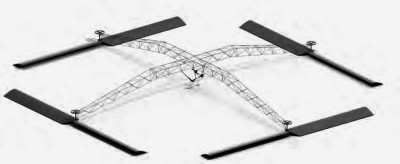
Recordamos que el premio Sikorsy se estableció en 1980 y dotará con 250000$ a aquél que logre volar un helicóptero movido con potencia humana a una altura de 3m sobre el suelo y durante un minuto. Y que hasta ahora ningún equipo ha logrado ganar. El año pasado presentamos el intento de la Clark School of Engineering de conquistar el premio Sikorsky con su helicóptero de motor humano Gamera. Y este año van a intentarlo con su Gamera II.
Recordamos que el premio Sikorsy se estableció en 1980 y dotará con 250000$ a aquél que logre volar un helicóptero movido con potencia humana a una altura de 3m sobre el suelo y durante un minuto. Y que hasta ahora ningún equipo ha logrado ganar. El año pasado presentamos el intento de la Clark School of Engineering de conquistar el premio Sikorsky con su helicóptero de motor humano Gamera. Y este año van a intentarlo con su Gamera II.
Easyjet abandona su base en Barajas por el encarecimiento del aeropuerto
Easyjet cerrará su base en el aeropuerto de Madrid-Barajas a partir del próximo invierno. La empresa afirma que las tasas aeroportuarias son muy altas, y que existe un exceso de oferta. Seguirá operando en España pero desde sus otras bases europeas y reducirá sus vuelos en España un 7%.
En un comunicado, informa que tras una revisión exhaustiva de la estrategia operacional de la compañía en Madrid, ha decidido suprimir la base de tripulación y aviones en Madrid-Barajas a partir del próximo invierno.
http://www.cincodias.com/articulo/empresas/easyjet-abandona-base-barajas-encarecimiento-aeropuerto/20120621cdscdiemp_5/
South Korea ‘could delay $6.9 bln fighter deal’
South Korea ‘could delay $6.9 bln fighter deal’: South Korea could delay awarding an eight trillion won ($6.9 billion) contract for 60 advanced fighter planes, the arms procurement agency said Wednesday after setting a new deadline for bids. The makers of Boeing’s F-15 Silent Eagle, Lockheed Martin’s F-35 Lightning II and the...
[[ This is a content summary only. Visit my website for full links, other content, and more! ]]
[[ This is a content summary only. Visit my website for full links, other content, and more! ]]
Los billetes de avión comprados antes de aprobar los PGE quedan exentos de aumentos de tasas
Los billetes de avión comprados antes de aprobar los PGE quedan exentos de aumentos de tasas:
El Grupo Parlamentario Catalán de CiU en el Senado ha conseguido la introducción de dos enmiendas en los Presupuestos Generales del Estado (PGE) que permitirán que todos los billetes de avión adquiridos antes de la aprobación de los PGE queden exentos de la repercusión del aumento de las tasas aeroportuarias sobre el precio del billete aunque el viaje se realice con posterioridad.
El Grupo Parlamentario Catalán de CiU en el Senado ha conseguido la introducción de dos enmiendas en los Presupuestos Generales del Estado (PGE) que permitirán que todos los billetes de avión adquiridos antes de la aprobación de los PGE queden exentos de la repercusión del aumento de las tasas aeroportuarias sobre el precio del billete aunque el viaje se realice con posterioridad.
Transaero compra cuatro Airbus A380
Transaero compra cuatro Airbus A380:
cLa ompañía aérea rusa, Transaero, compra cuatro A380, convirtiéndose en la primera aerolínea de Rusia en incorporar el super avión de Airbus
Transaero convierte en firme su pedido de 4 A380Transaero convierte así en firme el pedido de cuatro unidades del A380 que realizó en octubre de 2011.
cLa ompañía aérea rusa, Transaero, compra cuatro A380, convirtiéndose en la primera aerolínea de Rusia en incorporar el super avión de Airbus
Transaero convierte en firme su pedido de 4 A380
La nueva compañía Extremadura Despega ofertará este verano vuelos desde Badajoz a Palma de Mallorca desde 50 euros
http://ecodiario.eleconomista.es/espana/noticias/4055807/06/12/la-nueva-compania-extremadura-despega-ofertara-este-verano-vuelos-desde-badajoz-a-palma-de-mallorca-desde-50-euros.html
La nueva compañía 'Extremadura Despega' prevé comenzar a este verano a operar desde el Aeropuerto de Badajoz, con destino a Palma, con un avión Boeing MD83 con capacidad para 167 pasajeros.
Skyscanner quiere conocer cómo es el avión de nuestros sueños - Expreso.info
Skyscanner quiere conocer cómo es el avión de nuestros sueños - Expreso.info:
 Expreso.info | Skyscanner quiere conocer cómo es el avión de nuestros sueños Expreso.info El nuevo modelo de Boeing 787 Dreamliner ya está listo para surcar los cielos de Reino Unido este mes de agosto y en España tendremos que esperar hasta ... Bar de copas, camas, cine o iPad gratis: así sería el avión perfectoLainformacion.com los 14 artículos informativos » |
Trabajadores de Alestis negocian un nuevo ERTE para 120 trabajadores
Trabajadores de Alestis negocian un nuevo ERTE para 120 ... - Europa Press:
Trabajadores de Alestis negocian un nuevo ERTE para 120 ... Europa Press Los trabajadores de la empresa aeronáutica Alestis de Puerto Real (Cádiz) han llegado a un principio de acuerdo, "aún no... Alestis presenta un ERE temporal para 120 trabajadoresCanalSurWeb Un centenar de trabajadores de Alestis seguirá en el ERTE hasta ...La Voz Digital (Cádiz) El comité de Alestis teme que les afecte la nueva reestructuraciónDiario de Jerez los 18 artículos informativos » |
Entrevista con el CEO de Vueling, Alex Cruz: Tenemos las herramientas, sólo hay que utilizarlas
Alex Cruz: Tenemos las herramientas, sólo hay que utilizarlas:

Desde el SITA Air Transport IT Summit en Bruselas, el CEO de Vueling, Alex Cruz, nos ha dedicado unos minutos para poder ser entrevistado y atender algunas cuestiones.
Desde el SITA Air Transport IT Summit en Bruselas, el CEO de Vueling, Alex Cruz, nos ha dedicado unos minutos para poder ser entrevistado y atender algunas cuestiones.
Azul Brazilian Airlines makes demonstration flight with renewable jet fuel produced from Brazilian sugarcane
Known as Azul+Verde, the project is pioneering the development of renewable jet fuels produced from sugarcane for global aviation
Sao Paulo, Brazil - June 19, 2012 - Azul Brazilian Airlines, in partnership with Amyris Inc. (NASDAQ: AMRS), Embraer (NYSE: ERJ; BOVESPA: EMBR3) and GE (NYSE: GE), made a demonstration flight today using an innovative, renewable jet fuel produced from Brazilian sugarcane. Heading to Rio de Janeiro Santos Dumont Airport, the Embraer E195 jet operated by Azul departured from Campinas Viracopos Airport and has flown over the “Marvelous City” of Rio, which is hosting the U.N. Conference for Sustainable Development (Rio+20) this week.
Known as the Azul+Verde (a greener blue), this project began in November 2009 with the objective of evaluating a new concept in the development of a renewable jet fuel that could reduce greenhouse gas emissions. In addition to providing an alternative to fossil fuels, the initiative represents another major step towards a sustainable air transportation industry.
“Azul’s commitment to reducing our dependency on volatile petroleum products goes beyond reducing our costs. The main objective is to innovate in our service offerings, using the best technologies to reduce our carbon footprint as well as raise awareness among our customers that they are not just choosing an airline that is merely concerned about the environment but is taking steps to preserve it,” said Flavio Costa, Chief Operating Officer of Azul Airlines.
A lifecycle analysis and sustainability study developed by a Brazilian think-tank, Institute for International Trade Negotiations (ICONE), indicates that the Amyris renewable jet fuel could reduce greenhouse gas emissions up to 82%, when compared to convention fossil-derived jet fuel.
“Amyris’s renewable jet fuel has been designed to be compliant with Jet A/A-1 fuel specifications. To that end, we have successfully undertaken a series of tests that measure its performance,” said John Melo, President & Chief Executive Officer of Amyris. “This demonstration flight caps a major milestone in our jet fuel program and allow us to pursue our certification and commercialization goals,” Melo concluded.
This fuel, referred to as AMJ 700, is made using modified microorganisms that function as living factories, converting sugar into pure renewable hydrocarbon. Such a process results in a renewable jet fuel that, once approved, will meet the most rigorous requirements of the aviation industry as well as the American Society for Testing and Materials (ASTM).
A blend of conventional jet fuel and renewable fuel produced from the fermentation of Brazilian sugarcane was used in this demonstration flight, which was a first of its kind in the Brazilian aviation.
“During our ground tests at GE’s engine testing facility in Ohio earlier this year, the Amyris renewable fuel met all the required test objectives, and, in combination with our latest GE engine technologies, can further help the aviation industry meet its environmental targets for net greenhouse gas reductions,” said Steve Csonka, GE Aviation Director of Environmental Strategy and Ecomagination.
“Developed as drop-in, the renewable jet fuel did not require any modification or adaptation in the aircraft for the demonstration flight,” said Mauro Kern, Executive Vice President for Technology & Engineering at Embraer. “The tests undertaken by Embraer with Amyris’s renewable jet fuel in Brazil were a success. This confirms the potential performance of this renewable fuel, whether on technical or environmental grounds. We are pleased with the technical success of this project and remain committed with the development of leading technologies, such as renewable fuels, that can contribute with the sustainability of the aviation industry,” Kern concluded.
“Azul greatly believes in Amyris technology. Brazil has abundant arable land, which allows for the growing of sugarcane in ways that do not displace other crops, such as food,” says Adalberto Febeliano, Director of Institutional Relations at Azul Airlines. “We expect that it will be possible to adopt this renewable fuel in commercial flights in the medium term, with a large-scale production economically viable,” he concluded.
This project had institutional support from Banco Pine, BR Aviation, Total, and the Inter-American Development Bank.
About Azul Airlines
Azul Brazilian Airlines has changed the landscape of Brazilian commercial aviation. With over 10% domestic market share, Azul is the third largest airline in Brazil, connecting 48 destinations, 47 cities, with over 400 daily flights. In addition to 52 Brazilian cities served by the company’s aircrafts, Azul serves 8 additional points via convenient bus connections. Azul currently operates a fleet of 54 aircrafts including 42 jets (32 Embraer 195 and 10 Embraer 190) and 12 turboprops (7 ATR 72-600 and 5 ATR 72-200). To date, Azul has served more than 19 million customers. Its mission: to stimulate air travel and boost the Brazilian economy using a simple formula: low prices and high quality service. The company's success has drawn recognition not only within Brazil, but internationally: In 2011, Azul was voted the 'Best Airline in Brazil' by both Travel and Tourism and Flight Revue magazines; Awarded title of 'Best Low-Cost Airline in Latin America' by Skytrax. Was recognized as "One of The World's 30 Hottest Brands' by Advertising Age in New York. Learn more at www.voeazul.com.br.
About Amyris, Inc.
Amyris is an integrated renewable products company focused on providing sustainable alternatives to a broad range of petroleum-sourced products. Amyris uses its industrial synthetic biology platform to convert plant sugars into a variety of hydrocarbon molecules -- flexible building blocks that can be used in a wide range of products. Amyris is developing and producing these products both as No Compromise® renewable ingredients in cosmetics, flavors and fragrances, polymers, lubricants and consumer products, and also as No Compromise renewable diesel and jet fuel. Amyris Brasil Ltda., a subsidiary of Amyris, oversees the establishment and expansion of Amyris's production in Brazil. More information about Amyris is available at www.amyris.com.
About Embraer
Embraer S.A. is the world’s largest manufacturer of commercial jets up to 120 seats, and one of Brazil’s leading exporters. Headquartered in São José dos Campos, São Paulo, it has offices, industrial operations and customer service facilities in Brazil, China, France, Portugal, Singapore, and the U.S. Embraer designs, develops, manufactures and sells aircraft and systems for the commercial aviation, executive aviation, and defense and security segments. It also provides after sales support and services to customers worldwide. For more information, please visit www.embraer.com.
About GE
GE (NYSE: GE) works on things that matter. The best people and the best technologies taking on the toughest challenges. Finding solutions in energy, health and home, transportation and finance. Building, powering, moving and curing the world. Not just imagining. Doing. GE works. For more information, visit the company's website at www.ge.com. GE Aviation, an operating unit of GE, is a world-leading provider of jet, turboprop and turboshaft engines, components and integrated systems for commercial, military, business and general aviation aircraft. GE Aviation has a global service network to support these offerings. For more information, visit www.geaviation.com.
EMBRAER PERFORMS FIRST FLIGHT OF THE A-1M AND DELIVERS THE LAST A-29 SUPER TUCANO AND F-5M AIRCRAFT TO THE FAB
São Paulo, June 19, 2012 – Embraer successfully performed the first flight of the A-1M prototype at its manufacturing plant in Gavião Peixoto, in outstate São Paulo, during a ceremony attended by the Aeronautics Commander, Air Force General Juniti Saito, and officers from the Brazilian Air Force (FAB) High Command. The aircraft’s flight test campaign will soon begin. The A-1M program provides for refurbishing and upgrading 43 FAB AMX subsonic fighters. Ten aircraft are already at the Company’s facilities and the first deliveries are planned for 2013.
The event also marked the delivery of the 99th, and last, A-29 Super Tucano light attack turboprop to the FAB, as well as the last two upgraded F-5M fighters from the first group. Via the AL-X program, the FAB became the launch customer for the Super Tucano, in December 2003. The aircraft is currently used for advanced pilot training and carries out important functions in the Amazon Surveillance System (SIVAM). The A-29 Super Tucano has been chosen by ten customers in Africa, the Americas and Asia-Pacific.
The F-5M program covers the refurbishing and upgrading of 46 supersonic fighters. Each aircraft received new navigation systems, weaponry, computers, and multimodal radar. This equipment, as well as structural repairs, increase the operational capability of the fighters for at least fifteen more years. In December 2010, a new contract was signed to upgrade 11 additional F-5 aircraft, with the work beginning on the first jet in October 2012. The first deliveries of this second group are planned for 2013.
“The A-1Ms are receiving modern systems that are similar to those already found on the F-5M and A-29 aircraft. All of the upgrades and acquisitions are aligned with the objectives of the Aeronautics Strategic Military Planning (PEMAER)—which positions the FAB, via medium- and long-term studies—based on the National Defense Policy (PND) and on the National Defense Strategy (END). One premise of this process is the pursuit of commercial, industrial, and technological returns for developing defense materiel and strengthening the Nation’s industry,” said Aeronautics Commander, Air Force General Juniti Saito. “Therefore, our equipment makes the most of the similarity between the avionics of these aircraft, which helps with the adaptation of our pilots, and provides a level of standardization that comes with numerous operational advantages, such as improving the employment doctrine of the FAB and a better yield in terms of flight hours. Embraer’s technical capability for meeting our needs strengthens the Air Force and, consequently, strengthens Brazil, making us ready to respond promptly to any threat to the sovereignty of our air space.”
“These achievements reinforce the commitment of Embraer Defense and Security, as a strategic partner of Brazil and, especially, of the Brazilian Air Force, and contributes to its reequipping process and the upgrading of its material resources,” said Luiz Carlos Aguiar, President of Embraer Defense and Security. “The Super Tucano gives continuity to our tradition of developing aircraft that meet Air Force requirements and, at the same time, are capable of enjoying commercial success on the foreign market, while the upgrading of the A-1 and F-5 shows our ability to develop integrated solutions, in complex systems, for our customers.”
The event also marked the delivery of the 99th, and last, A-29 Super Tucano light attack turboprop to the FAB, as well as the last two upgraded F-5M fighters from the first group. Via the AL-X program, the FAB became the launch customer for the Super Tucano, in December 2003. The aircraft is currently used for advanced pilot training and carries out important functions in the Amazon Surveillance System (SIVAM). The A-29 Super Tucano has been chosen by ten customers in Africa, the Americas and Asia-Pacific.
The F-5M program covers the refurbishing and upgrading of 46 supersonic fighters. Each aircraft received new navigation systems, weaponry, computers, and multimodal radar. This equipment, as well as structural repairs, increase the operational capability of the fighters for at least fifteen more years. In December 2010, a new contract was signed to upgrade 11 additional F-5 aircraft, with the work beginning on the first jet in October 2012. The first deliveries of this second group are planned for 2013.
“The A-1Ms are receiving modern systems that are similar to those already found on the F-5M and A-29 aircraft. All of the upgrades and acquisitions are aligned with the objectives of the Aeronautics Strategic Military Planning (PEMAER)—which positions the FAB, via medium- and long-term studies—based on the National Defense Policy (PND) and on the National Defense Strategy (END). One premise of this process is the pursuit of commercial, industrial, and technological returns for developing defense materiel and strengthening the Nation’s industry,” said Aeronautics Commander, Air Force General Juniti Saito. “Therefore, our equipment makes the most of the similarity between the avionics of these aircraft, which helps with the adaptation of our pilots, and provides a level of standardization that comes with numerous operational advantages, such as improving the employment doctrine of the FAB and a better yield in terms of flight hours. Embraer’s technical capability for meeting our needs strengthens the Air Force and, consequently, strengthens Brazil, making us ready to respond promptly to any threat to the sovereignty of our air space.”
“These achievements reinforce the commitment of Embraer Defense and Security, as a strategic partner of Brazil and, especially, of the Brazilian Air Force, and contributes to its reequipping process and the upgrading of its material resources,” said Luiz Carlos Aguiar, President of Embraer Defense and Security. “The Super Tucano gives continuity to our tradition of developing aircraft that meet Air Force requirements and, at the same time, are capable of enjoying commercial success on the foreign market, while the upgrading of the A-1 and F-5 shows our ability to develop integrated solutions, in complex systems, for our customers.”
Visit One of the Largest Titanium Producers
One of the Largest Titanium Producers: 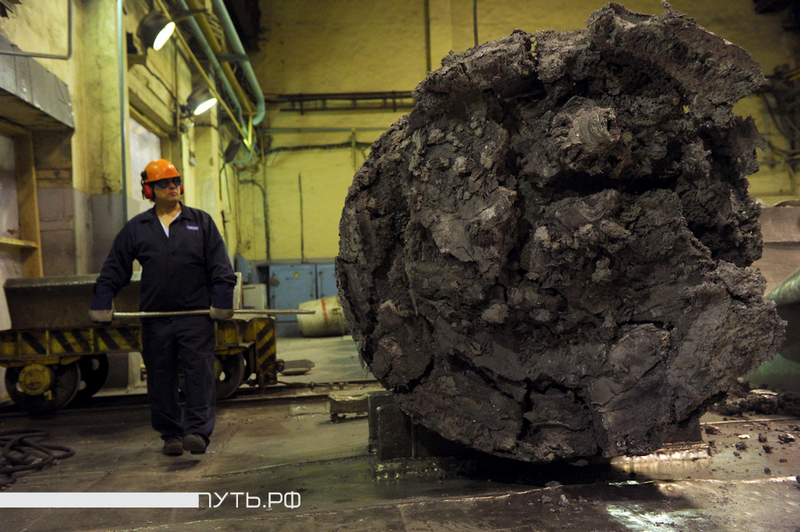 We are in the Perm region, at the chemical-metallurgic plant “AVISMA”, one of the largest world producers of titanium and magnesium. It looks like a spacecraft Without its products not a single Boeing or Airbus will take off Location: Perm … Read more...
We are in the Perm region, at the chemical-metallurgic plant “AVISMA”, one of the largest world producers of titanium and magnesium. It looks like a spacecraft Without its products not a single Boeing or Airbus will take off Location: Perm … Read more...
miércoles, 20 de junio de 2012
The first anniversary of the Sukhoi Superjet 100 commercial operations in Aeroflot
The first anniversary of the Sukhoi Superjet 100 commercial operations in Aeroflot
June 20, 2012, Moscow – A year ago, on June 16, 2011 Aeroflot – Russian Airlines put its first Sukhoi Superjet 100 aircraft MSN 95008 in commercial operations. The SSJ100 aircraft named after the outstanding soviet pilot Mikhail Vodopyanov and received tail number RA-89001 successfully performed its first commercial flight on route Moscow – St Petersburg.
In 2011 Aeroflot received and put in operation three additional SSJ100 aircraft (MSN 95010 & RA-89002, MSN 95011 & RA-89003 and MSN 95012 & RA-89004) in August, November and December respectively. In 2012 four aircraft (MSN 95015 & RA-89007, MSN 95013 & RA-89005, MSN 95016 & RA-89008 and MSN 95014 & RA-89006) joined the airline's fleet and started to perform revenue flights in January, March, April and May respectively. The acceptance of the ninth Aeroflot's aircraft (MSN 95017 & RA-89009) will start in Komsomolsk-on-the Amur this week. In 2012 Aeroflot plans to receive five additional Sukhoi Superjet 100 aircraft.
By June 15, 2012 eight SSJ100s of Aeroflot accumulated 6,865 flight hours in 3,710 revenue flights and carried more than 220,000 passengers. Aeroflot's SSJ100s performed scheduled flights from Moscow to 27 destinations in Russia (Anapa, Astrakhan, Volgograd, Yekaterinburg, Kazan, Nizhnevartovsk, Nizhnekamsk, Nizhny Novgorod, Orenburg, Perm, Samara, St Petersburg, Ufa and Chelyabinsk), Ukraine (Donetsk and Odessa), Belarus (Minsk) and Europe (Budapest, Bucharest, Vilnius, Dresden, Copenhagen, Krakow, Oslo, Sofia and Stockholm).
The best results in terms of monthly utilization were reached by aircraft MSN 95011 and MSN 95016 in May 2012 with a figure of 249 and 240 flight hours respectively. The biggest numbers of flights per month were performed by aircraft MSN 95010 and MSN 95008 in September and August 2011 and stood at 151 and 157 flights. The largest daily utilization reached 16 flight hours.
Aeroflot's SSJ100 operations showed that the aircraft is able to efficiently serve both regional routes with the high frequency of departure and short haul routes. The SSJ100 of Aeroflot was able to perform three return flights per day, achieving daily utilization over than 10 flight hours.
"We are positive in evaluating the first year of our SSJ100 operations taking in account the fact that Aeroflot applied same rigid requirements to the technical condition of the new Russian airliner as to the Airbus and Boeing aircraft currently in its fleet. While the aircraft went through the initial phase of operations, we paid particular attention to its overall performance. Taking into account the high quality standards of Aeroflot, we believe that the work aimed at further improving the technical support efficiency conducted by SCAC and its partners will definitely lead to an expansion of the operational performance of our growing SSJ100 fleet in the near future", noted Chief of the Aeroflot SSJ100 pilots team Evgeny Voronin.
"Sukhoi Superjet 100 is the new aircraft type, and we are satisfied with the results of the first year of operations of our aircraft with Aeroflot. These results achieved through joint efforts of Aeroflot, SCAC, SuperJet International and PowerJet sometimes exceeded those of many other new aircraft types in the first year of their commercial operations. For us it is important that the SSJ100 showed high safety rates for the new aircraft type and received positive feedback from Aeroflot pilots. We are continuously working on the enhancement of the production's quality and range of services to our operators", stressed President of Sukhoi Civil Aircraft Vladimir Prisyazhnyuk.
Activities to establish and enhance the after-sales support system have been carried out during the first year of operations. Over the last six months the implementation of the monitoring system of operations allowed to minimize a number of issues related to the aircraft acceptance, to reduce of three times the notes to the operational documentation, to optimize the spare parts' delivery time to 48 hours maximum and to heavily cut the troubleshooting time.
Training for the airline's flight and technician staff for the SSJ100 aircraft is an important field to be focused on. The whole training is accomplished by SuperJet International, the joint venture between Alenia Aermacchi and Sukhoi Holding, by the Training Center in Zhukovsky by applying the international aviation and safety standards. Up to date and since the beginning of the training courses in February 2011 47 AFL crews (94 pilots including 42 pilots without previous "glass cockpit" experience), 24 flight attendant-instructors and 118 engineering technical specialists (94 in 2011 and 24 in 2012) were trained. Within the end of 2012 additional 16 AFL flight crews and around 40 AFL technicians will be trained.
A Full Flight Simulator (FFS) will be delivered to the Aeroflot training center in Sheremetyevo in October 2012.
French Air Force Demos ASMPA Raid
French Air Force Demos ASMPA Raid:
 The French air force has, for the first time, conducted an end-to-end test of its strategic strike capability using the ASMPA cruise missile (but, obviously, not the nuclear warhead).
The ATR 42-600, certified by EASA
ATR, sole manufacturer of 50-seater regional aircraft, continues to invest in this niche market
Toulouse, 19 June 2012
ATR, manufacturer of turboprop aircraft, is pleased to announce that the ATR 42-600, new member of its family of airplanes, just obtained certification from the European Aviation Safety Agency (EASA). This certification, prior to the aircraft's entry into service and for the plane's new equipment, marks the end of a series of ground and in-flight tests which were performed on the ATR 42-600 prototype. It demonstrates ATR's willingness to continue investing in the 50-seater aircraft segment, a niche market for which it is the lone manufacturer.
Within the framework of the test campaign, the ATR 42-600 benefited from its similarity to the ATR 72-600, which was certified in May 2011. As for the ATR 72-600, all of the tests on the ATR 42-600 were used to validate that the new systems and equipment installed on board operate correctly, especially the new “glass cockpit” avionics suite with 5 LCD screens, new communication, navigation and monitoring systems, flight management system (FMS), automatic pilot, alert management and multi-purpose computer (MPC, which integrates aircraft maintenance and protection functions in particular).
Since the launch of the “-600” program in October 2007, ATR has already received orders for a total of 250 ATR 42-600 and ATR 72-600 aircraft.
Entry into service of the new ATR 42-600 is scheduled for summer 2012. The ATR 72-600, it has been in service since August 2011 and is currently operated by 7 airlines worldwide.
Filippo Bagnato, Chief Executive Officer of ATR, said: “We are very pleased to see that the entire ATR “-600” family is now ready to operate for our customers. Today we are the only manufacturer of 50-seater aircraft in the world and we estimate that, over the next twenty years, there will be a substantial potential market in this category. Therefore, we must offer the market an aircraft equipped with all the latest technology and the highest levels of comfort.
About the ATR 42-600:
Passenger capacity: 46 to 50 seats
Engines: Pratt & Whitney 127M
Maximum take-off power: 2400 horsepower per engine
Maximum take-off weight: 18,600 kg
Maximum load: 5,500 kg
Maximum flight range when fully loaded: 800 nautical miles (1,483 km)
About ATR:
Founded in 1981, ATR has become the world leader on the market for regional aircraft with 90 seats or less. Since its creation, ATR has sold approximately 1,200 aircraft to over 180 operators based in 91 countries. ATR planes have totaled over 21 million flight hours. ATR is an equal partnership between two major European aeronautics players, Alenia Aermacchi (a Finmeccanica Group company) and EADS. Its head office is in Toulouse. ATR is ISO 14001 certified. This is the international reference standard in the field for environmental friendliness.
For additional information, log on to www.atraircraft.com.
Trial flights of 'unmanned' aircraft begin in UK
Trial flights of 'unmanned' aircraft begin in UK - Zee News:
 Zee News | Trial flights of 'unmanned' aircraft begin in UK Melbourne: A plane that can be flown without a pilot is being tested in the UK ahead of its maiden flight later this year. Although it will be pilot-free during the tests, there will be people on board who will be able to take the controls if the need arises. The aim of the trials is to demonstrate to regulators such as the Civil Air Authority and air traffic control that such aircraft also known as Unmanned Aerial Vehicles (UAVs), will be able to be used safely in UK airspace, the Daily Telegraph reported. Plane without pilot to go on trial over UKPerth Now los 20 artículos informativos » |
Udega pujará por contratos de Embraer y Bombardier en Portugal y Marruecos
Udega pujará por contratos de Embraer y Bombardier en Portugal y ... - Faro de Vigo:
Udega pujará por contratos de Embraer y Bombardier en Portugal y ... Faro de Vigo La implantación de dos gigantes del sector aeronáutico como la brasileira Embraer en Portugal (en Évora) y la canadiense Bombardier en Marruecos ha animado a ocho empresas gallegas del automóvil y la metalurgia a fundar una nueva firma aeronáutica para aprovechar esta oportunidad de negocio. Udega (Unión de Empresas Gallegas de Aeronáutica) invertirá 10 millones de euros con el objetivo de conseguir contratos en estos países y en España (Airbus) y con la previsión de generar hasta 150 puestos de trabajo en 2013 (los ocho socios emplean a 400 personas). |
Un investigador de la ETSEIAT propone un nuevo sistema de propulsión para micro y nanosatélites
Un investigador de la ETSEIAT propone un nuevo sistema de propulsión para micro y nanosatélites:
Barcelona.- El profesor de la Escuela Técnica Superior de Ingenierías Industrial y Aeronáutica de Terrassa (ETSEIAT),en colaboración con Javier Díez, profesor de la Universidad de Rutgers (New Jersey), ha descubierto que es perfectamente viable utilizar el efecto electrocinético para propulsar microsatélites en el espacio.
Barcelona.- El profesor de la Escuela Técnica Superior de Ingenierías Industrial y Aeronáutica de Terrassa (ETSEIAT),en colaboración con Javier Díez, profesor de la Universidad de Rutgers (New Jersey), ha descubierto que es perfectamente viable utilizar el efecto electrocinético para propulsar microsatélites en el espacio.
Suscribirse a:
Entradas (Atom)