
miércoles, 24 de abril de 2019
New matchbox-sized radar in its way into impaired people, or unmanned moving devices to detect objects in real time.
Radar provides detailed information about the size, distance and speed of moving objects. However, for close-range applications, the transmitted radio waves must have short wavelengths to pick up as much detail as possible about its immediate environment. Such sensors could help visually impaired people, and unmanned moving devices, to see by translating radar reflections into useful information.
“Current radar modules are large and bulky. They also lose out on key details because they operate using long radio wavelengths,” says Seifallah Jardak , who worked on the project under the supervision of Sajid Ahmed and Mohamed-Slim Alouini from KAUST and along with Tero Kiuru and Mikko Metso from VTT. “We wanted to develop a low-power, portable radar. Colleagues at VTT brought the necessary experience in millimeter-wave and hardware design, while I focused on the signal processing side and developed modular radar software,” explains Jardak.
Continue reading https://discovery.kaust.edu.sa/en/article/791/tiny,-fast,-accurate-technology-on-the-radar
Paper: https://repository.kaust.edu.sa/handle/10754/631876
video: https://player.vimeo.com/video/307220053


Lockheed Martin Inaugurates F-16 Production Line in Greenville, South Carolina

press release
GREENVILLE, S.C., April 23, 2019 /PRNewswire/ -- Lockheed Martin (NYSE: LMT) hosted a ceremony to celebrate its new F-16 production line in Greenville, South Carolina. F-16 tooling and equipment previously in Fort Worth, Texas, has since been installed in a newly-refurbished hangar in Greenville, where the company will begin manufacturing F-16 Block 70 aircraft later this year.
"This is an exciting time as we celebrate another important milestone for the F-16 ‒ the world's most successful, combat-proven 4th generation fighter," said Michele Evans, executive vice president of Lockheed Martin Aeronautics. "The future is bright, and it begins right here in Greenville, South Carolina ‒ the new home of F-16 production."
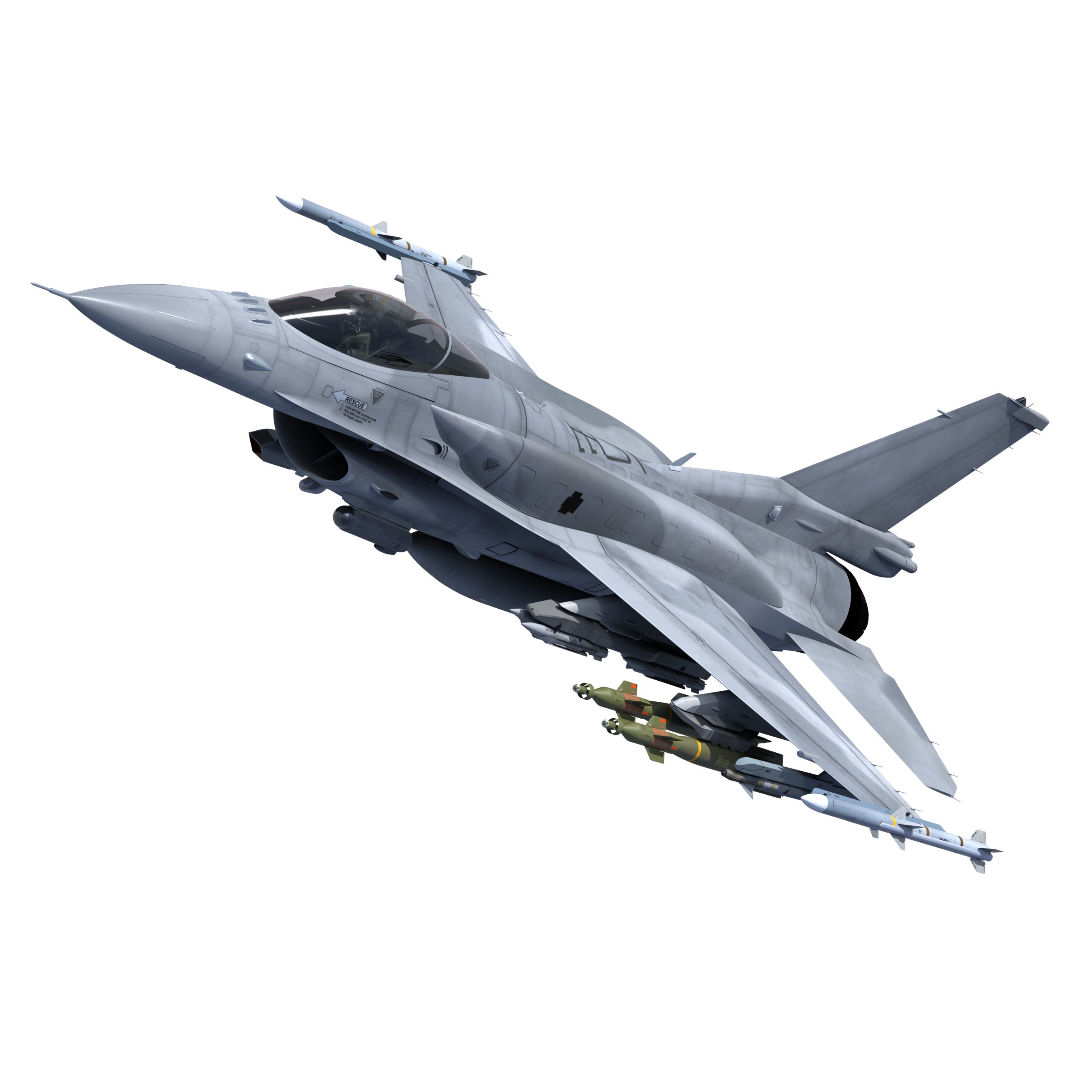
Lockheed Martin F-16 Block 70
Demand continues to soar for new production F-16s and F-16V upgrades. Bahrain became the first F-16 Block 70 customer in June 2018, Slovakia signed Letter of Agreement in Dec. 2018 for 14 Block 70 aircraft, and Bulgaria and the U.S. Government are currently negotiating Bulgaria's planned acquisition of new F-16 Block 70 aircraft. The U.S. State Department also recently approved the proposed sale of 25 new production F-16 Block 72 aircraft and F-16V upgrades for Morocco.
"This is a great day for Greenville and South Carolina," said U.S. Sen. Lindsey Graham of South Carolina. "We have the best workforce in the country and now we are going to build the most advanced F-16 ever right here in the Palmetto State."
"South Carolina's workforce is second to none, and the fact that Lockheed Martin continues to invest and put its faith in South Carolinians to build the newest F-16s in Greenville speaks volumes about our state and the company," said South Carolina Governor Henry McMaster. "Every person who calls South Carolina home should be proud that the F-16 is made right here in the Palmetto state."
More than 400 new jobs will be created to support the F-16 production line in Greenville. F-16 production also supports hundreds of U.S.-based Lockheed Martin engineering, procurement, sustainment and customer support jobs and thousands of U.S. supplier jobs. A significant portion of F-16 production occurs in the supply chain, which currently includes more than 400 U.S. suppliers in 41 states.
To date, 4,588 F-16s have been produced, and there are approximately 3,000 operational F-16s are in service today in 25 countries.
For additional information, visit: lockheedmartin.com/f16
About Lockheed Martin
Headquartered in Bethesda, Maryland, Lockheed Martin is a global security and aerospace company that employs approximately 105,000 people worldwide and is principally engaged in the research, design, development, manufacture, integration and sustainment of advanced technology systems, products and services.
SOURCE Lockheed Martin Aeronautics Company
Airbus and ZF to develop highly precise end-to-end autonomous driving solution

press release
Airbus Defence and Space and ZF Friedrichshafen AG, a system provider for mobility, are collaborating to enrich and complement ZF on-board system to enhance autonomous driving by using Airbus satellite derived information.
Under this collaboration, Airbus and ZF are combining their capabilities and expertise to offer a reliable end-to-end solution for self-driving and self-positioning vehicles. To answer the extreme level of accuracy required, Airbus provides its unique high precise Ground Control Points (GCPs), calculated using radar satellite imagery, to support the fusion of ZF sensor data such as Lidar and Radar. In addition, the GCPs serve as independent data source to improve and validate the accuracy of mobile mapping data.
Furthermore Airbus investigates generation of High Definition maps (HD maps) based on aerial and space borne approach, to complement ZF semantic cards. HD Maps are key to ensure the guiding route, as they build an important link between mobile mapping data and global positioning systems. They contain more information than just the road itself, as lanes, the radius of curves, lane widths, street signs, bridges, and buildings, as well as their distance from one another. Both remote sensed information GCPs and HD maps will be integrated as foundation layers into the “ZF AD Environment” – an enhanced HD maps solution ZF will present soon – where all needed information for autonomous driving will be implemented in a cloud based system.
Autonomous driving is a new, enthusing and challenging market for Airbus, as the highest level of autonomy requires the highest maps precision.
* * *
About Airbus
Airbus is a global leader in aeronautics, space and related services. In 2018 it generated revenues of € 64 billion and employed a workforce of around 134,000. Airbus offers the most comprehensive range of passenger airliners. Airbus is also a European leader providing tanker, combat, transport and mission aircraft, as well as one of the world’s leading space companies. In helicopters, Airbus provides the most efficient civil and military rotorcraft solutions worldwide.
About ZF Friedrichshafen AG
ZF is a global technology company and supplies systems for passenger cars, commercial vehicles and industrial technology, enabling the next generation of mobility. With its comprehensive technology portfolio, the company offers integrated solutions for established vehicle manufacturers, mobility providers and start-up companies in the fields of transportation and mobility. ZF continually enhances its systems in the areas of digital connectivity and automation in order to allow vehicles to see, think and act. In 2018, ZF achieved sales of €36.9 billion. The company has a global workforce of 149,000 with approximately 230 locations in 40 countries.
martes, 23 de abril de 2019
Russia develops super heavy 500-ton Elephant transport aircraft - YouTube
https://m.youtube.com/watch?v=7W9qIrKX6yo&feature=youtu.be
Text quoted below copied from YouTube video description
«Publicado el 10 abr. 2019
Russian aircraft designers develop a new jumbo cargo aircraft that would be comparable in size to the legendary Antonov An-124 Ruslan.
The development of the new airplane is being carried out by the Federal State Unitary Enterprise Central Aerohydrodynamic Institute named after Professor Zhukovsky. So far the aircraft exists in the form of a conceptual design.
The aircraft is called Slon, which translates from Russian into English as Elephant.
The aircraft will be built on the aerodynamic scheme with high-lying extra long wings and one keel. The entire fuselage of the new aircraft will serve as the transport compartment.
The construction of an additional deck can also be possible, which can make the Elephant a flying double-decker. The Slon will take off with the help of four dual-turbojet engines. The cargo compartment will be 5.2 meters hight from floor to ceiling. It will be 6.3 meters wide.
Two decks will enable the aircraft to transport both military equipment and the crew. Tanks and armored personnel carriers will be placed in the cargo compartment, and up to 400 soldiers will be accommodated on the upper deck.
The empty aircraft will weigh 214-222 tons. It will be able to take 150 tons of cargo. One will need 150 tons of kerosene to fill the tanks of the jumbo jet. The maximum weight of the aircraft may thus make up 500 tons. The speed of the aircraft in flight will be 800-850 km/h. The maximum flight range of the aircraft with cargo on board will be nearly 8,000 km. An empty airplane will be able to fly for almost 19 thousand kilometers.
»
Raytheon's new DeepStrike missile rocket motor passes critical test
pr
ROCKET CENTER, W.Va., April 23, 2019 /PRNewswire/ -- Raytheon Company (NYSE: RTN) completed a successful static test of the new DeepStrike® missile rocket motor, which moved the advanced, surface-to-surface weapon closer to its maiden flight test later this year.
The company is offering the DeepStrike missile for the U.S. Army's Precision Strike Missile, or PrSM, program to replace the aging Army Tactical Missile System that is approaching the end of its service life.
"Testing shows us how initial data assessments line up and validates them for the next phase in development," said Dr. Thomas Bussing, Raytheon Advanced Missile Systems vice president. "This test confirms our design for the DeepStrike propulsion system is solid and moves us one step closer to extending the Army's reach and doubling the load-out of long-range fires."
The rocket motor test at Allegany Ballistics Laboratory in West Virginia is the latest in a series of milestones for the DeepStrike missile. Raytheon recently concluded a successful preliminary design review for the weapon.
Raytheon's new, long-range precision strike missile features an innovative, two-in-the-pod design and will fly farther, faster, and give the Army twice the firepower at half the cost per missile. It is also more maneuverable and has a modular, open architecture to simplify system upgrades.
"With our expertise in advanced weapon systems, Raytheon is best positioned to provide an affordable, low-risk solution that gives the Army an overwhelming advantage over our nation's adversaries," Bussing said.
The DeepStrike missile will defeat fixed land targets 60-499 kilometers away, and get there faster than current systems.
About Raytheon
Raytheon Company, with 2018 sales of $27 billion and 67,000 employees, is a technology and innovation leader specializing in defense, civil government and cybersecurity solutions. With a history of innovation spanning 97 years, Raytheon provides state-of-the-art electronics, mission systems integration, C5I™ products and services, sensing, effects and mission support for customers in more than 80 countries. Raytheon is headquartered in Waltham, Massachusetts. Follow us on Twitter.
Embraer Praetor 600 Business Jet Outperforms on Certification
corporate news
04/18/2019
Embraer Praetor 600 Business Jet Outperforms on Certification São Paulo, Brazil, April 18, 2019 – Embraer announces that the company’s new Praetor 600 super-midsize business jet was granted its Type Certificate by Brazil’s Civil Aviation Authority (ANAC—Agência Nacional de Aviação Civil), having been announced in October 2018 at NBAA-BACE and becoming the only super-midsize business jet to be certified since 2014. The Praetor 600 is the best performing super-midsize jet ever developed, surpassing all its main design goals and becoming capable of flying beyond 4,000 nautical miles in long-range cruise speed or beyond 3,700 nautical miles at Mach .80 from runways shorter than 4,500ft, complemented by an outstanding payload capability. “Our engineering and program teams have outperformed again by passionately designing, developing and certifying the class-leading Praetor 600 business jet, exceeding specifications and expectations, and ahead of schedule,” said Paulo César Souza e Silva, Embraer CEO. “This advanced aircraft reflects not only our journey of innovation, it is also a preview of the future of this great company.” “The most disruptive and technologically advanced super-midsize business jet has arrived. The Praetor 600 will fascinate our customers with the highest performance, technology and comfort in its class and raise the customer experience to an unprecedented level,” said Michael Amalfitano, President & CEO, Embraer Executive Jets. “I want to thank and congratulate the Embraer family for bringing to market an aircraft that will create true value for customers and shareholders alike.” The Praetor 600 is now the farthest-flying super-midsize jet, able to make nonstop flights between London and New York, São Paulo and Miami, Dubai and London. With four passengers and NBAA IFR Reserves, the Praetor 600 has an intercontinental range of 4,018 nautical miles (7,441 km). Take Off Field Length for such a mission is only 4,436 ft (1,352 m). At M0.80, range is 3,719 nm (6,887 km) with four passengers and NBBA IFR Reserves. The Praetor 600 is the first super-midsize jet with full fly-by-wire technology, which powers the Active Turbulence Reduction that not only makes every flight the smoothest but also the most efficient possible. The Embraer DNA Design interior eloquently explores every dimension of the only super-midsize to feature a six-foot-tall, flat-floor cabin, stone flooring and a vacuum service lavatory, all in the same certified aircraft. The class-exclusive Active Turbulence Reduction and 5,800-foot cabin altitude, complemented by a whisper silent cabin, have set the highest standards in customer experience in the super-midsize category. In addition to the full-service galley and a wardrobe, eight fully reclining club seats may be berthed into four beds, and the baggage space is the largest in the class. Advanced technology throughout the cabin is also a trait of the Embraer DNA Design, beginning with the industry-exclusive Upper Tech Panel that displays flight information and offers cabin management features also available on personal devices through Honeywell Ovation Select. High-capacity, ultra high-speed connectivity for all aboard is available through Viasat’s Ka-band, with speeds of up to 16Mbps and unlimited streaming, another industry-exclusive in super-midsize jets. The Praetor 600 features Collins Aerospace’s newest edition of the acclaimed Pro Line Fusion flight deck. Capabilities such as the industry-first vertical weather display, air-traffic-control-like situational awareness with ADSB-IN, predictive wind shear radar capability, as well as Embraer Enhanced Vision System (E2VS) with a Head-up Display (HUD) and an Enhanced Video System (EVS), an Inertial Reference System (IRS) and a Synthetic Vision Guidance System (SVGS) are some of the highlights on the Praetor 600 flight deck.
04/18/2019
Embraer Praetor 600 Business Jet Outperforms on Certification São Paulo, Brazil, April 18, 2019 – Embraer announces that the company’s new Praetor 600 super-midsize business jet was granted its Type Certificate by Brazil’s Civil Aviation Authority (ANAC—Agência Nacional de Aviação Civil), having been announced in October 2018 at NBAA-BACE and becoming the only super-midsize business jet to be certified since 2014. The Praetor 600 is the best performing super-midsize jet ever developed, surpassing all its main design goals and becoming capable of flying beyond 4,000 nautical miles in long-range cruise speed or beyond 3,700 nautical miles at Mach .80 from runways shorter than 4,500ft, complemented by an outstanding payload capability. “Our engineering and program teams have outperformed again by passionately designing, developing and certifying the class-leading Praetor 600 business jet, exceeding specifications and expectations, and ahead of schedule,” said Paulo César Souza e Silva, Embraer CEO. “This advanced aircraft reflects not only our journey of innovation, it is also a preview of the future of this great company.” “The most disruptive and technologically advanced super-midsize business jet has arrived. The Praetor 600 will fascinate our customers with the highest performance, technology and comfort in its class and raise the customer experience to an unprecedented level,” said Michael Amalfitano, President & CEO, Embraer Executive Jets. “I want to thank and congratulate the Embraer family for bringing to market an aircraft that will create true value for customers and shareholders alike.” The Praetor 600 is now the farthest-flying super-midsize jet, able to make nonstop flights between London and New York, São Paulo and Miami, Dubai and London. With four passengers and NBAA IFR Reserves, the Praetor 600 has an intercontinental range of 4,018 nautical miles (7,441 km). Take Off Field Length for such a mission is only 4,436 ft (1,352 m). At M0.80, range is 3,719 nm (6,887 km) with four passengers and NBBA IFR Reserves. The Praetor 600 is the first super-midsize jet with full fly-by-wire technology, which powers the Active Turbulence Reduction that not only makes every flight the smoothest but also the most efficient possible. The Embraer DNA Design interior eloquently explores every dimension of the only super-midsize to feature a six-foot-tall, flat-floor cabin, stone flooring and a vacuum service lavatory, all in the same certified aircraft. The class-exclusive Active Turbulence Reduction and 5,800-foot cabin altitude, complemented by a whisper silent cabin, have set the highest standards in customer experience in the super-midsize category. In addition to the full-service galley and a wardrobe, eight fully reclining club seats may be berthed into four beds, and the baggage space is the largest in the class. Advanced technology throughout the cabin is also a trait of the Embraer DNA Design, beginning with the industry-exclusive Upper Tech Panel that displays flight information and offers cabin management features also available on personal devices through Honeywell Ovation Select. High-capacity, ultra high-speed connectivity for all aboard is available through Viasat’s Ka-band, with speeds of up to 16Mbps and unlimited streaming, another industry-exclusive in super-midsize jets. The Praetor 600 features Collins Aerospace’s newest edition of the acclaimed Pro Line Fusion flight deck. Capabilities such as the industry-first vertical weather display, air-traffic-control-like situational awareness with ADSB-IN, predictive wind shear radar capability, as well as Embraer Enhanced Vision System (E2VS) with a Head-up Display (HUD) and an Enhanced Video System (EVS), an Inertial Reference System (IRS) and a Synthetic Vision Guidance System (SVGS) are some of the highlights on the Praetor 600 flight deck.
From Canada to Argentina with a Tecnam P2006T

press release
Hours on a normal arirline, The real rout is with stopovers, crossing from Florida.
Great adventure for Francisco Martire and his copilot Matias Gaitan flying from CYBW Canada to SAAR Argentina with the Tecnam P2006t LV-GUY. More than 7200 mn flying over the Carribean and South America. It is a guinnes record, the longest trip for P2006T made on the american continent.
Airbus selects seven finalist teams to shape the future of aerospaceAirbus selects seven finalist teams to shape the future of aerospace
Press Release
Airbus experts have selected seven teams for the 2019 final of world-class competition Fly Your Ideas which invites students from around the world to innovate in key areas for the industry: Electrification, Data Services, Cyber Security, Internet of Things, Artificial Intelligence and Mixed Reality. The finalist teams were selected after a three-month development phase working with support from Airbus mentors.
Fly Your Ideas gives students the opportunity to develop exceptional or radical ideas for tomorrow's aerospace industry. The selected concepts represent a range of trendsetting topics such as a ‘Smart Wheelchair’ for air travel or a ‘Solar Windmill’.
The finalist team members represent 11 countries (Argentina, Germany, Greece, India, Indonesia, Italy, Japan, Moldavia, Netherlands, Norway, United Kingdom), 8 different universities and were selected from over 270 entries worldwide. Their academic backgrounds vary from Engineering to Information Technology and Natural Sciences to Finance.
In June, the teams will travel to Toulouse, France to work in Airbus' innovation and R&D facilities to further develop, prototype or visualise their ideas using state-of-the-art equipment with support from Airbus. On 27th June, the students will present their projects in front of Airbus experts and personalities from the aerospace and academic world, live-streamed in parallel to a global audience.
The students, competing for a share of the €45,000 prize fund and the chance to further evolve their idea in the aerospace industry, are clearly motivated by the digital nature of this year’s challenge, and the chance to change the world with their ideas.
The seven finalist teams are:
Teams will share project updates, photos, sketches and stories using #flyyourideas with their posts captured on the social wall of the competition website.
Airbus Fly Your Ideas is a global competition challenging students worldwide to innovate for the future of aerospace, designed and launched by Airbus in 2008 and organised in partnership with UNESCO since 2012. Since 2008, over 22,000 students have registered for Fly Your Ideas from over 700 universities and 100 countries worldwide, with more than 500 Airbus employees contributing their mentorship and expertise to support the competition.
For more details and information on the finalists, please visit www.airbus-fyi.com.
Key figures Fly Your Ideas 2019:
o Number of universities involved: 284
o Top 5 countries: India – 43 teams, China & HK – 17 teams, France – 16 teams,
Iran – 15 teams, United Kingdom – 15 teams
o Gender mix: 47% of teams mix male and female students
· Finalist universities involved
o University of Cambridge, UK (two teams)
o University of Strathclyde, UK
o Delft University of Technology, Netherlands
o National University of La Plata, University of Buenos Aires and National University of the Centre of the Province of Buenos Aires, Argentina (all in one team)
o Technical University of Milan, Italy
o Saarland University, Germany
Fly Your Ideas competition – since the 2008 launch:
· 6 competitions in 2009, 2011, 2013, 2015, 2017 and 2019
· Partnership with UNESCO since 2012
· More than 100 countries represented
· Over 700 universities supporting
· More than 22,000 students registered
· Over 500 Airbus staff involved
· 1,900+ ideas submitted
Airbus experts have selected seven teams for the 2019 final of world-class competition Fly Your Ideas which invites students from around the world to innovate in key areas for the industry: Electrification, Data Services, Cyber Security, Internet of Things, Artificial Intelligence and Mixed Reality. The finalist teams were selected after a three-month development phase working with support from Airbus mentors.
Fly Your Ideas gives students the opportunity to develop exceptional or radical ideas for tomorrow's aerospace industry. The selected concepts represent a range of trendsetting topics such as a ‘Smart Wheelchair’ for air travel or a ‘Solar Windmill’.
The finalist team members represent 11 countries (Argentina, Germany, Greece, India, Indonesia, Italy, Japan, Moldavia, Netherlands, Norway, United Kingdom), 8 different universities and were selected from over 270 entries worldwide. Their academic backgrounds vary from Engineering to Information Technology and Natural Sciences to Finance.
In June, the teams will travel to Toulouse, France to work in Airbus' innovation and R&D facilities to further develop, prototype or visualise their ideas using state-of-the-art equipment with support from Airbus. On 27th June, the students will present their projects in front of Airbus experts and personalities from the aerospace and academic world, live-streamed in parallel to a global audience.
The students, competing for a share of the €45,000 prize fund and the chance to further evolve their idea in the aerospace industry, are clearly motivated by the digital nature of this year’s challenge, and the chance to change the world with their ideas.
The seven finalist teams are:
- Airbus Integrated Fisheries Information Services (Data Services Challenge) – Team AirFish, University of Cambridge, UK. AirFish is an ocean monitoring system using satellite imagery and video imaging technology. It can help governments combat illegal fishing, reduce bycatch of endangered species, and generally decrease damages to the marine habitat. This project aims to improve the efficiency of fish farming, making food production more affordable whilst reducing open-water fishing and thus environmental impacts.
- Automated Intelligent Real-Time Quality Inspection Exploiting Human-Robot-Collaboration (Artificial Intelligence Challenge) - Team AIQinspect, Saarland University, Germany. AIQinspect will assist the human operator in performing rivet inspection by using Artificial Intelligence. Quality is predicted based on images and physical parameters while riveting in real time. The resulting information is communicated to the operator via Augmented Reality.
- Batteryless Wireless Switches for Airplanes (Internet of Things Challenge) - Team “Zero” Heroes, Delft University of Technology, Netherlands.Application of wireless systems in aircraft instead of traditional wired systems. This idea solves the main limitation for IoT in aircraft by removing battery integration - a current challenge for safety and regulation. Furthermore it reduces fuel consumption and weight while simplifying aircraft retrofit and maintenance needs.
- Motor Intra-body Cooling System - MICS (Electrification Challenge) - Team Osprey, University of Strathclyde, UK. Replacing the traditional method of cooling electric motors with a water jacket or submerged cooling with a cooling system integrated inside the body of the motor itself. This project has the potential to provide mass effective motors for future Urban Air Mobility and Hybrid Electric aircraft.
- The Solar Windmill (Electrification Challenge) - Team Seren, University of Cambridge, UK. A novel method of electricity generation for spacecraft using trapped high energy particles. Using two concentric aluminium spheres, the energetic electrons flux from solar wind trapped in planetary magnetic fields can be collected and harnessed to generate power. This innovative approach aims to store and generate energy in deep space where the current density from sunlight is low.
- Swan – Smart Wheelchair for Air travel Needs (Internet of Things Challenge) - Team Move-ez, Technical University of Milan, Italy.SWAN is an innovation that aims to revolutionize the air-travel experience of Passengers with Reduced Mobility (PRM) using IoT technology. It converts a redesigned class of detachable airplane seats into smart electric wheelchairs that passengers can use from check-in to arrival. It is fully controllable by smartphone through a dedicated app.
- V.A.C.A. - Earth-obserVation-data based Application for stoCkbreeding Administration (Data Services Challenge) - Team V.A.C.A, National University of La Plata, Argentina VACA is an integrated service for stockbreeders, based on Earth observation, meteorological and IoT data applied to agriculture. VACA aims to provide actionable information to stockbreeders on quality and quantity of pastures, number of animals in paddocks as well as the physical condition of cattle.
Teams will share project updates, photos, sketches and stories using #flyyourideas with their posts captured on the social wall of the competition website.
Airbus Fly Your Ideas is a global competition challenging students worldwide to innovate for the future of aerospace, designed and launched by Airbus in 2008 and organised in partnership with UNESCO since 2012. Since 2008, over 22,000 students have registered for Fly Your Ideas from over 700 universities and 100 countries worldwide, with more than 500 Airbus employees contributing their mentorship and expertise to support the competition.
For more details and information on the finalists, please visit www.airbus-fyi.com.
Key figures Fly Your Ideas 2019:
· Number of ideas submitted: 270
o Number of countries involved: 72 (80 nationalities)o Number of universities involved: 284
o Top 5 countries: India – 43 teams, China & HK – 17 teams, France – 16 teams,
Iran – 15 teams, United Kingdom – 15 teams
o Gender mix: 47% of teams mix male and female students
· Finalist universities involved
o University of Cambridge, UK (two teams)
o University of Strathclyde, UK
o Delft University of Technology, Netherlands
o National University of La Plata, University of Buenos Aires and National University of the Centre of the Province of Buenos Aires, Argentina (all in one team)
o Technical University of Milan, Italy
o Saarland University, Germany
Fly Your Ideas competition – since the 2008 launch:
· 6 competitions in 2009, 2011, 2013, 2015, 2017 and 2019
· Partnership with UNESCO since 2012
· More than 100 countries represented
· Over 700 universities supporting
· More than 22,000 students registered
· Over 500 Airbus staff involved
· 1,900+ ideas submitted
lunes, 22 de abril de 2019
What NASA’s twin study actually taught us about living in space
Twin studies are the closest scientists can get to putting a person in two places at once. But they are also hard to come by: Identical twins are relatively rare (just three to four per thousand births worldwide). Even rarer are identical twin pairs that are astronauts. In fact, right now, just o...
http://flip.it/501LrF
Enviado a través de Flipboard
http://flip.it/501LrF
Enviado a través de Flipboard
Looks Like Poland Wants To Replace Its Soviet-era MiG-29 And Su-22 Jets With The F-35 At Any Cost
Looks Like Poland Wants To Replace Its Soviet-era MiG-29 And Su-22 Jets With The F-35 At Any Cost https://theaviationist.com/2019/04/20/looks-like-poland-wants-to-replace-its-soviet-era-mig-29-and-su-22-jets-with-the-f-35-at-any-cost/
MagniX to supply Eviation Alice motors as all-electric advances
MagniX to supply Eviation Alice motors as all-electric advances http://www.flightglobal.com/news/articles/magnix-to-supply-eviation-alice-motors-as-all-electr-457593/
Embraer X, Airbus Lay Out eVTOL Design Considerations
Embraer X, Airbus Lay Out eVTOL Design Considerations https://www.ainonline.com/aviation-news/business-aviation/2019-04-18/embraer-x-airbus-lay-out-evtol-design-considerations
Used Business Aircraft Fleet Value Primed For Decline
Used Business Aircraft Fleet Value Primed For Decline https://www.ainonline.com/aviation-news/business-aviation/2019-04-22/used-business-aircraft-fleet-value-primed-decline
domingo, 21 de abril de 2019
martes, 16 de abril de 2019
lunes, 15 de abril de 2019
Rolls-Royce Reveals Blade Problems in Newest Engine
Rolls-Royce Reveals Blade Problems in Newest Engine https://www.mro-network.com/manufacturing-distribution/rolls-royce-reveals-blade-problems-newest-engine
Wildcat strike of Tunisair employees; three days of flight disruptions
Wildcat strike of Tunisair employees; three days of flight disruptions https://www.aviation24.be/airlines/tunisair/wildcat-strike-employees-three-days-flight-disruptions/
Spanish union calls for strike at Air Nostrum during Easter travel season, affecting also Brussels Airlines’ flights
Spanish union calls for strike at Air Nostrum during Easter travel season, affecting also Brussels Airlines' flights https://www.aviation24.be/miscellaneous/strike-action/spanish-union-calls-for-strike-at-air-nostrum-during-easter-travel-season-affecting-also-brussels-airlines-flights/
1,100 Jet Airways pilots have decided not to fly from tomorrow to protest against pending salaries
1,100 Jet Airways pilots have decided not to fly from tomorrow to protest against pending salaries https://www.aviation24.be/airlines/jet-airways/1100-jet-airways-pilots-have-decided-not-to-fly-from-tomorrow-to-protest-against-pending-salaries/
A taste of AERO Friedrichshafen
https://www.pilotweb.aero/news/a-taste-of-aero-friedrichshafen-1-5992820
https://www.aviation24.be/manufacturers/sonaca/sonaca-aircraft-to-unveil-the-sonaca-200-trainer-pro-at-the-aero-friedrichshafen-exhibition/
https://www.aopa.org/news-and-media/all-news/2019/april/11/continental-brings-jet-a-power-to-da-50
https://www.aopa.org/news-and-media/all-news/2019/april/11/orders-for-eflyer-hit-300
https://www.aopa.org/news-and-media/all-news/2019/april/11/the-new-junkers-f13
https://www.aopa.org/news-and-media/all-news/2019/april/11/tecnam-debuts-new-p2002jf-p92-echo-mkii
https://www.aopa.org/news-and-media/all-news/2019/april/11/flight-design-goes-big-with-f2-f4
https://www.aopa.org/news-and-media/all-news/2019/april/12/horten-flying-wing-displayed-at-aero
https://www.tecnam.com/slider-home-en/three-new-models-at-aero-19-friedrichshafen/
https://www.aviation24.be/manufacturers/sonaca/sonaca-aircraft-to-unveil-the-sonaca-200-trainer-pro-at-the-aero-friedrichshafen-exhibition/
https://www.aopa.org/news-and-media/all-news/2019/april/11/continental-brings-jet-a-power-to-da-50
https://www.aopa.org/news-and-media/all-news/2019/april/11/orders-for-eflyer-hit-300
https://www.aopa.org/news-and-media/all-news/2019/april/11/the-new-junkers-f13
https://www.aopa.org/news-and-media/all-news/2019/april/11/tecnam-debuts-new-p2002jf-p92-echo-mkii
https://www.aopa.org/news-and-media/all-news/2019/april/11/flight-design-goes-big-with-f2-f4
https://www.aopa.org/news-and-media/all-news/2019/april/12/horten-flying-wing-displayed-at-aero
https://www.tecnam.com/slider-home-en/three-new-models-at-aero-19-friedrichshafen/
sábado, 13 de abril de 2019
viernes, 12 de abril de 2019
Northrop Grumman Gets $3.1Bln US Navy Order for 24 E-2D Hawkeye Command Aircraft
Northrop Grumman Gets $3.1Bln US Navy Order for 24 E-2D Hawkeye Command Aircraft http://aviationnews.eu/news/2019/04/northrop-grumman-gets-3-1bln-us-navy-order-for-24-e-2d-hawkeye-command-aircraft/
Sonaca Adds Second Trainer with Glass Flight Deck
Sonaca Adds Second Trainer with Glass Flight Deck https://www.ainonline.com/aviation-news/general-aviation/2019-04-12/sonaca-adds-second-trainer-glass-flight-deck
Flight Design Developing New 'Modular' Aircraft Family
Flight Design Developing New 'Modular' Aircraft Family https://www.ainonline.com/aviation-news/general-aviation/2019-04-11/flight-design-developing-new-modular-aircraft-family
Israel's Beresheet spacecraft crashes on Moon
The first privately funded mission to the Moon has crashed on the lunar surface after the apparent failure of its main engine.
http://flip.it/lRXC9V
Enviado a través de Flipboard
http://flip.it/lRXC9V
Enviado a través de Flipboard
Light helos target Australian special forces opportunity
Light helos target Australian special forces opportunity http://www.flightglobal.com/news/articles/light-helos-target-australian-special-forces-opport-457429/
US Marine Corps to add more autonomy to Kaman K-Max helicopters
US Marine Corps to add more autonomy to Kaman K-Max helicopters http://www.flightglobal.com/news/articles/us-marine-corps-to-add-more-autonomy-to-kaman-k-max-457411/
Norway’s OSM Aviation orders 60 electric planes to cut training costs
Norway's OSM Aviation orders 60 electric planes to cut training costs http://aviationnews.eu/news/2019/04/norways-osm-aviation-orders-60-electric-planes-to-cut-training-costs/
Sonaca Aircraft to unveil the Sonaca 200 Trainer Pro at the Aero Friedrichshafen exhibition
Sonaca Aircraft to unveil the Sonaca 200 Trainer Pro at the Aero Friedrichshafen exhibition https://www.aviation24.be/manufacturers/sonaca/sonaca-aircraft-to-unveil-the-sonaca-200-trainer-pro-at-the-aero-friedrichshafen-exhibition/
Drone-to-home Delivery Service Begins in Australia
Drone-to-home Delivery Service Begins in Australia https://www.ainonline.com/aviation-news/general-aviation/2019-04-10/drone-home-delivery-service-begins-australia
AutoFlightX Takes Wraps off All-electric Demonstrator
AutoFlightX Takes Wraps off All-electric Demonstrator https://www.ainonline.com/aviation-news/general-aviation/2019-04-10/autoflightx-takes-wraps-all-electric-demonstrator
Rotax Releases New 915 iS Service Bulletin
Rotax Releases New 915 iS Service Bulletin http://www.aero-news.net/index.cfm?do=main.textpost&id=c2f4ac99-5a05-4913-ad2e-8197894b72e1
Daher Introduces Me & My TBM V3 At AERO Friedrichshafen 2019
Daher Introduces Me & My TBM V3 At AERO Friedrichshafen 2019 http://www.aero-news.net/index.cfm?do=main.textpost&id=354f3486-4598-4359-bdd1-f6e53934b77d
SpaceX nails triple rocket landing following Falcon Heavy's first commercial launch
SpaceX nails triple rocket landing following Falcon Heavy's first commercial launch https://newatlas.com/arabsat-6a-heavy-falcon-launch/59259/
jueves, 11 de abril de 2019
Ford funds study on eVTOL commuting emissions, and it doesn't go well for Ford
Ford funds study on eVTOL commuting emissions, and it doesn't go well for Ford https://newatlas.com/evtol-commuting-emissions/59245/
Conferencias en AEROSPORT 2019
http://firaigualada.mailrelay-iv.es/mailing/148049/304.html
|









La Sabca est à vendre | L'Echo
Le français Dassault veut vendre sa participation (96,85%) dans l'équipementier aéronautique belge Sabca, a annoncé le groupe dans un communiqué ce mercredi soir.
miércoles, 10 de abril de 2019
AERO Kicks Off with Record Number of Exhibitors
press release
The AERO exhibition is set to kick off with a record number of exhibitors. With 757 exhibitors from 40 countries, this is the largest the international aviation exhibition at Lake Constance has ever been. The proportion of foreign exhibitors is also unprecedented, with every second exhibitor coming from abroad. Messe Friedrichshafen CEO Klaus Wellmann, head of AERO Roland Bosch and project lead Tobias Bretzel reported ahead of the trade fair that it would feature 50 more exhibitors than in 2017, when the previous record of 707 was set. This represents an increase of seven percent. Every company of significance in general aviation will be in attendance at the fair on the shores of Lake Constance. "The AERO in Friedrichshafen is Europe's largest exhibition for general aviation, and with regard to innovations and premieres, it's the industry's foremost exhibition in the world," said Klaus Wellmann in a press conference.
Even the day before the official opening of the 27th international aviation exhibition AERO (10 to 13 Apr 2019), it presented a few highlights during a media tour. The focus was on modern electric propulsion systems, gliders and motorized aircraft as well as sleek machines for business aviation that drew a lot of attention.
Until Saturday, April 13, the AERO in Friedrichshafen will be presenting many other aircraft from the area of general aviation, too. This category includes all civilian motorized aircraft, helicopters, gliders and sailplanes, ultralights and business jets not used in scheduled or chartered air traffic. One trend at the exhibition is the development of quiet, environmentally friendly electric aircraft.
The hybrid-electric propulsion systems from Siemens eAircraft presented during the media tour are one answer to the challenges facing the aviation industry in the future. They allow the use of alternative energy sources for propulsion. In addition, according to Siemens eAircraft, the physical separation of propulsion from energy generation in hybrid electric aircraft opens up entirely new prospects in aircraft design. That's why the booth of the company features multiple different electric aircraft, all of which are already flying with the help of their hybrid electric propulsion systems.
An entirely new and unusual-looking aircraft to be featured at the AERO is a "flying wing" made by Horten Aircraft from Eisenach, Germany. As the name implies, the design lacks a tail assembly and a definite fuselage, with the pilot's cabin housed inside the airfoil. The improved aerodynamics of this configuration result in lower fuel consumption and thus increased range compared to conventional designs. The two-seater Horten HX-2 is already flying. It comes equipped with a four-cylinder engine that produces 100 horsepower. The choice of Horten Aircraft's company name was quite deliberate: It hearkens back to the Horten brothers of Germany, who first popularized the concept of the flying wing with their gliders of the 1930s.
Junkers Flugzeugwerke AG from Dübendorf is one of the Swiss aircraft makers represented at the AERO. This young company is currently building their second replica of the six-seater Junkers F13, the first all-metal transport plane, which was first constructed in the year 1919. The first F13 replica from Dübendorf is already flying. Working from the original blueprints, they hope to produce at least five units of this classic open-cockpit design. The Junkers booth also features a WACO YMF, a brand-new biplane in the style of the 1930s. The three-seater WACO is available for purchase in both VFR and IFR versions.
Boasting a maximum speed of 610 km/h (330 knots), the new model TBM 940 of the French aircraft maker DAHER is one of the fastest single-turboprop planes in the world. Approved for instrument flying and now also equipped with a fully automatic deicing system for the wings, the TBM 940 can fly in any weather, just like an airliner. As DAHER's top-of-the-line model, the TBM 940 further boasts cutting-edge touchscreen avionics and seats five passengers in addition to the pilot.
Of course, gliders and sailplanes are also part of the AERO. The Arcus is one of the most successful models of Schempp-Hirth, a German company with a long history in the production of gliders. With a wingspan of 20 meters (66 feet), this two-seater comes equipped with a fold-away auxiliary motor, enabling it to take off under its own power without the aid of a tow plane. Once the desired altitude has been attained, the motor can be turned off and stowed inside the fuselage to switch the craft to gliding mode. The Arcus is available with either a combustion engine or an electric engine.
The new G2 version of the Vision Jet from the American aircraft company Cirrus boasts two special features: It's equipped with only a single turbine for thrust, and it's the only business jet in the world to feature an integrated emergency parachute system for the entire plane. If the pilot runs into serious trouble - such as drive failure, bad weather, or sudden health problems - simply manually triggering the emergency system lets the entire plane drift to the ground on its parachute. Capable of speeds up to 560 km/h (302 knots), the single-jet craft can seat up to six passengers in addition to the pilot.
The AERO 2019 will take place from Wednesday, April 10, to Saturday, April 13, 2019, in Friedrichshafen, Germany. It will be open on Wednesday to Friday from 9 a.m. to 6 p.m. and on Saturday from 9 a.m. to 5 p.m.
NASA isn't happy about India's anti-satellite missile test
But this is far from the first time a country has destroyed a satellite with a missile and caused a ruckus. On March 27, India conducted an anti-satellite missile test and successfully destroyed a live satellite sitting 186 miles above the surface, in low Earth orbit (LEO). This means the world's...
http://flip.it/ZMP7eb
Enviado a través de Flipboard
http://flip.it/ZMP7eb
Enviado a través de Flipboard
Autonomous flying taxis will only be eco-friendly if we use them right
The future of the commute could get a little greener. Skipping rush hour traffic by hopping in a flying taxi may seem like science fiction, but a number of corporations and startups are currently working on prototypes. In October, Cora—a company testing electric, autonomous flying cars—partnered ...
http://flip.it/l_0F61
Enviado a través de Flipboard
http://flip.it/l_0F61
Enviado a través de Flipboard
Watch live as the first-ever picture of a black hole is (hopefully) revealed
Black holes are a strange celestial phenomenon to describe. They exert gravity that's so powerful, not even light can escape their grip. And despite how powerful our technology for observing space is these days, we've still never been able to snap a picture of a black hole—ever. All of that is po...
http://flip.it/IrytjM
Enviado a través de Flipboard
http://flip.it/IrytjM
Enviado a través de Flipboard
Boeing, Australian Space Agency Commit to Future Collaboration https://boeing.mediaroom.com/2019-04-09-Boeing-Australian-Space-Agency-Commit-to-Future-Collaboration
Fast 5: Bell Strives for Urban Air Mobility Adoption by 2025
Fast 5: Bell Strives for Urban Air Mobility Adoption by 2025 https://www.mro-network.com/emerging-technology/fast-5-bell-strives-urban-air-mobility-adoption-2025
Airbus to add a 6th BelugaXL to its internal fleet
Airbus to add a 6th BelugaXL to its internal fleet https://www.aviation24.be/manufacturers/airbus/airbus-to-add-a-6th-belugaxl-to-its-internal-fleet/
Aero Friedrichshafen Draws Record Number of Exhibitors
Aero Friedrichshafen Draws Record Number of Exhibitors https://www.ainonline.com/aviation-news/general-aviation/2019-04-08/aero-friedrichshafen-draws-record-number-exhibitors
UAVs, eVTOLs Take Spotlight at Rotorcraft Asia
UAVs, eVTOLs Take Spotlight at Rotorcraft Asia https://www.ainonline.com/aviation-news/business-aviation/2019-04-09/uavs-evtols-take-spotlight-rotorcraft-asia
Google's delivery drones get the green light in Australia
Google's delivery drones get the green light in Australia https://newatlas.com/google-delivery-drones-green-light-australia/59242/
martes, 9 de abril de 2019
Suscribirse a:
Entradas (Atom)