Lockheed Martin (NYSE: LMT) develops satellite imagery recognition system using open-source deep learning libraries to quickly identify and classify objects or targets in large areas across the world, potentially saving image analysts countless hours manually categorizing and labeling items within an image. Global Automated Target Recognition runs in the cloud, using Maxar’s Geospatial Big Data platform (GBDX) to access Maxar’s 100 petabyte satellite imagery library and millions of curated data labels across dozens of categories that expedite the training of deep learning algorithms. Fast GPU’s let GATR scan a large area very quickly, while deep learning methods automate object recognition and reduce the need for extensive algorithm training.
GATR teaches itself what the identifying characteristics of an object area or target, for example, learning how to distinguish between a cargo plane and a military transport jet. The system scales quickly to scan large areas, including entire countries. GATR uses deep learning techniques common in the commercial sector and can identify ships, airplanes, buildings, seaports, and many other categories.
“There’s more commercial satellite data than ever available today, and up until now, identifying objects has been a largely manual process,” said Maria Demaree, vice president and general manager of Lockheed Martin Space Mission Solutions. “Artificial Intelligence models like GATR keep analysts in control while letting them focus on higher-level tasks.”
GATR has a high accuracy rate, well over 90% on the models we’ve tested so far. It only took two hours to search the entire state of Pennsylvania for fracking sites – that’s 120,000 square kilometers
“I’m not an expert on what oil production sites are, and I don’t have to be,” said Mark Pritt, senior fellow at Lockheed Martin and principle investigator for GATR. “This system teaches itself the defining characteristics of an object, saving valuable time training an algorithm and ultimately letting an image analyst focus more on their mission.”
GATR builds on research Pritt’s team pioneered during a Intelligence Advanced Research Projects Activity (IARPA) challenge, called the “Functional Map of the World.” The Lockheed Martin team was the only team from a company who placed in the top five.
About Lockheed Martin
Headquartered in Bethesda, Maryland, Lockheed Martin is a global security and aerospace company that employs approximately 105,000 people worldwide and is principally engaged in the research, design, development, manufacture, integration and sustainment of advanced technology systems, products and services.
Sikorsky Flies Black Hawk with Optionally Piloted Vehicle Technology
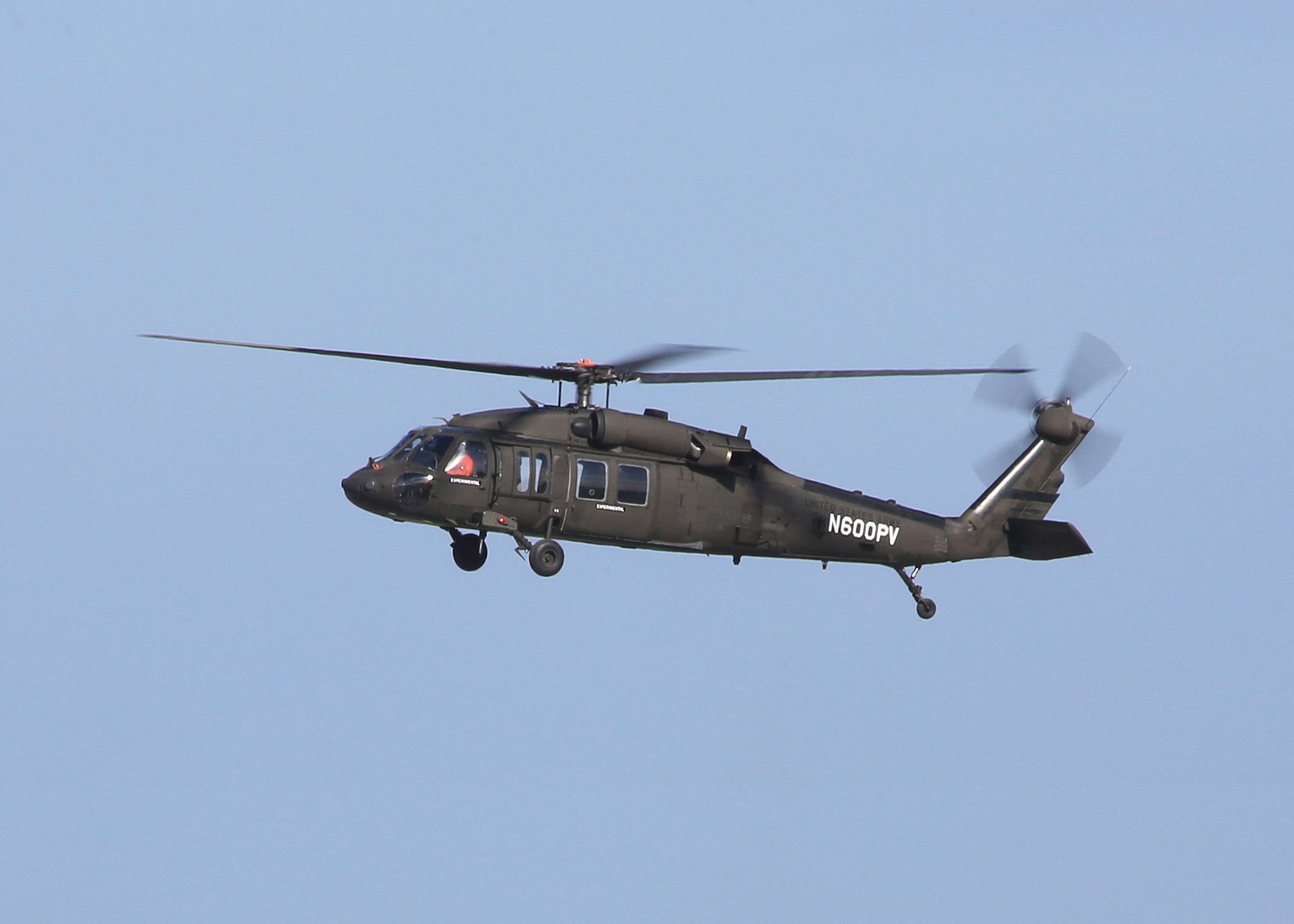
WEST PALM BEACH, Fla., June 6, 2019 /PRNewswire/ -- A technology kit developed by Sikorsky, a Lockheed Martin company (NYSE: LMT), was used for the first time to operate a Black Hawk helicopter with full-authority, fly-by-wire flight controls. The May 29 flight marked the official start to the flight test program for the soon-to-be optionally piloted aircraft. Follow-on flight testing aims to include envelope expansion throughout the summer leading to fully autonomous flight (zero pilots) in 2020.
"This technology brings a whole new dimension of safety, reliability and capability to existing and future helicopters and to those who depend on them to complete their missions," said Chris Van Buiten, Vice President, Sikorsky Innovations. "We're excited to be transforming a once mechanically controlled aircraft into one with fly-by-wire controls. This flight demonstrates the next step in making optionally piloted – and optimally piloted – aircraft, a reality."
This is the first full authority fly-by-wire retrofit kit developed by Sikorsky that has completely removed mechanical flight controls from the aircraft.
Through DARPA's Aircrew Labor In-Cockpit Automation System (ALIAS) program, Sikorsky is developing an OPV approach it describes as pilot directed autonomy to give operators the confidence to fly aircraft safely, reliably and affordably in optimally piloted modes enabling flight with two, one or zero crew. The program aims to improve operator decision aiding for manned operations while also enabling both unmanned and reduced crew operations.
Sikorsky has been demonstrating its MATRIX™ Technology on a modified S-76B™ called the Sikorsky Autonomy Research Aircraft (SARA). The aircraft, which has been in test since 2013, has more than 300 hours of autonomous flight.
Sikorsky announced in March that its S-92® helicopter fleet update will include the introduction of phase one MATRIX Technology that will bring advanced computing power to the platform. This foundation enables adoption of autonomous landing technology.
About Lockheed Martin
Headquartered in Bethesda, Maryland, Lockheed Martin is a global security and aerospace company that employs approximately 105,000 people worldwide and is principally engaged in the research, design, development, manufacture, integration and sustainment of advanced technology systems, products and services.
The Highest-Capacity Electric Aircraft Ever Flown Held First Public Test Flight in the Skies Above Southern California on Thursday, Paving the Way for Ampaire Inc. to Have Regular Commercial Service for Passengers and Cargo as Soon as 2021
Aviation Company Ampaire, Inc., Helps Further Cement Los Angeles as the Center of Innovation on Transportation Electrification
Camarillo, California, June 6, 2019. Ampaire, Inc. has moved the aviation industry a major step forward with the test flight of the Ampaire 337, the highest-capacity hybrid-electric aircraft ever flown. On Thursday, June 6, Ampaire engineers, investors and journalists witnessed the hybrid-electric Ampaire 337 fly in the skies above Camarillo Airport.
This is a significant step for aviation because never before has a hybrid-electric aircraft this large flown. Ampaire’s 337 is built with a direct path towards commercialization—moving electric aviation firmly from futuristic to attainable.
The aircraft, based on the six-seat Cessna 337 Skymaster, was retrofitted with Ampaire's proprietary electric propulsion system and is powered by a lightweight battery system. The battery-powered electric motor replaces a combustion engine of the aircraft's original two-engine configuration, and the resulting system is a ‘parallel hybrid’, meaning the internal combustion engine and electric motor work in concert to optimize power output as the plane flies. In hybrid configuration, the aircraft sees significant greenhouse gas emissions savings and operating cost reductions. The experimental plane was flown by a test pilot and flight engineer.
“The first flight of Ampaire’s electric passenger aircraft is a huge step forward for aviation,” said Deborah Flint, CEO of Los Angeles World Airports. “As a cleantech company that was started in our great city as part of LACI, Ampaire’s incredible achievement further cements Los Angeles as the leader in transportation electrification and technology innovation.”
“Imagine that in just a few years you will be able to buy a ticket for a flight that is clean, quiet and inexpensive,” said Kevin Noertker, CEO of Ampaire. “Ampaire is proud to lead the aviation industry in transportation electrification, and we recognize the importance of electric aviation for climate change and community connectivity.”
“Given the urgency of the climate crisis, today’s historic flight not only signifies a huge step forward for aviation, it also shines a light on Los Angeles’s leadership in transportation electrification,” said Matt Petersen, CEO of the Los Angeles Cleantech Incubator (LACI). “That’s why I’m so excited for the Ampaire team for their first hybrid-electric flight—as a LACI portfolio company, Ampaire and their Ampaire 337 flight test program further proves that Los Angeles is a cleantech hub that attracts investment and game-changing innovation for climate solutions.”
"Flight is becoming electric and this is the most incredible team to make that happen! Ampaire's approach is one of the many reasons we chose to support them through our accelerator program,” said Van Espahbodi, Co-Founder and Managing Director of Starburst Accelerator. “We see tremendous potential in their business model, and we're excited to see them achieve this significant technical milestone."
Aircraft are a significant contributor to both local and global emissions. Electric and hybrid-electric aircraft will reduce GHG emissions and air pollution even as more and more goods and people fly. In addition, electric aircraft are quieter, more efficient and cost much less to fly and maintain connecting communities, making skies quieter.
Ampaire has mapped a clear path from today’s first test flight of a prototype to commercial operations in 2021. Thursday’s test flight follows the Federal Aviation Administration (FAA) May 2019 airworthiness approval to begin a flight test program. The test flights will see the aircraft fly multiple times per week from June through August 2019 and will gather data about the electric propulsion performance characteristics.
In late 2019, Ampaire will begin a pilot project on a commercial route on the Hawaiian island of Maui. The aircraft will be a newly retrofitted Cessna 337 built with learnings from the test flight program that inform the configuration of the battery and motor. This aircraft will be a pre-production prototype and will move Ampaire closer to commercial readiness.
Ampaire’s focus is on supplying aircraft to regional airlines— who typically fly short-haul—often serving remote communities and island regions. In addition to the upcoming pilot project in Maui, Ampaire is also in collaboration with Vieques Air Link (VAL), a regional airline in Puerto Rico, to establish a pilot project in the region. Alongside Mokulele Airlines and VAL, Ampaire has signed Letters of Interest with 14 other airlines across the world.
About Ampaire
Ampaire is leading the charge in aircraft electrification. The Los Angeles based company is on a mission to be the world’s most trusted developer of practical and compelling electric aircraft. To start, Ampaire is retrofitting existing passenger aircraft to electric. It’s the leanest, fastest, most capital efficient approach to making commercial electric air travel a reality. As a LACI portfolio company, Ampaire has its roots in Los Angeles. Ampaire’s vision is to make flights more accessible to more people from more airports by providing electric aircraft that are safe, clean, quiet, and less costly to operate.
Following the announcement that Red Bull Air Race will not continue
beyond the 2019 season, Air Race 1 and Air Race E CEO and Founder, Jeff
Zaltman has released the below and attached statement.
The announcement that Red Bull Air Race will not continue beyond the 2019 season is sad news not only for the pilots, teams and fans that put so much effort into that iconic series, but the wider aviation community as a whole.
Air racing can be a demanding and logistically challenging sport and one that requires a lot of time and dedication from everyone involved. Red Bull Air Race set the standard for air racing development and provided a platform for highly skilled pilots to compete in a professional competition to put on an impressive spectacle for its global fans. We wish Red Bull Air Race and the race teams all the best for the remaining three races.
Air Race 1 events will remain a regular fixture of the air racing calendar and is still the only international air race series where pilots fly wing tip-to-wing tip in what is known as formula one air racing. We are due to announce the next Air Race 1 event and other exciting news soon, as we continue to grow towards our long-term strategy of becoming a mainstream sport.
In addition, we have just announced the formal bidding process for venues interested in hosting the world’s first ever electric air race, Air Race E, next year. This will be the first in a series of international electric air racing events aimed at accelerating and promoting the development of cleaner, faster and more technologically-advanced electric engines.
We’re delighted to have Airbus as the Official Founding Partner of the new Air Race E series and we are actively seeking the involvement of other industry partners to collaborate on all aspects of making this series a success.
We welcome interest from anyone looking to get involved in Air Race 1 or Air Race E and we hope that pilots, teams and fans of Red Bull Air Race will continue to support our series as we commit to ensuring the sport of air racing continues to thrive for many years to come.
For more information on Air Race 1 and Air Race E go to:
Air Race 1 is pure motorsport at its fastest. It is a thrilling test of pilot skill based upon the long-running sport known as formula one air racing. Formula one airplanes are a specifically defined airplane class with over 70 years of history which sets strict parameters regarding wing area, engine size and other technical characteristics. Air Race 1 is the top international title in the sport and is sanctioned by all three international formula air racing associations. Air Race 1 World Cup is the event name and trading name of Air Race CC Ltd, which is registered in the United Kingdom and has a base of operations in Spain. Air Race 1 is comprised of highly-regarded industry-leading experts who have extensive experience in organizing and promoting air racing and air sports competitions on a global scale and who work hard to ensure this race is both safe and a monumental success for all.
About Air Race E
Air Race E will become the world’s first all-electric airplane race when it launches its inaugural series of international races in 2020. Run by Air Race Events and led by world-leading air racing promoter Jeff Zaltman, the man behind the globally successful Air Race 1 World Cup, the race is set to revolutionise air racing and pioneer innovations in electric aviation. Air Race E will see electric airplanes race directly against each other on a tight 5km circuit just 10m above the ground and at speeds faster than any land-based motorsport. The demand for speed, performance and power management under the rigors of a competitive race environment provide the perfect platform for the development and promotion of cleaner, faster and more technologically-advanced electric engines. The Light Aircraft Association (LAA), has committed its support in developing the technical regulations and providing design oversight for the sport, soon to be sanctioned by the Formula Air Racing Association (FARA) and its counter-part in France, the Association des Pilotes D'Avions de Formules (APAF).
Airbus inaugurated today its new office in Buenos Aires, to strengthen its presence in Latin America and reinforce its commitment to the country.
Alberto Robles, Head of Airbus Strategy & International for Latin America, said that the presence of Airbus in Argentina is a natural step in increasing Airbus’ activity in the region. “There are great opportunities for Airbus in Latin America, and this new office in Buenos Aires is essential to consolidate our products in the region, while continuing to provide an even closer support to our customers in the country.”
Airbus has been present in Argentina for decades. In 1994 Aerolíneas Argentinas became an Aibrus customer with the A310-300. Today, the airline operates a long-range fleet of 10 A330 and two A340. Airbus also established a maintenance training centre in collaboration with Aerolíneas Argentinas to support the airline’s growth. Airbus maintains 35 percent market share of the country’s passenger fleet in service. LATAM and JetSmart also operate in Argentina with their A320 Family aircraft, the world's most popular single-aisle aircraft family.
With more than 40 years in Latin America, Airbus helicopters represent a third of the country’s operating fleet, mainly in service with the Armed Forces and other public institutions such as the Federal Police, the National Gendarmerie, and the Naval Prefecture in several provinces. The more than 85 helicopters in service have a key role in performing vital operations for the population such as border protection and helping to fight against organized crime, search and rescue missions in mountainous areas, firefighting and emergency medical transport. In an effort to closely support its customer operators, Airbus Helicopters also established a maintenance centre in Argentina to improve operations and increase rotorcraft availability.
As part of its on-going contribution to the development of the aerospace industry in the country, Airbus Defence and Space signed an agreement in 2017 with the Argentine aircraft factory "Brigadier San Martín" (FAdeA) to support the Airbus C212 of the Army and Naval Prefecture. These aircraft have been serving the country's Armed Forces and Security sector for more than 25 years.
With over 1,300 employees located throughout 18 sites across eight countries: Argentina, Brazil, Chile, Colombia, Mexico, Peru, Uruguay and a regional hub in Miami, Airbus continues to expand its presence in Latin America with its new facility in Argentina.
Startup manages maintenance, inspection and alteration services for global manufacturers and operators of commercial unmanned aircraft systems
Access to safe, reliable maintenance will support commercial operations and urban mobility efforts
Boeing [NYSE: BA] today announced its investment in Robotic Skies, a services provider that connects manufacturers and operators of commercial unmanned aircraft systems (UAS) with a global network of more than 170 civil aviation authority-certified repair stations.
"With safety as a cornerstone, we are shaping a robust operational ecosystem for on-demand mobility that supports the future of aircraft, air vehicles and autonomous systems," said Brian Schettler, managing director for Boeing HorizonX Ventures.
The investment is part of Boeing's disciplined, long-term strategy of entering into value-added partnerships that enhance and accelerate growth and deliver key differentiators for customers.
"Unmanned and autonomous commercial aircraft operations are increasingly mirroring those in manned aviation, including the need for quality maintenance provided by certified technicians," said Brad Hayden, founder and CEO of Robotic Skies. "This latest investment will allow us to continue to grow our global footprint and expand operational capabilities to support customers."
Boeing HorizonX Ventures led this funding round with participation from Thayer Ventures, Sun Mountain Capital and KickStart Seed Fund. The investment builds on a previously-announced collaboration with Robotic Skies, Boeing Global Services and its subsidiaries Aviall and Jeppesen to provide enhanced commercial UAS services.
Boeing is the world's largest aerospace company and leading provider of commercial airplanes, defense, space and security systems, and global services. As the top U.S. exporter, the company supports commercial and government customers in more than 150 countries. Boeing employs more than 150,000 people worldwide and leverages the talents of a global supplier base. Building on a legacy of aerospace leadership, Boeing continues to lead in technology and innovation, deliver for its customers and invest in its people and future growth.
Robotic Skies is the only global network of certified UAS maintenance centers. It offers comprehensive turnkey field service programs designed to keep UAS flying safely, efficiently and affordably around the world. Founded in 2014, Robotic Skies has more than 170 certified repair stations across more than 40 countries, providing MRO and support services for commercial UAS. Each service center in the network possesses the aviation expertise and factory training to ensure the mission readiness of these aircraft. For more information about Robotic Skies, visit www.roboticskies.com.
KLM President & CEO Pieter Elbers and Dean of the Faculty of Aerospace Engineering at Delft University of Technology (TU Delft) Professor Henri Werij today signed a new cooperative agreement to work together on making aviation more sustainable at the IATA Annual General Meeting in Seoul. KLM will be contributing towards TU Delft's research into an innovative flight concept known as the "Flying-V", which embraces an entirely different approach to aircraft design, in anticipation and support of sustainable long-distance flight in the future.
The aircraft's v-shaped design will integrate the passenger cabin, the cargo hold and the fuel tanks in the wings. Its improved aerodynamic shape and reduced weight will mean it uses 20% less fuel than the Airbus A350, today's most advanced aircraft. A flying scale model and a full-size section of the interior of the Flying-V will be officially presented at the KLM Experience Days at Amsterdam Airport Schiphol in October on the occasion of KLM's 100th anniversary.
The aircraft was originally conceptualised as a potential aircraft design for the future, but can be compared to today's most advanced aircraft, the Airbus A350. Although the plane is not as long as the A350, it does have the same wingspan. This will enable the Flying-V to use existing infrastructure at airports, such as gates and runways, without difficulty and the aircraft will also fit into the same hangar as the A350. What's more, the Flying-V will carry the same number of passengers – 314 in the standard configuration – and the same volume of cargo, 160m3. The Flying-V will be smaller than the A350, giving it less aerodynamic resistance. KLM President & CEO Pieter Elbers: "In recent years, KLM has developed as a pioneer in sustainability within the airline industry. The development of aviation has given the world a great deal, offering us an opportunity to connect people. This privilege is paired with a huge responsibility for our planet. KLM takes this very seriously and has therefore been investing in sustainability at different levels for many years, enabling it to develop a broad spectrum of sustainability initiatives. We are proud of our progressive cooperative relationship with TU Delft, which ties in well with KLM's strategy and serves as an important milestone for us on the road to scaling-up sustainable aviation."
Dean of the Faculty of Aerospace Engineering at TU Delft Professor Henri Werij: "We are incredibly pleased to be able to cooperate with our trusted partner KLM on our combined mission to make aviation more sustainable. Radically new and highly energy-efficient aircraft designs such as the Flying-V are important in this respect, as are new forms of propulsion. Our ultimate aim is one of emission free flight. Our cooperation with KLM offers a tremendous opportunity to bring about real change."
Improved passenger experience The Flying-V also provides researchers a unique opportunity to improve passenger experience in aircraft, from the seating layout in the wings, to the design of the seats and bathrooms. Everything has to be as lightweight as possible in order to maximise the efficiency gain the new aircraft shape provides. Passenger comfort is also taken into account.
Fuel versus electric propulsion The Flying-V is propelled by the most fuel-efficient turbofan engines that currently exist. In its present design it still flies on kerosene, but it can easily be adapted to make use of innovations in the propulsion system – by using electrically-boosted turbofans for example.
Red Bull has decided not to continue the Red Bull Air Race World Championship beyond the 2019 season. The remaining races this year are: Kazan, Russia, 15-16 June; Lake Balaton, Hungary, 13-14 July and Chiba, Japan, 7-8 September.
There have been more than 90 races since Red Bull Air Race began in 2003. These have given the world's most exceptional pilots the opportunity to compete in high speed flying at low altitude with extreme maneuvers. The Red Bull Air Race provided sports entertainment of highest quality but did not attract the level of outside interest as many other Red Bull events across the world.
Red Bull thanks the pilots, their teams, partners, the host cities as well as the Red Bull employees for all they have done to make these enjoyable and memorable events.
Speaking at the Typhoon Ministerial Meeting in Germany, Defence
Minister Stuart Andrew announced the beginning of a series of capability
tests of BriteCloud, a drinks-can sized missile decoy to protect combat
jets from the latest radar-guided missiles.
BriteCloud uses powerful radar emissions to disrupt the targeting
system within air-to-air and surface-to-air missiles, drawing them away
to a safe distance. The device can be fired from an aircraft flare
dispenser without the need for modification to the aircraft.
Designed and manufactured in Luton by Leonardo, the miniature decoy
has been tested and released for the first time aboard the RAF’s fleet
of Typhoon aircraft. The MOD has been working with Leonardo on the
development of BriteCloud since 2012 and has so far invested £27m in the
system, with the project sustaining 50 jobs in Luton.
Defence Minister Stuart Andrew said:
Britecloud offers the RAF a powerful and cost-effective way to keep our pilots safer than ever on the frontline.
These trials show UK industry is once again at
the heart of defence innovation, providing our Armed Forces with
state-of-the-art capabilities and creating high-tech jobs across the
country.
The first Britecould trial with Typhoon aircraft took place in the UK
in April. Thirty three BriteCloud 55 rounds were dispensed from
aircraft flown by the RAF’s 41 Test and Evaluation Squadron against a
range of threats designed to mirror those faced on the battlefield.
Further trials are planned to ensure the decoy launches safely from
the aircraft and to develop a range of operational uses for the
technology on the battlefield, including adding the devices to military
helicopters and C-130 Hercules aircraft. The Typhoon trials will also
inform how such decoys could be used on the RAF’s Lightning stealth
jets.
Should the trials be succesful, the devices will be available for frontline aircrews by the end of 2019.
Sir Simon Bollom, CEO of the MOD’s Defence Equipment and Support organisation, said:
Our ongoing partnership with Leonardo continues
to drive vital research and development that leads to the kind of
innovation demanded by our RAF today. The trials of BriteCloud on
Typhoon demonstrates how we are constantly striving to find a
technological edge and protect our service personnel.
Wg Cdr Pete Ward, SO1 Typhoon said:
The initial flight-trial of Bright-cloud from
RAF Typhoon aircraft was a key milestone in moving closer towards a
viable and extremely valuable capability for the warfighter; trials will
now move to operational testing and validation before the initial
operating capability is declared, planned at this time for later in 2019
The MOD invested £4.4bn with industry in in the South-East in 2017/18, sustaining almost 27,000 jobs across the region.
Para atender las necesidades futuras de crecimiento que Iberia ha anunciado en sus mercados de largo radio, la aerolínea ha lanzado una convocatoria de empleo para pilotos en la que, por primera vez, los seleccionados podrán ingresar directamente en la flota de largo radio, siempre y cuando cumplan los requisitos solicitados por la compañía.
· Nivel mínimo de estudios: Prueba de acceso a la universidad aprobada o estudios finalizados que permitan el acceso a la universidad.
· Cualificación mínima: ATPL(A) frozen EASA parte FCL y MCC.
· Certificado médico clase 1 en vigor.
· Certificado de competencia lingüística en Inglés mínimo nivel 4 y Castellano nivel 5.
· Derecho a trabajar en la Unión Europea y pasaporte sin restricciones.
· Certificado de antecedentes penales.
Además, se valorará:
· ATPL (A) sin restricción.
· Habilitaciones.
· Estudios universitarios, formación profesional, experiencia aeronáutica en función de la edad del candidato, idiomas y trabajos previos dentro del ámbito aeronáutico o fuera de él.
Más información sobre esta oferta de empleo y formulario para aplicar a la misma en https://grupo.iberia.es/jobs
Con sus vuelos de Madrid a Bergen y a Oslo, la aerolínea Iberia ofrecerá cerca de 43.000 asientos entre España y Noruega en 2019
Iberia inaugurará dos nuevas rutas en las próximas semanas. Noruega, con los vuelos desde Madrid a Oslo y a Bergen, se convierte en el tercer país escandinavo al que vuela el grupo aéreo tras Dinamarca y Suecia.
Vuelos a Oslo durante todo el año
Con cuatro frecuencias semanales a Oslo, Iberia inaugurará esta ruta desde Madrid el 15 de junio que se mantendrá durante todo el año.
Los horarios de estos vuelos serán:
Nº de vuelo
Origen
Salida
Destino
Llegada
Días
IB3496
Madrid
08:45
Oslo
12:20
Domingo
IB3496
Madrid
10:55
Oslo
14:30
Lu., Ma., Sa.
IB3497
Oslo
13:05
Madrid
16:45
Domingo
IB3497
Oslo
15:15
Madrid
18:55
Lu., Ma., Sa.
La capital noruega destaca por su arquitectura moderna, por ser la sede de instituciones culturales como el Museo Munch y por su apuesta medioambiental, no en vano ha sido elegida Capital Verde Europea en 2019.
Dos vuelos a la semana a Bergen
A partir del 1 de junio, Iberia ofrecerá dos vuelos a la semana a Bergen, la segunda ciudad más importante de Noruega, hasta el 30 de septiembre con el siguiente horario:
Nº de vuelo
Origen
Salida
Destino
Llegada
Días
IB3996
Madrid
12:10
Bergen
15:50
Lunes
IB3996
Madrid
13:00
Bergen
16:40
Sábado
IB3397
Bergen
16:35
Madrid
20:25
Lunes
IB3397
Bergen
17:25
Madrid
21:15
Sábado
Conocida por su pasado vikingo, su universidad, su Festival Internacional y por su mercado de pescado, Bergen es el punto ideal de partida para explorar los fiordos noruegos.
El horario de los vuelos de Madrid a Bergen y a Oslo permite la conexión desde más de 20 ciudades de la red de Iberia. Ambas rutas se operarán con aviones de la familia A320 que pueden acomodar entre 141 y 200 pasajeros distribuidos en las clases Business y Turista. En total, Iberia ofrecerá cerca de 43.000 asientos entre España y Noruega en 2019.
Oslo y Bergen son el tercer y cuarto destino del Grupo Iberia en Escandinavia, tras Copenhague, adónde Iberia Express opera un vuelo diario, y Estocolmo que une con Madrid todos los días. Además, ofrece vuelos a Helsinki, Kuopio, Oulu y Rovaniemi en Finlandia en código compartido con Finnair, el socio de Iberia en la alianza oneworld. Durante los meses de verano, Iberia Express unirá, además, Madrid con Keflavik en Islandia, tres veces a la semana. La apuesta del Grupo Iberia por los países nórdicos es una muestra del creciente interés turístico de la región.
Más información, reserva y compra de vuelos en iberia.com
Sobre Iberia: Iberia es la primera compañía de España y líder en las rutas entre Europa y Latinoamérica. Junto con su filial Iberia Express y su franquiciada Iberia Regional Air Nostrum, ofrece alrededor de 600 vuelos al día a medio centenar de países de Europa, América, África, Oriente Medio y Asia, con una flota de 142 aviones. En 2017 Iberia consiguió su 4ª estrella Skytrax; en 2016 y 2017 fue la aerolínea más puntual del mundo y, en 2018, la tercera de Europa, según FlightStats. Iberia tiene su hub en el aeropuerto de Madrid, y es miembro de la alianza oneworld, que ofrece más de 14.000 vuelos diarios a cerca de 1.000 aeropuertos en más de 150 países.
Airbus has signed a Memorandum of Understanding (MoU) with SAS Scandinavian Airlines for hybrid and electric aircraft eco-system and infrastructure requirements research.
The MoU was signed by Grazia Vittadini, Chief Technology Officer, Airbus and Göran Jansson, Deputy President EVP Strategy & Ventures, Scandinavian Airlines. Collaboration will start in June 2019 and will continue until the end of 2020.
Under the MoU, Airbus and SAS Scandinavian Airlines will cooperate on a joint research project to enhance understanding of the operational and infrastructure opportunities and challenges involved with the large-scale introduction of hybrid and full electric aircraft to airlines modus operandi. The project scope includes five work packages, which focus on analysing the impact of ground infrastructure and charging on range, resources, time and availability at airports.
The collaboration also includes a plan to involve a renewable energy supplier to ensure genuine zero CO2 emissions operations are assessed. This multidisciplinary approach—from energy to infrastructure—aims to address the entire aircraft operations ecosystem in order to better support the aviation industry's transition to sustainable energy.
Aircraft are roughly 80% more fuel efficient per passenger kilometer than they were 50 years ago. However, with air traffic growth estimated to more than double over the next 20 years, reducing aviation’s impact on the environment remains the aim of the industry.
To overcome this challenge, the Global Aviation Industry (ATAG) including Airbus and SAS Scandinavian Airlines have committed to achieving carbon-neutral growth for the aviation industry as a whole from 2020 onwards, cutting aviation net emissions by 50% by 2050 (compared to 2005).
This agreement further strengthens Airbus’ position in a field where it is already investing in and focusing its research efforts on developing hybrid-electric and electric propulsion technologies that promise significant environmental benefits. Airbus has already started to build a portfolio of technology demonstrators and is currently testing innovative hybrid propulsion systems, subsystems and components in order to address long-term efficiency goals for building and operating electric aircraft.
Airbus presentará diferentes productos y servicios digitales en el ámbito de defensa, helicópteros y espacio
Airbus patrocinará la cena oficial de FEINDEF como parte de la conmemoración de su 50 aniversario
Airbus participará en la primera edición de la Feria Internacional de Defensa y Seguridad (FEINDEF), que tendrá lugar del 29 al 31 de mayo en el recinto ferial IFEMA de Madrid. Como principal compañía aeroespacial española, Airbus presentará productos y servicios de gran relevancia para España, así como proyectos de innovación y tecnología de vanguardia.
La compañía destacará en su estand las principales colaboraciones en el sector europeo de defensa. Se mostrarán el futuro sistema de avión de combate FCAS (Future Combat Air System), el Eurodrone MALE RPAS europeo (Medium Altitude, Long Endurance Remotely Piloted Air System), así como el avión de combate polivalente Eurofighter Typhoon.
Airbus también mostrará helicópteros, incluyendo el entrenador Part Task Trainer del helicóptero NH90. Asimismo, también se presentarán diferentes aviones militares, como el A400M, el único avión de transporte del mundo capaz de entregar cargas de gran tamaño en pistas no preparadas; el C295, líder mundial del mercado en el segmento de tamaño medio de transporte y misiones especiales; y el A330 MRTT, el único avión de repostaje en vuelo de nueva generación probado en combate.
Además, Airbus destacará su experiencia en el entorno marítimo con la versión patrulla marítima del C295, así como la cartera de soluciones marítimas combinadas de la compañía que responden a las necesidades de los clientes, desde la detección temprana de las amenazas hasta su resolución definitiva.
Como parte de la oferta de productos y servicios digitales, de comunicación y de ciberseguridad, se expondrán las capacidades de comunicaciones seguras en tierra, antenas de comunicación intersatelital, su solución de comunicaciones militares aéreas seguras en red, Network for the Sky, así como el innovador servicio de inteligencia basado en imágenes de satélite, OneAtlas.
Airbus destacará en su estand los principales programas espaciales españoles, como los satélites de observación de la Tierra PAZ e Ingenio, que operan con éxito y en los que la compañía ha sido el contratista principal, así como los programas Spainsat NG I y II, donde Airbus actuará como “socio principal” en la construcción de estos satétlites.
Las actividades de Airbus en el evento incluyen:
29 de mayo, a las 16:00 horas en el estand de Airbus (C07 – Pabellón
8): firma de un acuerdo de colaboración relativo a una nueva tecnología
de inspección de aviones militares.
30 de mayo, en el Foro de Tecnología, Innovación y Emprendimiento de
FEINDEF: presentación del proyecto ATHENA sobre la tecnología de
enjambres de drones, que incluye la toma de decisiones autónoma basada
en algoritmos. (Sala de conferencias Tecnobit desde las 09:30).
31 de mayo, Foro de la Mujer de FEINDEF: participación de Cristina
Aguilar Grieder como parte del compromiso de Airbus a favor de la
diversidad de género (Sala de conferencias Tecnobit a las 12:00).
Además, para conmemorar el 50 aniversario de Airbus que se cumple este año, la compañía será el patrocinador principal de la cena oficial de la feria, que se celebrará el 29 de mayo.
La Feria Internacional de Defensa y Seguridad, FEINDEF, está organizada por TEDAE (Asociación Española de Tecnologías de Defensa, Seguridad, Aeronáutica y Espacio) y AESMIDE (Asociación de Empresas Contratistas Con las Administraciones Públicas), con el apoyo del Ministerio de Defensa de España.
FEINDEF cuenta con 150 expositores, 11 países representados y alrededor de 8000 visitantes profesionales previstos.
Para más información sobre el evento, visite www.feindef.com
Cities are completely rethinking the urban mobility mix. We speak to Vassilis Agouridas, Senior Manager Strategic Innovation at Airbus, who offers insight on how citizens and other public actors can play an active role as co-creators of future mobility solutions.
Boeing’s CST-100 Starliner propulsion system was put to the test at NASA’s White Sands Test Facility in New Mexico. Teams ran multiple tests proving both the vehicle’s in-space maneuvering system as well as the critical launch abort system.
The test used a flight-like Starliner service module with a full propulsion system comprising of fuel and helium tanks, reaction control system and orbital maneuvering and attitude control thrusters, launch abort engines and all necessary fuel lines and avionics.
During the test:
-- 19 thrusters fired to simulate in-space maneuvers; -- 12 thrusters fired to simulate a high-altitude abort; -- 22 propulsion elements, including the launch abort engines, fired to simulate a low-altitude abort.
“With the safety of our astronauts at the forefront of all we do, this successful testing proves this system will work correctly and keep Starliner and the crew safe through all phases of flight,” said John Mulholland, vice president and program manager of Boeing’s Commercial Crew Program. “The milestone paves the way for the upcoming pad abort test and flights to and from the International Space Station later this year.”
The development of a safe, reliable and cost-effective solution for crew transportation services to and from the International Space Station will allow the on-orbit research facility to continue to fulfill its promise as a world-class laboratory. With NASA as the anchor customer, Boeing's Starliner is setting the foundation for commercial passenger flights to and from low-Earth orbit destinations to include international astronauts, scientists and even tourists.