
martes, 18 de junio de 2019
Russian Helicopters demonstrates Ansat with a new satellite communication system at Paris Air Show 2019
PR
17.06.2019 / Paris
Russian Helicopters Holding Company (part of Rostec State Corporation) presented the light multi-purpose Ansat helicopter equipped with the new Mku30 satellite communication system at the 53th International Paris Air Show 2019.
"The Holding Company actively develops the introduction of modern satellite communication systems for helicopters. We entered into an agreement with the MOST-satellite systems company on joint promotion of these products. The Ku-band satellite communication system was created for Ansat and integrated into its avionics. It ensures data transmission and reception at the speed up to 2 Mbps regardless helicopter's location. We plan to offer this system as an option for all civil helicopters of the Holding Company," said Andrey Boginsky, Director General of Russian Helicopters.
The Mku30 satellite communication system allows single-point and multi-point video conferencing on board, smooth real-time transmission of selected amounts of data and high-quality video content.
At Paris Air Show 2019 held in the French capital on June 17-23, Russian Helicopters shows two Ansat helicopters – medical and VIP versions.
The light multi-purpose Ansat helicopter, which has the largest cabin within its class, is actively used by the Russian air medical services. This twin-engine helicopter has compact size and does not require a large landing area. It can also be used for normal passenger and VIP transport, cargo delivery and environmental monitoring. High-altitude tests of Ansat have been successfully completed, which confirmed the possibility of its use in mountainous terrain at altitudes up to 3,500 meters. The helicopter can be operated in a temperature range between -45 and +50 degrees of Celsius. Its significant advantage is the possibility of storage out of the hangar and low cost of operation.
The international air show in Le Bourget is one of the largest and oldest air shows in the world. It takes place every two years at the Le Bourget airport, 12 kilometers from Paris. Russia is a regular participant of the show. The first Russian aircraft presented in France was ANT-35 in 1936. In 1965, the Soviet Union showed Mi-6, Mi-8 and Mi-10 helicopters for the first time at Paris Air Show.
JSC Russian Helicopters (part of Rostec State Corporation) is one of the world leaders in helicopter industry, the only developer and manufacturer of helicopters in Russia. The holding company was established in 2007. The head office is located in Moscow. The holding company is comprised of five helicopter plants, two design bureaus, enterprises for production and maintenance of components, aircraft repair plants and a service company providing after-sales support in Russia and abroad. The buyers of the holding company's products include the Ministry of Defense of Russia, the Ministry of Internal Affairs of Russia, EMERCOM of Russia, and other state customers, Gazprom Avia and UTair airlines, as well as major Russian and foreign companies.
Rostec is a Russian State Corporation established in 2007 to promote the development, production and export of high-tech industrial products designed for civil and military applications. The Corporation comprises over 700 organizations that are currently part of eleven holding companies operating in the military-industrial complex and three holding companies working in civilian industry, as well as over 80 directly managed organizations. Rostec's portfolio includes well-known brands such as AVTOVAZ, KAMAZ, Kalashnikov Concern, Russian Helicopters, VSMPO AVISMA, UralVagonZavod, etc. Rostec companies are located in 60 constituent entities of the Russian Federation and supply products to more than 100 countries. The consolidated revenue of Rostec in 2017 amounted to RUB 1 trillion 589 billion rubles, while the consolidated net income and EBITDA amounted to 121 and 305 billion rubles, correspondingly. In 2017 the average salary in the Corporation was 46.8 thousand rubles. According to Rostec's strategy, the main objective of the Corporation is to ensure that Russia has a technological advantage in highly competitive global markets. Rostec's key objectives include the introduction of a new techno-economic paradigm and digitalization of Russian economy.


lunes, 17 de junio de 2019
Daher, Airbus and Safran team up to develop EcoPulseTM, a distributed hybrid propulsion aircraft demonstrator


http://aviationnews.eu/news/2019/06/daher-airbus-and-safran-team-up-to-develop-ecopulsetm-a-distributed-hybrid-propulsion-aircraft-demonstrator/
press release:
As part of their innovation strategies, Daher, Airbus and Safran have announced a collaborative partnership for the design and development of the wing-mounted EcoPulseTM distributed hybrid propulsion demonstrator with a maiden flight scheduled in 2022. Based on Daher’s TBM platform, this project, kick-started by CORAC (the French Civil Aviation Research Council) with support from DGAC (the French Civil Aviation Authority), will develop technologies that boost the environmental efficiency of aircraft and meet the future needs of the air travel industry.
The aviation industry as a whole is committed to the development of cleaner aviation.
The overall approach spans 3 areas of research and development:
The distributed hybrid propulsion system will be provided by Safran;
Airbus will have responsibility for the aerodynamic optimisation of the distributed propulsion system, the installation of high energy density batteries and the use of those batteries to power the aircraft;
Component and systems installation, flight testing, overall analysis and regulatory construction will be undertaken by Daher using its TBM platform.
The purpose of this three-way collaboration is to validate technologies designed to reduce CO2 emissions, noise pollution, and create new uses for air transportation.
“Reducing the environmental impact of aircraft is a priority for the industry as a whole. So it is with enthusiasm and determination that we welcome the opportunity to be part of this unique partnership alongside Airbus and Safran to succeed in the ambitious challenge set by CORAC. We are determined to make it a distinctive feature of the French aviation industry, and are certain that all stakeholders will unite around it,” said Nicolas Orance, SVP Aerospace and Defense BU at Daher.
Safran will supply the entire EcoPulseTM distributed hybrid propulsion system (excluding batteries), consisting of a turbogenerator (a combined turbine and power generator), an electric power management system and integrated electric thrusters (or e-Propellers) including electric motors and propellers. The electric thrusters will be integrated into the EcoPulseTM wing and will provide propulsion thrust, at the same time as delivering aerodynamic gains (reducing wing surface area and wingtip marginal vortices, and therefore drag).
The installation of a distributed propulsion system on a TBM aircraft is an exciting opportunity to boost its efficiency, diversify its missions, reduce its environmental footprint and cut its operating costs.
“Safran has developed a technology roadmap for the installation of electric thrusters on aircraft. EcoPulseTM offers us an excellent opportunity to evaluate and identify the specific features expected by this market, particularly in terms of new hybrid propulsion aircraft projects. Safran intends to position itself as the market leader in this type of propulsion system by 2025,” said Stéphane Cueille, Head of R&T and Innovation at Safran.
Airbus will be involved in the aerodynamic modeling of the demonstrator, both to support configuration choices and to enable the development of flight control laws. All these considerations should make it possible to demonstrate the benefits of distributed propulsion, and provide the baselines for the design of optimised distributed propulsion aircraft in terms of methods, tools and outcomes.
“This distributed hybrid propulsion demonstrator is a very important step towards preparing the certification standards for a more electric aircraft. It also gives us the opportunity to improve our simulation models and consider their use on larger aircraft,” said Jean-Brice Dumont, Executive Vice President Engineering at Airbus.
* * *
About DAHER
DAHER est un avionneur et un équipementier industrie et services. DAHER affirme son leadership dans 3 principaux métiers - construction d’avions, équipements et systèmes aéronautiques, services logistiques et supply chain - et a réalisé un chiffre d’affaires de 1,2 milliard d’euros en 2018.
Fort de son actionnariat familial, DAHER est tourné vers l’innovation depuis sa création en 1863. Aujourd’hui présent dans 13 pays, DAHER s’impose comme un acteur de référence de l’industrie 4.0, en concevant et développant des solutions à valeur ajoutée pour ses partenaires industriels.
TURKISH FIGHTER WILL BE DISPLAYED AT PARIS AIRSHOW FOR THE FIRST TIME
press release
Turkish Aerospace will display for the first time the one-to-one mock-up of the Turkish Fighter at the International Paris Airshow. International Paris Airshow will take place at Le Bourget airport between June 17-23, 2019. Turkish Aerospace, apart from the Turkish Fighter mock-up, will display ATAK, ANKA, HÜRJET and GÖKBEY platforms. Furthermore, ATAK helicopter will perform flight demonstrations during the show.
An important and historical development of Turkey will be witnessed at one of the world's largest aerospace fair shows in Paris. The one-to-one mock-up of the Turkish Fighter Project, initiated to meet the needs of Turkish Armed Force, which is the prime contractor of Turkish Aerospace, will be shown to the public for the first time in Paris. Thus, Turkey will demonstrate once again its infrastructure, technologies and abilities to produce 5th generation jet aircraft which is therefore considered invaluable to a leading power like the USA, Russia and China.
In accordance with the main objectives of the Turkish Aerospace, by increasing the design, production and certification of the jet aircraft, all domestic and national resources will be put into action.
Turkish Fighter, which will be displayed for the first time at the world's largest fair - the International
Paris Airshow, along with other products of Turkish Aerospace will attract attention. Regarding the first
showcase of Turkish Fighter the President and CEO of Turkish Aerospace Prof. Temel Kotil said:
"We moved Turkey's most important project, which we conduct the pride, to the higher point. We will do what few countries worldwide do. For the first time we will exhibit Turkish Fighter in Paris in order to show our capabilities. Thus, Turkey will demonstrate that there is no difference from other countries from the point of view of technological infrastructure. As Turkish Aerospace we aspire to fulfill Turkey’s first achievements in disciplined and concentrated ways. In order to realize the mentioned goals, we will continue to grow our company and to build our army of engineers. I am waiting for all our qualified engineers who say ’’Let be my share as well for my country’’. Turkish Aerospace has opened its doors for you. We look forward to your determination, patience and work”.
About Turkish Aerospace
Turkish Aerospace, ranking among the top hundred global players in aerospace and defense industry,
is the center of technology in design, development, modernization, manufacturing and life cycle support
of integrated aerospace systems, from fixed and rotary wing platforms to UAV systems and space
systems and is one of the largest and most important defence and aerospace companies in Turkey.
viernes, 14 de junio de 2019
[video & photo] How the albatross is inspiring next generation of aircraft wings


press release
https://youtu.be/9Ujp46SHAXI
Airbus engineers have developed a scale-model aeroplane with the first in-flight, flapping wing-tips that could revolutionise aircraft wing-design.
The aerospace giant has drawn on nature to develop its ‘semi-aeroelastic hinge’ concept to reduce drag and overall wing weight, while combating the effects of turbulence and wind gusts.
Known as AlbatrossOne, the remote-controlled aircraft has already taken its first flights to prove the concept and the team will now conduct further testing before the demonstrator, based on the manufacturer’s A321 plane, is scaled-up further.
“While hinged wing-tips are not new – military jets employ them to allow greater storage capacity on aircraft carriers – the Airbus demonstrator is the first aircraft to trial in-flight, freely-flapping wing-tips to relieve the effects of wind gusts and turbulence,” explained Airbus engineer Tom Wilson, based in Filton, north Bristol, UK.
“We drew inspiration from nature – the albatross marine bird locks its wings at the shoulder for long-distance soaring but unlocks them when wind-gusts occur or manoeuvering is required.
“The AlbatrossOne model will explore the benefits of unlockable, freely-flapping wing-tips – accounting for a up to a third of the length of the wing – to react autonomously during in-flight turbulence and lessen the load on the wing at its base, so reducing the need for heavily reinforced wing boxes.”
Jean-Brice Dumont, Airbus’ Executive Vice-President of Engineering, said the project showed “how nature can inspire us”. He said: “When there is a wind gust or turbulence, the wing of a conventional aircraft transmits huge loads to the fuselage, so the base of the wing must be heavily strengthened, adding weight to the aircraft.
“Allowing the wing-tips to react and flex to gusts reduces the loads and allows us to make lighter and longer wings – the longer the wing, the less drag it creates up to an optimum, so there are potentially more fuel efficiencies to exploit.”
The first test flights of the AlbatrossOne demonstrator, developed by Airbus engineers in Filton, were concluded in February after a 20-month development programme. Speaking in Toulouse, Dumont said AlbatrossOne was the “first Filton aircraft since Concorde”.
It has been constructed from carbonfibre and glassfibre-reinforced polymers, as well as components from additive-layer manufacturing.
Initial testing of AlbatrossOne has examined the demonstrator’s stability with the wing-tips locked and completely unlocked, says fellow Filton engineer James Kirk.
“The next step is to conduct further tests to combine the two modes, allowing the wing-tips to unlock during flight and to examine the transition,” he added.
The team presented their research at the International Forum on Aeroelasticity and Structural Dynamics conference in the United States this week.
Airbus tests its Network for the Sky on a A310 MRTT aircraft


press release
Airbus has successfully completed a flight demonstration of a connected airborne battlespace scenario, centred on a MRTT aircraft. The test was carried out as part of the development of Airbus’ Network for the Sky (NFTS) programme. This follows on from last August’s demonstration in Canada of secure mobile communications using a stratospheric balloon to simulate a HAPS (High Altitude Pseudo Satellite), such as Airbus’ Zephyr UAV (Unmanned Aerial Vehicle).
NFTS combines various technologies - satellite and ground communications, air-to-ground, ground-to-air and air-to-air tactical links, 5G mobile communications and laser connections - in a resilient, unified, secure, highly interoperable, mesh network. Aircraft, UAVs and helicopters currently use networks with limited bandwidth and interoperability, and often little resilience. NFTS will allow them to form an integral part of high-speed military networks.
“This unique demonstration is a significant milestone in realising our vision of secure connectivity, which will enable the future air combat cloud and enhance real time execution of military missions,” said Evert Dudok, Head of Communications, Intelligence & Security at Airbus Defence and Space.
The demonstration scenario simulates the establishment of multi-Mbit/s, wideband communication links between ground forces operatives, a fighter jet, a MRTT, and a combined air operations centre (CAOC) on the ground. Both the operatives and jet fighter had to send video in real time to provide enhanced real-time situational awareness and receive instructions from the CAOC in return.
The operative located in Getafe (Spain) was equipped with a standard handheld radio for NATO forces (ROVER). The fighter was deployed to obtain imagery of the area of interest and act as a communications node between the operative and the MRTT flying at 30,000 feet within a 150 km radius in secure airspace. Communications were thus relayed between the fighter jet and the MRTT, via a wideband LOS (line-of-sight) data link. The MRTT then routed the video along with its own communications via a wideband satellite link to an space teleport near Washington, D.C. The communications flow was then returned to Europe via a terrestrial link to the CAOC.
This complex scenario demonstrates the real-time operation of secure end-to-end communications across different networks and technologies: ground-air tactical link, air-air wideband link between two aircrafts, air-satellite relay and terrestrial networks. This type of configuration, known as a ‘hybrid network’, represents the future of military communications and meets the needs of armed forces to be able to use a wide range of networks while allowing these to be managed dynamically and transparently. The solutions developed by Airbus thus allow secure IP (Internet Protocol) communications to be established, links to be reconfigured in real time and the available bandwidth to be allocated to data links based on operational priorities.
For this demonstration an MRTT aircraft has been equipped with Janus, Airbus’ new tri-band (Ku-Ka-MilKa) satellite antenna, as well as the latest version of the Proteus satellite modem, which is highly resilient against interference and jamming, and Airbus’ aircraft links integration management system (ALIMS).
This exercise paves the way for the development of the core capability for SMART MRTT connectivity, which will allow the MRTT to act as a high-end communication node. Network for the Sky (NFTS) sets the foundation for the connected airborne battlespace, with the objective to offer a full operational capability by 2020. The NFTS programme is part of Airbus’ Future Air Power project and is fully aligned with the development of the European Future Combat Air System (FCAS).
www.nfts.airbus.com
jueves, 13 de junio de 2019
DAHER announces its acquisition of Quest Aircraft Company, becoming a Franco-American aircraft manufacturer - Daher
https://www.daher.com/en/daher-announces-its-acquisition-of-quest-aircraft-company/


Paris, June 13, 2019 – Daher – producer of the TBM family, the fastest turboprop aircraft in its category – is taking a major step in developing the company's airplane manufacturing business with the planned acquisition of Quest Aircraft Company, based in Sandpoint, Idaho, USA, which builds the Kodiak 100.
With this acquisition, Daher strengthens two of its strategic pillars by:
Reinforcing its aircraft manufacturing business and consolidating the company's leading position in the turboprop segment by widening the product family,
Achieving a major milestone in the growth of its North American industrial and services operations.
The Kodiak 100 is a 10-seat, unpressurized, entry-level aircraft in the single-engine turboprop category.
Originally created for humanitarian missions in developing countries, the Kodiak 100 is an agile and robust aircraft, capable of operating on uneven and ultra-short runways, while offering optimal safety.
Certified in 67 countries, the Kodiak 100 is used worldwide by air-taxi, recreational and leisure operators, along with businesses, pilot-owners and humanitarian organizations.
The Kodiak 100 will be exhibited by Daher
at the Paris Air Show (June 17-23) |Static display area: Location B4
DAHER strengthens its aircraft manufacturing business with an industrial location in North America
Through this major acquisition, Daher is enhancing its presence in the general and business aviation segment by offering a wider multi-product range. Already well known for its TBM 910 and TBM 940 very fast turboprop aircraft, Daher's airplane portfolio has now expanded to include the Kodiak 100.
With more than 270 Kodiak aircraft in operation, this all-terrain multi-mission aircraft is used worldwide by air-taxi, recreational and leisure operators, along with businesses, pilot-owners and humanitarian organizations.
"The Quest Aircraft Company's acquisition represents an additional step in our development in the United States and an overall strengthening of our aircraft manufacturing business," said Daher CEO Didier Kayat. "In addition to making Daher the world's seventh largest aircraft manufacturer in business aviation, it provides us with our first industrial site in the United States, thereby reinforcing Daher's position as a Tier-1 aerospace equipment and systems manufacturer, as well as a logistics and services provider. This key acquisition for Daher is perfectly aligned with the strategy of intensifying our company's links with the North American market's leading aerospace players."
In addition to its development and purchasing synergies, the Quest Aircraft Company's acquisition offers excellent commercial, technological and geographical complementarities. With more than 150 years of know-how, Daher now intends to invest in this production platform to offer an enhanced services and sales network.
Daher Chairman Patrick Daher stated: "Quest was built on a foundation of values that are common to our two companies, with a focus on excellence and with the commitment to a high-quality, extremely robust product. As a powerful and maneuverable aircraft – used particularly for humanitarian missions to provide aid to isolated communities – the Kodiak 100 perfectly complements our TBM product range and is fully in line with Daher's long-term vision as a company committed to the future of aviation."
The family-owned Daher Group ultimately plans to develop synergies with the two aircraft product lines, introducing technologies and functionalities for the Kodiak aircraft that have contributed to the successes achieved by the TBM.
"The Kodiak 100 is an aviator's aircraft, just like the members of our TBM family, and we are happy to bring together two communities of passionate pilots and operators with the acquisition of Quest," explained Nicolas Chabbert, Senior Vice President of the Daher Aircraft Business Unit. "We also are particularly pleased to welcome the 240 employees based in Sandpoint, Idaho to the Daher Group."
Robert Wells the Quest Aircraft Company's CEO said: "The know-how of Quest and Daher opens the potential for rapid growth, with the combined operation becoming a key international player. Our teams share the values for craftsmanship and quality, as underscored by Quest's motto: 'Built by hand in Sandpoint, Idaho.'"
The acquisition's closing is expected to be completed by the end of 2019, subject to approval by the appropriate authorities in both countries.
About Daher – www.daher.com
Daher is an aircraft manufacturer and an industry and service equipment supplier. Daher asserts its leadership in three main businesses – aircraft manufacturing, aerospace equipment and systems, logistics and supply chain services – and achieved a turnover of 1.2 billion euros in 2018. With the stability provided by its family ownership, Daher has been committed to innovation since its creation in 1863.
Today, present in 12 countries, Daher is a leader in Industry 4.0, designing and developing value-added solutions for its industrial partners.
[photo & video] EmbraerX Unveils New Flying Vehicle Concept for Future Urban Air Mobility


https://youtu.be/39DFuvU_PwY
press release 11.06.19
EmbraerX unveils today a new electric flying vehicle concept during Uber Elevate Summit 2019 in Washington, D.C. The event convenes a global community of manufacturers, investors, policymakers, and government officials, all working to make the urban aerial ridesharing vision a reality. The aircraft concept, with electric vertical take-off and landing capability, known as eVTOL, is part of the EmbraerX multi-project approach. Embraer’s disruptive business subsidiary is working on a collaborative effort to enable and accelerate the urban mobility ecosystem. “As a market accelerator committed to developing solutions to transform life’s experiences, we have been combining human-centered design thinking with our 50-year history of building and engineering expertise in a unique manner. These are the factors behind the technical progress and leading-edge innovations we are bringing to this new eVTOL concept,” said Antonio Campello, President & CEO, EmbraerX. EmbraerX’s human-centric approach has been instrumental in the eVTOL project, focused on user experience and passenger peace of mind, with the goal of making the aircraft easily accessible to every person. This new aircraft concept results from a broad range of tests and simulations, aiming at operational optimization for the urban environment, considering high reliability, low operating costs, a lower noise footprint, fully electric powered and progressively autonomous. "Embraer's team focused on the customer experience with their latest vehicle concept, using built-in redundant systems to achieve optimal safety, while also achieving low noise output with an eight rotor system, which enables span-wise lift. Our team looks forward to continued collaboration with the Embraer team to achieve a quiet, green, and safe, aerial ridesharing vehicle," said Mark Moore, Engineering Director of Aviation, Uber. EmbraerX is also engaged in a variety of tailored solutions for the ecosystem, including a new business platform, named Beacon, designed to foster collaboration and synchronize aviation services companies and professionals in a streamlined and more agile way, to keep aircraft flying. Additionally, in partnership with dozens of air traffic controllers, academics, pilots and industry experts, EmbraerX has proposed a very practical, simple and robust urban air space design to allow more aircraft to fly in urban environments.
Airbus partners with United Airlines to manage aircraft data and enhance predictive maintenance capabilities
press release
United Airlines has become the latest U.S. airline to connect to Airbus’ open-data platform, Skywise, following an agreement recently signed between the airline and Airbus. United will leverage Skywise to enhance all aspects of its maintenance and engineering operations on its Airbus fleet.
With flexible and visual tools, Skywise enables airlines to store, access, manage and analyse data more efficiently while also benchmarking against other airline users’ trends. Skywise provides all technology elements in one place, including data warehousing, visualisation, alerting, and even machine learning packages, allowing United and other airlines to nimbly develop and deploy their own analytical products.
In addition, Skywise seamlessly connects with the data integration platform, Palantir Foundry. United began using this platform in 2018, and the combination of Palantir Foundry and Airbus’ Skywise will provide United with the data and tools to enhance its operational reliability.
“We are proud to partner with Airbus and Palantir on this new data platform, which will allow us to maximise the performance of our Airbus fleet by analysing the best data we have available and using those insights to continuously improve our operation,” said Praveen Sharma, United’s Vice President of Digital Products and Analytics.
Marc Fontaine, Airbus’ Digital Transformation Officer said, “Skywise will bring significant value by unlocking data, which will power operational efficiency in aircraft maintenance and flight operations for United Airlines’ fleet.” He added, “By extending Skywise to other company business functions, with Palantir, the potential for United will be even bigger.”
Launched in 2017, Skywise is fast becoming the platform of reference used by all major aviation players to improve operational performance, ensuring complete data continuity with benefits across the entire value chain. Today, over 70 airlines around the world are connected to Skywise.
Skywise provides all users with one single access point to their aggregated and anonymised aviation data, enriched from multiple sources across the industry into one secure, cloud-based platform. The more data that airlines or OEMs share into the Skywise Core platform, the more accurate the predictions and models for customers connected.
#Airbus @united @PalantirTech #Skywise
For more information:
https://www.airbus.com/aircraft/support-services/skywise.html
https://www.airbus.com/aircraft/passenger-aircraft/a350xwb-family/a350-900.html
miércoles, 12 de junio de 2019
martes, 11 de junio de 2019
United Technologies and Raytheon to Combine Into Aerospace and Military Giant
https://www.nytimes.com/2019/06/09/business/dealbook/united-technologies-raytheon-deal.html
Press Release:http://raytheon.mediaroom.com/index.php?s=43&item=123176
Raytheon and United Technologies Aerospace Businesses to Combine in Merger of Equals
- Combination will create a premier systems provider with advanced technologies to address rapidly growing segments of aerospace and defense
- Expanded technology and R&D capabilities to deliver innovative and cost-effective solutions aligned with customer priorities
- Significant near- and long-term benefits expected from uniting complementary portfolios of platform-agnostic capabilities, resulting in more than $1 billion of gross annual cost synergies by year four, as well as new revenue opportunities from combined technology
- Return of capital to shareowners expected to be $18 to $20 billion in first 36 months following completion of the merger
- United Technologies' separation into three independent companies remains on track; merger is expected to be tax-free and close in the first half of 2020, following completion of UTC portfolio separation
WALTHAM, Mass. and FARMINGTON, Conn., June 9, 2019 /PRNewswire/ -- Raytheon Company (NYSE: RTN) and United Technologies Corp. (NYSE: UTX) have entered into an agreement to combine in an all-stock merger of equals. The transaction will create a premier systems provider with advanced technologies to address rapidly growing segments within aerospace and defense. The merger of Raytheon, a leading defense company, and United Technologies, a leading aerospace company, comprised of Collins Aerospace and Pratt & Whitney, will offer a complementary portfolio of platform-agnostic aerospace and defense technologies. The combined company, which will be named Raytheon Technologies Corporation, will offer expanded technology and R&D capabilities to deliver innovative and cost-effective solutions aligned with customer priorities and the national defense strategies of the U.S. and its allies and friends. The combination excludes Otis and Carrier, which are expected to be separated from United Technologies in the first half of 2020 as previously announced.
The combined company will have approximately $74 billion in pro forma 2019 sales. With a strong balance sheet and robust cash generation, Raytheon Technologies will enjoy enhanced resources and financial flexibility to support significant R&D and capital investment through business cycles.
Under the terms of the agreement, which was unanimously approved by the Boards of Directors of both companies, Raytheon shareowners will receive 2.3348 shares in the combined company for each Raytheon share. Upon completion of the merger, United Technologies shareowners will own approximately 57 percent and Raytheon shareowners will own approximately 43 percent of the combined company on a fully diluted basis. The merger is expected to close in the first half of 2020, following completion by United Technologies of the previously announced separation of its Otis and Carrier businesses. The timing of the separation of Otis and Carrier is not expected to be affected by the proposed merger and remains on track for completion in the first half of 2020. The merger is intended to qualify as a tax-free reorganization for U.S. federal income tax purposes.
"Today is an exciting and transformational day for our companies, and one that brings with it tremendous opportunity for our future success. Raytheon Technologies will continue a legacy of innovation with an expanded aerospace and defense portfolio supported by the world's most dedicated workforce," said Tom Kennedy, Raytheon Chairman and CEO. "With our enhanced capabilities, we will deliver value to our customers by anticipating and addressing their most complex challenges, while delivering significant value to shareowners."
"The combination of United Technologies and Raytheon will define the future of aerospace and defense," said Greg Hayes, United Technologies Chairman and CEO. "Our two companies have iconic brands that share a long history of innovation, customer focus and proven execution. By joining forces, we will have unsurpassed technology and expanded R&D capabilities that will allow us to invest through business cycles and address our customers' highest priorities. Merging our portfolios will also deliver cost and revenue synergies that will create long-term value for our customers and shareowners."Combination to Create Long-Term Value
Raytheon plans to consolidate its four businesses into two businesses to be named Intelligence, Space & Airborne Systems and Integrated Defense & Missile Systems. The new businesses will join Collins Aerospace and Pratt & Whitney to form the four businesses of Raytheon Technologies.
Pro Forma Capital Structure
Net debt for the combined company at the time of closing is expected to be approximately $26 billion, with United Technologies expected to contribute approximately $24 billion. The combined company targets an 'A' category credit rating at the time of the closing.
Leadership and Governance
The combined company's Board of Directors will be comprised of 15 members, consisting of 8 directors from United Technologies and 7 from Raytheon, with the lead director from Raytheon. Tom Kennedy will be appointed Executive Chairman and Greg Hayes will be named CEO of Raytheon Technologies. Two years following the close of the transaction, Hayes will assume the role of Chairman and CEO.
Raytheon Technologies will be headquartered in the greater Boston metro area, and will retain a corporate presence in existing locations. The company will be led by a highly experienced, proven leadership team with a strong track record of innovation, delivering on synergies, and meeting financial and customer commitments.
Timing and Closing
The transaction is subject to the satisfaction of customary closing conditions, including receipt of required regulatory approvals, the approval of Raytheon and United Technologies shareowners, as well as completion by United Technologies of the separation of its Otis and Carrier businesses. As previously mentioned, the transaction is expected to close in the first half of 2020.
2019 Financial Outlook
There is no change to either Raytheon's or United Technologies' financial outlook for 2019.
Advisors
Citigroup Global Markets Inc. is acting as financial advisor to Raytheon, and RBC Capital Markets LLC provided a fairness opinion. Shearman & Sterling LLP is serving as legal advisor to Raytheon. Morgan Stanley & Co. LLC, Evercore, and Goldman Sachs & Co. LLC are acting as financial advisors to United Technologies. Wachtell, Lipton, Rosen & Katz is serving as legal advisor to United Technologies.
Conference Call
A conference call to discuss the merger will be held tomorrow, June 10, 2019 at 8:00 a.m. EDT. Participants will include Tom Kennedy, Chairman and CEO of Raytheon; Greg Hayes, Chairman and CEO of United Technologies; Toby O'Brien, vice president and Chief Financial Officer of Raytheon; and Akhil Johri, executive vice president and Chief Financial Officer of United Technologies.
The dial-in number for the conference call will be (877) 280-7280. The conference call will also be audiocast online at www.raytheon.com/ir and www.utc.com. Individuals may listen to the call and download charts that will be used during the call. These charts will be available prior to the call. Interested parties are encouraged to check the website ahead of time to ensure their computers are configured for the audio stream.
Transaction Website
Additional information on the merger and related materials can be found on a joint transaction website at www.futureofaerospacedefense.com.
About Raytheon
Raytheon Company is a technology and innovation leader specializing in defense, civil government and cybersecurity solutions. With a history of innovation, Raytheon provides state-of-the-art electronics, mission systems integration, C5I® products and services, sensing, effects and mission support for customers in more than 80 countries. Raytheon is headquartered in Waltham, Massachusetts. Follow us on Twitter.
About United Technologies
United Technologies Corp., based in Farmington, Connecticut, provides high technology products and services to the building and aerospace industries. By combining a passion for science with precision engineering, the company is creating smart, sustainable solutions the world needs. For more information about the company, visit our website at www.utc.com or on Twitter @UTC.
Press Release:http://raytheon.mediaroom.com/index.php?s=43&item=123176
Raytheon and United Technologies Aerospace Businesses to Combine in Merger of Equals
- Combination will create a premier systems provider with advanced technologies to address rapidly growing segments of aerospace and defense
- Expanded technology and R&D capabilities to deliver innovative and cost-effective solutions aligned with customer priorities
- Significant near- and long-term benefits expected from uniting complementary portfolios of platform-agnostic capabilities, resulting in more than $1 billion of gross annual cost synergies by year four, as well as new revenue opportunities from combined technology
- Return of capital to shareowners expected to be $18 to $20 billion in first 36 months following completion of the merger
- United Technologies' separation into three independent companies remains on track; merger is expected to be tax-free and close in the first half of 2020, following completion of UTC portfolio separation
WALTHAM, Mass. and FARMINGTON, Conn., June 9, 2019 /PRNewswire/ -- Raytheon Company (NYSE: RTN) and United Technologies Corp. (NYSE: UTX) have entered into an agreement to combine in an all-stock merger of equals. The transaction will create a premier systems provider with advanced technologies to address rapidly growing segments within aerospace and defense. The merger of Raytheon, a leading defense company, and United Technologies, a leading aerospace company, comprised of Collins Aerospace and Pratt & Whitney, will offer a complementary portfolio of platform-agnostic aerospace and defense technologies. The combined company, which will be named Raytheon Technologies Corporation, will offer expanded technology and R&D capabilities to deliver innovative and cost-effective solutions aligned with customer priorities and the national defense strategies of the U.S. and its allies and friends. The combination excludes Otis and Carrier, which are expected to be separated from United Technologies in the first half of 2020 as previously announced.
The combined company will have approximately $74 billion in pro forma 2019 sales. With a strong balance sheet and robust cash generation, Raytheon Technologies will enjoy enhanced resources and financial flexibility to support significant R&D and capital investment through business cycles.
Under the terms of the agreement, which was unanimously approved by the Boards of Directors of both companies, Raytheon shareowners will receive 2.3348 shares in the combined company for each Raytheon share. Upon completion of the merger, United Technologies shareowners will own approximately 57 percent and Raytheon shareowners will own approximately 43 percent of the combined company on a fully diluted basis. The merger is expected to close in the first half of 2020, following completion by United Technologies of the previously announced separation of its Otis and Carrier businesses. The timing of the separation of Otis and Carrier is not expected to be affected by the proposed merger and remains on track for completion in the first half of 2020. The merger is intended to qualify as a tax-free reorganization for U.S. federal income tax purposes.
"Today is an exciting and transformational day for our companies, and one that brings with it tremendous opportunity for our future success. Raytheon Technologies will continue a legacy of innovation with an expanded aerospace and defense portfolio supported by the world's most dedicated workforce," said Tom Kennedy, Raytheon Chairman and CEO. "With our enhanced capabilities, we will deliver value to our customers by anticipating and addressing their most complex challenges, while delivering significant value to shareowners."
"The combination of United Technologies and Raytheon will define the future of aerospace and defense," said Greg Hayes, United Technologies Chairman and CEO. "Our two companies have iconic brands that share a long history of innovation, customer focus and proven execution. By joining forces, we will have unsurpassed technology and expanded R&D capabilities that will allow us to invest through business cycles and address our customers' highest priorities. Merging our portfolios will also deliver cost and revenue synergies that will create long-term value for our customers and shareowners."Combination to Create Long-Term Value
- Balanced and diversified aerospace and defense portfolio that is resilient across business cycles: The merger establishes a broad and complementary portfolio of platform-agnostic capabilities across the high-growth segments of aerospace and defense, reducing risk of concentration in any individual platform or program.
- Highly complementary technology and R&D platform: With a combined annual company and customer funded R&D spend of approximately $8 billion, seven technology Centers of Excellence, and over 60,000 engineers, the company will develop new, critical technologies faster and more efficiently than ever before. Areas of joint advancement include, but are not limited to: hypersonics and future missile systems; directed energy weapons; intelligence, surveillance, and reconnaissance (ISR) in contested environments; cyber protection for connected aircraft; next generation connected airspace; and advanced analytics and artificial intelligence for commercial aviation.
- Attractive financial profile with strong cash flow generation and balance sheet: Robust free cash flow growth and a strong balance sheet will support continued investment and return of capital to shareowners. The combined company expects to return $18 to $20 billion of capital to shareowners in the first 36 months following completion of the merger. As a result of the combination, the company also expects to capture more than $1 billion in gross annual run-rate cost synergies by year four post-close, with approximately $500 million in annual savings returned to customers. In addition, the combination presents significant long-term revenue opportunities from technology synergies.
- Complementary company culture: The combined company will have a strong performance-based culture focused on integrity, collaboration, innovation, diversity and corporate social responsibility. Employees will have expanded opportunities for career development and advancement in high-growth areas, as well as ongoing engagement in local communities.
Raytheon plans to consolidate its four businesses into two businesses to be named Intelligence, Space & Airborne Systems and Integrated Defense & Missile Systems. The new businesses will join Collins Aerospace and Pratt & Whitney to form the four businesses of Raytheon Technologies.
Pro Forma Capital Structure
Net debt for the combined company at the time of closing is expected to be approximately $26 billion, with United Technologies expected to contribute approximately $24 billion. The combined company targets an 'A' category credit rating at the time of the closing.
Leadership and Governance
The combined company's Board of Directors will be comprised of 15 members, consisting of 8 directors from United Technologies and 7 from Raytheon, with the lead director from Raytheon. Tom Kennedy will be appointed Executive Chairman and Greg Hayes will be named CEO of Raytheon Technologies. Two years following the close of the transaction, Hayes will assume the role of Chairman and CEO.
Raytheon Technologies will be headquartered in the greater Boston metro area, and will retain a corporate presence in existing locations. The company will be led by a highly experienced, proven leadership team with a strong track record of innovation, delivering on synergies, and meeting financial and customer commitments.
Timing and Closing
The transaction is subject to the satisfaction of customary closing conditions, including receipt of required regulatory approvals, the approval of Raytheon and United Technologies shareowners, as well as completion by United Technologies of the separation of its Otis and Carrier businesses. As previously mentioned, the transaction is expected to close in the first half of 2020.
2019 Financial Outlook
There is no change to either Raytheon's or United Technologies' financial outlook for 2019.
Advisors
Citigroup Global Markets Inc. is acting as financial advisor to Raytheon, and RBC Capital Markets LLC provided a fairness opinion. Shearman & Sterling LLP is serving as legal advisor to Raytheon. Morgan Stanley & Co. LLC, Evercore, and Goldman Sachs & Co. LLC are acting as financial advisors to United Technologies. Wachtell, Lipton, Rosen & Katz is serving as legal advisor to United Technologies.
Conference Call
A conference call to discuss the merger will be held tomorrow, June 10, 2019 at 8:00 a.m. EDT. Participants will include Tom Kennedy, Chairman and CEO of Raytheon; Greg Hayes, Chairman and CEO of United Technologies; Toby O'Brien, vice president and Chief Financial Officer of Raytheon; and Akhil Johri, executive vice president and Chief Financial Officer of United Technologies.
The dial-in number for the conference call will be (877) 280-7280. The conference call will also be audiocast online at www.raytheon.com/ir and www.utc.com. Individuals may listen to the call and download charts that will be used during the call. These charts will be available prior to the call. Interested parties are encouraged to check the website ahead of time to ensure their computers are configured for the audio stream.
Transaction Website
Additional information on the merger and related materials can be found on a joint transaction website at www.futureofaerospacedefense.com.
About Raytheon
Raytheon Company is a technology and innovation leader specializing in defense, civil government and cybersecurity solutions. With a history of innovation, Raytheon provides state-of-the-art electronics, mission systems integration, C5I® products and services, sensing, effects and mission support for customers in more than 80 countries. Raytheon is headquartered in Waltham, Massachusetts. Follow us on Twitter.
About United Technologies
United Technologies Corp., based in Farmington, Connecticut, provides high technology products and services to the building and aerospace industries. By combining a passion for science with precision engineering, the company is creating smart, sustainable solutions the world needs. For more information about the company, visit our website at www.utc.com or on Twitter @UTC.
lunes, 10 de junio de 2019
viernes, 7 de junio de 2019
jueves, 6 de junio de 2019
Deep Learning Model Speeds Up, Automates Satellite Image Analysis
press release
Lockheed Martin (NYSE: LMT) develops satellite imagery recognition system using open-source deep learning libraries to quickly identify and classify objects or targets in large areas across the world, potentially saving image analysts countless hours manually categorizing and labeling items within an image. Global Automated Target Recognition runs in the cloud, using Maxar’s Geospatial Big Data platform (GBDX) to access Maxar’s 100 petabyte satellite imagery library and millions of curated data labels across dozens of categories that expedite the training of deep learning algorithms. Fast GPU’s let GATR scan a large area very quickly, while deep learning methods automate object recognition and reduce the need for extensive algorithm training.
GATR teaches itself what the identifying characteristics of an object area or target, for example, learning how to distinguish between a cargo plane and a military transport jet. The system scales quickly to scan large areas, including entire countries. GATR uses deep learning techniques common in the commercial sector and can identify ships, airplanes, buildings, seaports, and many other categories.
“There’s more commercial satellite data than ever available today, and up until now, identifying objects has been a largely manual process,” said Maria Demaree, vice president and general manager of Lockheed Martin Space Mission Solutions. “Artificial Intelligence models like GATR keep analysts in control while letting them focus on higher-level tasks.”
GATR has a high accuracy rate, well over 90% on the models we’ve tested so far. It only took two hours to search the entire state of Pennsylvania for fracking sites – that’s 120,000 square kilometers
“I’m not an expert on what oil production sites are, and I don’t have to be,” said Mark Pritt, senior fellow at Lockheed Martin and principle investigator for GATR. “This system teaches itself the defining characteristics of an object, saving valuable time training an algorithm and ultimately letting an image analyst focus more on their mission.”
GATR builds on research Pritt’s team pioneered during a Intelligence Advanced Research Projects Activity (IARPA) challenge, called the “Functional Map of the World.” The Lockheed Martin team was the only team from a company who placed in the top five.
About Lockheed Martin
Headquartered in Bethesda, Maryland, Lockheed Martin is a global security and aerospace company that employs approximately 105,000 people worldwide and is principally engaged in the research, design, development, manufacture, integration and sustainment of advanced technology systems, products and services.
Optionally Piloted Black Hawk 1st flight

Sikorsky Flies Black Hawk with Optionally Piloted Vehicle Technology
WEST PALM BEACH, Fla., June 6, 2019 /PRNewswire/ -- A technology kit developed by Sikorsky, a Lockheed Martin company (NYSE: LMT), was used for the first time to operate a Black Hawk helicopter with full-authority, fly-by-wire flight controls. The May 29 flight marked the official start to the flight test program for the soon-to-be optionally piloted aircraft. Follow-on flight testing aims to include envelope expansion throughout the summer leading to fully autonomous flight (zero pilots) in 2020.
View the Video
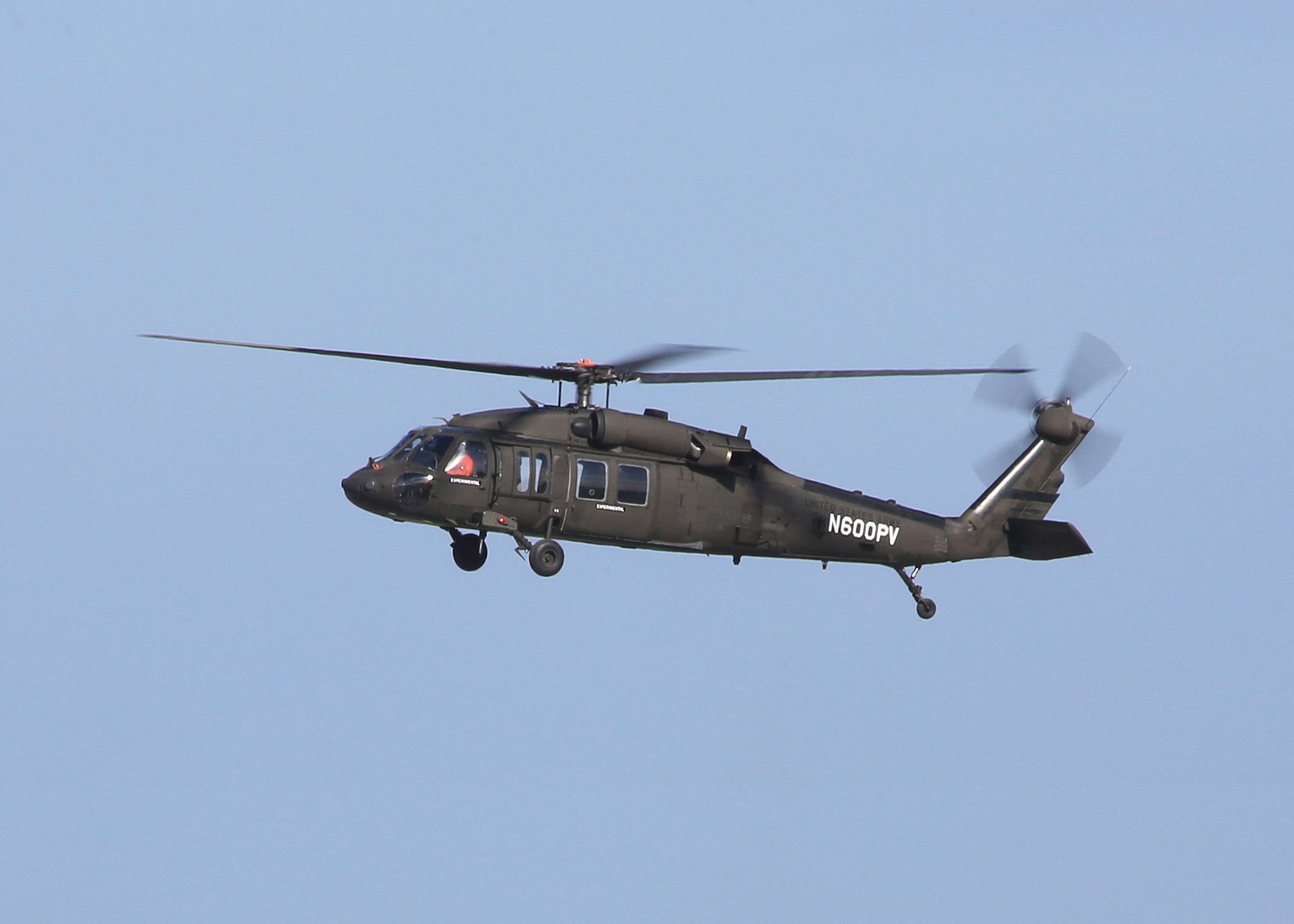
OPVBlackHawkFirstFlight2019-Sikorsky
"This technology brings a whole new dimension of safety, reliability and capability to existing and future helicopters and to those who depend on them to complete their missions," said Chris Van Buiten, Vice President, Sikorsky Innovations. "We're excited to be transforming a once mechanically controlled aircraft into one with fly-by-wire controls. This flight demonstrates the next step in making optionally piloted – and optimally piloted – aircraft, a reality."
This is the first full authority fly-by-wire retrofit kit developed by Sikorsky that has completely removed mechanical flight controls from the aircraft.
Through DARPA's Aircrew Labor In-Cockpit Automation System (ALIAS) program, Sikorsky is developing an OPV approach it describes as pilot directed autonomy to give operators the confidence to fly aircraft safely, reliably and affordably in optimally piloted modes enabling flight with two, one or zero crew. The program aims to improve operator decision aiding for manned operations while also enabling both unmanned and reduced crew operations.
Sikorsky has been demonstrating its MATRIX™ Technology on a modified S-76B™ called the Sikorsky Autonomy Research Aircraft (SARA). The aircraft, which has been in test since 2013, has more than 300 hours of autonomous flight.
Sikorsky announced in March that its S-92® helicopter fleet update will include the introduction of phase one MATRIX Technology that will bring advanced computing power to the platform. This foundation enables adoption of autonomous landing technology.
For more information about Sikorsky MATRIX Technology, which won an Edison award in 2018, visit https://lockheedmartin.com/en-us/products/sikorsky-matrix-technology.html.
About Lockheed Martin
Headquartered in Bethesda, Maryland, Lockheed Martin is a global security and aerospace company that employs approximately 105,000 people worldwide and is principally engaged in the research, design, development, manufacture, integration and sustainment of advanced technology systems, products and services.
Ampaire's twin pull-push hybrid first flight [photos & video]


press release
The Highest-Capacity Electric Aircraft Ever Flown Held First Public Test Flight in the Skies Above Southern California on Thursday, Paving the Way for Ampaire Inc. to Have Regular Commercial Service for Passengers and Cargo as Soon as 2021
Aviation Company Ampaire, Inc., Helps Further Cement Los Angeles as the Center of Innovation on Transportation Electrification
Camarillo, California, June 6, 2019. Ampaire, Inc. has moved the aviation industry a major step forward with the test flight of the Ampaire 337, the highest-capacity hybrid-electric aircraft ever flown. On Thursday, June 6, Ampaire engineers, investors and journalists witnessed the hybrid-electric Ampaire 337 fly in the skies above Camarillo Airport.
This is a significant step for aviation because never before has a hybrid-electric aircraft this large flown. Ampaire’s 337 is built with a direct path towards commercialization—moving electric aviation firmly from futuristic to attainable.
The aircraft, based on the six-seat Cessna 337 Skymaster, was retrofitted with Ampaire's proprietary electric propulsion system and is powered by a lightweight battery system. The battery-powered electric motor replaces a combustion engine of the aircraft's original two-engine configuration, and the resulting system is a ‘parallel hybrid’, meaning the internal combustion engine and electric motor work in concert to optimize power output as the plane flies. In hybrid configuration, the aircraft sees significant greenhouse gas emissions savings and operating cost reductions. The experimental plane was flown by a test pilot and flight engineer.
“The first flight of Ampaire’s electric passenger aircraft is a huge step forward for aviation,” said Deborah Flint, CEO of Los Angeles World Airports. “As a cleantech company that was started in our great city as part of LACI, Ampaire’s incredible achievement further cements Los Angeles as the leader in transportation electrification and technology innovation.”
“Imagine that in just a few years you will be able to buy a ticket for a flight that is clean, quiet and inexpensive,” said Kevin Noertker, CEO of Ampaire. “Ampaire is proud to lead the aviation industry in transportation electrification, and we recognize the importance of electric aviation for climate change and community connectivity.”
“Given the urgency of the climate crisis, today’s historic flight not only signifies a huge step forward for aviation, it also shines a light on Los Angeles’s leadership in transportation electrification,” said Matt Petersen, CEO of the Los Angeles Cleantech Incubator (LACI). “That’s why I’m so excited for the Ampaire team for their first hybrid-electric flight—as a LACI portfolio company, Ampaire and their Ampaire 337 flight test program further proves that Los Angeles is a cleantech hub that attracts investment and game-changing innovation for climate solutions.”
"Flight is becoming electric and this is the most incredible team to make that happen! Ampaire's approach is one of the many reasons we chose to support them through our accelerator program,” said Van Espahbodi, Co-Founder and Managing Director of Starburst Accelerator. “We see tremendous potential in their business model, and we're excited to see them achieve this significant technical milestone."
Aircraft are a significant contributor to both local and global emissions. Electric and hybrid-electric aircraft will reduce GHG emissions and air pollution even as more and more goods and people fly. In addition, electric aircraft are quieter, more efficient and cost much less to fly and maintain connecting communities, making skies quieter.
Ampaire has mapped a clear path from today’s first test flight of a prototype to commercial operations in 2021. Thursday’s test flight follows the Federal Aviation Administration (FAA) May 2019 airworthiness approval to begin a flight test program. The test flights will see the aircraft fly multiple times per week from June through August 2019 and will gather data about the electric propulsion performance characteristics.
In late 2019, Ampaire will begin a pilot project on a commercial route on the Hawaiian island of Maui. The aircraft will be a newly retrofitted Cessna 337 built with learnings from the test flight program that inform the configuration of the battery and motor. This aircraft will be a pre-production prototype and will move Ampaire closer to commercial readiness.
Ampaire’s focus is on supplying aircraft to regional airlines— who typically fly short-haul—often serving remote communities and island regions. In addition to the upcoming pilot project in Maui, Ampaire is also in collaboration with Vieques Air Link (VAL), a regional airline in Puerto Rico, to establish a pilot project in the region. Alongside Mokulele Airlines and VAL, Ampaire has signed Letters of Interest with 14 other airlines across the world.
About Ampaire
Ampaire is leading the charge in aircraft electrification. The Los Angeles based company is on a mission to be the world’s most trusted developer of practical and compelling electric aircraft. To start, Ampaire is retrofitting existing passenger aircraft to electric. It’s the leanest, fastest, most capital efficient approach to making commercial electric air travel a reality. As a LACI portfolio company, Ampaire has its roots in Los Angeles. Ampaire’s vision is to make flights more accessible to more people from more airports by providing electric aircraft that are safe, clean, quiet, and less costly to operate.
miércoles, 5 de junio de 2019
Air Race 1 & Air Race Electric on Red Bull Air Race
press release


Following the announcement that Red Bull Air Race will not continue beyond the 2019 season, Air Race 1 and Air Race E CEO and Founder, Jeff Zaltman has released the below and attached statement.
The announcement that Red Bull Air Race will not continue beyond the 2019 season is sad news not only for the pilots, teams and fans that put so much effort into that iconic series, but the wider aviation community as a whole.
Air racing can be a demanding and logistically challenging sport and one that requires a lot of time and dedication from everyone involved. Red Bull Air Race set the standard for air racing development and provided a platform for highly skilled pilots to compete in a professional competition to put on an impressive spectacle for its global fans. We wish Red Bull Air Race and the race teams all the best for the remaining three races.
Air Race 1 events will remain a regular fixture of the air racing calendar and is still the only international air race series where pilots fly wing tip-to-wing tip in what is known as formula one air racing. We are due to announce the next Air Race 1 event and other exciting news soon, as we continue to grow towards our long-term strategy of becoming a mainstream sport.
In addition, we have just announced the formal bidding process for venues interested in hosting the world’s first ever electric air race, Air Race E, next year. This will be the first in a series of international electric air racing events aimed at accelerating and promoting the development of cleaner, faster and more technologically-advanced electric engines.
We’re delighted to have Airbus as the Official Founding Partner of the new Air Race E series and we are actively seeking the involvement of other industry partners to collaborate on all aspects of making this series a success.
We welcome interest from anyone looking to get involved in Air Race 1 or Air Race E and we hope that pilots, teams and fans of Red Bull Air Race will continue to support our series as we commit to ensuring the sport of air racing continues to thrive for many years to come.
For more information on Air Race 1 and Air Race E go to:
https://airracee.com/
http://airrace1.com/
About Air Race 1
Air Race 1 is pure motorsport at its fastest. It is a thrilling test of pilot skill based upon the long-running sport known as formula one air racing. Formula one airplanes are a specifically defined airplane class with over 70 years of history which sets strict parameters regarding wing area, engine size and other technical characteristics. Air Race 1 is the top international title in the sport and is sanctioned by all three international formula air racing associations. Air Race 1 World Cup is the event name and trading name of Air Race CC Ltd, which is registered in the United Kingdom and has a base of operations in Spain. Air Race 1 is comprised of highly-regarded industry-leading experts who have extensive experience in organizing and promoting air racing and air sports competitions on a global scale and who work hard to ensure this race is both safe and a monumental success for all.
About Air Race E
Air Race E will become the world’s first all-electric airplane race when it launches its inaugural series of international races in 2020. Run by Air Race Events and led by world-leading air racing promoter Jeff Zaltman, the man behind the globally successful Air Race 1 World Cup, the race is set to revolutionise air racing and pioneer innovations in electric aviation. Air Race E will see electric airplanes race directly against each other on a tight 5km circuit just 10m above the ground and at speeds faster than any land-based motorsport. The demand for speed, performance and power management under the rigors of a competitive race environment provide the perfect platform for the development and promotion of cleaner, faster and more technologically-advanced electric engines. The Light Aircraft Association (LAA), has committed its support in developing the technical regulations and providing design oversight for the sport, soon to be sanctioned by the Formula Air Racing Association (FARA) and its counter-part in France, the Association des Pilotes D'Avions de Formules (APAF).


Following the announcement that Red Bull Air Race will not continue beyond the 2019 season, Air Race 1 and Air Race E CEO and Founder, Jeff Zaltman has released the below and attached statement.
The announcement that Red Bull Air Race will not continue beyond the 2019 season is sad news not only for the pilots, teams and fans that put so much effort into that iconic series, but the wider aviation community as a whole.
Air racing can be a demanding and logistically challenging sport and one that requires a lot of time and dedication from everyone involved. Red Bull Air Race set the standard for air racing development and provided a platform for highly skilled pilots to compete in a professional competition to put on an impressive spectacle for its global fans. We wish Red Bull Air Race and the race teams all the best for the remaining three races.
Air Race 1 events will remain a regular fixture of the air racing calendar and is still the only international air race series where pilots fly wing tip-to-wing tip in what is known as formula one air racing. We are due to announce the next Air Race 1 event and other exciting news soon, as we continue to grow towards our long-term strategy of becoming a mainstream sport.
In addition, we have just announced the formal bidding process for venues interested in hosting the world’s first ever electric air race, Air Race E, next year. This will be the first in a series of international electric air racing events aimed at accelerating and promoting the development of cleaner, faster and more technologically-advanced electric engines.
We’re delighted to have Airbus as the Official Founding Partner of the new Air Race E series and we are actively seeking the involvement of other industry partners to collaborate on all aspects of making this series a success.
We welcome interest from anyone looking to get involved in Air Race 1 or Air Race E and we hope that pilots, teams and fans of Red Bull Air Race will continue to support our series as we commit to ensuring the sport of air racing continues to thrive for many years to come.
For more information on Air Race 1 and Air Race E go to:
https://airracee.com/
http://airrace1.com/
About Air Race 1
Air Race 1 is pure motorsport at its fastest. It is a thrilling test of pilot skill based upon the long-running sport known as formula one air racing. Formula one airplanes are a specifically defined airplane class with over 70 years of history which sets strict parameters regarding wing area, engine size and other technical characteristics. Air Race 1 is the top international title in the sport and is sanctioned by all three international formula air racing associations. Air Race 1 World Cup is the event name and trading name of Air Race CC Ltd, which is registered in the United Kingdom and has a base of operations in Spain. Air Race 1 is comprised of highly-regarded industry-leading experts who have extensive experience in organizing and promoting air racing and air sports competitions on a global scale and who work hard to ensure this race is both safe and a monumental success for all.
About Air Race E
Air Race E will become the world’s first all-electric airplane race when it launches its inaugural series of international races in 2020. Run by Air Race Events and led by world-leading air racing promoter Jeff Zaltman, the man behind the globally successful Air Race 1 World Cup, the race is set to revolutionise air racing and pioneer innovations in electric aviation. Air Race E will see electric airplanes race directly against each other on a tight 5km circuit just 10m above the ground and at speeds faster than any land-based motorsport. The demand for speed, performance and power management under the rigors of a competitive race environment provide the perfect platform for the development and promotion of cleaner, faster and more technologically-advanced electric engines. The Light Aircraft Association (LAA), has committed its support in developing the technical regulations and providing design oversight for the sport, soon to be sanctioned by the Formula Air Racing Association (FARA) and its counter-part in France, the Association des Pilotes D'Avions de Formules (APAF).
Airbus opens new office in Argentina, reinforces commitment to Latin America
press release
Airbus inaugurated today its new office in Buenos Aires, to strengthen its presence in Latin America and reinforce its commitment to the country.
Alberto Robles, Head of Airbus Strategy & International for Latin America, said that the presence of Airbus in Argentina is a natural step in increasing Airbus’ activity in the region. “There are great opportunities for Airbus in Latin America, and this new office in Buenos Aires is essential to consolidate our products in the region, while continuing to provide an even closer support to our customers in the country.”
Airbus has been present in Argentina for decades. In 1994 Aerolíneas Argentinas became an Aibrus customer with the A310-300. Today, the airline operates a long-range fleet of 10 A330 and two A340. Airbus also established a maintenance training centre in collaboration with Aerolíneas Argentinas to support the airline’s growth. Airbus maintains 35 percent market share of the country’s passenger fleet in service. LATAM and JetSmart also operate in Argentina with their A320 Family aircraft, the world's most popular single-aisle aircraft family.
With more than 40 years in Latin America, Airbus helicopters represent a third of the country’s operating fleet, mainly in service with the Armed Forces and other public institutions such as the Federal Police, the National Gendarmerie, and the Naval Prefecture in several provinces. The more than 85 helicopters in service have a key role in performing vital operations for the population such as border protection and helping to fight against organized crime, search and rescue missions in mountainous areas, firefighting and emergency medical transport. In an effort to closely support its customer operators, Airbus Helicopters also established a maintenance centre in Argentina to improve operations and increase rotorcraft availability.
As part of its on-going contribution to the development of the aerospace industry in the country, Airbus Defence and Space signed an agreement in 2017 with the Argentine aircraft factory "Brigadier San Martín" (FAdeA) to support the Airbus C212 of the Army and Naval Prefecture. These aircraft have been serving the country's Armed Forces and Security sector for more than 25 years.
With over 1,300 employees located throughout 18 sites across eight countries: Argentina, Brazil, Chile, Colombia, Mexico, Peru, Uruguay and a regional hub in Miami, Airbus continues to expand its presence in Latin America with its new facility in Argentina.
Boeing Invests in Commercial UAS Services Provider Robotic Skies
press release
Boeing [NYSE: BA] today announced its investment in Robotic Skies, a services provider that connects manufacturers and operators of commercial unmanned aircraft systems (UAS) with a global network of more than 170 civil aviation authority-certified repair stations.
"With safety as a cornerstone, we are shaping a robust operational ecosystem for on-demand mobility that supports the future of aircraft, air vehicles and autonomous systems," said Brian Schettler, managing director for Boeing HorizonX Ventures.
The investment is part of Boeing's disciplined, long-term strategy of entering into value-added partnerships that enhance and accelerate growth and deliver key differentiators for customers.
"Unmanned and autonomous commercial aircraft operations are increasingly mirroring those in manned aviation, including the need for quality maintenance provided by certified technicians," said Brad Hayden, founder and CEO of Robotic Skies. "This latest investment will allow us to continue to grow our global footprint and expand operational capabilities to support customers."
Boeing HorizonX Ventures led this funding round with participation from Thayer Ventures, Sun Mountain Capital and KickStart Seed Fund. The investment builds on a previously-announced collaboration with Robotic Skies, Boeing Global Services and its subsidiaries Aviall and Jeppesen to provide enhanced commercial UAS services.
Boeing is the world's largest aerospace company and leading provider of commercial airplanes, defense, space and security systems, and global services. As the top U.S. exporter, the company supports commercial and government customers in more than 150 countries. Boeing employs more than 150,000 people worldwide and leverages the talents of a global supplier base. Building on a legacy of aerospace leadership, Boeing continues to lead in technology and innovation, deliver for its customers and invest in its people and future growth.
Robotic Skies is the only global network of certified UAS maintenance centers. It offers comprehensive turnkey field service programs designed to keep UAS flying safely, efficiently and affordably around the world. Founded in 2014, Robotic Skies has more than 170 certified repair stations across more than 40 countries, providing MRO and support services for commercial UAS. Each service center in the network possesses the aviation expertise and factory training to ensure the mission readiness of these aircraft. For more information about Robotic Skies, visit www.roboticskies.com.
- Startup manages maintenance, inspection and alteration services for global manufacturers and operators of commercial unmanned aircraft systems
- Access to safe, reliable maintenance will support commercial operations and urban mobility efforts
Boeing [NYSE: BA] today announced its investment in Robotic Skies, a services provider that connects manufacturers and operators of commercial unmanned aircraft systems (UAS) with a global network of more than 170 civil aviation authority-certified repair stations.
"With safety as a cornerstone, we are shaping a robust operational ecosystem for on-demand mobility that supports the future of aircraft, air vehicles and autonomous systems," said Brian Schettler, managing director for Boeing HorizonX Ventures.
The investment is part of Boeing's disciplined, long-term strategy of entering into value-added partnerships that enhance and accelerate growth and deliver key differentiators for customers.
"Unmanned and autonomous commercial aircraft operations are increasingly mirroring those in manned aviation, including the need for quality maintenance provided by certified technicians," said Brad Hayden, founder and CEO of Robotic Skies. "This latest investment will allow us to continue to grow our global footprint and expand operational capabilities to support customers."
Boeing HorizonX Ventures led this funding round with participation from Thayer Ventures, Sun Mountain Capital and KickStart Seed Fund. The investment builds on a previously-announced collaboration with Robotic Skies, Boeing Global Services and its subsidiaries Aviall and Jeppesen to provide enhanced commercial UAS services.
Boeing is the world's largest aerospace company and leading provider of commercial airplanes, defense, space and security systems, and global services. As the top U.S. exporter, the company supports commercial and government customers in more than 150 countries. Boeing employs more than 150,000 people worldwide and leverages the talents of a global supplier base. Building on a legacy of aerospace leadership, Boeing continues to lead in technology and innovation, deliver for its customers and invest in its people and future growth.
Robotic Skies is the only global network of certified UAS maintenance centers. It offers comprehensive turnkey field service programs designed to keep UAS flying safely, efficiently and affordably around the world. Founded in 2014, Robotic Skies has more than 170 certified repair stations across more than 40 countries, providing MRO and support services for commercial UAS. Each service center in the network possesses the aviation expertise and factory training to ensure the mission readiness of these aircraft. For more information about Robotic Skies, visit www.roboticskies.com.
KLM and TU Delft join forces to make aviation more sustainable

(Image: Edwin Wallet, Studio OSO)
KLM President & CEO Pieter Elbers and Dean of the Faculty of Aerospace Engineering at Delft University of Technology (TU Delft) Professor Henri Werij today signed a new cooperative agreement to work together on making aviation more sustainable at the IATA Annual General Meeting in Seoul. KLM will be contributing towards TU Delft's research into an innovative flight concept known as the "Flying-V", which embraces an entirely different approach to aircraft design, in anticipation and support of sustainable long-distance flight in the future.
KLM President & CEO Pieter Elbers and Dean of the Faculty of Aerospace Engineering at Delft University of Technology (TU Delft) Professor Henri Werij today signed a new cooperative agreement to work together on making aviation more sustainable at the IATA Annual General Meeting in Seoul. KLM will be contributing towards TU Delft's research into an innovative flight concept known as the "Flying-V", which embraces an entirely different approach to aircraft design, in anticipation and support of sustainable long-distance flight in the future.
The aircraft's v-shaped design will integrate the passenger cabin, the cargo hold and the fuel tanks in the wings. Its improved aerodynamic shape and reduced weight will mean it uses 20% less fuel than the Airbus A350, today's most advanced aircraft. A flying scale model and a full-size section of the interior of the Flying-V will be officially presented at the KLM Experience Days at Amsterdam Airport Schiphol in October on the occasion of KLM's 100th anniversary.
The aircraft was originally conceptualised as a potential aircraft design for the future, but can be compared to today's most advanced aircraft, the Airbus A350. Although the plane is not as long as the A350, it does have the same wingspan. This will enable the Flying-V to use existing infrastructure at airports, such as gates and runways, without difficulty and the aircraft will also fit into the same hangar as the A350. What's more, the Flying-V will carry the same number of passengers – 314 in the standard configuration – and the same volume of cargo, 160m3. The Flying-V will be smaller than the A350, giving it less aerodynamic resistance.
KLM President & CEO Pieter Elbers: "In recent years, KLM has developed as a pioneer in sustainability within the airline industry. The development of aviation has given the world a great deal, offering us an opportunity to connect people. This privilege is paired with a huge responsibility for our planet. KLM takes this very seriously and has therefore been investing in sustainability at different levels for many years, enabling it to develop a broad spectrum of sustainability initiatives. We are proud of our progressive cooperative relationship with TU Delft, which ties in well with KLM's strategy and serves as an important milestone for us on the road to scaling-up sustainable aviation."
Dean of the Faculty of Aerospace Engineering at TU Delft Professor Henri Werij: "We are incredibly pleased to be able to cooperate with our trusted partner KLM on our combined mission to make aviation more sustainable. Radically new and highly energy-efficient aircraft designs such as the Flying-V are important in this respect, as are new forms of propulsion. Our ultimate aim is one of emission free flight. Our cooperation with KLM offers a tremendous opportunity to bring about real change."
Improved passenger experience
The Flying-V also provides researchers a unique opportunity to improve passenger experience in aircraft, from the seating layout in the wings, to the design of the seats and bathrooms. Everything has to be as lightweight as possible in order to maximise the efficiency gain the new aircraft shape provides. Passenger comfort is also taken into account.
Fuel versus electric propulsion
The Flying-V is propelled by the most fuel-efficient turbofan engines that currently exist. In its present design it still flies on kerosene, but it can easily be adapted to make use of innovations in the propulsion system – by using electrically-boosted turbofans for example.
For images and more information please visit www.tudelft.nl/flying-v
KLM President & CEO Pieter Elbers: "In recent years, KLM has developed as a pioneer in sustainability within the airline industry. The development of aviation has given the world a great deal, offering us an opportunity to connect people. This privilege is paired with a huge responsibility for our planet. KLM takes this very seriously and has therefore been investing in sustainability at different levels for many years, enabling it to develop a broad spectrum of sustainability initiatives. We are proud of our progressive cooperative relationship with TU Delft, which ties in well with KLM's strategy and serves as an important milestone for us on the road to scaling-up sustainable aviation."
Dean of the Faculty of Aerospace Engineering at TU Delft Professor Henri Werij: "We are incredibly pleased to be able to cooperate with our trusted partner KLM on our combined mission to make aviation more sustainable. Radically new and highly energy-efficient aircraft designs such as the Flying-V are important in this respect, as are new forms of propulsion. Our ultimate aim is one of emission free flight. Our cooperation with KLM offers a tremendous opportunity to bring about real change."
Improved passenger experience
The Flying-V also provides researchers a unique opportunity to improve passenger experience in aircraft, from the seating layout in the wings, to the design of the seats and bathrooms. Everything has to be as lightweight as possible in order to maximise the efficiency gain the new aircraft shape provides. Passenger comfort is also taken into account.
Fuel versus electric propulsion
The Flying-V is propelled by the most fuel-efficient turbofan engines that currently exist. In its present design it still flies on kerosene, but it can easily be adapted to make use of innovations in the propulsion system – by using electrically-boosted turbofans for example.
For images and more information please visit www.tudelft.nl/flying-v
Related:
martes, 4 de junio de 2019
lunes, 3 de junio de 2019
domingo, 2 de junio de 2019
Suscribirse a:
Entradas (Atom)