martes, 26 de febrero de 2013

Japanese probe identifies cause of 787 Dreamliner fuel leak problems


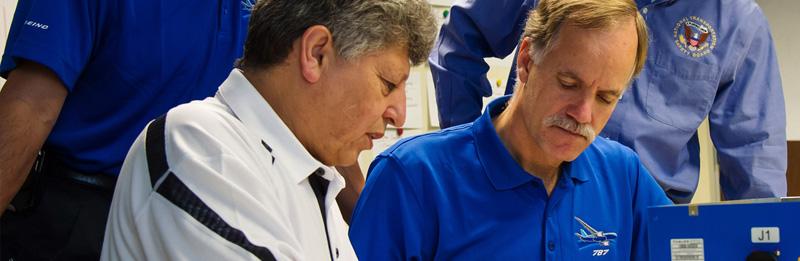
Japanese regulators have identified the reasons for the fuel leaks and other problems that occurred on Japan Airlines' (JAL) 787 Dreamliner jets in January but are still investigating battery problems that caused worldwide grounding of the aircraft.

Japan's Transport Ministry concluded that the fuel leak which occured on 9 January, prior to the takeoff of JAL 787 in Boston, was due to a foreign material 1.5mm big that was stuck to fuel valves and caused them to remain partially open.

In addition, a fuel leak on the same aircraft at Tokyo's Narita airport, on 13 January, was caused by an improperly applied electrical-insulating coating material.

lunes, 25 de febrero de 2013

Quadrocopters throw, catch, and balance an inverted pendulum

Quadrocopters throw, catch, and balance an inverted pendulum:
A quadrocopter robot balances a pole while a second robot waits to catch it
Apparently, balancing a pole on top of a flying quadrocopter robot wasn't challenging enough for the researchers at ETH Zurich's Institute for Dynamic Systems and Control. Their latest project has two quadrocopters playing catch with a precariously balanced pole – the first robot launches the pole into the air, while the second robot deftly moves into position in less than a second to catch it as it falls. The incredible precision flying achieved by the team can be seen in a video after the break...
Continue Reading Quadrocopters throw, catch, and balance an inverted pendulum

Boeing Acquires CPU Tech's Microprocessor Business

  • Acalis microprocessors provide critical security for global aerospace and defense customers
  • Acquisition increases Boeing's vertical depth to further differentiate its platforms and services in growing global market

ST. LOUIS, Feb. 22, 2013 -- Boeing [NYSE: BA] today continued to address its global customers' enduring need to protect warfighters from information-assurance attacks by acquiring CPU Technology Inc.'s Acalis business. Acalis microprocessors contain unique hardware and software that can guard mission-critical onboard systems in Boeing platforms.

"Acalis provides security-on-a-chip that can help defend the manned and unmanned aircraft we build at Boeing today and in the future for customers around the world," said Chris Chadwick, president of Boeing Military Aircraft. "With these processors onboard, warfighters can complete their missions and not be sidelined by malware, cloning and other cyber threats against the aircraft's systems."

Acalis will be integrated into Boeing Military Aircraft's Global Strike division. The Acalis business employs approximately 40 people and is based in Pleasanton, Calif.

Acquiring Acalis continues the company's strategy of increasing Boeing's vertical depth to better differentiate its offerings and provide long-term value for its global aerospace and defense customers.

CPU Technology was privately held and the terms of the transaction were not disclosed.

A unit of The Boeing Company, Boeing Defense, Space & Security is one of the world's largest defense, space and security businesses specializing in innovative and capabilities-driven customer solutions, and the world's largest and most versatile manufacturer of military aircraft. Headquartered in St. Louis, Boeing Defense, Space & Security is a $33 billion business with 60,000 employees worldwide. Follow us on Twitter: @BoeingDefense.

# # #

Forward-Looking Information Is Subject to Risk and Uncertainty

Certain statements in this release may be "forward-looking" within the meaning of the Private Securities Litigation Reform Act of 1995, including statements regarding benefits and synergies of the transaction, as well as any other statement that does not directly relate to any historical or current fact. Forward-looking statements are based on current assumptions about future events that may not prove to be accurate. These statements are not guarantees and are subject to risks, uncertainties and changes in circumstances that are difficult to predict. Many factors could cause actual results to differ materially from these forward-looking statements. As a result, these statements speak only as of the date they are made and we undertake no obligation to update or revise any forward-looking statement, except as required by law. Specific factors that could cause actual results to differ materially from these forward-looking statements include the effect of global economic conditions, our ability to successfully integrate CPU Tech’s business and realize anticipated synergies, and other important factors disclosed previously and from time to time in our filings with the Securities and Exchange Commission.

Boeing-COMAC Technology Center to Support Efficient Air Traffic Management

  • Companies will work with Chinese researchers to forecast 30-year airspace capacity, new opportunities for efficiency
  • Collaborative effort will support growth in commercial aviation


BEIJING, Feb. 25, 2013 – Boeing [NYSE: BA] and Commercial Aircraft Corporation of China (COMAC) announced today that the Boeing-COMAC Aviation Energy Conservation and Emissions Reductions Technology Center will conduct two new research projects on air traffic management to support the long-term efficiency, capacity and safety of China’s air traffic system.

“Combining our two companies’ efforts on air traffic management through our Joint Technology Center is a natural step forward in our steadily expanding collaboration,” said Marc Allen, president of Boeing China.

The Boeing-COMAC Technology Center, the companies’ collaborative effort to support commercial aviation industry growth, will work with Civil Aviation University of China (CAUC) to forecast the 30-year capacity of China’s national airspace system. This research will develop evaluation tools to predict trends of future airspace development and provide recommendations for improving the national airspace system. CAUC is administered by the Civil Aviation Administration of China and hosts the National Key Laboratory of Operation Safety Technology.

“With the increasing demand for air transport and growing environmental concerns, air traffic management plays a key role in the healthy growth of air transport capability,” said Dr. Guangqiu Wang, vice president of COMAC’s Beijing Aeronautical Science and Technology Research Institute (BASTRI). “It is our great pleasure to cooperate with Boeing to work on air traffic management initiatives for greater energy efficiency and emission reduction.”

The Boeing-COMAC Technology Center will also work with Nanjing University of Aeronautics and Astronautics, which hosts the National Key Laboratory of Air Traffic Flow Management Technology, on development of an air traffic decision support system to optimize in-bound air traffic flow at airports. Successful outcomes from this project will help air traffic controllers determine the most efficient arrival sequences and enhance flight safety by providing better situational awareness.

“We are very pleased to work with COMAC to support the long-term efficiency of China’s commercial aviation system and reduce greenhouse gas emissions,” said Dr. Dong Yang Wu, vice president of Boeing Research & Technology - China. “The Boeing-COMAC Technology Center continues to partner with wop’rld-class research capabilities in China to support commercial aviation’s growth while reducing its environmental footprint.”

The Boeing-COMAC Technology Center previously announced research to identify contaminants in waste cooking oil, which is sometimes called “gutter oil” in China, and processes that may treat and clean it for use as jet fuel. Funded by both companies and located in COMAC’s BASTRI, the Boeing-COMAC Technology Center is working with China-based universities and research institutions to expand knowledge in areas such as sustainable aviation biofuels and air traffic management that improve commercial aviation’s efficiency and reduce carbon emissions.

China is one of the world’s fastest-growing aviation markets. The Civil Aviation Administration of China has reported that passenger traffic reached 319 million in 2012 and forecasts that it will reach 1.5 billion passengers in 2030. Boeing has estimated that Chinese airlines will need to buy 5,260 new commercial airplanes by 2031 to meet this extraordinary demand.


About COMAC

The Commercial Aircraft Corporation of China, Ltd. (COMAC) is a state-owned company, which is formed with the approval of the State Council and jointly invested by the State-owned Assets Supervision and Administration Commission (SASAC) of the State Council, Shanghai Guosheng (Group) Co., Ltd., Aviation Industry Corporation of China (AVIC), China Aluminum Corporation (CHINALCO), Baosteel Group, and Sinochem Group. COMAC was held on May 11th, 2008. COMAC is headquartered in Shanghai. Mr Jin Zhuanglong serves as Chairman of the Board, and Mr He Dongfeng as President.

COMAC functions as the main vehicle in implementing large passenger aircraft programs in China. It is also mandated with the overall planning of developing trunk liner and regional jet programs and realizing the industrialization of civil aircraft in China. COMAC is engaged in the research, manufacture and flight tests of civil aircraft and related businesses such as marketing, servicing, leasing and operations of civil aircraft. The company has six member organizations: Shanghai Aircraft Design and Research Institute (SADRI), Shanghai Aircraft Manufacturing Co., Ltd. (SAMC), Shanghai Aircraft Customer Service Co., Ltd., Beijing Aeronautical Science and Technology Research Institute (BASTRI)., COMAC Flight Test Center (CFTC), Shanghai Aviation Industrial (Group) Co., Ltd. (SAIGC) and Shanghai Commercial Aircraft Magazine Co., Ltd.


COMAC adopts a "major manufacturer-suppliers" model, focusing on aircraft design, final assembly and manufacture of aircraft, marketing and customer service, and acquisition of certification. COMAC adheres to the principle of "developing with Chinese characteristics and representing the technical progress" and makes self-reliant advancement in the process of marketing, integration, localization and globalization. The company endeavors to manufacture large passenger aircraft that are safe, economical, comfortable and environmentally friendly. COMAC is determined to independently build large Chinese passenger aircraft that will soon be soaring through the blue skies.


About Boeing

Boeing is the world's largest aerospace company and leading manufacturer of commercial jetliners and defense, space and security systems. A top U.S. exporter, the company supports airlines and U.S. and allied government customers in 150 countries. Boeing products and tailored services include commercial and military aircraft, satellites, weapons, electronic and defense systems, launch systems, advanced information and communication systems, and performance-based logistics and training. For more information about Boeing please visit www.boeing.com.


Boeing is currently celebrating the 40th anniversary of its partnership with China’s aviation industry.Boeing is the single largest purchaser of made-in-China aviation parts, committing hundreds of millions of dollars annually to dozens of suppliers. Today, some 6,000 Boeing airplanes fly throughout the world with integrated China-built parts and assemblies.

Lockheed to upgrade USAF's F-22 jet fleet in $6.9bn contract

Lockheed to upgrade USAF's F-22 jet fleet in $6.9bn contract: The US Department of Defense (DoD) has awarded a sole source indefinite-delivery, indefinite-quantity $6.9bn acquisition contract to Lockheed Martin, to upgrade the US Air Force's (USAF) F-22 Raptor fighter jet fleet.

Asia-Pacific to drive demand for bigger and more efficient aircraft


Demand for nearly 10,000 new aircraft, including over 3,800 widebodies
Blagnac, 25 February 2013


Asia-Pacific airlines will lead global demand for larger and more eco-efficient aircraft types over the next 20 years, according to the latest market forecast for the region by Airbus. The forecast was presented today in Singapore by John Leahy, Chief Operating Officer, Customers, Airbus.

Altogether, airlines from the region will take delivery of around 9,870 new passenger and cargo aircraft during the forecast period, valued at US$1.6 trillion. This represents 35 per cent of all new aircraft deliveries worldwide over the next 20 years, ahead of Europe and North America. In terms of value, the region will account for 40 per cent of the global market for new airliners, reflecting the higher proportion of widebody aircraft required by Asia-Pacific carriers.

In the passenger market, the fleet of aircraft operated by Asia-Pacific carriers is expected to more than double in the next 20 years, from 4,300 aircraft today to a total of 10,440 jets, based on higher than average annual traffic growth of 5.8 per cent and replacement of nearly 3,500 aircraft in service today.

Reflecting the high levels of urbanisation in the Asia-Pacific region, traffic will continue to be concentrated around a growing number of major cities, with larger aircraft providing the most efficient means of meeting demand while overcoming airport constraints. As a result, Airbus predicts that carriers in the region will acquire some 3,840 widebody aircraft over the next 20 years, accounting for 44 per cent of worldwide demand in the larger aircraft categories.

The widebody deliveries to the region will include 3,080 twin-aisle aircraft, such as the A330 and all-new A350 XWB, and around 760 very large aircraft with over 400 seats, such as the A380, for the busiest routes. At the top end of the market, the region will lead global demand for airliners such as the A380, accounting for 45 per cent of deliveries in this size category.

In addition to long haul services, carriers in the region will continue to operate large numbers of mid-size widebodies on regional services, with more routes being served in the future by aircraft carrying more than 400 passengers.

While Asia-Pacific carriers will lead demand in the larger aircraft segments, the latest Airbus forecast also sees the number of single aisle aircraft in the region accelerating in the coming years.

This will be largely driven by the ongoing growth in the low cost sector, which has increased by seven per cent annually for the last ten years. This growth, plus replacement cycles, will generate demand for some 6,030 new single aisle aircraft in the region, such as the best-selling A320 Family.

As with the widebody market, the average seating capacity of single aisle aircraft in the region will also grow, with a significant move towards the larger models offered by the various manufacturers and higher seating configurations.

In the cargo sector, the region will continue to dominate the global market. According to the new forecast, the dedicated freighter fleet operated by Asia-Pacific airlines will grow from 316 today to some 887, representing 30 per cent of the global freighter fleet. While many of the aircraft will be converted from passenger models, Airbus predicts that around 251 new production freighters will be delivered to the region over the next two decades. As in other world regions, around 30 per cent of the freighters will be in the 45 – 70 tonne category served by mid-size widebody aircraft, such as the A330.

“The Asia-Pacific market is where the action will be in the air transport market over the next 20 years,” said John Leahy, Chief Operating Officer, Customers. “Growing economies, bigger cities and increasing wealth will see more people flying, driving the need for larger and more efficient aircraft.”

“Airbus will be uniquely placed to meet demand from airlines in the region with the most modern, efficient and comprehensive product line, ranging from 100 to over 500 seats and catering to every market segment.”

The Asia-Pacific region is a core market for Airbus, accounting for 31 per cent of all orders recorded by the company to date. Today, there are more than 2,100 Airbus aircraft in service with 97 operators across the region, with another 1,800 on order with customers for future delivery. This represents over a third of the company's total backlog, reflecting the importance of the region as the fastest growing market for new civil aircraft.

Airbus' forecast for the Asia-Pacific region is derived from the company's Global Market Forecast, which foresees a need for some 28,200 passenger and freighter aircraft valued at nearly US$4.0 trillion over the next 20 years. In the various size categories the forecast predicts total demand for 1,710 very large aircraft, 6,970 twin aisle widebodies and 19,520 single aisle aircraft.

The Airbus product line comprises the best-selling A320 Family in the single aisle market, the popular A330 and all-new A350 XWB in the mid-size widebody category and the flagship A380 in the very large aircraft segment. In the freight market Airbus currently offers the new-build A330-200F and the A330 Passenger-to-Freighter (A330P2F) programme.

domingo, 24 de febrero de 2013

PowerUp 3.0 – here's how it works

PowerUp 3.0 – here's how it works:
A paper airplane equipped with the PowerUp 3.0 kit, which is controlled via PowerUp's flig...
Earlier this month, we reported on the PowerUp 3.0 – a US$50 kit that lets you control a powered paper airplane via your smartphone. At the time, we were still waiting to hear back from its designer, regarding how a simple add-on motorized propeller could be used to actually steer the plane. Now we know.
..
Continue Reading PowerUp 3.0 – here's how it works

Skyflash: Jetman-like wings designed to allow ground take off

Skyflash: Jetman-like wings designed to allow ground take off:
The Skyflash one-man, jet-propelled wing undergoes testing
While most of us sit around grumbling and demanding to know, “where’s my jetpack?", German Fritz Unger and a group of friends have decided to do something about it. On a shoestring budget they are building their own one-man, jet-propelled wing. Dubbed “Skyflash,” it’s meant to not only emulate the jet wing made famous by Jetman Yves Rossy, but to go one better by taking off from the ground instead of having to be dropped from an aircraft...
Continue Reading Skyflash: Jetman-like wings designed to allow ground take off

A400M Gears Up For First Flight

A400M Gears Up For First Flight:
The first flight of a production-standard A400M, Airbus Military's heavy airlifter, is expected to take place in the first week of March. The first aircraft, MSN0007, for the French Air Force, was rolled out of the paint-shop several months ago. 

sábado, 23 de febrero de 2013

Entire F-35 fleet grounded over engine issues

Unlike the last suspension , which was
only for the B variant , this suspension
affects all three variants: the F - 35 A Air
Force conventional takeoff version , the
F 35 - B for the Marines , and the F 35 - C
carrier variant for the Navy .
" On Feb . 19 , 2013 , a routine engine
inspection revealed a crack on a low
pressure turbine blade of an F 135 engine
installed in a [ conventional takeoff ] test
aircraft at Edwards Air Force Base , Calif ,"
wrote Kyra Hawn, Joint Program Office
( JPO) spokeswoman , in a statement

http://www.airforcetimes.com/mobile/news/2013/02/dn022213-f35-grounded-again-mil

viernes, 22 de febrero de 2013

La Comunidad de Madrid echa a andar la ampliación de EADS CASA en La Carpetania

La Comisión de Urbanismo de la Comunidad de Madrid ha aprobado inicialmente este proyecto -que actualmente se encuentra en la fase de información pública para la realización de alegaciones-, que llevaba paralizado casi cuatro años por la falta de entendimiento entre la Comunidad y el Ayuntamiento de Getafe.

Esta medida permitirá una segregación de 400.000 metros cuadrados para la ampliación de EADS-CASA, que en principio estaban incluidos dentro de la segunda fase de Carpetania, proyecto que comprende un total de 3.700.000 metros cuadrados, pero que ahora se realizará antes que el resto del desarrollo.

Airbus: GLOBAL MARKET FORECAST 2012-2031


Airbus’ Global Market Forecast for 2012-2031 offers a forward-looking view of the air transport sector’s evolution – taking into account such drivers and factors as population growth, urbanization, emerging markets, innovation and environmental impact.

During this period, Airbus foresees the need for some 27,300 passenger airliners with seating capacities of 100 seats and above, along with nearly 900 new factory-built freighter aircraft. The Global Market Forecast also anticipates a more than doubling of the world’s overall passenger aircraft inventory, from 15,500 today to more than 32,500 by 2031


Download the Airbus GMF app compatible with iPad on iTunes
or
Download the Airbus GMF app compatible with Android on Google Play
or
Experience the Airbus GMF interactive web animation


Airbus Global Market Forecast 2012-2031 slides
"Navigating the Future" by John Leahy, Airbus COO - Customers, and Chris Emerson, Airbus Senior Vice President - Future Programmes & Market Strategy - 4 September 2012
Airbus-Global-Market-Forecast-September-2012.pdf — 4.7 MB


Airbus Global Market Forecast 2012-2031 Booklet
Airbus’ latest Global Market Forecast (GMF) – covering the 2012-2031 timeframe, identifies a need for some 28,200 passenger and freighter aircraft worth nearly US$4 trillion, reconfirming an upward trend in the pace of new aircraft deliveries. This outlook, entitled "Navigating the Future," also outlines how emerging economic regions will further increase their importance in overall traffic growth during the next 20 years.
Airbus_-Global_Market_Forecast_2012-2031_Booklet.pdf — 5.5 MB


Airbus Global Market Forecast 2012-2031 Full Book
Airbus’ latest Global Market Forecast (GMF). Download the full book to find out more on this outlook, entitled "Navigating the Future," that outlines how emerging economic regions will further increase their importance in overall traffic growth during the next 20 years.
Airbus_Global_Market_Forecast2012-2031_Full_book.pdf — 41 MB

Airbus Predicts Move To Larger Planes

Airbus Predicts Move To Larger Planes: Says Airlines Want To Lower The Cost-Per-Seat On Existing Routes An Airbus executive says that the company thinks airlines will begin looking at larger aircraft as they seek to lower their cost-per-seat on existing routes. Airbus' director for strategic marketing and analysis Andrew Gordon said in an interview in Helsinki that there has been an "upscaling" in the airplanes that are being sold.

FL Technics, SCAC and SuperJet International sign M.o.U for MRO Services on SSJ100 fleet


Moscow, February 21. FL Technics, a global provider of integrated aircraft maintenance, repair and overhaul services, and Sukhoi Civil Aircraft Company (SCAC), the Russian civil aviation manufacturer and the developer of the Sukhoi Superjet 100 project, along with SuperJet International, a joint venture between Alenia Aermacchi, a Finmeccanica Company, (51%) and Sukhoi Holding (49%), managing SSJ100 sales and support in the Western markets, earlier today have announced about the execution of a Memorandum of Understanding (M.o.U) for Sukhoi Superjet 100 technical support in Europe and Asia.

According to the agreement FL Technics will become a partner of the SuperJet International Airframe Authorized Service Centers Network and will provide SSJ100 operators with line and base airframe maintenance services. In the nearest future FL Technics will be dedicated to provide line maintenance support to SSJ100 operators located in the South-East Asia.

"We are proud to become a part of the SuperJet International' Network of dedicated MRO providers. Sharing our experience and supporting the newest SSJ100 aircraft fleet is an important step in our company's development, particularly in the Asian region. We are positive that the latest agreement will result in a long-term and mutually beneficial partnership among FL Tehcnics, SuperJet International and SSJ100 aircraft operators from around the world," – said Jonas Butautis, the CEO of FL Technics.

"This is a significant milestone in the establishment of the SuperJet International MRO network. The cooperation with FL Technics will ensure world-class and cost-efficient support to the SSJ100 operators in Eastern Europe and South-East Asia - said Giovanni Simonetti, Senior Vice President of Customer Services with SuperJet International – this agreement confirms SuperJet International's comittment in providing SSJ100 worlwide customers with a first-class and full spectrum of after-sales services " added Simonetti.

"We recognize that a prompt and comprehensive aftermarket support is a major task for the success of the SSJ100 program and for Customers' satisfaction. This agreement between FL Technics, SCAC and SuperJet International will allow to maximize maintenance efficiency and ensure high-quality servises through the SuperJet International's MRO network" commented Andrey Nedosekin, SCAC Vice-President on After-Sales Support.

SSJ100 operators can rely on the SuperJet International MRO network for first class line and base on-wing maintenance services. SJI network is built on partnerships with well recognized MRO providers worldwide.

About Sukhoi Superjet 100:

The Sukhoi Superjet 100 (SSJ100) is a state-of-the-art 100-seat new generation jet. Designed, developed and built by Sukhoi Civil Aircraft Company (SCAC), a Sukhoi and Alenia Aermacchi company. On May 19th 2008 SSJ100 successfully accomplished its first flight. The Sukhoi Superjet 100 cruises at a Maximum Operating Speed of Mach 0.81 and 40,000 feet. It takes off from a 1,731 meters runway in the basic range and 2,052 meters in the long range. The operating range for the basic version is 3,048 km and 4,578 km for the long range version. In January 2011, the SSJ100 obtained the Type Certificate by the Russian Certification Authority IAC AR. In February 2012, the SSJ100 achieved the EASA Type Certificate.

About Sukhoi Civil Aircraft Company:

The Company's shareholders are the Sukhoi Holding owing 75% – 1 share and the Italian Alenia Aermacchi, a Finmeccanica Company, holding 25% + 1 share since April 7, 2009. Sukhoi Civil Aircraft was founded in 2000 to develop new regional aircraft projects. SCAC is in charge of the aircraft production. The company is also responsible for SSJ100 sales in Russia, the CIS, China, India, Middle East and Southeast Asia. Headquartered in Moscow, SCAC has several production branches seated in Russian cities of Komsomolsk-on-Amur, Novosibirsk and Voronezh. Sukhoi Superjet 100 is the Company's major project.

About SuperJet International:

SuperJet International, a joint venture between Alenia Aermacchi (51%) and Sukhoi Holding (49%), is in charge of marketing, sales, customization and delivery of the Sukhoi Superjet 100 regional jet in Europe, the Americas, Oceania, Africa and Japan. The Company is also responsible for the training and worldwide after-sales support, as well as the design and development of VIP and cargo variants. A SuperJet International branch is active in Moscow, together with a sales office in Washington, DC, USA.

About FL Technics:

FL Technics is a global provider of tailor-made solutions for aircraft maintenance and repair. Company specializes in base and line maintenance, full aircraft engineering, engine management, spare parts and components support, logistics and distribution, technical training and consulting services, landing gear overhaul, delivery and redelivery support.

FL Technics acts as one-stop-shop maintenance solutions' provider for Commercial and Business aviation, serving customers from Europe, the CIS and Asia-Pacific. With offices in Lithuania, Russia, the United Kingdom, Poland, Italy and Malaysia, the company provides services in base maintenance facility in Lithuania, as well as a combined network of 32 Line Stations across Europe, the CIS and Asia-Pacific. FL Technics is an EASA Part-145, Part-M, Part-147, Part-21 certified company, as well as a Boeing GoldCare Program partner, with certificate approvals in Russia, Bermuda and other countries.

EADS Reviewing Revenue Goals

Tom Enders on the failed  merger: “There’s not much sense in looking in the rearview mirror.” 

jueves, 21 de febrero de 2013

Brown University researchers build robotic bat wing


Researchers at Brown University have developed a robotic bat wing that is providing valuable new information about dynamics of flapping flight in real bats.

The robot, which mimics the wing shape and motion of the lesser dog-faced fruit bat, is designed to flap while attached to a force transducer in a wind tunnel. As the lifelike wing flaps, the force transducer records the aerodynamic forces generated by the moving wing. By measuring the power output of the three servo motors that control the robot's seven movable joints, researchers can evaluate the energy required to execute wing movements.

Se crea la Dirección de Ciberdefensa del Ejército del Aire

Se crea la Dirección de Ciberdefensa del Ejército del Aire:
El pasado día 15 de febrero el Jefe de Estado Mayor del Ejército del Aire sancionó la 2ª enmienda de la 5ª revisión de la IG 10-2 'Desarrollo de la estructura orgánica del CGEA' por la que se aprobó la creación, bajo dependencia orgánica y operativa de la Jefatura de Servicios Técnicos y de Sistemas de Información y Telecomunicaciones (JSTCIS), de la Dirección de Ciberdefensa del Ejército del Aire (DCD), como órgano responsable de gestionar, supervisar, dirigir, planificar, coordinar y ejecutar todas las acciones relativas a la seguridad en Tecnologías de la Información y Comunicación y a la Ciberdefensa en el ámbito del Ejército del Aire.

Japanese Investigators Find ANA Dreamliner Battery Miswired

Japanese Investigators Find ANA Dreamliner Battery Miswired: Transport Ministry Says More Analysis Is Still Needed To Determine Cause Of Battery Fire The Japanese Transport Ministry said Wednesday that a battery in the auxiliary power unit (APU) aboard an ANA Dreamliner which was forced to make an emergency landing January 16 was incorrectly connected to the main battery that overheated. But they have not said definitely that the miswiring was the cause of the failure.

Cuatrovientos (LECU) agoniza con el aterrizaje de Eurovegas (via @mguerreiro)

http://www.gba.es/ferrovial/20130220/Link_10.pdf

AirGo seat concept aims to up the comfort in coach class

AirGo seat concept aims to up the comfort in coach class:
The AirGo Seat
Flying economy class can be about as enjoyable as being stuffed into a left luggage locker, but Malaysia-based engineering student Alireza Yaghoubi has come up with a new economy class air passenger seat design that departs radically from the one that’s been used since the 1960s. Winner of the Malaysian national James Dyson Award, the AirGo concept aims to make seats less expensive, easier to maintain and as comfortable as the leather and free drinks before take-off jobs up in first class...
Continue Reading AirGo seat concept aims to up the comfort in coach class

Aena, condenada a pagar casi 8 millones de euros por el cierre del espacio aéreo en 2010

Aena, condenada a pagar casi 8 millones de euros por el cierre del espacio aéreo en 2010:


"Se trata de la primera sentencia definitiva y firme en la que se reconoce la responsabilidad de Aena por el incidente de los controladores aéreos y en la que se desestima la existencia de fuerza mayor alegada por el abogado del Estado", indicó la Asociación Catalana de Agencias de Viajes (ACAV). En este caso y en el resto de demandas presentadas por ACAV, se reclamaba a Aena, como empresa pública, responsabilidad por los daños causados por sus empleados.

Boeing engineers, technical workers split on contract offer


Boeing’s engineers and technical workers returned a split decision after voting on a new four-year contract. According to the Society of Professional Engineering Employees in Aerospace (SPEEA), engineers accepted the offer and technical workers rejected it, authorizing a strike.

SPEEA said that while Boeing’s offers extended “most elements of the previous contracts—including 5% annual wage pools and no increases to employees for medical coverage—union members found fault with the elimination of the pension for future employees. In its place, Boeing offered a 401(k) retirement package that slashed the retirement benefit 41%. Boeing also refused to ensure existing employees their benefits would not be affected by changes to the Social Security cap on taxable income or raising the Medicare eligibility age. Both are being considered by Congress and would dramatically impact existing retirement packages.

Airbus Military lidera el Grupo Europeo de Calidad Aeroespacial


Antonio Padín, Director de Calidad de Airbus Military, ha sido elegido Presidente del Grupo Europeo de Calidad Aeroespacial (EAQG, por sus iniciales en inglés). Su elección tuvo lugar el pasado 6 de febrero con el voto unánime de los 35 miembros de este grupo que integra a las organizaciones de Calidad de las compañías europeas del sector aeroespacial. De este modo, Airbus Military se pone al frente del colectivo europeo que forma parte del Grupo Internacional de Calidad Aeroespacial (IAQG, por sus iniciales en inglés), la asociación de Calidad más importante en el ámbito aeroespacial a nivel mundial.Los integrantes del EAQG son los máximos responsables de Calidad de las principales empresas aeroespaciales de Europa. El objetivo fundamental de esta asociación es el impulso en este territorio de las líneas estratégicas que el IAQG acuerda a nivel global. Esta agrupación es la que certifica a las firmas del sector en todo el mundo para la fabricación, distribución y mantenimiento de aeronaves bajo la normativa del propio IAQG. La Agencia Europea de Seguridad Aérea (EASA, por sus iniciales en inglés) ha reconocido algunas de las normativas de Calidad impulsadas por este grupo, por ejemplo la EN9100, como “medio de cumplimiento” de sus propias regulaciones en el ámbito de la aviación civil. Igualmente, la OTAN también está en proceso de reconocimiento de disposiciones de la IAQG.

Antonio Padín ha declarado tras su nombramiento: “Es un orgullo profesional para mí haber sido elegido Presidente del Grupo Europeo de Calidad Aeroespacial. Este nombramiento supone, sobre todo, una enorme satisfacción al implicar el reconocimiento internacional por parte de la industria aeroespacial europea del trabajo que hacemos en Airbus Military, siempre en pos de la máxima calidad y la excelencia”.

Antonio Padín es el Director de Calidad de Airbus Military desde 2010. Ingeniero Técnico Aeronáutico por la Universidad Politécnica de Madrid, se incorporó al equipo de Airbus Military en 1984. Desde entonces ha desempeñado diversos cargos entre los que se encuentran los de responsable de distintas áreas de Diseño de Sistemas, ha dirigido la línea de montaje final (FAL, por sus iniciales en inglés) de los Derivados Militares de Airbus, así como la industrialización de aviones Derivados Militares de Airbus. Asimismo, Antonio Padín es Vicepresidente de la Asociación Española para la Calidad y es miembro del Grupo de Trabajo Estratégico del IAQG.

Airbus Military A400M undergoes latest cold weather tests

As the countdown to first customer delivery progresses, the Airbus Military A400M new generation airlifter has successfully passed a renewed series of cold weather tests in a production-representative configuration. During a week-long deployment to Iqaluit, Canada, the flight test-team demonstrated the capability of equipment such as the cargo system and production-standard engines which were not available during earlier tests in Sweden. Tests conducted over 5 days on Grizzly 5 / msn6 included engine runs after a 24-hour cold-soak to -32°C, use of all the cargo bay equipment, taxying, and a development flight. A high-resolution image of the aircraft at Iqaluit can be downloaded from http://bit.ly/139bJLf.

La reunión entre sindicatos e Iberia se cierra sin acuerdo

Ni diez minutos ha durado la reunión entre los sindicatos del comité de huelga de Iberia para negociar las condiciones del ERE que han dado lugar a una convocatoria de huelga en tres tramos, el primero de los cuales empezó el lunes por lo que se cumple hoy la tercera jornada de paros.

IAG volverá a los tribunales si Fomento dicta un tercer laudo para la aerolínea

El Gobierno ha constituido un grupo de trabajo y busca árbitro para dictar un laudo, el tercero del mandato, de obligado cumplimiento para las partes: dirección y sindicatos. El presidente Mariano Rajoy podría anunciar la decisión en alguna de sus intervenciones durante el debate del Estado de la Nación, que empieza este miércoles y termina el jueves.

Pastor obligará a la aerolínea a una serie de cambios estructurales y a recuperar rutas que considera de interés para España, según ha podido saber 02B en fuentes próximas a la ministra. La contundencia de la intervención en la compañía privatizada podría desencadenar la retirada ordenada de International Airlines Group (IAG) de España.

El grupo multinacional, propietario de Iberia y British Airways, recurrirá a los tribunales y ya habría advertido a Fomento “que las pérdidas tienen un límite”. Pastor recibió este martes, por separado, a las partes. Dio una última oportunidad a la negociación, pero la huelga debe desconvocarse en las próximas horas. De lo contrario, actuará.

miércoles, 20 de febrero de 2013

Sobrevuelos militares... sin ánimo de molestar

En 18 días, el Ejército del Aire tiene que demostrar que está preparado para la protección del espacio aéreo español. ¿Cómo? A través de un ejercicio de defensa aérea que simula la existencia de tres bandos enfrentados y en el que participan prácticamente todas las unidades de combate de la Fuerza Aérea y diferentes medios de Tierra y de la Armada. Se trata del denominado «Ejercicio Sirio», las maniobras más importantes que se realizan anualmente y que buscan adiestrar y evaluar a los participantes a lo largo y ancho del espacio aéreo peninsular. Un ejercicio de «planeamiento y toma de decisiones» que cubre numerosas operaciones y posibles situaciones «que un Estado Mayor podría encontrase en una operación de respuesta a una crisis», asegura el Ejército del Aire en un comunicado.

Sukhoi Superjet100 Long Range performed its maiden flight 12/02/2013


Moscow. February 12. On February 12, 2013 Sukhoi Superjet100 Long Range performed its maiden flight.

Sukhoi Superjet 100 MSN 95032 will start test program in the nearest future. The test program will last for 3-4 months and after the tests are over the documents to be submitted to IAC AR. SSJ100LR is supposed to receive certification in 2014.

SSJ100LR maximum range is 4 578 km. SSJ100 range is 3 048 km. Required runway length for SSJ100LR is 2 052 meters.

The SSJ100 is a 100 seat regional jet designed, developed and built by Sukhoi Civil Aircraft Company (SCAC), in partnership with Alenia Aermacchi, a Finmeccanica Company. On May 19th 2008 SSJ100 successfully accomplished its first flight. The Sukhoi Superjet 100 cruises at a Maximum Operating Speed of Mach 0.81 and 40,000 feet. It takes off from a 1,731 meters runway in the basic range and 2,052 meters in the long range. The operating range for the basic version is 3,048 km and 4,578 km for the long range version.

Sukhoi Civil Aircraft Company (SCAC). The Company’s shareholders are the Sukhoi Holding owing 75% — 1 share and the Italian Alenia Aermacchi, a Finmeccanica Company, holding 25% + 1 share since April 7, 2009. Sukhoi Civil Aircraft was founded in 2000 to develop new regional aircraft projects. SCAC is in charge of the aircraft production. The company is also responsible for SSJ100 sales in Russia, the CIS, China, India, Middle East and Southeast Asia. Headquartered in Moscow, SCAC has several production branches seated in Russian cities of Komsomolsk-on-Amur, Novosibirsk and Voronezh.

Lufthansa opens tender for 100 narrowbodies, eight widebodies


Boeing and Airbus are now entering into discussions with Lufthansa to claim newly-authorised orders for eight widebody aircraft and 100 single-aisle aircraft, the German flag carrier says today.

Lufthansa's supervisory board in a meeting earlier today cleared the company's executives to begin the negotiations with the airframers.

Lufthansa currently operates a mix of Airbus and Boeing widebodies and narrowbodies, but plans to phase out a fleet of 17 Boeing 737-300s and 22 737-500s by 2016.

Connecticut Senator visits Airbus

8 FEBRUARY 2013 PRESS RELEASE


Richard Blumenthal, the United States Senator for the state of Connecticut, led a delegation of home-state aerospace manufacturers in a visit to Airbus, in Toulouse, France. Airbus is the largest export customer of the U.S. aerospace industry. At Airbus the delegation met with Airbus President and CEO Fabrice Brégier, Executive Vice President for Procurement Klaus Richter and other procurement officials. The delegation also toured the state-of-the-art A350 XWB and A380 Final Assembly Lines.

Formerly Connecticut’s Attorney General, the Senator was elected to the Senate in 2010. He is a member of the Senate Armed Services Committee and also of the Senate Commerce Committee, which has responsibility over FAA and other transportation matters.

Jetstar Japan takes delivery of its first A320 with Sharklet


Carrier becomes the first operator of the new fuel saving devices in Japan
19 FEBRUARY 2013 PRESS RELEASE


Jetstar Japan, one of Japan’s low-cost carriers (LCC), has taken delivery of its first Airbus A320 aircraft equipped with Sharklet fuel saving wing tip devices, becoming the first Japanese carrier for the type.

Sharklets are an option on new-build A320 Family aircraft, and standard on all members of the A320neo Family. The new wingtip devices measure 2.4 metres tall, replacing A320’s current wingtip fence. They offer the flexibility to A320 Family operators of either adding around 100 nautical miles more range or increased payload capability of up to 450 kilogrammes.

“We are very happy to be the first operator of the latest version of the cost efficient A320 in Japan” Jetstar Japan President Miyuki Suzuki said. “The new Sharklet-equipped A320 will help us to save on fuel costs and allow us to continue to offer low fares to our customer.”

“We are delighted that Jetstar Japan has joined a growing list of operators of our A320 equipped with new fuel-saving Sharklet wing-tip devices”, said John Leahy, Airbus Chief Operating Officer, Customers. “With a four percent fuel burn reduction, the A320 with Sharklets makes Jetstar Japan one of the most fuel efficient airlines and gives it huge competitive advantages in one of the world’s most challenging markets.”

Jetstar Japan started operations in July 2012. The company is a joint venture between the Qantas Group, Japan Airlines (JAL), Mitsubishi Corporation and Century Tokyo Leasing Corporation. Jetstar Japan operates an all-Airbus fleet of seven leased A320s, and this will grow to 24 aircraft by the end of 2014.

As of today, over 9,000 Airbus A320 Family aircraft have been sold worldwide and over 5,400 aircraft delivered to more than 380 customers and operators, making it the world’s best selling commercial jetliner ever. With proven reliability and extended servicing periods, the A320 Family has the lowest operating costs of any single-aisle aircraft.

Warganing.net se retira de la búsqueda de Spitfires enterrados

Warganing.net se retira de la búsqueda de Spitfires enterrados. Dice en un comunicado que no existe evidencia documentada de aviones en Myanmar

Noticia completa en: 

http://blog.sandglasspatrol.com/index.php/noticias/52-historia/1201-warganingnet-se-retira-de-la-busqueda-de-spitfires-enterrados

Los vuelos de prueba de un 787 no aportan pistas sobre el problema de las baterías

Los vuelos de prueba de un 787 no aportan pistas sobre el problema de las baterías: El ZA005 en uno de los vuelos de prueba - BoeingDos vuelos de prueba en el ZA005 no han ayudado a Boeing a conseguir más pistas acerca de por qué se incendian las baterías de iones de litio de los Boeing 787, que por de pronto siguen sin volar y seguirán sin hacerlo en un futuro cercano.

Cuento como está la investigación enDos vuelos de prueba de Boeing 787 concluyen sin nuevas pistas sobre

Iberia y el comité de huelga se reúnen con voluntad de acercar posturas

Iberia y el comité de huelga se reúnen con voluntad de acercar posturas:
Madrid.- La compañía Iberia ha respondido a la llamada al diálogo del Gobierno convocando al comité de huelga para el mediodía de hoy, tercera jornada de paro, después de un día de escasas incidencias y cumplimiento de los servicios mínimos.

Los sindicatos anuncian que acuden al encuentro de hoy con ánimo de intentar llegar a un acuerdo y confían en que por parte de los representantes de Iberia se les haga alguna propuesta en este sentido. La compañía coincide en su intención de "acercar posturas", al considerar que existe "obligación" de negociar por ambas partes, según ha señalado el director de Comunicación de la aerolínea, Luis Díaz Güell.

Chinese carriers report $158.9 million net loss in January | ATWOnline

Chinese carriers reported a net loss of
CNY1 billion ($158.9 million) in January,
reversed from a net profit of CNY1.7 billion
in the year-ago period .
Ping An Securities Aviation Analyst Sun Chao
said the loss was due to the oversupply of
domestic capacity before the Spring
Festival, a slowdown of premium market
demand and the impact of high-speed rail.

http://atwonline.com/airline-finance-data/news/chinese-carriers-report-1589-million-net-loss-january-0219?utm_source=feedburner&utm_medium=feed&utm_campaign=Feed%3A+AtwDailyNews+%28ATW+Daily+News%29

Swelling found in ANA 787’s APU battery | ATWOnline

The ANA 787 made an emergency landing
after its main battery—a lithium ion battery
—failed and overheated. Japan Transport
Safety Board accident investigator Masahiro
Kudo told reporters during a Tuesday
briefing that the aircraft's APU battery, also
a lithium ion battery, had "slight swelling"
in two of its eight cells, according to
multiple reports from Tokyo.

http://atwonline.com/aircraft-engines-components/news/swelling-found-ana-787-s-apu-battery-0219?utm_source=feedburner&utm_medium=feed&utm_campaign=Feed%3A+AtwDailyNews+%28ATW+Daily+News%29

martes, 19 de febrero de 2013

PICTURE: Winglets fitted to first flying A350

PICTURE: Winglets fitted to first flying A350: Airbus has started fitting the sweeping winglets to the first flying prototype of its A350 twinjet, ahead of its maiden flight later this year. The...

Piaggio pressents its new UAS in IDEX 2013


Piaggio Aero Industries, together with Selex ES, today presented at IDEX 2013, the Piaggio Aero P.1HH "HammerHead" - Unmanned Aerial System (UAS).

The P.1HH "HammerHead" programme objective is the development of a multipurpose state-of-the-art Unmanned Aerial System designed to meet the need for a robust and high-tech solution for Intelligence, surveillance and reconnaissance missions (ISR). The Piaggio Aero P.1HH Unmanned Aerial System includes an unmanned aircraft platform, specific mission equipment and systems and a remote Ground Control Station (GCS).

After two years of development, the P.1HH "HammerHead" UAV has been rolled out and it successfully completed its first engine start and run way taxi on 14th February at an Italian Air Force base. The Piaggio Aero P.1HH - UAS first flight is scheduled for this year following the completion of the Vehicle Control & Management System integration and the ground test programme.

The Piaggio Aero P.1HH aircraft features automatic take-off and landing capabilities and is able to fly at up to 45,000 feet, with an outstanding endurance of 16 flight hours. The Piaggio Aero P.1HH "Hammer Head" UAV will also be compliant with the STANAG USAR 4671 standards that enable it to fly both in restricted and unrestricted flight areas.

Like the Piaggio Aero MPA - Multirole Patrol Aircraft - presented in July 2012, the Piaggio Aero P.1HH "HammerHead" unmanned aircraft - part of the P.1HH Unmanned Aerial System - is a derivative of the Piaggio Aero P.180 Avanti II platform newly designed for multi mission purposes such as aerial, land, coastal, maritime and offshore security, COMINT/ELINT missions, and electronic warfare.

The P.1HH "HammerHead" unmanned aircraft's main features are an enhanced airframe, increased aerodynamic configuration with a reinforced wing providing an increased surface and higher aspect ratio. The aerodynamic configuration is based on the development of new wings providing a 15,5 m wing span with the subsequent modification of the previous P.180 aerodynamic design but maintaining Piaggio Aero's patented 3 lifting surfaces configuration now employed in roles and applications that the Piaggio Aero's P.180 designers only envisioned.

The P.1HH "HammerHead" aircraft features a removable external section wing in order to guarantee easy ground transportation and provide operational flexibility in any environment. This modified aerodynamic configuration underwent extensive low speed/high speed wind tunnel testing to validate both its design and performance.

The P.1HH "HammerHead" aircraft will be remotlycontrolled from a autonomous mission control ground station (GCS) by both a Line Of Sight (LOS) and Beyond Line Of Sight (BLOS) satellite communication system. The Piaggio Aero UAS features a state of the art Vehicle Control & Management System (VCMS) combined with a sophisticated Air Data Terminal (ADT) and a customised Mission Management System (MMS) for the control of all mission specific equipment.

The P.1HH "HammerHead" unmanned aircraft is powered by two Pratt & Whitney Canada PT6-66B turboprop engines, rated at 950 shp, and features newly designed, low noise Hartzell 5 curved blades propellers. The propulsion system will be remote-controlled by an engine interface unit which is part of the P.1HH Vehicle Control and Management System.

"The P.1HH "HammerHead" Unmanned Aerial System program represents the most important and challenging project for Piaggio Aero.

It supports Piaggio Aero's vision of becoming a prominent player in the surveillance and security sector producing leading edge Unmanned Aerial Systems and world class Multirole Patrol Aircraft" stated Mr. Alberto Galassi, Chief Executive Officer of Piaggio Aero Industries. "In today's military, unmanned systems are highly regarded for their versatility for different roles and applications.

Being ideally designed to perform at the highest, sensitive mission level in patrol , detection and reconnaissance environments, the P.1HH UAS will provide sophisticated stand-off capabilities for any surveillance and security need." He added "With the development of a new generation of Multirole Patrol Aircraft and Unmanned Aerial Systems, Piaggio Aero is creating its future, with the fundamental support of our world class shareholders, Mubadala Aerospace and Tata Ltd" .

Piaggio Aero has selected Selex ES, a Finmeccanica company, for the development of the Mission Management System, , the Vehicle Management and control System, air Data Terminal and the Ground Control Segment for the Piaggio Aero P.1HH "Hammer Head" UAS. Selex ES has been selected as the Piaggio Aero UAS systems partner after an extensive international evaluation process.

Selex ES grants to Piaggio Aero an outstanding contribution thanks to its capabilities, products and experience in developing UAS surveillance systems, contributing mainly with its avionics and mission system, its sensor suite featuring SeaSpray 7300E Radar, Comms and Data Link solutions, cooperating with Piaggio Aero for effective integration.

"We are proud to have been selected by Piaggio Aero as partner in this unique and very ambitious programme that brings together the expertise of two leading Italian companies in the aerospace and defence domain" said Fabrizio Giulianini, CEO of Selex ES. "This achievement rewards the effort and investment that Selex ES has dedicated to the development of key enabling technologies and know-how in autonomous unmanned systems. These are integrated into our SkyISTAR system solution that, after less than two years from its launch, is now securing its first customer. This programme is a step forward in bringing to market a truly European MALE ISR UAS".

Its Mission Management system, based on Selex ES' skyISTAR innovative technology will redefine the concept of patrolling and ISR missions, to encompass threats that range from terrorist attacks to illegal immigration, protection of Exclusive Economic Zones (EEZ), infrastructures and critical sites / infrastructures.

Sensor fusion technology, data management and exploitation features of skyISTAR will enable highly effective border control, wide area surveillance, targeted surveillance (overt or covert), environmental and disaster control missions.

The characteristics of the P.1HH "HammerHead" UAS will make it uniquely suited for a wide range of surveillance intelligence, reconnaissance and security missions and it will be developed by Piaggio Aero with a variety of operational capabilities according to individual customer requirements.

Video Game Company Pulls Out Of Search For Buried Spitfires

Video Game Company Pulls Out Of Search For Buried Spitfires: Says In A Statement That No Archival Evidence Exists For Planes In Myanmar The Belarusian video gaming company that was backing a search in Myanmar for as many as 140 Supermarine Spitfires thought to be buried in crates as WWII was drawing to a close has pulled its financial backing from the project.

Piaggio Aero introduces P.1HH Hammerhead UAS at IDEX 2013

Piaggio Aero introduces P.1HH Hammerhead UAS at IDEX 2013: Piaggio Aero Industries has rolled out its newly developed P.1HH HammerHead unmanned aerial system (UAS) at the ongoing 2013 International Defence Exhibition and Conference (IDEX) in Abu Dhabi, UAE.

Evo Morales nacionaliza la gestora de los tres principales aeropuertos, propiedad de Abertis y Aena

Evo Morales nacionaliza la gestora de los tres principales aeropuertos, propiedad de Abertis y Aena:
Cochabamba.- El presidente boliviano, Evo Morales, nacionalizó ayer la empresa Servicios de Aeropuertos Bolivianos S.A. (Sabsa), gestora de los tres principales aeropuertos nacionales y propiedad de la sociedad española TBI participada en un 90% por Abertis y en un 10% por Aena,  por “falta de inversión en las terminales aéreas”, según anunció.

Stay updated on the 787’s progress


Boeing
Welcome to Boeing's World Design Team

Because you are a World Design Team member, we wanted to keep you updated on the latest 787 information as it becomes available to share. We have created a web page that provides relevant information about the 787 design choices and processes being used to manage the program. A dedicated team is working with various regulatory and investigative authorities to better understand recent events and determine a solution to return the fleet to flight status.

We have tremendous confidence in the design of this game-changing airplane and we appreciate your interest and support. Please share this information and check back often as we will be updating the website with new information as it becomes available.

Sincerely,

Boeing


Aterriza el primer avión en el aeropuerto de Castellón 2 años después de su inauguración | Castellón | elmundo.es

Se trataba de una avioneta de dos hélices
para vuelos de calibración de la
infraestructura , cuya duración se ampliará
por espacio de varias jornada

http://www.elmundo.es/elmundo/2013/02/18/castellon/1361178767.html

lunes, 18 de febrero de 2013

Airbus actualizará previsiblemente a la Release 21 de CATIA en el año 2013

Actualmente Airbus trabaja con Catia v5 r18 en todos los programas vigentes. Una migración a la Release 21 supondrá cambios, no solo a nivel de herramientas de diseño y gestión sino también en todas las aplicaciones desarrolladas en el entorno Catia. La Release 21 de Catia será la última antes de la migración al entorno colaborativo de V6.

Embraer Executive Jets Flies Second Legacy 500 Prototype

​São José dos Campos, Brazil, February 15, 2013 – In the wake of November’s highly successful maiden flight of the Legacy 500, the first, full fly-by-wire midsize business aircraft in the corporate aircraft industry, Embraer Executive Jets’ second Legacy 500 made its maiden flight today, officially entering the flight test and certification program.

“The test program is proceeding as planned and now that Serial Number Two has flown, the test campaign will accelerate for this break-through midsize jet,” said Ernest Edwards, President, Embraer Executive Jets. “The initial flight test feedback has been very favorable. The aircraft and systems overall performance is above expectation.”

The Legacy 500 has flown more than 44 hours in 23 flights since its first flight on November 27, 2012. Initial envelope clearances, including flying qualities, systems evaluation and Engine/APU air starts, have been completed. In late January, the aircraft performed a series of natural stalls with expected results. Reports indicate that systems, performance and flying qualities are excellent.

The second Legacy 500 prototype will be dedicated primarily to aircraft systems development and certification. The test program, as well as numerous other work that continues in tandem with the flight test program, is designed to ensure the maturity of the Legacy 500, its systems, interior and customer support before the aircraft enters service in 2014. The maturity program ensures customers will have the smoothest possible entry into service.

As the first midsize clean-sheet design in 15 years, the Legacy 500 is the only midsize business aircraft with full fly-by-wire technology, resulting in complete envelope protection, which improves safety, efficiency and passenger comfort. It has the longest range in its class at 3,000 nautical miles and represents the next generation of midsize corporate jets. It is the first midsize jet with a full, six-foot, stand-up cabin with flat floor and an award-winning interior design for the largest cabin in its class. It is the only midsize jet with a wet galley. It offers the best high-speed cruise and the best cabin pressurization at 6,000 feet.

The Legacy 500 is expected to have the same disruptive influence on business aviation as that experienced by the telecommunications industry with the advent of the smart phone. It is already the recipient of four international innovation and design awards.

For more information about Embraer Executive Jets, see: www.EmbraerExecutiveJets.com.

Boeing, ADASI Sign Teaming Agreement for Unmanned Aircraft Systems


ABU DHABI, United Arab Emirates, Feb. 18, 2013 -- Boeing [NYSE: BA] and Abu Dhabi Autonomous Systems Investments Company (ADASI), a Tawazun subsidiary, today signed a teaming agreement for the two companies to address the growing Middle East market for unmanned systems.

Speaking at the International Defence Exhibition and Conference (IDEX) in Abu Dhabi, company representatives said the teaming agreement enables ADASI to provide training, support and marketing services for Boeing's ScanEagle and Integrator unmanned aircraft systems in the United Arab Emirates (UAE), with prospects to expand into the Middle East and North Africa.

"This agreement advances Boeing's strategy of partnering with best-in-industry companies such as ADASI," said Debbie Rub, a vice president and general manager in Boeing Military Aircraft. "We plan to continue investing and growing in the UAE and the broader Middle East region in order to support U.S. allies' enduring need for affordable intelligence, surveillance and reconnaissance (ISR) solutions, such as ScanEagle and Integrator."

The agreement supports the ongoing drive to develop UAE national capabilities within ADASI. Boeing's direct involvement with ADASI will open many opportunities for ADASI's UAE nationals to develop their knowledge and skills through Boeing's world-leading capabilities and experience in the management and implementation of technical programs.

"Today’s announcement is an important continuation of our strategy to build aerospace capabilities right here in the Middle East," said ADASI Chairman Homaid Al Shemmari. "Our homegrown expertise, coupled with Boeing's technical capabilities in unmanned aircraft systems, is a winning combination and one that we look forward to strengthening in the coming years."

The teaming agreement expands on a previous agreement between ADASI and Insitu, a wholly owned Boeing subsidiary that makes the ScanEagle and Integrator. That collaboration allowed for support and sustainment of Insitu's unmanned ISR products and services.

"Boeing continues to demonstrate its enduring commitment to the UAE not just by delivering commercial aircraft and defense systems, but also through solid partnerships such as this latest agreement," said Boeing Middle East President Jeff Johnson. "In this way, we can help the UAE achieve its national objective of providing new career opportunities for its people."

ADASI is the first UAE-based company to offer clients a comprehensive range of services to cover all types of autonomous systems. ADASI offers holistic solutions, starting with joint analysis of end-users' needs, through formalization of their requirements, to equipment selection and procurement. ADASI also offers product or system design, development, testing and commissioning of localized subsystems and systems, and other engineering solutions, as well as training of customer teams, operational support and systems maintenance.

The Boeing Company has a long-standing relationship with the United Arab Emirates. From air transport and aviation support services to defense and satellite systems, Boeing has worked closely with UAE civil and defense authorities to achieve the country’s objectives and ambitions. Boeing values its relationships and partnerships in the UAE and the region and is committed to building on these relationships for mutual benefit into the future.

Tawazun is a strategic investment firm focused on the long-term development of UAE’s industrial manufacturing and technology capabilities and knowledge-transfer with a specific focus on the defense sector. Established in 2007 as a fully owned subsidiary of Tawazun Economic Council, Tawazun Holding’s mission is to develop profitable ventures through industrial partnerships and strategic investments that add to the country’s industrial manufacturing layer in the areas of defense, defense manufacturing and manufacturing technology.

NASA Unveils Strategic Space Technology Investment Plan

NASA Unveils Strategic Space Technology Investment Plan: Prioritizes Technologies Essential To NASA's Goals NASA's Strategic Space Technology Investment Plan has been posted to the agency's website. The comprehensive strategic plan prioritizes space technologies essential to the pursuit of NASA's mission and achievement of national goals.

Saab Signs Next Generation Fighter Aircraft Gripen E Development Deal

Saab Signs Next Generation Fighter Aircraft Gripen E Development Deal: Defence and security company Saab has signed an agreement with the Swedish Defence Materiel Administration (FMV) for Gripen E. The agreement includes development and modification of Gripen E for Sweden during the period 2013-2026 and a possible order for new production of Gripen E from Switzerland....


[[ This is a content summary only. Visit my website for full links, other content, and more! ]]

Northrop, USAF Explore Diverse B-2 Weapons Options - Aviation Week

Northrop, USAF Explore Diverse B-2 Weapons Options - Aviation Week:

Aviation Week

Northrop, USAF Explore Diverse B-2 Weapons Options
Aviation Week
Northrop Grumman is working on a variety of upgrades to improve the U.S. Air Force B-2 bomber's ability to deliver a variety of weapons. Though the 30,000-lb. Massive Ordnance Penetrator (MOP) has been integrated onto the stealthy bomber, work is under ...
B-2 Stealth Bomber Hardened for More Challenging MissionsNational Defense Magazine (blog)

los 2 artículos informativos »

Northrop, USAF Explore Diverse B-2 Weapons Options - Aviation Week

Northrop, USAF Explore Diverse B-2 Weapons Options - Aviation Week:

Aviation Week

Northrop, USAF Explore Diverse B-2 Weapons Options
Aviation Week
Northrop Grumman is working on a variety of upgrades to improve the U.S. Air Force B-2 bomber's ability to deliver a variety of weapons. Though the 30,000-lb. Massive Ordnance Penetrator (MOP) has been integrated onto the stealthy bomber, work is under ...
B-2 Stealth Bomber Hardened for More Challenging MissionsNational Defense Magazine (blog)

los 2 artículos informativos »

Dos vuelos de prueba de Boeing 787 concluyen sin nuevas pistas - RTVE

Dos vuelos de prueba de Boeing 787 concluyen sin nuevas pistas - RTVE:

Aeronoticias

Dos vuelos de prueba de Boeing 787 concluyen sin nuevas pistas
RTVE
Tras llevar a cabo dos vuelos de prueba en el ZA005 de Boeing y varias pruebas en tierra tanto en este avión como en un par de unidades destinadas a la aerolínea polaca LOT, Boeing no parece estar más cerca de averiguar qué pasa con las baterías de ...
Airbus no usará baterías de litio en el A350El Siglo de Torreón

los 3 artículos informativos »

Alestis y trabajadores alcanzan un principio de acuerdo en el ERE que afectaría a 234 trabajadores, un 25% menos

Alestis y trabajadores alcanzan un principio de acuerdo en el ERE ... - 20minutos.es:

Alestis y trabajadores alcanzan un principio de acuerdo en el ERE ...
20minutos.es
La empresa aeronáutica andaluza Alestis y la representación sindical de los trabajadores han alcanzado un principio de acuerdo, a falta de ratificar por las asambleas de empleados en cada centro, sobre el expediente de regulación de empleo (ERE) que ...

Airbus Military firma con OCCAR un contrato de servicios para los A400M franceses

Airbus Military firma con OCCAR un contrato de servicios para los ... - www.infodefensa.com:

www.infodefensa.com

Airbus Military firma con OCCAR un contrato de servicios para los ...
www.infodefensa.com
(Infodefensa.com) Madrid – Airbus Military ha firmado un contrato con la Organización Conjunta de Cooperación en materia de Armamento (OCCAR) – en representación de Francia–para la prestación de servicios de apoyo logístico para los A400M ...

Arranca “Sirio”, el más importante ejercicio de defensa aérea del Ejército del Aire español

Arranca “Sirio”, el más importante ejercicio de defensa aérea del Ejército del Aire español:

Se trata de un ejercicio de defensa aérea anual en el que intervienen la práctica totalidad de las unidades de combate del Ejército del Aire, además de otros medios de la Fuerzas Armadas, con el objetivo de adiestrar y evaluar a estas unidades en el espacio aéreo de responsabilidad nacional peninsular. Dentro del programa, el Escuadrón de Zapadores Paracaidistas del Ejército del Aire (EZAPAC), con sede en la Base Aérea de Alcantarilla, lleva a cabo hoy una demostración de rescate de rehenes en el Aeródromo de Los Cánovas (Murcia).

First F-35C carrier variant Production Model Takes Flight

The first Lockheed Martin production model F-35C carrier variant, known as CF-6, flew its first sortie Thursday. Upon delivery later this year, the jet will be assigned to US Navy Fighter Attack Squadron 101 (VFA-101) at Eglin AFB, Florida. The unit will serve as the Fleet Replacement Squadron, training Navy F-35C pilots and maintainers. While CF-6 will be the first carrier variant jet assigned to Eglin, it will join a fleet of nine F-35A conventional takeoff and landing (CTOL) jets and 13 F-35B short takeoff and vertical landing (STOVL) jets already on station.

Headquartered in Bethesda, Md., Lockheed Martin is a global security and aerospace company that employs about 120,000 people worldwide and is principally engaged in the research, design, development, manufacture, integration, and sustainment of advanced technology systems, products, and services. The Corporation’s net sales for 2012 were $47.2 billion.

Northrop Grumman to Begin Next Phase of Modernizing B-2 Defensive Systems


PALMDALE, Calif., Feb. 14, 2013 (GLOBE NEWSWIRE) -- Northrop Grumman Corporation (NYSE:NOC) will help drive down costs and speed the availability of new hardware and software upgrades for the B-2 stealth bomber under a recently awarded contract from the U.S. Air Force.

The contract covers Technology Development (TD) Phase 2 of a multiyear effort by Northrop Grumman to modernize the B-2's defensive management system (DMS). TD Phase 2 is expected to last approximately three years.

DMS is an electronic warfare system that includes various antennas and display processors. Northrop Grumman is the Air Force's prime contractor for the B-2, the flagship of the nation's long-range strike arsenal.

"TD Phase 2 is the cornerstone of a rapid acquisition initiative that Northrop Grumman and the government developed to reduce B-2 DMS modernization costs and accelerate the availability of the latest technologies for the aircraft," said Lauren Stevens, director of the company's B-2 DMS modernization integrated product team. "Instead of relying on new hardware and software development, our initiative takes advantage of mature, proven technologies. It minimizes nonrecurring costs, and reduces the time and technology risks associated with fielding new capabilities."

DMS modernization includes a new avionics graphics processor being developed by Lockheed Martin Mission Systems and Training, Owego, N.Y.; and new antennas, which are being developed by L3 Randtron, Menlo, Park, Calif., and Ball Aerospace, Boulder, Colo.

Northrop Grumman serves as the B-2 system integrator and developer of the architecture that determines how the aircraft responds to threat environments. In this role, the company will integrate all new DMS hardware and requisite software onto the jet.

"The DMS upgrades demonstrate how Northrop Grumman is using innovation and thoughtful engineering to address and fulfill key affordability goals of the Department of Defense," explained Ron Naylor, director of B-2 Modernization and Transformation for Northrop Grumman Aerospace Systems. "They also help ensure that the B-2 will remain the nation's most survivable and most effective long-range strike system for dealing with sophisticated enemy threats."

TD Phase 2 of the DMS modernization program will include continued development and testing of the hardware and software for the new systems; evaluation, down-select and awarding of the contract for the new DMS antennas; and preparation by Northrop Grumman and its suppliers for the next phase of DMS modernization, known as engineering, manufacturing and development (EMD).

As part of its plan to reduce costs and fielding schedules, Northrop Grumman accelerated forward into TD Phase 2 many significant engineering tasks normally conducted during EMD. EMD is expected to begin in late 2014.

The B-2 is the only long-range, large-payload U.S. aircraft that can penetrate deeply into access-denied airspace. In concert with the Air Force's air superiority fleet, which provides airspace control, and the Air Force's tanker fleet, which enables global mobility, the B-2 can help protect U.S. interests anywhere in the world. It can fly more than 6,000 nautical miles unrefueled and more than 10,000 nautical miles with just one aerial refueling, giving it the ability to reach any point on the globe within hours.

The latest B-2 product news and information from Northrop Grumman is available at http://www.as.northropgrumman.com/products/b2spirit/index.html.

Northrop Grumman is a leading global security company providing innovative systems, products and solutions in unmanned systems, cyber security, C4ISR, and logistics and modernization to government and commercial customers worldwide. Please visit www.northropgrumman.com for more information.

Poland prime minister: LOT must change to survive

LOT Polish Airlines is facing massive layoffs and deep restructuring measures as it struggles to survive, according to Poland's prime minister Donald Tusk. He has been quoted in several Polish media outlets as saying, “Either there is a change [within the airline] or LOT will not survive.”
Additionally, Mikosz told journalists that LOT’s two Boeing 787s will be removed from the summer schedule through October. Its two 787s are among all Dreamliners affected by the current grounding.

La venta de hortalizas vía avión, asfixiada por las tasas aeroportuarias

El envío de frutas y hortalizas por avión para llegar a aquellos mercados internacionales más alejados y, en muchas ocasiones, dispuestos a pagar más por la misma mercancía, llámese Emiratos Árabes, China o Japón, entre otros, continúa siendo uno de los retos pendientes del sector agrícola almeriense. Pero la situación de las tasas aeroportuarias españolas está ahogando esta posibilidad de exportación 

Airbus activates “Plan B” for the A350 XWB batteries Reverts back to nickel cadmium technology


15 FEBRUARY 2013 PRESS RELEASE


Airbus is confident that the lithium ion (Li-ion) main battery architecture it has been developing with Saft and qualifying for the A350 XWB aircraft is robust and safe. The A350 XWB flight test programme will continue as planned with the qualified Li-ion main batteries.

However, to date, the root causes of the two recent industry Li-ion main batteries incidents remain unexplained to the best of our knowledge. In this context, and with a view to ensuring the highest level of programme certainty, Airbus has decided to activate its “Plan B” and therefore to revert back to the proven and mastered nickel cadmium main batteries for its A350 XWB programme at Entry into Service (EIS). Airbus considers this to be the most appropriate way forward in the interest of programme execution and A350 XWB reliability.

In parallel, Airbus has also launched additional maturity studies on Li-ion main batteries behavior in aerospace operations and will naturally take on board the findings of the ongoing official investigation.

As a result of making this decision now, Airbus does not expect it to impact the A350 XWB Entry Into Service schedule.

El Grupo Iberia cancela 1.222 vuelos esta semana por la huelga que inicia hoy

El Grupo Iberia cancela 1.222 vuelos esta semana por la huelga que inicia hoy
Madrid.- Las compañías del grupo Iberia cancelarán un total de 1.222 vuelos esta semana durante las primeras cinco jornadas de paros que han convocado los sindicatos en protesta por el plan de ajuste, que incluye un ERE que afecta a 3.807 trabajadores.


El Gobierno podría fijar un arbitraje en la primera aerolínea española
Por parte del Ministerio, según fuentes sindicales, se recordó que no puede intervenir en la gestión de una empresa privada, pero aseguraron que, si se altera gravemente el transporte aéreo, "pondrán en marcha a los abogados del Estado" para aplicar la solución que proceda conforme a derecho, asumiendo sus atribuciones de reguladores del transporte.
UGT tradujo esta advertencia ministerial en el sentido de que el Gobierno estudiaría si se dan las condiciones que contempla la normativa sobre huelga para poder fijar un arbitraje.

domingo, 17 de febrero de 2013

LEMV airship programme cancelled


Northrop Grumman airship programme cancelled: The Northrop Grumman Long Endurance Multi-Intelligence Vehicle (LEMV), a lighter-than-air vehicle meant to keep sophisticated sensors airborne for weeks at a time, has been canceled by the US Army.

"This project was initially designed to support operational needs in Afghanistan in Spring 2012; it will not provide a capability in the timeframe required," says the Army. "Due to technical and performance challenges, and the limitations imposed by constrained resources, the Army has determined to discontinue the LEMV development effort."

#empleo Evento de selección de Ingenieros para vacantes en EADS en Europa


COMUNICADO DE EADS:

Evento de selección de Ingenieros para vacantes en EADS en Europa


Participa en las EADS Roadshow españolas el 19 de marzo en Getafe y el 21 de marzo en Sevilla.

¿Es usted un ingeniero dispuesto a trasladarse al Reino Unido, Francia o Alemania? ¿Quieres ser parte del desarrollo de nuestros productos de vanguardia en las cuatro divisiones? Actualmente hemos abierto posiciones en los siguientes campos: Supply Chain, Lean, Quality, IT, Customer Services, Certification, Manufacturing, Structure or Systems, así que estamos buscando profesionales con al menos 3 años de experiencia y un buen nivel de Inglés .

Apúntate antes del 20 de febrero a nuestra Roadshow española, serás invitado a entrevistas con nuestros directivos y participarás en mesas redondas técnicas. Apúntate en esta dirección web: https://eads.com/eads/int/en/work-for-eads/Events/Event-Overview/Roadshow-Getafe-Sevilla.html