martes, 7 de mayo de 2019

Bombardier Reports First Quarter 2019 Financial Results and New Strategic Direction for Aerospace, the formation of Bombardier Aviation

press release


  • First quarter results in line with preliminary results announced last week.
  • Announces the strategic formation of Bombardier Aviation, consolidating all aerospace assets into a single, streamlined and fully integrated business. As a result, Bombardier will pursue the divestiture of its Belfast and Morocco aerostructures businesses.


All amounts in this press release are in U.S. dollars unless otherwise indicated. Amounts in tables are in millions except per share amounts, unless otherwise indicated.

Bombardier (TSX: BBD.B) announced today its financial results for the first quarter of 2019, in line with the preliminary results published on April 25, 2019. The Company also announced that it will consolidate its aerospace assets into a single, streamlined, and fully integrated Bombardier Aviation business unit, which will be led by David Coleal.

“We are very excited to announce the strategic formation of Bombardier Aviation,” said Alain Bellemare, President and Chief Executive Officer, Bombardier Inc. “It is the right next step in our transformation. The consolidation will simplify and better focus our organization on our leading brands, Global, Challenger, Learjet and the CRJ. It will also allow us to better support our customers and generate value for shareholders.”

“With our clear vision for the future of Bombardier Aviation, we will focus our aerostructures activities around our core capabilities in Montréal, Mexico and our newly acquired Global 7500 wing operations in Texas,” Bellemare continued. “Collectively, these facilities provide Bombardier with all the skills, technologies and capabilities to design, produce and service the current and next generation of aircraft.”

As the Company moves to optimize its global manufacturing footprint, Bombardier will pursue the divestiture of the Belfast and Morocco aerostructures businesses. These are great businesses with tremendous capabilities.

Bombardier Aviation will continue to be the best business aircraft franchise in the world, and well positioned to maximize the value of its proven CRJ regional jets. Together, Bombardier Aviation and Bombardier Transportation will be two strong pillars supporting Bombardier’s future.

Financial Results

First quarter 2019 adjusted EBITDA(1) and adjusted EBIT(1) were $266 million and $171 million, respectively, on revenues of $3.5 billion. On a reported basis, EBIT was $684 million, driven higher by the $516 million gain on disposal of the training business closed during the quarter. Free cash flow usage(1) in the first quarter was $1.0 billion, supporting the intense ramp-up of key rail projects and Global 7500 aircraft deliveries in the second half of the year. Cash flow usage from operating activities amounted to $907 million in the first quarter.

As announced last week, Bombardier’s consolidated revenue guidance for 2019 has been adjusted to reflect revised expectations at Transportation and Commercial Aircraft. Full year revenues are expected to be approximately $17.0 billion, approximately $1.0 billion lower than originally anticipated. Year over year, the revised guidance represents approximately 10% organic growth over 2018, excluding currency effects and divestitures.

While earnings expectations across the aerospace businesses are unchanged, Transportation’s adjusted EBIT guidance is reduced by approximately $150 million for the year. As a result, the Company expects to report full year consolidated adjusted EBITDA of $1.50-1.65 billion, implying growth of almost 20% year over year. Consolidated adjusted EBIT guidance is also revised, and is now expected at $1.0-1.15 billion.

Commenting on Transportation’s ramp-up challenges, Bellemare stated, “despite the current industrial challenges we are facing, the business fundamentals at Bombardier Transportation remain very strong. We have a refreshed product portfolio, a broad global customer base and a strong $34-billion backlog. The team is making steady progress addressing our challenging legacy projects, however, it will take us a few more quarters to manage these projects to completion.”

Free cash flow guidance for the full year remains unchanged, at breakeven plus or minus $250 million, as Global 7500 aircraft and key Transportation project deliveries are expected to accelerate in the second half of the year.

Termination of the Corporation’s Automatic Securities Disposition Plan

Bombardier also announced today that its Board of Directors, upon the recommendation of its Human Resources and Compensation Committee, decided to terminate its automatic securities disposition plan (ASDP) established on August 15, 2018 in accordance with its terms.

  Selected results (PDF)
SEGMENTED RESULTS AND HIGHLIGHTS
Business Aircraft (PDF)
  • Revenues totaled $970 million on 24 aircraft, as deliveries ramp-up through the year to reach full year guidance.
  • Aftermarket service revenues continued to grow double-digit, at 20% year over year, supported by the strategy to expand footprint and move closer to customers. During the quarter, Business Aircraft announced the expansion of its Singapore Service Centre to further bolster customer service capabilities in the Asia-Pacific region by 2020.
  • Adjusted EBIT margin of 7.6% reflects the Global 7500 ramp-up and higher aftermarket revenues. The intensification of Global 7500 activities is expected to weigh on earnings before adjusted EBIT margin recovers towards full year guidance of approximately 7.5%.
  • Reported EBIT for the quarter of $594 million is largely driven by the $516 million gain on the sale of the Business Aircraft training activities to CAE.
  • Backlog increased by $0.6 billion, to an industry leading $14.9 billion, reflecting broad market interest across all regions and customer types.
  • The Global 7500 has been on a record-setting streak and continues to surpass expectations in terms of cabin experience and performance. Interest in this unique business aircraft has only intensified since entering into service at the end of 2018 as demonstrated with the recent order confirmation of four additional Global 7500 business jets by HK Bellawings.
Commercial Aircraft (PDF)
  • Revenues reached $241 million in the quarter, reducing year-over-year as a result of the deconsolidation of CSALP starting in the third quarter of 2018 as well as lower deliveries.
  • EBIT of $22 million reflects the deconsolidation of CSALP, higher proportion of aftermarket revenues and a proactive management of residual value guarantees exposure.
  • During the quarter, a subsidiary of Chorus Aviation Inc. has finalized a firm purchase agreement for nine CRJ900 aircraft to be operated by Jazz Aviation LP, making them the first Canadian operator of the new ATMOSPHERE cabin.
  • Commercial Aircraft launched the CRJ550 aircraft. Leveraging current aircraft platform, it is designed to replace the existing fleet of aging 50-seaters, while maximizing revenue potential with a triple-class cabin offering. United Airlines is the launch operator of this new model.
  • Commercial Aircraft’s expected deliveries for the year are lowered to approximately 30 aircraft as a result of the closing of the Q400 divestiture, which is now expected mid-year. Revenue guidance for the year is correspondingly adjusted to approximately $1.15 billion, with no change to adjusted EBIT(7) guidance at a loss of approximately $125 million.
Aerostructures and Engineering Services (PDF)
  • Revenues at Aerostructures and Engineering Services grew year-over-year to $470 million as it continued to ramp up the Global 7500 and the A220 programs.
  • External revenues increased year-over-year to 43% of total revenues as A220 components are now third party sales.
  • The EBIT margin for the three-month period increased mainly as a result of a positive impact from revenue mix skewed towards more mature programs. As Global 7500 and A220 deliveries ramp-up, full year adjusted EBIT margin guidance remains at approximately 7.5% for the year.
  • Since closing the acquisition of the Global 7500 aircraft wing program on February 6, 2019, Aerostructures and Engineering Services has focused on integrating the Red Oak, Texas facility to support the ramp-up of the Global 7500.
Transportation (PDF)
  • Transportation’s revenues for the first quarter reached $2.1 billion, 5% lower year-over-year excluding currency impacts, reflecting a slower production ramp-up on certain large projects as the Corporation better synchronizes its production output to customer requirements and delivery schedules.
  • EBIT margin of 3.9% is impacted by lower revenues and the related fixed cost absorption, as well as revised cost estimates on certain challenging projects. While cost absorption headwinds are expected to be resolved as production and revenues return to planned levels later this year, the ongoing and gradual phase out of legacy projects over the course of 2019 and 2020 is expected to support improving margins.
  • Full-year revenues and adjusted EBIT guidance are adjusted to reflect the revised project delivery schedules.
    • Revenue guidance is adjusted to approximately $8.75 billion, resulting in approximately 3.5% year-over-year growth, excluding currency impacts. This reduction is driven by approximately $500 million from slower production ramp-up, which defers revenues, and approximately $250 million of unfavourable currency impact at current rates.
    • Adjusted EBIT margin is revised from approximately 9% to approximately 8%.
  • Transportation’s backlog of $33.8 billion reflects book-to-bill of 0.8 and is expected to improve throughout the year based on a strong pipeline of opportunities.

Boeing Statement on AOA Disagree Alert


press release


On every airplane delivered to our customers, including the MAX, all flight data and information needed to safely operate the aircraft is provided in the flight deck on the primary flight deck displays. This information is provided full-time in the pilots’ primary field of view, and it always has been.

Air speed, attitude, altitude, vertical speed, heading and engine power settings are the primary parameters the flight crews use to safely operate the airplane in normal flight. Stick shaker and the pitch limit indicator are the primary features used for the operation of the airplane at elevated angles of attack. All recommended pilot actions, checklists, and training are based upon these primary indicators. Neither the angle of attack indicator nor the AOA Disagree alert are necessary for the safe operation of the airplane. They provide supplemental information only, and have never been considered safety features on commercial jet transport airplanes.

The Boeing design requirements for the 737 MAX included the AOA Disagree alert as a standard, standalone feature, in keeping with Boeing’s fundamental design philosophy of retaining commonality with the 737NG. In 2017, within several months after beginning 737 MAX deliveries, engineers at Boeing identified that the 737 MAX display system software did not correctly meet the AOA Disagree alert requirements. The software delivered to Boeing linked the AOA Disagree alert to the AOA indicator, which is an optional feature on the MAX and the NG. Accordingly, the software activated the AOA Disagree alert only if an airline opted for the AOA indicator.

When the discrepancy between the requirements and the software was identified, Boeing followed its standard process for determining the appropriate resolution of such issues. That review, which involved multiple company subject matter experts, determined that the absence of the AOA Disagree alert did not adversely impact airplane safety or operation. Accordingly, the review concluded, the existing functionality was acceptable until the alert and the indicator could be delinked in the next planned display system software update. Senior company leadership was not involved in the review and first became aware of this issue in the aftermath of the Lion Air accident.

Approximately a week after the Lion Air accident, on November 6, 2018, Boeing issued an Operations Manual Bulletin (OMB), which was followed a day later by the FAA’s issuance of an Airworthiness Directive (AD). In identifying the AOA Disagree alert as one among a number of indications that could result from erroneous AOA, both the OMB and the AD described the AOA Disagree alert feature as available only if the AOA indicator option is installed.

Boeing discussed the status of the AOA Disagree alert with the FAA in the wake of the Lion Air accident. At that time, Boeing informed the FAA that Boeing engineers had identified the software issue in 2017 and had determined per Boeing’s standard process that the issue did not adversely impact airplane safety or operation. In December 2018, Boeing convened a Safety Review Board (SRB) to consider again whether the absence of the AOA Disagree alert from certain 737 MAX flight displays presented a safety issue. That SRB confirmed Boeing’s prior conclusion that it did not. Boeing shared this conclusion and the supporting SRB analysis with the FAA.

Boeing is issuing a display system software update, to implement the AOA Disagree alert as a standard, standalone feature before the MAX returns to service. When the MAX returns to service, all MAX production aircraft will have an activated and operable AOA Disagree alert and an optional angle of attack indicator. All customers with previously delivered MAX airplanes will have the ability to activate the AOA Disagree alert.

Airbus and Siemens highlighting their collaboration for hybrid-electric propulsion at Bauhaus Luftfahrt Symposium


press release


Representatives of Airbus and Siemens are attending the Bauhaus Luftfahrt Symposium “Ambition 2050”, which is taking place in Taufkirchen on May 7 and 8. The event is bringing together science, industry, and politicians to tackle head on how to work together to meet the EU Flightpath 2050 goals to meet aviation’s challenging environmental targets. Topics to be explored include operations, alternative fuels, as well as energy technologies and power systems, which is at the heart of the work being carried out within the Airbus E-Aircraft Systems Programme in Taufkirchen/Ottobrunn near Munich.

While no single technology will allow the industry to become emission free, as Glenn Llewellyn, Electrification General Manager at Airbus will highlight on day one of the symposium, electric and hybrid electric propulsion technologies are some of the most promising. This is why Airbus is actively exploring how to apply such technologies across its portfolio, from helicopters and VTOLs all the way to commercial aircraft, with demonstrators such as CityAirbus and E-Fan X.

A key part of this research started in April 2016, Airbus and Siemens started a joint collaboration for hybrid-electric propulsion systems with the objective to demonstrate the technical feasibility of these eco-friendly technologies.

“We have worked very closely with Siemens eAircraft over the course of the last three years to research hybrid-electric technologies,” said Martin Nuesseler, Head of E-Aircraft Systems Programme at Airbus. “Siemens contributed their profound know-how in electric drives and power electronics and their strong capability to deliver innovative solutions to our ambitious projects. The results we have achieved this far pave the way towards the future of hybrid electric flight. We are sure that Siemens eAircraft will continue to be a close partner of Airbus in future.”

“It was a great experience to work together in tightly-knit teams with Airbus colleagues,” stated Frank Anton, Head of Siemens eAircraft, on the topic of the companies’ collaboration. “Their competence in aircraft architecture and design offered us the chance as a propulsion system provider to develop our solutions for concrete platforms. We very much look forward to being able to take these competencies in industrialized manner to our partners.”

Tecnam: Three New Models at AERO 19 Friedrichshafen. Tecnam Celebrates 70 Years With Outstanding Sales At AERO Germany


press release


The popular low-wing two-seat P2002JF is now completing full IFR certification in both the CS23 EASA and FAR23 FAA categories.

The iconic Tecnam P92 Echo, after 27 years and many different versions, now comes with a carbon fibre fuselage, coupling retro style and modern technology.

Also presented at AERO 2019, complying with the new European Union 600kg ULM category is the low wing Sierra MkII. This is immediately available for delivery to those countries where this category is approved by their local Civil Aviation Authorities.


Tecnam Celebrates 70 Years With Outstanding Sales At AERO Germany


Friedrichshafen, Germany – As AERO 2019 closes the final day, Italian aircraft manufacturer TECNAM has exceeded all of its pre-show expectations with the sale of 51 aircraft covering Certified and Light categories. This great achievement confirms that Tecnam is the one favourite manufacturer by flight schools and private owners.

The line of certified CS23 FAR23 aircraft displayed were the Twin Engine P2006T both in civilian and Special Mission Platform version, the Single Engine Piston four seat P2010 and the newest addition to the CS23 fleet: the new P2002JF two seat IFR. This two seater premiered at AERO 2019 featuring the new Garmin G500 Txi and it is without any doubt the most affordable solution on the market for a IFR training. The line of certified CS23 FAR23 aircraft displayed were the Twin Engine P2006T both in civilian and Special Mission Platform version, the Single Engine Piston four seat P2010 and the newest addition to the CS23 fleet: the new P2002JF two seat IFR. This two seater premiered at AERO 2019 featuring the new Garmin G500 Txi and it is without any doubt the most affordable solution on the market for a IFR training. During AERO, a number of flight schools, including three launch customers F-AIR from Czech Republic, Bartolini Air from Poland and EAS Barcelona Europe from Spain have already selected the P2002JF MkII as their ideal aeroplane for students initial training towards the ATPL.

As well as sales of the CS23 FAR 23 lines confirmed the sales expectation, there was an outstanding reaction to the new UL model showcasing for the first time at AERO19, as the new P92 Echo MkII. After 27 years and many different versions, the P92 Echo MkII arrives as the modern culmination of Tecnam knowhow and expertise in aircraft manufacturing, coupling retro style and modern solutions.

The P92 Echo MkII, together with the low wing Sierra MkII, has been developed for the new European Union 600kg ULM category and is available in those countries where this category is approved by their local Civil Aviation Authorities.

Many airlines and operators showed their interest in the flagship 11 seat P2012 Traveller that was certified last December. The Type Certificate was officially handed over during AERO to Tecnam’s CEO, Paolo Pascale, by EASA representatives Rachel Daeschler (Certification Director), Dominique Roland (Head of General Aviation) and Maximilian Maas (PCM P2012 e P2010).

On Friday, April 12th, together with Siemens and Rotax, Tecnam presented to the AERO community the H3PS project, that will research a marketable solution for a parallel hybrid aircraft based on the Tecnam four seat P2010. First testing flights are scheduled for 2021.

Paolo Pascale, Tecnam CEO said: “We are so delightful to feel that we are so much in line with our customers, anticipating their needs and fulfil their taste, providing safe aircraft with pleasant flying qualities, affordable in the acquisition and operating costs and with a pure Italian style. The number of sales during AERO confirms that the work we are doing is in the right direction.”

Ariane 6 series production begins with first batch of 14 launchers


press release


Arianespace has signed an order with ArianeGroup to begin manufacturing the first series-production batch of 14 Ariane 6 launchers across the European space industry.
Production of this initial batch of Ariane 6 launchers, which are to fly during the 2021-2023 timeframe, will be in parallel with the final batch of 8 Ariane 5 launchers.
These first series-production Ariane 6 launchers will roll out of the ArianeGroup plants from early 2021.
Ariane 6 is carried out within a European Space Agency (ESA) program. The Ariane 6 maiden flight is scheduled for 2020.

Following the initial institutional and commercial launch orders for Ariane 6 obtained by Arianespace since the autumn of 2017, and the resolution of the ESA Council on April 17, 2019, related to the rocket’s exploitation framework, ArianeGroup is starting to build the first series-production batch of 14 Ariane 6 launchers.

These 14 launchers, scheduled to fly between 2021 and 2023, will be built in ArianeGroup plants in France and Germany, as well as in those of its European industrial partners in the 13 countries taking part in the Ariane 6 program.

In parallel, ArianeGroup is proceeding with manufacturing of the model to be used for ground qualification tests on the launch pad in French Guiana, as well as the Ariane 62’s first flight vehicle, for which the inaugural launch is planned for 2020.

“Starting work on the first Ariane 6 series-production batch, less than four years after signing the development contract with ESA in August 2015, is a real success for the European space industry as a whole. We have made the necessary efforts to set up a new, more efficient and competitive European industrial organization in record time. We can now ensure the ramp-up of Ariane 6 production and prepare for its launch operations. Our customers are eagerly awaiting Ariane 6, and it will be delivered on time,” said André-Hubert Roussel, CEO of ArianeGroup. “I am particularly grateful to the teams at ArianeGroup, Arianespace, and our industrial partners throughout Europe who – each in their area of responsibility – work hand-in-hand to make the development, production, and marketing of the launcher possible. I also extend my warmest thanks to the European Space Agency, its member states and the national space agencies for their continued support in this great adventure, which is just beginning.”

Luce Fabreguettes, Arianespace’s Executive Director for Missions, Operations and Procurement, added: “With the kick-off of these first 14 series-production Ariane 6 launchers, Arianespace is proud to continue to offer its customers the best launch services. Thanks to its 62 and 64 versions and the re-ignitable Vinci engine, Ariane 6 will be able to offer an increasingly varied range of missions to satisfy the expectations of its institutional customers and address new trends in the commercial market.”

Ariane 6 – an ESA program – will be a versatile and competitive launcher particularly well-adapted to market developments. It is modular and will be available in two versions: Ariane 62 (with two P120 solid fuel boosters, common with Vega-C) and Ariane 64 (with four P120C solid fuel boosters), enabling it to carry out all missions, to all orbits, and to guarantee continued European access to space.

ArianeGroup is the prime contractor for the development and operation of the Ariane 5 and Ariane 6 launchers, and coordinates an industrial network of more than 600 companies, including 350 SMEs (small and medium enterprises) in 13 European countries. Arianespace is responsible for the exploitation of Ariane, Soyuz and Vega launch systems, ensuring their commercialization and subsequent flight readiness and mission preparation for customers.
About ArianeGroup

ArianeGroup develops and supplies innovative and competitive solutions for civil and military space launchers, with expertise in all aspects of state-of-the-art propulsion technologies. ArianeGroup is lead contractor for Europe’s Ariane 5 and Ariane 6 launcher families, responsible for both design and the entire production chain, up to and including marketing by its Arianespace subsidiary, as well as for the missiles of the French oceanic deterrent force. ArianeGroup and its subsidiaries enjoy a global reputation as specialists in the field of equipment and propulsion for space applications, while their expertise also benefits other industrial sectors. The group is a joint venture equally owned by Airbus and Safran, and employs approximately 9,000 highly qualified staff in France and Germany. Its 2018 revenues amounted to 3.6 billion euros.
About Arianespace

Arianespace uses space to make life better on Earth by providing launch services and solutions for all types of satellites (institutional and commercial) into all orbits. It has orbited more than 600 satellites since 1980, using its family of three launchers, Ariane, Soyuz and Vega, from launch sites in French Guiana (South America) and Baikonur (Central Asia). Arianespace is headquartered in Evry, near Paris, and has a technical facility in Kourou at the Guiana Space Center, Europe’s Spaceport in French Guiana, plus local offices in Washington, D.C., Tokyo and Singapore. Arianespace is a subsidiary of ArianeGroup, which holds 74% of its share capital, with the balance held by 15 other shareholders from the European launcher industry.

The Air Force Just Shot Down Multiple Missiles With A Laser Destined For Fighter Aircraft - The Drive

lunes, 6 de mayo de 2019

Engineers say Boeing pushed to limit safety testing in race to certify planes, including 737 MAX | The Seattle Times

Pontifications: Rebuilding the MAX and Boeing brands - Leeham News and Analysis

A drone has been used to deliver a donor kidney for the first time - MIT Technology Review

Aero Friedrichshafen 2019 summary, day by day


Aero Friedrichshafen Day 1 Aircraft Highlights: Zlin Ultra 915, Flight Design F=Series, Belmont

Aero Friedrichshafen Day 2: Tecnam Mk II, SkyArrow, Corsair Delivering, Delta Cruiser Floatplane

Aero Friedrichshafen Day 3: ELECTRIC, Hybrid on Tecnam and Comco – Battery on Horten and Bristell

Aero Friedrichshafen Day 4…Wrap — BlackWing 600, JMB Aircraft, FlySynthesis Synchro, ScaleWings P-51 Replica


Sun ‘n Fun 2019 summary, day by day


Sun ‘n Fun 2019 …About to Open — Here’s a Sneak Peek of Two Creations

Sun ‘n Fun Day 1 — Affordable Aircraft: CGS Hawk Ultra, Evolution RevX, Kolb Trifly, Thatcher CX5

Sun ‘n Fun Day 2 — As Summertime Approaches, Light-Sport Seaplanes Draw Interest

Sun ‘n Fun Day 3 — Lightning Fast Kit Aircraft, LSA Regulation Questions, and a Tribute

Sun ‘n Fun Day 4 — Rans Outbound Tricycle, Amphibious Trikes, Electric Powered Paraglider

Sun ‘n Fun Day 5 …Wrap Up — Cub and Mother; Sopwith Camel Replica, Father of Ultralight Aircraft


Moscow plane fire: 41 killed on Aeroflot jet - BBC News

Long before first 737 MAX crash, Boeing knew a key sensor warning light wasn’t working, but told no one | The Seattle Times

domingo, 5 de mayo de 2019

Life-saving kidney delivered by drone

A donor kidney has been delivered to surgeons at a US hospital via drone, in the first flight of its kind.

http://flip.it/L18PFH


Could high-flying drones power your home one day?

A growing number of companies believe using tethered kites and drones is a viable way to harness the stronger and more consistent high-altitude winds. Could this tech release wind power's full potential, or will it always remain a niche solution?

http://flip.it/fHdfUh


Nasa instrument on space station to map CO2

Nasa has sent up an instrument to the International Space Station (ISS) to help track carbon dioxide on Earth.

http://flip.it/neCHS_


The Photographs That Paved the Way for Apollo 11

When you see a beautiful moon, full and bright in the night sky, it can be hard to resist the urge to whip out your smartphone and snap a photo. That impulse—to capture the moon—is incredibly old. It stretches as much as 15,000 years back, from Vincent van Gogh to Leonardo da Vinci to the …

http://flip.it/0GkVde


Fraudulent aluminum cost NASA two missions and $700 million

An aluminum manufacturer charged with crimes and civil claims of fraud has agreed to pay $46.9 million to NASA, the Department of Defense, and many commercial customers. This comes after a NASA investigation uncovered a 19-year scheme by Sapa Profiles, Inc. that involved faked test results and th...

http://flip.it/JwWfQQ


The US Army is still looking for its perfect quadcopter drone

The Department of Defense awarded $11 million to six companies to make it happen. It's not hard to imagine how a small drone, like a quadcopter with a camera on it, could be useful for a soldier in the Army. After all, it's a way to see something that's over a hill, or around a corner, without st...

http://flip.it/5CZ.K1


City Airbus eVTOL Prototype Makes First Flight in Germany - Rotor & Wing International

Bjorn's Corner: Bombardier selling off unique CSeries technology https://leehamnews.com/2019/05/03/bjorns-corner-bombardier-selling-off-unique-cseries-technology/

Let’s Discuss Poland’s Controversial Decision To Buy four AW101 Helicopters To Replace Navy’s Soviet-era Mi-14 Helos

Let's Discuss Poland's Controversial Decision To Buy four AW101 Helicopters To Replace Navy's Soviet-era Mi-14 Helos https://theaviationist.com/2019/05/01/lets-discuss-polands-controversial-decision-to-buy-four-aw101-helicopters-to-replace-navys-soviet-era-mi-14-helos/

These Photos Of The F-22 Raptor Flying With The Blue Angels Are Some Of The Best Aerial Shots You’ll Ever See!

These Photos Of The F-22 Raptor Flying With The Blue Angels Are Some Of The Best Aerial Shots You'll Ever See! https://theaviationist.com/2019/05/02/these-photos-of-the-f-22-raptor-flying-with-the-blue-angels-are-some-of-the-best-aerial-shots-youll-ever-see/

IDEF: Turkey's T70 rotorcraft heading for 2020 certification

Bombardier to sell Belfast and Morocco sites

Lockheed Martin tapped for MLRS Recapitalization | Russian MiG-31 shot down by Friendly Fire | Australian Tiger deployed to Malaysia

Lockheed Martin tapped for MLRS Recapitalization | Russian MiG-31 shot down by Friendly Fire | Australian Tiger deployed to Malaysia http://www.defenseindustrydaily.com/lockheed-martin-tapped-for-mlrs-recapitalization-russian-mig-31-shot-down-by-friendly-fire-australian-tiger-deployed-to-malaysia-042128/

Boeing Statement on 737 MAX Disagree Alert

HJT-36 Flight Test Resumption Renews Hope for AL-55 Engine

Electrafly Developing Turbine Hybrid Personal UAM

Bombardier Moves To Consolidate Aerostructures Activities

Airbus Aerial Opens Software Suite To UAS Service Providers, Large Enterprises

Airbus Aerial Opens Software Suite To UAS Service Providers, Large Enterprises http://www.aero-news.net/index.cfm?do=main.textpost&id=28a50759-73ed-4bfe-8fcc-86d7f91c6192

Bye Aerospace Rebrands Electric Airplane As eFlyer

Boeing 737 Skids Off Runway Into St. Johns River At NAS Jacksonville

Boeing 737 Skids Off Runway Into St. Johns River At NAS Jacksonville http://www.aero-news.net/index.cfm?do=main.textpost&id=e7b77e1f-4246-487c-bebc-1c4c7691e105

World's first "flap-free" aircraft maneuvered by blown air takes flight

World's first "flap-free" aircraft maneuvered by blown air takes flight https://newatlas.com/worlds-first-flapless-aircraft-maiden/59524/

Engineers say Boeing pushed to limit safety testing in race to certify planes, including 737 MAX | The Seattle Times

jueves, 25 de abril de 2019

First plane landing on s.XIX wood-made Sopot pier [Poland-RedBull]

https://polandin.com/42352065/first-plane-landing-on-sopot-pier

Four Seasons introduces its new ACJ 321 neo LR 48seats private jet. It's taking off in 2021


Indonesian oil company to buy A400M transport aircraft

Spaceport In Adams County Becoming More Of A Reality – CBS Denver

Phoenix, a blimp-aircraft hybrid, has first test flight


https://edition.cnn.com/travel/amp/phoenix-aircraft-test-flight-scli-gbr-intl/index.html


https://youtu.be/nHIOvld_I_g


press release:


A group of UK experts has successfully flown the first ever large-scale aircraft powered by variable-buoyancy propulsion. The Phoenix is designed to repeatedly transition from being lighter than air to being heavier than air so thrust is generated to propel the craft forward.


Variable-buoyancy propulsion is used in underwater remotely operated vehicles, but has never before been harnessed for large aircraft. The system means the uninhabited vehicle is self-sufficient in energy so could, in theory, be operational for an unlimited period of time, an innovation which could revolutionise the telecommunications industry.

The team behind the ultra-long endurance autonomous aircraft includes representatives from academia and industry. Andrew Rae, Professor of Engineering at the University of the Highlands and Islands Perth College UHI Campus, led the design of the aeroplane.

He explains: “The Phoenix spends half its time as a heavier-than-air aeroplane, the other as a lighter-than-air balloon. The repeated transition between these states provides the sole source of propulsion.

“The vehicle’s fuselage contains helium to allow it to ascend and also contains an air bag which inhales and compresses air to enable the craft to descend. This motion propels the aeroplane forwards and is assisted by the release of the compressed air through a rear vent.

“This system allows the Phoenix to be completely self-sufficient. The energy needed to power its pumps and valves is provided by a battery which is charged by lightweight flexible solar cells on its wings and tail.

“Vehicles based on this technology could be used as pseudo satellites and would provide a much cheaper option for telecommunication activities. Current equivalent aeroplanes are very complex and very expensive. By contrast, Phoenix is almost expendable and so provides a user with previously unavailable options.”

The prototype aeroplane, which is 15 metres long and has a wingspan of 10.5 metres, was flown successfully and repeatedly over a distance of 120 metres during indoor trials at the Drystack facility in Portsmouth in March. The test flight was the culmination of a three-year project to prove the viability of a variable-buoyancy powered aircraft.

The Phoenix team are now exploring collaborations with major manufacturers to take the technology to the next phase of development. The project has been part-funded by Innovate-UK, the UK’s Innovation Agency, through the Aerospace Technology Institute.

The University of the Highlands and Islands offers a range of aircraft engineering programmes and pursues research activities across the aerospace sector and in motorsport. The Perth College UHI Dunne Aeronautical Laboratory gives students access to state-of-the-art learning and research facilities in aerodynamics, propulsion and flight. These include a large flight simulator, gas-turbine rig and wind tunnels.


more info
https://phoenixuas.co.uk/

[video] A New Gargantuan Drone Is Ready To Beam Internet From the Sky

https://youtu.be/G-LGG-6yNDQ


Apr. 25, 2019 Release
SoftBank Corp.
SoftBank Corp. Develops Aircraft That Delivers Telecommunications Connectivity from the Stratosphere New business to be launched through HAPSMobile Inc.


SoftBank Corp. (“SoftBank”) today announced the launch of a High Altitude Platform Station (HAPS) business through HAPSMobile Inc. (“HAPSMobile”), a joint venture between SoftBank and US-based company AeroVironment, Inc. With the aim of constructing a HAPS system that delivers telecommunications network connectivity from the sky for a global business, HAPSMobile developed “HAWK30,” an unmanned aircraft for stratospheric telecommunications platform system that flies at altitudes of approximately 20 kilometers.


HAPS refers to systems where unmanned objects such as aircraft flying in the stratosphere can be operated like telecommunication base stations to deliver connectivity across wide areas. By utilizing HAPS, SoftBank will be able to build stable Internet connection environments at locations unserved by telecommunication networks, such as mountainous terrain, remote islands and developing countries. Furthermore, by efficiently interconnecting with current telecommunication networks, SoftBank will be able to realize wide-area connectivity that spans both the sky and the ground to enable drone utilization, as well as contribute to the adoption of IoT and 5G. Since HAPS can provide stable telecommunications networks without being affected by situations on the ground, the technology is also expected to help assist rescue and recovery efforts during times of disasters.

“HAWK30”, the unmanned aircraft for stratospheric telecommunications platform developed by HAPSMobile, measures approximately 78 meters long. Powered by solar panels on its wings that house 10 propellers, “HAWK30” can fly at speeds of approximately 110 kilometers per hour on average. Since “HAWK30” flies at high altitudes above the clouds, its solar panels are continually powered by sunlight. “HAWK30” can also be flown for long periods that range up to a number of months since it takes advantage of the stratosphere's climate, which sees winds that are relatively gentle year-round.

he telecommunications network to be delivered to the ground by “HAWK30” is expected to use a system that does not interfere with the networks of terrestrial base stations. Furthermore, smooth handovers between networks provided by terrestrial base stations and by “HAWK30” will also be possible. As a result, communication disruption will not occur even when a person using a smartphone moves from a base station covered area to a “HAWK30” covered area.
With a view to providing sky-based telecommunications networks that utilize HAPS globally, HAPSMobile will conduct research and development and flight tests while coordinating with the relevant authorities in various countries and giving consideration to business-related regulations. HAPSMobile is targeting 2023 for “HAWK30” mass production and service launch.
The HAPS business is being positioned as an initiative for SoftBank's “Beyond Japan” strategy that takes insights from successful businesses from Japan to the global stage. By providing innovative services and deploying global businesses, SoftBank aims to maximize corporate value.


More info:
https://www.hapsmobile.com/en/

Alphabet’s Loon and SoftBank’s HAPSMobile Form Strategic Relationship to Advance High Altitude Network Connectivity

Press releases: 
  • Apr. 25, 2019 Release
    SoftBank Corp.
    Alphabet's Loon and SoftBank's HAPSMobile form strategic relationship to advance high altitude network connectivity HAPSMobile to Invest $125 Million in Loon

    SoftBank Corp.'s HAPSMobile and Alphabet's Loon have formed a long-term strategic relationship to advance the use of high altitude vehicles, such as balloons and unmanned aircraft systems (UAS), to bring connectivity to more people, places, and things worldwide. As part of the new relationship and HAPSMobile's financial and investment strategy, HAPSMobile has made a decision to invest $125 million USD in Loon. Loon has obtained the right to invest the same amount in HAPSMobile in the future. Furthermore, to strengthen the relationship, the companies are actively exploring commercial collaborations to accelerate the deployment of high altitude network connectivity solutions, with a focus on expanding mobile internet penetration, enabling internet of things (IoT) applications, and assisting in the deployment of 5G.
    Specifically, the companies have entered into formal negotiations on a number of areas of potential technical and commercial collaboration, including:
    • A wholesale business that would allow HAPSMobile to utilize Loon's fully-functioning vehicle and technology. Likewise, Loon would be able to utilize HAPSMobile's aircraft, which is currently in development, upon its completion.
    • A jointly developed communications payload that is adaptable to multiple flight vehicles and various ITU compliant frequency bands.
    • A common gateway or ground station that could be deployed globally and utilized by both Loon and HAPSMobile to provide connectivity over their respective platforms.
    • Adapting and optimizing Loon's fleet management system and temporospatial SDN for use by HAPSMobile.
    • Creating an alliance to promote the use of high altitude communications solution with regulators and officials worldwide.
    • Enabling flight vehicles from each party to connect and share the same network connectivity in the air.


    With the deployment of such technology, people will be reachable in areas where connectivity is lacking; such as mountainous terrain, remote islands, and developing countries.

    Each company brings important and complementary strengths to the table. HAPSMobile, SoftBank's subsidiary, is a joint venture with AeroVironment, Inc. HAPSMobile has completed its development of HAWK 30, its aircraft-type stratospheric telecommunications platform. SoftBank is one of Japan's telecommunication carriers and has significant experience in network planning, operations, and bringing connectivity solutions to the market.

    Loon brings technical leadership through an existing, fully-functioning high altitude vehicle and communications system that has already flown over 30 million kilometers and connected hundreds of thousands of users worldwide. In addition, Loon has nearly a decade of experience developing, launching, flying, and managing a high altitude platform.

    High altitude network connectivity platforms operate in the stratosphere, which is above ground infrastructure, but below satellites, allowing fornear ubiquitous coverage that avoids ground clutter and significant latency issues. These advantages make such vehicles a promising solution for expanding mobile coverage to those who need it as well as IoT and 5G use-cases. HAPSMobile and Loon, cooperating with strengths and technology from each party, seek to provide next generation global connectivity and revolutionize the world's mobile networks.

    Junichi Miyakawa, Representative Director & CTO of SoftBank Corp., also President & CEO of HAPSMobile Inc. said, “Building a telecommunications network in the stratosphere, which has not been utilized by humankind so far, is uncharted territory and a major challenge for SoftBank. Working with Alphabet's subsidiary Loon, I'm confident we can accelerate the path toward the realization of utilizing the stratosphere for global networks by pooling our technologies, insights and experience. Even in this current era of coming 5G services, we cannot ignore the reality that roughly half of the world's population is without Internet access. Through HAPS, we aim to eliminate the digital divide and provide people around the world with the innovative network services that they need.”

    Loon CEO Alastair Westgarth said, “We see joining forces as an opportunity to develop an entire industry, one which holds the promise to bring connectivity to parts of the world no one thought possible. This is the beginning of a long-term relationship based on a shared vision for expanding connectivity to those who need it. We look forward to what the future holds.”

    Astro Teller, Captain of Moonshots at X said, “From the very beginning, Loon's mission has been to connect the unconnected. While at X the team made incredible technical progress. We're delighted to now be cheering them on as they collaborate with SoftBank's HAPSMobile to bring the benefits of connectivity to more people around the world.” 

miércoles, 24 de abril de 2019

What SpaceX's latest failure means for the rest of American spaceflight

The Crew Dragon's engine test anomaly this past weekend will have dramatic consequences over the next year, and beyond. The problem with failing in spaceflight is that your failures are extremely loud and incredibly public. Once again, SpaceX is at the forefront of the public eye, after a failed ...

http://flip.it/fUdo3B


Controlling instabilities gives closer look at chemistry from hypersonic vehicles [feedly]

Controlling instabilities gives closer look at chemistry from hypersonic vehicles
http://www.spacedaily.com/reports/Controlling_instabilities_gives_closer_look_at_chemistry_from_hypersonic_vehicles_999.html

 -- via my feedly newsfeed

Drop test proves technologies for Spanish reusable microlauncher [feedly]

Drop test proves technologies for reusable microlauncher
http://www.spacedaily.com/reports/Drop_test_proves_technologies_for_reusable_microlauncher_999.html

 -- via my feedly newsfeed

Sky Power unveils new combustion engines for drones [feedly]

Sky Power unveils new combustion engines for drones
http://uasmagazine.com/articles/2019/sky-power-unveils-new-combustion-engines-for-drones

 -- via my feedly newsfeed

Will Dash 8 hybrid-electric X-plane hit the spot for green aviation? [feedly]

Will Dash 8 hybrid-electric X-plane hit the spot for green aviation?
https://runwaygirlnetwork.com/2019/04/23/will-dash-8-hybrid-electric-x-plane-hit-the-spot-for-green-aviation/

 -- via my feedly newsfeed

Zipline launches the worlds largest medical drone delivery network in Ghana

https://www.ghanaweb.com/GhanaHomePage/NewsArchive/Medical-drone-delivery-service-to-be-launched-on-April-24-739892#

https://www.suasnews.com/2019/04/zipline-launches-the-worlds-largest-medical-drone-delivery-network-in-ghana/

https://www.youtube.com/watch?v=opz9RE8zfJ4

Air Force Seeks 10-20% Maintenance Savings From Innovation

Two additive repair centers have already been established to focus on parts maintenance.


https://www.mro-network.com/maintenance-repair-overhaul/air-force-seeks-10-20-maintenance-savings-innovation

 -- via my feedly newsfeed

Cabin Inspection Software Adding Functionality for New Components and Aircraft Types [feedly]

Cabin Inspection Software Adding Functionality for New Components and Aircraft Types
https://www.mro-network.com/maintenance-repair-overhaul/cabin-inspection-software-adding-functionality-new-components-and

 -- via my feedly newsfeed

Van Horn Assures Blades Safe Following Fatal Crash

What Elon said: Tesla CEO goes big on promises at Autonomy Day event

What Elon said: Tesla CEO goes big on promises at Autonomy Day event
https://newatlas.com/tesla-autonomy-day-elon-musk-quotes/59413/

Restored Northrop N-9M Reported Down, Destroyed, in CA Accident [feedly]

Restored Northrop N-9M Reported Down, Destroyed, in CA Accident
http://www.aero-news.net/index.cfm?do=main.textpost&id=980a936b-f361-4ea4-9f34-21a17783c18a

 -- via my feedly newsfeed

New matchbox-sized radar in its way into impaired people, or unmanned moving devices to detect objects in real time.


Radar provides detailed information about the size, distance and speed of moving objects. However, for close-range applications, the transmitted radio waves must have short wavelengths to pick up as much detail as possible about its immediate environment. Such sensors could help visually impaired people, and unmanned moving devices, to see by translating radar reflections into useful information.


“Current radar modules are large and bulky. They also lose out on key details because they operate using long radio wavelengths,” says Seifallah Jardak , who worked on the project under the supervision of Sajid Ahmed and Mohamed-Slim Alouini from KAUST and along with Tero Kiuru and Mikko Metso from VTT. “We wanted to develop a low-power, portable radar. Colleagues at VTT brought the necessary experience in millimeter-wave and hardware design, while I focused on the signal processing side and developed modular radar software,” explains Jardak.


Continue reading https://discovery.kaust.edu.sa/en/article/791/tiny,-fast,-accurate-technology-on-the-radar


Paper: https://repository.kaust.edu.sa/handle/10754/631876
video: https://player.vimeo.com/video/307220053 

Wing becomes first certified Air Carrier for drones in the US

https://medium.com/wing-aviation/wing-becomes-first-certified-air-carrier-for-drones-in-the-us-43401883f20b


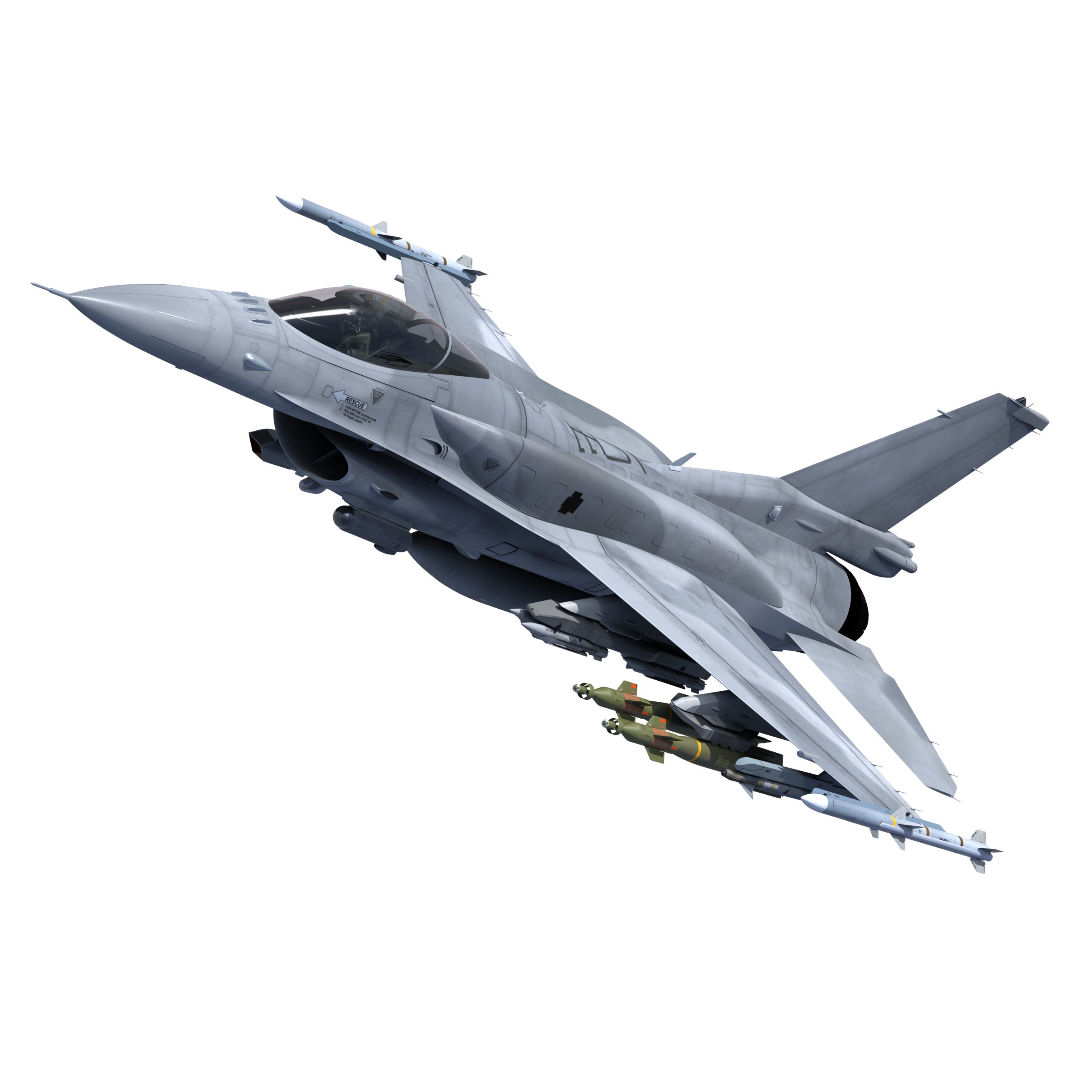
Lockheed Martin Inaugurates F-16 Production Line in Greenville, South Carolina


press release


GREENVILLE, S.C., April 23, 2019 /PRNewswire/ -- Lockheed Martin (NYSE: LMT) hosted a ceremony to celebrate its new F-16 production line in Greenville, South Carolina. F-16 tooling and equipment previously in Fort Worth, Texas, has since been installed in a newly-refurbished hangar in Greenville, where the company will begin manufacturing F-16 Block 70 aircraft later this year.

"This is an exciting time as we celebrate another important milestone for the F-16 ‒ the world's most successful, combat-proven 4th generation fighter," said Michele Evans, executive vice president of Lockheed Martin Aeronautics. "The future is bright, and it begins right here in Greenville, South Carolina ‒ the new home of F-16 production."


Lockheed Martin F-16 Block 70

Demand continues to soar for new production F-16s and F-16V upgrades. Bahrain became the first F-16 Block 70 customer in June 2018, Slovakia signed Letter of Agreement in Dec. 2018 for 14 Block 70 aircraft, and Bulgaria and the U.S. Government are currently negotiating Bulgaria's planned acquisition of new F-16 Block 70 aircraft. The U.S. State Department also recently approved the proposed sale of 25 new production F-16 Block 72 aircraft and F-16V upgrades for Morocco.

"This is a great day for Greenville and South Carolina," said U.S. Sen. Lindsey Graham of South Carolina. "We have the best workforce in the country and now we are going to build the most advanced F-16 ever right here in the Palmetto State."

"South Carolina's workforce is second to none, and the fact that Lockheed Martin continues to invest and put its faith in South Carolinians to build the newest F-16s in Greenville speaks volumes about our state and the company," said South Carolina Governor Henry McMaster. "Every person who calls South Carolina home should be proud that the F-16 is made right here in the Palmetto state."

More than 400 new jobs will be created to support the F-16 production line in Greenville. F-16 production also supports hundreds of U.S.-based Lockheed Martin engineering, procurement, sustainment and customer support jobs and thousands of U.S. supplier jobs. A significant portion of F-16 production occurs in the supply chain, which currently includes more than 400 U.S. suppliers in 41 states.

To date, 4,588 F-16s have been produced, and there are approximately 3,000 operational F-16s are in service today in 25 countries.

For additional information, visit: lockheedmartin.com/f16

About Lockheed Martin
Headquartered in Bethesda, Maryland, Lockheed Martin is a global security and aerospace company that employs approximately 105,000 people worldwide and is principally engaged in the research, design, development, manufacture, integration and sustainment of advanced technology systems, products and services.

SOURCE Lockheed Martin Aeronautics Company

Airbus and ZF to develop highly precise end-to-end autonomous driving solution


press release


Airbus Defence and Space and ZF Friedrichshafen AG, a system provider for mobility, are collaborating to enrich and complement ZF on-board system to enhance autonomous driving by using Airbus satellite derived information.


Under this collaboration, Airbus and ZF are combining their capabilities and expertise to offer a reliable end-to-end solution for self-driving and self-positioning vehicles. To answer the extreme level of accuracy required, Airbus provides its unique high precise Ground Control Points (GCPs), calculated using radar satellite imagery, to support the fusion of ZF sensor data such as Lidar and Radar. In addition, the GCPs serve as independent data source to improve and validate the accuracy of mobile mapping data.

Furthermore Airbus investigates generation of High Definition maps (HD maps) based on aerial and space borne approach, to complement ZF semantic cards. HD Maps are key to ensure the guiding route, as they build an important link between mobile mapping data and global positioning systems. They contain more information than just the road itself, as lanes, the radius of curves, lane widths, street signs, bridges, and buildings, as well as their distance from one another. Both remote sensed information GCPs and HD maps will be integrated as foundation layers into the “ZF AD Environment” – an enhanced HD maps solution ZF will present soon – where all needed information for autonomous driving will be implemented in a cloud based system.

Autonomous driving is a new, enthusing and challenging market for Airbus, as the highest level of autonomy requires the highest maps precision.


* * *


About Airbus

Airbus is a global leader in aeronautics, space and related services. In 2018 it generated revenues of € 64 billion and employed a workforce of around 134,000. Airbus offers the most comprehensive range of passenger airliners. Airbus is also a European leader providing tanker, combat, transport and mission aircraft, as well as one of the world’s leading space companies. In helicopters, Airbus provides the most efficient civil and military rotorcraft solutions worldwide.

About ZF Friedrichshafen AG

ZF is a global technology company and supplies systems for passenger cars, commercial vehicles and industrial technology, enabling the next generation of mobility. With its comprehensive technology portfolio, the company offers integrated solutions for established vehicle manufacturers, mobility providers and start-up companies in the fields of transportation and mobility. ZF continually enhances its systems in the areas of digital connectivity and automation in order to allow vehicles to see, think and act. In 2018, ZF achieved sales of €36.9 billion. The company has a global workforce of 149,000 with approximately 230 locations in 40 countries.

Most Powerful U.S. Helicopter Ever, Marine CH-53K King Stallion, Heads For Production

https://www.forbes.com/sites/lorenthompson/2019/04/18/marine-ch-53k-king-stallion-most-powerful-u-s-helicopter-ever-heads-for-production/

Boeing sees FAA approving software fix in May, MAX ungrounding in July

martes, 23 de abril de 2019

Russia develops super heavy 500-ton Elephant transport aircraft - YouTube

https://m.youtube.com/watch?v=7W9qIrKX6yo&feature=youtu.be


Text quoted below copied from YouTube video description


«Publicado el 10 abr. 2019
Russian aircraft designers develop a new jumbo cargo aircraft that would be comparable in size to the legendary Antonov  An-124 Ruslan.

The development of the new airplane is being carried out by the Federal State Unitary Enterprise Central Aerohydrodynamic Institute named after Professor Zhukovsky. So far the aircraft exists in the form of a conceptual design. 


The aircraft is called Slon, which translates from Russian into English as Elephant. 
The aircraft will be built on the aerodynamic scheme with high-lying extra long wings and one keel. The entire fuselage of the new aircraft will serve as the transport compartment. 

The construction of an additional deck can also be possible, which can make the Elephant a flying double-decker. The Slon will take off with the help of four dual-turbojet engines. The cargo compartment will be 5.2 meters hight from floor to ceiling. It will be 6.3 meters wide.

Two decks will enable the aircraft to transport both military equipment and the crew. Tanks and armored personnel carriers will be placed in the cargo compartment, and up to 400 soldiers will be accommodated on the upper deck. 

The empty aircraft will weigh 214-222 tons. It will be able to take 150 tons of cargo. One will need 150 tons of kerosene to fill the tanks of the jumbo jet. The maximum weight of the aircraft may thus make up 500 tons. The speed of the aircraft in flight will be 800-850 km/h. The maximum flight range of the aircraft with cargo on board will be nearly 8,000 km. An empty airplane will be able to fly for almost 19 thousand kilometers. 


»

L'armée de l'air danoise recrute chez les joueurs - JeuxOnLine

AERO Freidrichshafen 2019 - show report

Raytheon's new DeepStrike missile rocket motor passes critical test


pr


ROCKET CENTER, W.Va., April 23, 2019 /PRNewswire/ -- Raytheon Company (NYSE: RTN) completed a successful static test of the new DeepStrike® missile rocket motor, which moved the advanced, surface-to-surface weapon closer to its maiden flight test later this year.


The company is offering the DeepStrike missile for the U.S. Army's Precision Strike Missile, or PrSM, program to replace the aging Army Tactical Missile System that is approaching the end of its service life.

"Testing shows us how initial data assessments line up and validates them for the next phase in development," said Dr. Thomas Bussing, Raytheon Advanced Missile Systems vice president. "This test confirms our design for the DeepStrike propulsion system is solid and moves us one step closer to extending the Army's reach and doubling the load-out of long-range fires."

The rocket motor test at Allegany Ballistics Laboratory in West Virginia is the latest in a series of milestones for the DeepStrike missile. Raytheon recently concluded a successful preliminary design review for the weapon.

Raytheon's new, long-range precision strike missile features an innovative, two-in-the-pod design and will fly farther, faster, and give the Army twice the firepower at half the cost per missile. It is also more maneuverable and has a modular, open architecture to simplify system upgrades.

"With our expertise in advanced weapon systems, Raytheon is best positioned to provide an affordable, low-risk solution that gives the Army an overwhelming advantage over our nation's adversaries," Bussing said.

The DeepStrike missile will defeat fixed land targets 60-499 kilometers away, and get there faster than current systems.

About Raytheon
Raytheon Company, with 2018 sales of $27 billion and 67,000 employees, is a technology and innovation leader specializing in defense, civil government and cybersecurity solutions. With a history of innovation spanning 97 years, Raytheon provides state-of-the-art electronics, mission systems integration, C5I™ products and services, sensing, effects and mission support for customers in more than 80 countries. Raytheon is headquartered in Waltham, Massachusetts. Follow us on Twitter.

Embraer Praetor 600 Business Jet Outperforms on Certification

corporate news
04/18/2019
Embraer Praetor 600 Business Jet Outperforms on Certification São Paulo, Brazil, April 18, 2019 – Embraer announces that the company’s new Praetor 600 super-midsize business jet was granted its Type Certificate by Brazil’s Civil Aviation Authority (ANAC—Agência Nacional de Aviação Civil), having been announced in October 2018 at NBAA-BACE and becoming the only super-midsize business jet to be certified since 2014. The Praetor 600 is the best performing super-midsize jet ever developed, surpassing all its main design goals and becoming capable of flying beyond 4,000 nautical miles in long-range cruise speed or beyond 3,700 nautical miles at Mach .80 from runways shorter than 4,500ft, complemented by an outstanding payload capability. “Our engineering and program teams have outperformed again by passionately designing, developing and certifying the class-leading Praetor 600 business jet, exceeding specifications and expectations, and ahead of schedule,” said Paulo César Souza e Silva, Embraer CEO. “This advanced aircraft reflects not only our journey of innovation, it is also a preview of the future of this great company.” “The most disruptive and technologically advanced super-midsize business jet has arrived. The Praetor 600 will fascinate our customers with the highest performance, technology and comfort in its class and raise the customer experience to an unprecedented level,” said Michael Amalfitano, President & CEO, Embraer Executive Jets. “I want to thank and congratulate the Embraer family for bringing to market an aircraft that will create true value for customers and shareholders alike.” The Praetor 600 is now the farthest-flying super-midsize jet, able to make nonstop flights between London and New York, São Paulo and Miami, Dubai and London. With four passengers and NBAA IFR Reserves, the Praetor 600 has an intercontinental range of 4,018 nautical miles (7,441 km). Take Off Field Length for such a mission is only 4,436 ft (1,352 m). At M0.80, range is 3,719 nm (6,887 km) with four passengers and NBBA IFR Reserves. The Praetor 600 is the first super-midsize jet with full fly-by-wire technology, which powers the Active Turbulence Reduction that not only makes every flight the smoothest but also the most efficient possible. The Embraer DNA Design interior eloquently explores every dimension of the only super-midsize to feature a six-foot-tall, flat-floor cabin, stone flooring and a vacuum service lavatory, all in the same certified aircraft. The class-exclusive Active Turbulence Reduction and 5,800-foot cabin altitude, complemented by a whisper silent cabin, have set the highest standards in customer experience in the super-midsize category. In addition to the full-service galley and a wardrobe, eight fully reclining club seats may be berthed into four beds, and the baggage space is the largest in the class. Advanced technology throughout the cabin is also a trait of the Embraer DNA Design, beginning with the industry-exclusive Upper Tech Panel that displays flight information and offers cabin management features also available on personal devices through Honeywell Ovation Select. High-capacity, ultra high-speed connectivity for all aboard is available through Viasat’s Ka-band, with speeds of up to 16Mbps and unlimited streaming, another industry-exclusive in super-midsize jets. The Praetor 600 features Collins Aerospace’s newest edition of the acclaimed Pro Line Fusion flight deck. Capabilities such as the industry-first vertical weather display, air-traffic-control-like situational awareness with ADSB-IN, predictive wind shear radar capability, as well as Embraer Enhanced Vision System (E2VS) with a Head-up Display (HUD) and an Enhanced Video System (EVS), an Inertial Reference System (IRS) and a Synthetic Vision Guidance System (SVGS) are some of the highlights on the Praetor 600 flight deck.

From Canada to Argentina with a Tecnam P2006T


press release

Hours on a normal arirline, The real rout is with stopovers, crossing from Florida.


Great adventure for Francisco Martire and his copilot Matias Gaitan flying from CYBW Canada to SAAR Argentina with the Tecnam P2006t LV-GUY. More than 7200 mn flying over the Carribean and South America. It is a guinnes record, the longest trip for P2006T made on the american continent.

Airbus selects seven finalist teams to shape the future of aerospaceAirbus selects seven finalist teams to shape the future of aerospace

Press Release


Airbus experts have selected seven teams for the 2019 final of world-class competition Fly Your Ideas which invites students from around the world to innovate in key areas for the industry: Electrification, Data Services, Cyber Security, Internet of Things, Artificial Intelligence and Mixed Reality. The finalist teams were selected after a three-month development phase working with support from Airbus mentors.

Fly Your Ideas gives students the opportunity to develop exceptional or radical ideas for tomorrow's aerospace industry. The selected concepts represent a range of trendsetting topics such as a ‘Smart Wheelchair’ for air travel or a ‘Solar Windmill’.

The finalist team members represent 11 countries (Argentina, Germany, Greece, India, Indonesia, Italy, Japan, Moldavia, Netherlands, Norway, United Kingdom), 8 different universities and were selected from over 270 entries worldwide. Their academic backgrounds vary from Engineering to Information Technology and Natural Sciences to Finance.

In June, the teams will travel to Toulouse, France to work in Airbus' innovation and R&D facilities to further develop, prototype or visualise their ideas using state-of-the-art equipment with support from Airbus. On 27th June, the students will present their projects in front of Airbus experts and personalities from the aerospace and academic world, live-streamed in parallel to a global audience.

The students, competing for a share of the €45,000 prize fund and the chance to further evolve their idea in the aerospace industry, are clearly motivated by the digital nature of this year’s challenge, and the chance to change the world with their ideas.
The seven finalist teams are:
  1. Airbus Integrated Fisheries Information Services (Data Services Challenge) – Team AirFish, University of Cambridge, UK. AirFish is an ocean monitoring system using satellite imagery and video imaging technology. It can help governments combat illegal fishing, reduce bycatch of endangered species, and generally decrease damages to the marine habitat. This project aims to improve the efficiency of fish farming, making food production more affordable whilst reducing open-water fishing and thus environmental impacts.
  2. Automated Intelligent Real-Time Quality Inspection Exploiting Human-Robot-Collaboration (Artificial Intelligence Challenge) - Team AIQinspect, Saarland University, Germany. AIQinspect will assist the human operator in performing rivet inspection by using Artificial Intelligence. Quality is predicted based on images and physical parameters while riveting in real time. The resulting information is communicated to the operator via Augmented Reality.
  3. Batteryless Wireless Switches for Airplanes (Internet of Things Challenge) - Team “Zero” Heroes, Delft University of Technology, Netherlands.Application of wireless systems in aircraft instead of traditional wired systems. This idea solves the main limitation for IoT in aircraft by removing battery integration - a current challenge for safety and regulation. Furthermore it reduces fuel consumption and weight while simplifying aircraft retrofit and maintenance needs.
  4. Motor Intra-body Cooling System - MICS (Electrification Challenge) - Team Osprey, University of Strathclyde, UK. Replacing the traditional method of cooling electric motors with a water jacket or submerged cooling with a cooling system integrated inside the body of the motor itself. This project has the potential to provide mass effective motors for future Urban Air Mobility and Hybrid Electric aircraft.
  5. The Solar Windmill (Electrification Challenge) - Team Seren, University of Cambridge, UK. A novel method of electricity generation for spacecraft using trapped high energy particles. Using two concentric aluminium spheres, the energetic electrons flux from solar wind trapped in planetary magnetic fields can be collected and harnessed to generate power. This innovative approach aims to store and generate energy in deep space where the current density from sunlight is low.
  6. Swan – Smart Wheelchair for Air travel Needs (Internet of Things Challenge) - Team Move-ez, Technical University of Milan, Italy.SWAN is an innovation that aims to revolutionize the air-travel experience of Passengers with Reduced Mobility (PRM) using IoT technology. It converts a redesigned class of detachable airplane seats into smart electric wheelchairs that passengers can use from check-in to arrival. It is fully controllable by smartphone through a dedicated app.
  7. V.A.C.A. - Earth-obserVation-data based Application for stoCkbreeding Administration (Data Services Challenge) - Team V.A.C.A, National University of La Plata, Argentina VACA is an integrated service for stockbreeders, based on Earth observation, meteorological and IoT data applied to agriculture. VACA aims to provide actionable information to stockbreeders on quality and quantity of pastures, number of animals in paddocks as well as the physical condition of cattle. 

Teams will share project updates, photos, sketches and stories using #flyyourideas with their posts captured on the social wall of the competition website.


Airbus Fly Your Ideas is a global competition challenging students worldwide to innovate for the future of aerospace, designed and launched by Airbus in 2008 and organised in partnership with UNESCO since 2012. Since 2008, over 22,000 students have registered for Fly Your Ideas from over 700 universities and 100 countries worldwide, with more than 500 Airbus employees contributing their mentorship and expertise to support the competition.


For more details and information on the finalists, please visit www.airbus-fyi.com.

Key figures Fly Your Ideas 2019:

·       Number of ideas submitted: 270

o    Number of countries involved: 72 (80 nationalities)
o    Number of universities involved: 284
o    Top 5 countries: India – 43 teams, China & HK – 17 teams, France – 16 teams,
Iran – 15 teams, United Kingdom – 15 teams
o    Gender mix: 47% of teams mix male and female students
·       Finalist universities involved
o    University of Cambridge, UK (two teams)
o    University of Strathclyde, UK
o    Delft University of Technology, Netherlands
o    National University of La Plata, University of Buenos Aires and National University of the Centre of the Province of Buenos Aires, Argentina (all in one team)
o    Technical University of Milan, Italy
o    Saarland University, Germany
Fly Your Ideas competition – since the 2008 launch:
·       6 competitions in 2009, 2011, 2013, 2015, 2017 and 2019
·       Partnership with UNESCO since 2012
·       More than 100 countries represented
·       Over 700 universities supporting
·       More than 22,000 students registered
·       Over 500 Airbus staff involved
·       1,900+ ideas submitted

Lockheed's Costly F-35 to Be Billions Costlier, Pentagon Finds

Explosion d’une capsule de SpaceX à Cap Canaveral

lunes, 22 de abril de 2019

What NASA’s twin study actually taught us about living in space

Twin studies are the closest scientists can get to putting a person in two places at once. But they are also hard to come by: Identical twins are relatively rare (just three to four per thousand births worldwide). Even rarer are identical twin pairs that are astronauts. In fact, right now, just o...

http://flip.it/501LrF

Enviado a través de Flipboard

Lockheed tries reducing F-35 costs with new supplier contracts

Airbus-Safran Lower Deck Pax Experience modules in firm development

Electric aircraft builder announces new engine option

Why it's taking Boeing so long to fix the 737 Max software linked to deadly crashes

New Chinese Media Campaign Rolls Back Curtain of Secrecy on Their Air Forces

Looks Like Poland Wants To Replace Its Soviet-era MiG-29 And Su-22 Jets With The F-35 At Any Cost

Looks Like Poland Wants To Replace Its Soviet-era MiG-29 And Su-22 Jets With The F-35 At Any Cost https://theaviationist.com/2019/04/20/looks-like-poland-wants-to-replace-its-soviet-era-mig-29-and-su-22-jets-with-the-f-35-at-any-cost/

MagniX to supply Eviation Alice motors as all-electric advances

Embraer X, Airbus Lay Out eVTOL Design Considerations

Used Business Aircraft Fleet Value Primed For Decline

Electric Flight In Focus At FAI

Lockheed Martin's 360-Degree Pilot Visual System Completes First Flight on Bell V-280 Valor - Apr 15, 2019

AVX & L3 Technologies Unveil avanced Design for U.S. Army’s Future Attack Reconnaissance Aircraft-Competitive Prototype

The new Rega search & rescue drone flies and searches autonomously

Amphibious electric aircraft prototype achieves flight out of ground effect

FAA Grounds Cirrus SF50 Jet over AoA Vane Issue

Airlines may be underestimating the cost of the 737 MAX groundings

New York Times: Boeing's South Carolina plant faces production issues that 'have threatened to compromise safety'

https://edition.cnn.com/2019/04/20/politics/boeing-south-carolina-plant/index.html

https://www.nytimes.com/2019/04/20/business/boeing-dreamliner-production-problems.html

How the Boeing 737 Max Disaster Looks to a Software Developer

https://spectrum.ieee.org/aerospace/aviation/how-the-boeing-737-max-disaster-looks-to-a-software-developer

EU lists goods, including airplanes, subject to tariff in WTO trade war - Leeham News and Analysis

lunes, 15 de abril de 2019

American Airlines will cancel 115 Max flights a day through busy summer travel season

The 737 Max is out until August, so how will Southwest Airlines handle it? P

Rolls-Royce Reveals Blade Problems in Newest Engine

Wildcat strike of Tunisair employees; three days of flight disruptions

Wildcat strike of Tunisair employees; three days of flight disruptions https://www.aviation24.be/airlines/tunisair/wildcat-strike-employees-three-days-flight-disruptions/

Spanish union calls for strike at Air Nostrum during Easter travel season, affecting also Brussels Airlines’ flights

Spanish union calls for strike at Air Nostrum during Easter travel season, affecting also Brussels Airlines' flights https://www.aviation24.be/miscellaneous/strike-action/spanish-union-calls-for-strike-at-air-nostrum-during-easter-travel-season-affecting-also-brussels-airlines-flights/

1,100 Jet Airways pilots have decided not to fly from tomorrow to protest against pending salaries

1,100 Jet Airways pilots have decided not to fly from tomorrow to protest against pending salaries https://www.aviation24.be/airlines/jet-airways/1100-jet-airways-pilots-have-decided-not-to-fly-from-tomorrow-to-protest-against-pending-salaries/

ESA Boosts Startup To The Moon

A taste of AERO Friedrichshafen

https://www.pilotweb.aero/news/a-taste-of-aero-friedrichshafen-1-5992820

https://www.aviation24.be/manufacturers/sonaca/sonaca-aircraft-to-unveil-the-sonaca-200-trainer-pro-at-the-aero-friedrichshafen-exhibition/

https://www.aopa.org/news-and-media/all-news/2019/april/11/continental-brings-jet-a-power-to-da-50

https://www.aopa.org/news-and-media/all-news/2019/april/11/orders-for-eflyer-hit-300

https://www.aopa.org/news-and-media/all-news/2019/april/11/the-new-junkers-f13

https://www.aopa.org/news-and-media/all-news/2019/april/11/tecnam-debuts-new-p2002jf-p92-echo-mkii

https://www.aopa.org/news-and-media/all-news/2019/april/11/flight-design-goes-big-with-f2-f4

https://www.aopa.org/news-and-media/all-news/2019/april/12/horten-flying-wing-displayed-at-aero

https://www.tecnam.com/slider-home-en/three-new-models-at-aero-19-friedrichshafen/