http://www.farodevigo.es/gran-vigo/2010/06/16/festival-aereo-batira-record-participacion-50-aviones/448162.html
La décima edición del Festival Aéreo Internacional de Vigo volará este año más alto que nunca. La parrilla de los aviones que desfilarán por Samil el próximo día 18 de julio está ya prácticamente cerrada con más de 50 aeronaves. Al evento, que presentará hoy en Madrid el alcalde, Abel Caballero, todavía podrían sumarse nuevos participantes.
La principal novedad llegará de manos de una piloto acrobática estadounidense. Melissa Pemberton participará por primera vez en España en el festival vigués.

miércoles, 16 de junio de 2010


martes, 15 de junio de 2010
Northrop to Build LEMV Surveillance Airship
http://www.aviationweek.com/aw/blogs/defense/index.jsp?plckController=Blog&plckScript=blogScript&plckElementId=blogDest&plckBlogPage=BlogViewPost&plckPostId=Blog:27ec4a53-dcc8-42d0-bd3a-01329aef79a7Post:17fef0f2-d00f-4d13-8c96-0b0ca910f99c
The US Army has confirmed Northrop Grumman will develop the Long Endurance Multi-intelligence Vehicle (LEMV) technology demonstrator, awarding the company a five-year, $517 million contract to build and fly the three-week-endurance hybrid airship. Lockheed Martin was the other finalist.
The US Army has confirmed Northrop Grumman will develop the Long Endurance Multi-intelligence Vehicle (LEMV) technology demonstrator, awarding the company a five-year, $517 million contract to build and fly the three-week-endurance hybrid airship. Lockheed Martin was the other finalist.
US Air Force formalises UAS pilot training
http://www.flightglobal.com/articles/2010/06/15/343213/us-air-force-formalises-uas-pilot-training.html
After testing the curriculum on five "beta" classes, the US Air Force has formalised remotely piloting aircraft as a career field by establishing an undergraduate training program.
The training program will "normalise and formalise" as of 2011, starting off with five classes of 13 students each
After testing the curriculum on five "beta" classes, the US Air Force has formalised remotely piloting aircraft as a career field by establishing an undergraduate training program.
The training program will "normalise and formalise" as of 2011, starting off with five classes of 13 students each
CÁLCULO DE ELEMENTOS FINITOS CATIA V.5
DIRIGIDO A:
Preferiblemente a personas con FP Delineación o CF grado medio o superior similar, ingenieros aeronáuticos, industriales, delineantes, arquitectos, técnicos de proyectos y de máquinas-herramientas con CNC y profesionales relacionados con el diseño y fabricación. Experiencia en diseño y/o programación CNC.
OBJETIVOS:
Obtener una visión general de las técnicas de cálculo y análisis estructural por elementos finitos y su aplicación dentro del entorno CATIA V.5. El enfoque del curso, eminentemente práctico, pretende conseguir un dominio de este módulo que permita resolver los cálculos estructurales de piezas y conjuntos metálicos más usuales.
MÓDULOS FORMATIVOS:
1. Introducción al método de elementos finitos y simulación. 2. Módulo de análisis de V.5. Visión general. 3. Análisis de piezas (CATpart) mediante módulo GPS: Tipos de análisis (estático lineal, modos propios y pandeo lineal), técnicas de mallado. Módulo de mallado avanzado, propiedades y materiales, cargas y condiciones de contorno, elementos virtuales y de masa, solver, post-procesado de resultado. 4. Análisis de conjuntos (CATproduct) mediante módulo GAS: definición de conexiones, asignación de propiedades, ejercicios prácticos.
CENTRO DE IMPARTICIÓN :
Centro de formación TAMadrid
FECHA DE CELEBRACIÓN:
Proximamente
TURNO:
--
DURACIÓN:
40 horas
Foindesa
Preferiblemente a personas con FP Delineación o CF grado medio o superior similar, ingenieros aeronáuticos, industriales, delineantes, arquitectos, técnicos de proyectos y de máquinas-herramientas con CNC y profesionales relacionados con el diseño y fabricación. Experiencia en diseño y/o programación CNC.
OBJETIVOS:
Obtener una visión general de las técnicas de cálculo y análisis estructural por elementos finitos y su aplicación dentro del entorno CATIA V.5. El enfoque del curso, eminentemente práctico, pretende conseguir un dominio de este módulo que permita resolver los cálculos estructurales de piezas y conjuntos metálicos más usuales.
MÓDULOS FORMATIVOS:
1. Introducción al método de elementos finitos y simulación. 2. Módulo de análisis de V.5. Visión general. 3. Análisis de piezas (CATpart) mediante módulo GPS: Tipos de análisis (estático lineal, modos propios y pandeo lineal), técnicas de mallado. Módulo de mallado avanzado, propiedades y materiales, cargas y condiciones de contorno, elementos virtuales y de masa, solver, post-procesado de resultado. 4. Análisis de conjuntos (CATproduct) mediante módulo GAS: definición de conexiones, asignación de propiedades, ejercicios prácticos.
CENTRO DE IMPARTICIÓN :
Centro de formación TAMadrid
FECHA DE CELEBRACIÓN:
Proximamente
TURNO:
--
DURACIÓN:
40 horas
Foindesa
lunes, 14 de junio de 2010
Research Suggests Water Content Of Moon Interior Underestimated
WASHINGTON -- NASA-funded scientists estimate from recent research that the volume of water molecules locked inside minerals in the moon's interior could exceed the amount of water in the Great Lakes here on Earth.
Scientists at the Carnegie Institution's Geophysical Laboratory in Washington, along with other scientists across the nation, determined that the water was likely present very early in the moon's formation history as hot magma started to cool and crystallize. This finding means water is native to the moon.
"For over 40 years we thought the moon was dry," said Francis McCubbin of Carnegie and lead author of the report published in Monday's Online Early Edition of the Proceedings of the National Academy of Sciences. "In our study we looked at hydroxyl, a compound with an oxygen atom bound with hydrogen, and apatite, a water-bearing mineral in the assemblage of minerals we examined in two Apollo samples and a lunar meteorite."
McCubbin's team utilized tests which detect elements in the parts per billion range. Combining their measurements with models that characterize how the material crystallized as the moon cooled during formation, they found that the minimum water content ranged from 64 parts per billion to 5 parts per million. The result is at least two orders of magnitude greater than previous results from lunar samples that estimated water content of the moon to be less than 1 parts per billion.
"In this case, when we talk about water on the moon, we mean water in the structural form hydroxyl," said Jim Green, director of the Planetary Science Division at NASA Headquarters in Washington. "This is a very minor component of the rocks that make up the lunar interior."
The origin of the moon is now commonly believed to be the result of a Mars-sized object that impacted the Earth 4.5 billion years ago. This impact put a large amount of material into Earth's orbit that ultimately compacted to form the moon. The lunar magma ocean that is thought to have formed at some point during the compacting process, began to cool. During this cooling, water either escaped or was preserved as hydroxyl molecules in the crystallizing minerals.
Previous studies found evidence of water both on the lunar surface and inside the moon by using respectively, remote sensing data from the Indian spacecraft Chandrayaan-1 and other lunar sample analysis. Carnegie researchers looked within crystalline rocks called KREEP (K for potassium; REE, for rare Earth elements; and P for phosphorus). These rocks are a component of some lunar impact melt and basaltic rocks.
"Since water is insoluble in the main silicates that crystallized, we believed that it should have concentrated in those rocks," said Andrew Steele of Carnegie and co-author of the report. "That's why we selected KREEP to analyze."
The identification of water from multiple types of lunar rocks that display a range of incompatible trace element signatures indicates that water may be at low concentrations but ubiquitous within the moon's interior, potentially as early as the time of lunar formation and magma ocean crystallization.
"It is gratifying to see this proof of the hydroxyl contents in lunar apatite," said lunar scientist Bradley Jolliff of Washington University in St. Louis. "The concentrations are very low and, accordingly, they have been until recently nearly impossible to detect. We can now finally begin to consider the implications - and the origin - of water in the interior of the moon."
NASA press release
Scientists at the Carnegie Institution's Geophysical Laboratory in Washington, along with other scientists across the nation, determined that the water was likely present very early in the moon's formation history as hot magma started to cool and crystallize. This finding means water is native to the moon.
"For over 40 years we thought the moon was dry," said Francis McCubbin of Carnegie and lead author of the report published in Monday's Online Early Edition of the Proceedings of the National Academy of Sciences. "In our study we looked at hydroxyl, a compound with an oxygen atom bound with hydrogen, and apatite, a water-bearing mineral in the assemblage of minerals we examined in two Apollo samples and a lunar meteorite."
McCubbin's team utilized tests which detect elements in the parts per billion range. Combining their measurements with models that characterize how the material crystallized as the moon cooled during formation, they found that the minimum water content ranged from 64 parts per billion to 5 parts per million. The result is at least two orders of magnitude greater than previous results from lunar samples that estimated water content of the moon to be less than 1 parts per billion.
"In this case, when we talk about water on the moon, we mean water in the structural form hydroxyl," said Jim Green, director of the Planetary Science Division at NASA Headquarters in Washington. "This is a very minor component of the rocks that make up the lunar interior."
The origin of the moon is now commonly believed to be the result of a Mars-sized object that impacted the Earth 4.5 billion years ago. This impact put a large amount of material into Earth's orbit that ultimately compacted to form the moon. The lunar magma ocean that is thought to have formed at some point during the compacting process, began to cool. During this cooling, water either escaped or was preserved as hydroxyl molecules in the crystallizing minerals.
Previous studies found evidence of water both on the lunar surface and inside the moon by using respectively, remote sensing data from the Indian spacecraft Chandrayaan-1 and other lunar sample analysis. Carnegie researchers looked within crystalline rocks called KREEP (K for potassium; REE, for rare Earth elements; and P for phosphorus). These rocks are a component of some lunar impact melt and basaltic rocks.
"Since water is insoluble in the main silicates that crystallized, we believed that it should have concentrated in those rocks," said Andrew Steele of Carnegie and co-author of the report. "That's why we selected KREEP to analyze."
The identification of water from multiple types of lunar rocks that display a range of incompatible trace element signatures indicates that water may be at low concentrations but ubiquitous within the moon's interior, potentially as early as the time of lunar formation and magma ocean crystallization.
"It is gratifying to see this proof of the hydroxyl contents in lunar apatite," said lunar scientist Bradley Jolliff of Washington University in St. Louis. "The concentrations are very low and, accordingly, they have been until recently nearly impossible to detect. We can now finally begin to consider the implications - and the origin - of water in the interior of the moon."
NASA press release
Más de 400.000 personas en la a VII edición del Festival Aéreo de Valencia
El festival arrancó a las 10:00 horas con la actuación de los ultraligeros de la escuela de la Llosa de Castellón, el Real Aeroclub y el Paraclub ambos de Valencia. Posteriormente fue el turno para las aeronaves donde participaron, por parte del Ejército del Aire, un caza F-18 del Ala 15 y un Canadair CL-415 aeronave destinada en el 43 Grupo para la extinción de incendios.
Después, saltaron paracaidistas civiles y tras ellos la Patrulla Acrobática de Paracaidismo del Ejército del Aire (PAPEA). Sus componentes cayeron desde más de 3.000 metros de altura a más de 200 kilómetros por hora, realizando diversas maniobras entre las que destacaron por su dificultad la formación en espejo, donde dos paracaidistas unidos por los pies descienden en horizontal, así cómo un relativo campana, maniobra en la que participaron tres paracaidistas. Cada uno de ellos, agarrado por los cordones a la campana del hombre que tiene debajo, forman una columna en la que el último hombre una gran bandera de España.
Tras la participación de diferentes helicópteros de la Guardia Civil, Cuerpo Nacional de Policía y Dirección General de Tráfico y Aduanas, el broche final lo puso la actuación de la Patrulla Águila.
En esta edición estuvieron presentes el jefe del Mando Aéreo General (MAGEN) del Ejército del Aire teniente general Fernando Lens Astray, el concejal de Deportes del Ayuntamiento de Valencia, Cristóbal Grau y la Fallera Mayor Infantil de Valencia 2010, Ariadna Galán, entre otros
Nota de prensa del Ejercito del Aire
Después, saltaron paracaidistas civiles y tras ellos la Patrulla Acrobática de Paracaidismo del Ejército del Aire (PAPEA). Sus componentes cayeron desde más de 3.000 metros de altura a más de 200 kilómetros por hora, realizando diversas maniobras entre las que destacaron por su dificultad la formación en espejo, donde dos paracaidistas unidos por los pies descienden en horizontal, así cómo un relativo campana, maniobra en la que participaron tres paracaidistas. Cada uno de ellos, agarrado por los cordones a la campana del hombre que tiene debajo, forman una columna en la que el último hombre una gran bandera de España.
Tras la participación de diferentes helicópteros de la Guardia Civil, Cuerpo Nacional de Policía y Dirección General de Tráfico y Aduanas, el broche final lo puso la actuación de la Patrulla Águila.
En esta edición estuvieron presentes el jefe del Mando Aéreo General (MAGEN) del Ejército del Aire teniente general Fernando Lens Astray, el concejal de Deportes del Ayuntamiento de Valencia, Cristóbal Grau y la Fallera Mayor Infantil de Valencia 2010, Ariadna Galán, entre otros
Nota de prensa del Ejercito del Aire
IberSim 2010 Call for papers
The IberSim 2010 Conference will be held in Madrid, Spain, on 27-28 October 2010.
All sessions of the IberSim 2010 Conference will be Unclassified. The Conference is open to NATO, Partner, Mediterranean Dialogue and Contact Nations.
Authors are invited to submit papers for this Conference. Papers can be accepted in English and Spanish.
Simultaneous translation might be provided between these two languages during all Conference Sessions.
The Programme Committee will select about 20 papers considered suitable for presentation at the Conference.
The selection of papers will be completed by 31 August 2010. Authors will be notified shortly thereafter whether or not their papers are selected. Authors of selected papers will also be provided with information in the Instructions for Authors, which contains detailed instructions for the presentation, transmission, etc. of papers.
The time allowed for each speaker is normally 30 minutes, which includes 10 minutes for discussion. Equipment will be available for PowerPoint presentations. The time and date of your presentation is in the Programme Announcement which you will receive along with the Instructions to Authors.
IMPORTANT: Authors of selected papers are to provide to the IberSim organisers with a printed version of their complete manuscript (PDF file) and the source document (MS Word, etc.) by e-mail 30 days prior to the Conference. Cleared papers, when available, will be put on the IberSim website prior to the IberSim 2010 Conference, under the ‘Pre-Released’ section of the ‘Reports’ pages and will remain as such until officially published.
A copy of the Oral Presentation of your paper is also requested prior to the Conference for the use of the interpreters. Further details of all these requests can be found in the ‘Authoring Support’ pages of the IberSim 2010 website.
PLEASE NOTE: The Conference will be Unclassified and the proceedings will be Unclassified/Unlimited Distribution.
IBERSIM 2010 CONFERENCE THEMES
• Standards for Modelling and Simulation and VV&A (risk that VV&A is not mature enough for a subject)
• Unmanned Air Vehicle (UAV) and Unmanned Ground Vehicle (UGV) Simulation – estaciones de control de
tierra (ergonomia)
• Terrain databases and re-usability of terrain databases
• Emergency response and emergency planning
• Technologies & trends for simulation and training
• Cyber Warfare
• Simulating the future soldier
• Tactile interfaces for simulation and training
• Virtual reality and tactile interfaces for simulation and training
All sessions of the IberSim 2010 Conference will be Unclassified. The Conference is open to NATO, Partner, Mediterranean Dialogue and Contact Nations.
Authors are invited to submit papers for this Conference. Papers can be accepted in English and Spanish.
Simultaneous translation might be provided between these two languages during all Conference Sessions.
The Programme Committee will select about 20 papers considered suitable for presentation at the Conference.
The selection of papers will be completed by 31 August 2010. Authors will be notified shortly thereafter whether or not their papers are selected. Authors of selected papers will also be provided with information in the Instructions for Authors, which contains detailed instructions for the presentation, transmission, etc. of papers.
The time allowed for each speaker is normally 30 minutes, which includes 10 minutes for discussion. Equipment will be available for PowerPoint presentations. The time and date of your presentation is in the Programme Announcement which you will receive along with the Instructions to Authors.
IMPORTANT: Authors of selected papers are to provide to the IberSim organisers with a printed version of their complete manuscript (PDF file) and the source document (MS Word, etc.) by e-mail 30 days prior to the Conference. Cleared papers, when available, will be put on the IberSim website prior to the IberSim 2010 Conference, under the ‘Pre-Released’ section of the ‘Reports’ pages and will remain as such until officially published.
A copy of the Oral Presentation of your paper is also requested prior to the Conference for the use of the interpreters. Further details of all these requests can be found in the ‘Authoring Support’ pages of the IberSim 2010 website.
PLEASE NOTE: The Conference will be Unclassified and the proceedings will be Unclassified/Unlimited Distribution.
IBERSIM 2010 CONFERENCE THEMES
• Standards for Modelling and Simulation and VV&A (risk that VV&A is not mature enough for a subject)
• Unmanned Air Vehicle (UAV) and Unmanned Ground Vehicle (UGV) Simulation – estaciones de control de
tierra (ergonomia)
• Terrain databases and re-usability of terrain databases
• Emergency response and emergency planning
• Technologies & trends for simulation and training
• Cyber Warfare
• Simulating the future soldier
• Tactile interfaces for simulation and training
• Virtual reality and tactile interfaces for simulation and training
IBERSIM 2010 PROGRAMME COMMITTEE
You can contact the IberSim 2010 programme committee by email at: info[at]ibersim.com
ABSTRACTS
Unclassified abstracts of papers offered for the IberSim 2010 Conference should be submitted in the following format:
2010 IBERSIM CONFERENCE TITLE OF ABSTRACT/PAPER
Title/Rank, Full Name of Author/Co-Author(s) 200 - 500 words
Length:
Content: - Introduction/relevance to the Conference
- Rationale
- Description of methods employed and results obtained
- Conclusions
Authors’ names, complete mailing addresses and emails must be included with the abstract.
Abstracts should be submitted by email to your IberSim contact no later than 15 August 2010 for subsequent transmission to the Programme Committee Members. This date is important and must be met in order to ensure consideration.
The abstract must also contain a declaration from the author(s) that there are no restrictions regarding presentation neither during the conference nor of the publication of the paper (as described in the abstract) in the Meeting Proceedings.
SCHEDULE
- 15 August 2010 Deadline for abstract submission
- 1 September 2010 Notice to authors of acceptance and authors receive ‘Instructions for Authors’ Information
- 15 October 2010 Deadline for reception of authors Powerpoint Slides
- 27-28 October 2010 IberSim 2010 Conference
EADS confía en poder firmar el nuevo contrato del A400M en otoño
http://www.europapress.es/economia/noticia-economia-empresas-eads-confia-poder-firmar-nuevo-contrato-a400m-otono-20100614140721.html
El presidente de EADS, Louis Gallois, prevé que el nuevo contrato del avión militar A400M, cuyo ensamblaje final se realiza en Sevilla, se firme "probablemente en otoño", dada la complejidad parar que los siete países clientes del programa, entre los que se encuentra España, se pongan de acuerdo en su redacción.
En una entrevista a la cadena de televisión gala LCI, el presidente de la matriz de Airbus no descartó que el preacuerdo alcanzado en marzo por los siete estados para aportar 3.500 millones de euros adicionales al programa y hacer frente así a los costes adicionales derivados de sus retrasos, pueda formalizarse antes del verano. "No excluyo totalmente que antes del verano", afirmó.
El presidente de EADS, Louis Gallois, prevé que el nuevo contrato del avión militar A400M, cuyo ensamblaje final se realiza en Sevilla, se firme "probablemente en otoño", dada la complejidad parar que los siete países clientes del programa, entre los que se encuentra España, se pongan de acuerdo en su redacción.
En una entrevista a la cadena de televisión gala LCI, el presidente de la matriz de Airbus no descartó que el preacuerdo alcanzado en marzo por los siete estados para aportar 3.500 millones de euros adicionales al programa y hacer frente así a los costes adicionales derivados de sus retrasos, pueda formalizarse antes del verano. "No excluyo totalmente que antes del verano", afirmó.
Jefe EADS desestima rumores sociedad con brasileña Embraer
http://economia.terra.com.co/noticias/noticia.aspx?idNoticia=201006131829_RTI_SIE65C0KQ
El jefe de la firma matriz de Airbus, EADS desestimó el domingo especulaciones sobre que deseaba cooperar con su rival brasileño Embraer en la fabricación de jets pequeños que podrían competir con las series C de Bombardier. "No está pasando nada", aseveró Louis Gallois en entrevista con LCI television.
El jefe de la firma matriz de Airbus, EADS desestimó el domingo especulaciones sobre que deseaba cooperar con su rival brasileño Embraer en la fabricación de jets pequeños que podrían competir con las series C de Bombardier. "No está pasando nada", aseveró Louis Gallois en entrevista con LCI television.
Antonov, Ilyushin and Tupolev Fading Away
http://www.strategypage.com/htmw/htairmo/articles/20100614.aspx
June 14, 2010: Russia is scrambling, without much success, to retain its Cold War era air transport manufacturing capability. For example, a year ago, the old Soviet aircraft builder, Antonov, introduced a competitor (the An-148) for the American Boeing 737. Although Antonov has orders for over 200 of the new aircraft, the first operators report that the An-148 is more expensive to operate than a comparable 737 (in service since the 1960s with over 6,000 built).
June 14, 2010: Russia is scrambling, without much success, to retain its Cold War era air transport manufacturing capability. For example, a year ago, the old Soviet aircraft builder, Antonov, introduced a competitor (the An-148) for the American Boeing 737. Although Antonov has orders for over 200 of the new aircraft, the first operators report that the An-148 is more expensive to operate than a comparable 737 (in service since the 1960s with over 6,000 built).
New passenger aircraft to break duopoly
http://www.theaustralian.com.au/travel/news/new-passenger-aircraft-to-break-duopoly/story-e6frg8ro-1225879563356
Embraer, the Brazilian manufacturer, has started to encroach with its E190 and E195 aircraft, while Bombardier's CSeries is due to enter service in 2013.
But the biggest threat may lie elsewhere. China's Comac is building the C919, which will seat about 156 people and is scheduled for its first flight in 2014. United Aircraft Company, a collection of Russian aircraft makers, will fly its Irkut MS-21 for the first time in 2014, while Sukhoi's Superjet 100, a regional jet, could be lengthened to challenge the 737 and A320.
Embraer, the Brazilian manufacturer, has started to encroach with its E190 and E195 aircraft, while Bombardier's CSeries is due to enter service in 2013.
But the biggest threat may lie elsewhere. China's Comac is building the C919, which will seat about 156 people and is scheduled for its first flight in 2014. United Aircraft Company, a collection of Russian aircraft makers, will fly its Irkut MS-21 for the first time in 2014, while Sukhoi's Superjet 100, a regional jet, could be lengthened to challenge the 737 and A320.
EADS Offers To Pre-Finance Talarion UAV
http://www.aviationweek.com/aw/generic/story_generic.jsp?channel=aerospacedaily&id=news/asd/2010/06/14/12.xml
To help build support for its Talarion medium-altitude long-endurance (MALE) UAV program during Europe’s difficult budget period, EADS is offering to pre-finance the development of the system if it gets a purchase commitment from its target customers that they will buy the surveillance and reconnaissance tool.
To help build support for its Talarion medium-altitude long-endurance (MALE) UAV program during Europe’s difficult budget period, EADS is offering to pre-finance the development of the system if it gets a purchase commitment from its target customers that they will buy the surveillance and reconnaissance tool.
Boeing begins fuselage assembly for 1st 747-8 Intercontinental
EVERETT, Wash., June 14 /PRNewswire-FirstCall/ -- Boeing (NYSE: BA) began fuselage assembly of the first 747-8 Intercontinental at the factory in Everett, Wash. Mechanics loaded panels for the 31-foot, 8-inch (9.6 m) long front section of the new airplane into the assembly tool. The panels are part of section 41, the area of the fuselage that houses the flight deck on the upper deck and the forward passenger cabin on the main deck, an area that most airlines typically configure with first class seating.

The 747-8 Intercontinental is the new, high-capacity 747 that offers airlines the lowest operating costs and best economics of any large passenger airplane while providing enhanced environmental performance. Boeing has 109 orders for the 747-8 -- 33 for the 747-8 Intercontinental and 76 for the 747-8 Freighter. The first 747-8 Intercontinental is scheduled to deliver in late 2011.
Boeing Press Release

The 747-8 Intercontinental is the new, high-capacity 747 that offers airlines the lowest operating costs and best economics of any large passenger airplane while providing enhanced environmental performance. Boeing has 109 orders for the 747-8 -- 33 for the 747-8 Intercontinental and 76 for the 747-8 Freighter. The first 747-8 Intercontinental is scheduled to deliver in late 2011.
Boeing Press Release
EADS Unveils EC645
http://www.aviationweek.com/aw/blogs/defense/index.jsp?plckController=Blog&plckScript=blogScript&plckElementId=blogDest&plckBlogPage=BlogViewPost&plckPostId=Blog:27ec4a53-dcc8-42d0-bd3a-01329aef79a7Post:558d5b9b-1ce9-4945-b581-14339392b095
In the U.S. the EC145 is better known as the UH-72A Lakota Light Utility Helicopter. And the armed derivative of the LUH has been designated the AAS-72X by the company. The AAS-72X is being pitched to the U.S. Army as a replacement for its Kiowa Warriors.

http://www.uh-72a.com
In the U.S. the EC145 is better known as the UH-72A Lakota Light Utility Helicopter. And the armed derivative of the LUH has been designated the AAS-72X by the company. The AAS-72X is being pitched to the U.S. Army as a replacement for its Kiowa Warriors.

http://www.uh-72a.com
Eurosatory 2010 arranca en París con notable presencia española entre 1.315 expositores de todo el mundo
http://www.infodefensa.com/esp/noticias/noticias.asp?cod=2478&n=Eurosatory-2010-arranca-en-Par%EDs-con-notable-presencia-espa%F1ola-entre-1.315-expositores-de-todo-el-mundo
Dentro del Pabellón España (Hall 06 - stand GH 281), organizado por primera vez por la Asociación Española de Tecnologías de Defensa Aeronáutica y Espacio (TEDAE), contará con la presencia institucional del Ministerio de Defensa cuyo stand albergará al INTA y la compañía pública ISDEFE, además de otras doce empresas: Amper Programas, Ibersystems de Defensa, DAS Photonics, EMC Arpa, Indra, OTO Melara Ibérica, Sapa Placencia, PromoMadrid/ Cluster Aeroespacial de la Comunidad de Madrid, SENER, Tecnobit, URO y UAV Navigation.
Dentro del Pabellón España (Hall 06 - stand GH 281), organizado por primera vez por la Asociación Española de Tecnologías de Defensa Aeronáutica y Espacio (TEDAE), contará con la presencia institucional del Ministerio de Defensa cuyo stand albergará al INTA y la compañía pública ISDEFE, además de otras doce empresas: Amper Programas, Ibersystems de Defensa, DAS Photonics, EMC Arpa, Indra, OTO Melara Ibérica, Sapa Placencia, PromoMadrid/ Cluster Aeroespacial de la Comunidad de Madrid, SENER, Tecnobit, URO y UAV Navigation.
EADS to shift some Eurofighter development projects to India
http://economictimes.indiatimes.com/news/politics/nation/EADS-to-shift-some-Eurofighter-development-projects-to-India/articleshow/6031803.cms
European Aeronautic Defence and Space Company NV (EADS) would transfer some of the development projects of its advanced fourth generation Eurofighter Typhoon or other military aircraft to India soon, a top company official said on Thursday.
"We will transfer some of our development projects, which we have in Europe for Eurofighter or other military aircraft to India, where we have set up a military research and development (R&D) centre in Bangalore," EADS chief executive (defence & security) Stefan Zoller told IANS here
European Aeronautic Defence and Space Company NV (EADS) would transfer some of the development projects of its advanced fourth generation Eurofighter Typhoon or other military aircraft to India soon, a top company official said on Thursday.
"We will transfer some of our development projects, which we have in Europe for Eurofighter or other military aircraft to India, where we have set up a military research and development (R&D) centre in Bangalore," EADS chief executive (defence & security) Stefan Zoller told IANS here
domingo, 13 de junio de 2010
El Gobierno español autoriza la fase de producción del misil Meteor por importe de 100 millones de euros
http://www.infodefensa.com/esp/noticias/noticias.asp?cod=2476&n=El-Gobierno-espa%F1ol-autoriza-la-fase-de-producci%F3n-del-misil-Meteor-por-importe-de-100-millones-de-euros
La participación industrial española en el diseño y fabricación del Meteor, un misil aire-aire, se ha llevado a cabo a través de las empresas Navantia, Indra, Inmize, INTA, General Dynamics-Santa Bárbara Sistemas y Sener.
La participación industrial española en el diseño y fabricación del Meteor, un misil aire-aire, se ha llevado a cabo a través de las empresas Navantia, Indra, Inmize, INTA, General Dynamics-Santa Bárbara Sistemas y Sener.
sábado, 12 de junio de 2010
Typhoon storms Berlin as air display takes it up a notch
The Luftwaffe put on an impressive display of capabilities in the air show yesterday with a Bundeswehr demonstration involving 17 aircraft and the star was the Eurofighter Typhoon.
The aircraft was described in the flight display programme as a “High-performance jet” which took part alongside the national display team Patrouille Suisse.
The simulation which took over ten minutes to perform was based on the ‘extraction’ of a group of civilians from a hazardous situation. The exercise began with a helicopter collecting the evacuees and transporting them to a remote air strip which in this case was ILA’s Schoenefeld runway. The transfer of civilians into a Transall transport aircraft followed, creating a requirement to secure the air strip. This was performed by two Eurofighter Typhoons responsible for the air supremacy over the scenario’s sky. The role of the ‘enemy’ was played by two F-4F Phantoms that when intercepted were forced to land on the airfield by the Typhoons.
Two Tornado jets were involved in the operation in the Suppression of Enemy Air Defence (SEAD) role. The Tornadoes were responsible for Close Air Support (CAS) securing the ground around the transport aircraft to ensure there was no interference with the ‘cargo’ whilst at the same time the two Typhoons circled above the Tornadoes in order to keep any air threats at bay.
To conclude the demonstration, the two Typhoons flanked the recently converted A310 MRTT multi-role transport tanker with a simulated air-to-air refuelling.
Commenting on the air display for Germany’s NTV news was one of our Eurofighter Typhoon experts Erwin Obermeier, former Eurofighter Programme Director.

viernes, 11 de junio de 2010
NASA's Unmanned Global Hawk Aircraft Conducts Ground Breaking Science MissionsNASA's Unmanned Global Hawk Aircraft Conducts Ground Breaking Science Missions
SAN DIEGO, June 9, 2010 (GLOBE NEWSWIRE) -- NASA's unmanned Global Hawk aircraft, developed by Northrop Grumman Corporation (NYSE:NOC), completed four science flights over the Pacific Ocean during the month of April. The flights were part of the Global Hawk Pacific (GloPac) mission, a joint project between NASA and the National Oceanic and Atmospheric Administration (NOAA), with Northrop Grumman support.
The GloPac mission flights revolutionized the collection of data in the stratosphere. Fitted with 11 science instruments, Global Hawk acquired and transmitted data that has never before been accessible through either manned flights or satellites. Flights reached up to 65,000 feet where information was collected from the air as well as the water and polar ice below. Data from the science instruments were downloaded in real-time to NASA Dryden Flight Research Center where scientists were able to analyze the data, and if necessary, ask the Global Hawk pilot to adjust the flight path to optimize data collection.
Flights during the GloPac project ranged from north of the Arctic Circle, over polar ice, down to Hawaii near the equator. NASA Global Hawk completed 82.5 flight hours, with one particular flight lasting 28.6 hours, eight hours of which was spent north of Alaska over the polar ice. Additionally, this was the first time a Global Hawk unmanned air vehicle has flown as far as 85 degrees north latitude.
The flights were designed to address several science objectives, including validation and scientific collaboration with NASA earth observation satellite (EOS) missions, principally the Aura satellite, also built by Northrop Grumman. The GloPac payloads collected atmospheric data in the same location at the same time as Aura and other EOS missions to compare and combine results.
"Global Hawk is a revolutionary aircraft for science because of its enormous range and endurance," said Paul Newman, co-mission scientist for GloPac and an atmospheric scientist from NASA's Goddard Space Flight Center in Greenbelt, Md. "No other science platform provides the range and time to sample rapidly evolving atmospheric phenomena. This mission is our first opportunity to demonstrate the unique capabilities of this plane, while gathering atmospheric data in a region that is poorly sampled."
A Space Act Agreement between NASA Dryden Flight Research Center and Northrop Grumman established a partnership to re-fit and maintain two Global Hawk aircraft transferred from the U.S. Air Force. As part of the Northrop Grumman/NASA partnership, the company contributed to the GloPac missions by developing the GloPac mission plans; confirming aircraft performance through extensive analysis; providing pilots and training for NASA/NOAA pilots; sharing maintenance and operations support; and developing and building a new ground control station and software for aircraft operations. Additionally, under a contract from NASA, Northrop Grumman performed aircraft modification engineering and analysis for installation of the science payloads, which was funded by the science sponsors for each of the 11 sensors.
"We have partnered with NASA to provide this new capability for the atmospheric science community," said Carl Johnson, Northrop Grumman vice president of advanced concepts – air and land. "The Global Hawk system has been serving the United States Air Force and Navy and is now serving mankind with critical data from the NASA and NOAA science experiments. Global Hawk is truly global in its reach."
Later this year, NASA Global Hawk will examine hurricanes and their formation process. This experiment will explore the possibility of improving hurricane forecasts. The Global Hawk aircraft is proving to be the premier platform for use in high-altitude, long-duration Earth science missions.
Northrop
The GloPac mission flights revolutionized the collection of data in the stratosphere. Fitted with 11 science instruments, Global Hawk acquired and transmitted data that has never before been accessible through either manned flights or satellites. Flights reached up to 65,000 feet where information was collected from the air as well as the water and polar ice below. Data from the science instruments were downloaded in real-time to NASA Dryden Flight Research Center where scientists were able to analyze the data, and if necessary, ask the Global Hawk pilot to adjust the flight path to optimize data collection.
Flights during the GloPac project ranged from north of the Arctic Circle, over polar ice, down to Hawaii near the equator. NASA Global Hawk completed 82.5 flight hours, with one particular flight lasting 28.6 hours, eight hours of which was spent north of Alaska over the polar ice. Additionally, this was the first time a Global Hawk unmanned air vehicle has flown as far as 85 degrees north latitude.
The flights were designed to address several science objectives, including validation and scientific collaboration with NASA earth observation satellite (EOS) missions, principally the Aura satellite, also built by Northrop Grumman. The GloPac payloads collected atmospheric data in the same location at the same time as Aura and other EOS missions to compare and combine results.
"Global Hawk is a revolutionary aircraft for science because of its enormous range and endurance," said Paul Newman, co-mission scientist for GloPac and an atmospheric scientist from NASA's Goddard Space Flight Center in Greenbelt, Md. "No other science platform provides the range and time to sample rapidly evolving atmospheric phenomena. This mission is our first opportunity to demonstrate the unique capabilities of this plane, while gathering atmospheric data in a region that is poorly sampled."
A Space Act Agreement between NASA Dryden Flight Research Center and Northrop Grumman established a partnership to re-fit and maintain two Global Hawk aircraft transferred from the U.S. Air Force. As part of the Northrop Grumman/NASA partnership, the company contributed to the GloPac missions by developing the GloPac mission plans; confirming aircraft performance through extensive analysis; providing pilots and training for NASA/NOAA pilots; sharing maintenance and operations support; and developing and building a new ground control station and software for aircraft operations. Additionally, under a contract from NASA, Northrop Grumman performed aircraft modification engineering and analysis for installation of the science payloads, which was funded by the science sponsors for each of the 11 sensors.
"We have partnered with NASA to provide this new capability for the atmospheric science community," said Carl Johnson, Northrop Grumman vice president of advanced concepts – air and land. "The Global Hawk system has been serving the United States Air Force and Navy and is now serving mankind with critical data from the NASA and NOAA science experiments. Global Hawk is truly global in its reach."
Later this year, NASA Global Hawk will examine hurricanes and their formation process. This experiment will explore the possibility of improving hurricane forecasts. The Global Hawk aircraft is proving to be the premier platform for use in high-altitude, long-duration Earth science missions.
Northrop
Airbus consigue compromisos por valor de 15.300 millones de dólares en el Salón Aeronáutico de Berlín ILA
Durante el Salón Aeronáutico de Berlín ILA 2010, Airbus ha anunciado compromisos para la adquisición de los productos de su amplia gama, con un total de 67 aviones valorados en 15.300 millones de dólares. Estos compromisos incluyen pedidos en firme de 32 A380, valorados en 11.500 millones de dólares, además de Acuerdos de Intenciones (MoU) de otros 35 aviones, valorados en 3.800 millones de dólares.
El aspecto más remarcable durante el Salón, ha sido el pedido en firme de Emirates Airline de 32 aviones A380. Este último pedido de esta compañía aérea basada en Dubai, eleva el pedido total del A380 a 90 unidades. Emirates ha apoyado el desarrollo del A380 desde sus inicios, y este pedido – el más grande de A380 que se ha hecho jamás – es, sin lugar a dudas, la confirmación, tanto de la excepcional actuación del avión como de su importante papel para los planes de expansión de las aerolíneas que lo operan.
Además de este pedido en firme, Airbus ha conseguido Acuerdos de Intenciones (MoU) de otros 35 aviones, valorados en 3.800 millones de dólares, de:
El aspecto más remarcable durante el Salón, ha sido el pedido en firme de Emirates Airline de 32 aviones A380. Este último pedido de esta compañía aérea basada en Dubai, eleva el pedido total del A380 a 90 unidades. Emirates ha apoyado el desarrollo del A380 desde sus inicios, y este pedido – el más grande de A380 que se ha hecho jamás – es, sin lugar a dudas, la confirmación, tanto de la excepcional actuación del avión como de su importante papel para los planes de expansión de las aerolíneas que lo operan.
Además de este pedido en firme, Airbus ha conseguido Acuerdos de Intenciones (MoU) de otros 35 aviones, valorados en 3.800 millones de dólares, de:
- TAM Airlines: cinco A350-900 valorados en casi 1.300 millones de dólares, más 20 aviones de la Familia A320, valorados en unos 1.700 millones de dólares (seis A319s, siete A320s y siete A321);
- Finnair: cinco A321 valorados en 485 millones de dólares. Estos aviones irán equipados con Sharklets, los nuevos dispositivos aerodinámicos que mejoran la actuación del avión.
- Germania: cinco A319 valorados en 372 millones de dólares.
Boeing to demonstrate UAV Cooperative Control Technologies for USAF
The Boeing Company (NYSE: BA) has received a three-year, $9.8 million contract from the U.S. Air Force Research Laboratory to further develop and demonstrate technologies that will enable multiple small unmanned aerial vehicles to coordinate with each other and a manned airborne control station to more safely and effectively carry out intelligence, surveillance and reconnaissance missions.
The Foxhunt Multi-Small Unmanned Aerial System Cooperative Control Demonstration will leverage Boeing's networked systems expertise and technology advancements to directly support an emerging and challenging U.S. Air Force need.
"The focus of the Foxhunt program is the airborne control of a varied mix of unmanned aerial vehicles," said Patrick Stokes of Boeing Research & Technology, the company's advanced, central research, technology and innovation organization, who will manage the research effort. "It's part of a grander vision outlined by the Air Force Research Laboratory to include the air launch, command-and-control and airborne recovery of unmanned aerial systems – all from an airborne mothership."
Stokes said the unmanned aerial systems are intended to be an extension of the manned mothership's sensor and weapon suites, improving situational awareness and intelligence, as well as surveillance and reconnaissance reach, allowing for safer stand-off distances.
The team working on this effort includes researchers from the Boeing Research & Technology and Boeing Test & Evaluation groups of Boeing's Engineering, Operations & Technology organization; Boeing Defense, Space & Security's Phantom Works organization; and Insitu, a wholly owned independent Boeing subsidiary. Jonathan How, a renowned researcher from the Massachusetts Institute of Technology in the area of unmanned aerial vehicle cooperative planning, also is on the team.
"This research project is a good fit within Boeing's overall research-and-technology strategy," said Jim Paunicka, a Boeing Technical Fellow and the program's principal investigator. "It supports research and technology roadmaps in many Boeing programs, helping to further the development of technologies involving airborne communications and networking, unmanned aerial systems, control station architecture, multi-mission planning, and command-and-control."
Boeing Press Release
The Foxhunt Multi-Small Unmanned Aerial System Cooperative Control Demonstration will leverage Boeing's networked systems expertise and technology advancements to directly support an emerging and challenging U.S. Air Force need.
"The focus of the Foxhunt program is the airborne control of a varied mix of unmanned aerial vehicles," said Patrick Stokes of Boeing Research & Technology, the company's advanced, central research, technology and innovation organization, who will manage the research effort. "It's part of a grander vision outlined by the Air Force Research Laboratory to include the air launch, command-and-control and airborne recovery of unmanned aerial systems – all from an airborne mothership."
Stokes said the unmanned aerial systems are intended to be an extension of the manned mothership's sensor and weapon suites, improving situational awareness and intelligence, as well as surveillance and reconnaissance reach, allowing for safer stand-off distances.
The team working on this effort includes researchers from the Boeing Research & Technology and Boeing Test & Evaluation groups of Boeing's Engineering, Operations & Technology organization; Boeing Defense, Space & Security's Phantom Works organization; and Insitu, a wholly owned independent Boeing subsidiary. Jonathan How, a renowned researcher from the Massachusetts Institute of Technology in the area of unmanned aerial vehicle cooperative planning, also is on the team.
"This research project is a good fit within Boeing's overall research-and-technology strategy," said Jim Paunicka, a Boeing Technical Fellow and the program's principal investigator. "It supports research and technology roadmaps in many Boeing programs, helping to further the development of technologies involving airborne communications and networking, unmanned aerial systems, control station architecture, multi-mission planning, and command-and-control."
Boeing Press Release
Boeing P-8A Poseidon aircraft T2 successfully completed the program's first mission systems test flight on June 8 in Seattle
Boeing P-8A Poseidon aircraft T2 successfully completed the program's first mission systems test flight on June 8 in Seattle. T2 will be used to verify integrated mission systems performance during flights in Seattle and at Naval Air Station Patuxent River, Md.
During the three-hour flight, the joint Boeing and Navy test team exercised mission computing on all five operator workstations and successfully demonstrated key systems -- including acoustics, mission planning, tactical data-link, communications, electronic support measures and flight test instrumentation -- for the first time.
"This successful flight moves us a step closer to getting the Poseidon and its next-generation radar and sensors into the hands of the warfighter," said Chuck Dabundo, Boeing vice president and P-8 program manager. "Future flights will demonstrate the state-of-the-art systems that will provide the Navy superior performance well into the 21st century."
T2 is one of five test aircraft that are being assembled and tested as part of the U.S. Navy System Development and Demonstration contract Boeing received in 2004. Boeing's T1 airworthiness-test aircraft entered flight testing in October 2009 and arrived at the Navy's Patuxent River facility in April 2010.
The Navy plans to purchase 117 P-8A anti-submarine warfare, anti-surface warfare, intelligence, surveillance and reconnaissance aircraft to replace its P-3 fleet. Initial operational capability is planned for 2013.
Boeing Press Release
During the three-hour flight, the joint Boeing and Navy test team exercised mission computing on all five operator workstations and successfully demonstrated key systems -- including acoustics, mission planning, tactical data-link, communications, electronic support measures and flight test instrumentation -- for the first time.
"This successful flight moves us a step closer to getting the Poseidon and its next-generation radar and sensors into the hands of the warfighter," said Chuck Dabundo, Boeing vice president and P-8 program manager. "Future flights will demonstrate the state-of-the-art systems that will provide the Navy superior performance well into the 21st century."
T2 is one of five test aircraft that are being assembled and tested as part of the U.S. Navy System Development and Demonstration contract Boeing received in 2004. Boeing's T1 airworthiness-test aircraft entered flight testing in October 2009 and arrived at the Navy's Patuxent River facility in April 2010.
The Navy plans to purchase 117 P-8A anti-submarine warfare, anti-surface warfare, intelligence, surveillance and reconnaissance aircraft to replace its P-3 fleet. Initial operational capability is planned for 2013.
Boeing Press Release
A400M: ILA Berlin Air Show (y Messerschimitt 109)


Nos han hecho llegar estas fotografías al correo electrónico. Desconocemos el nombre del autor.
jueves, 10 de junio de 2010
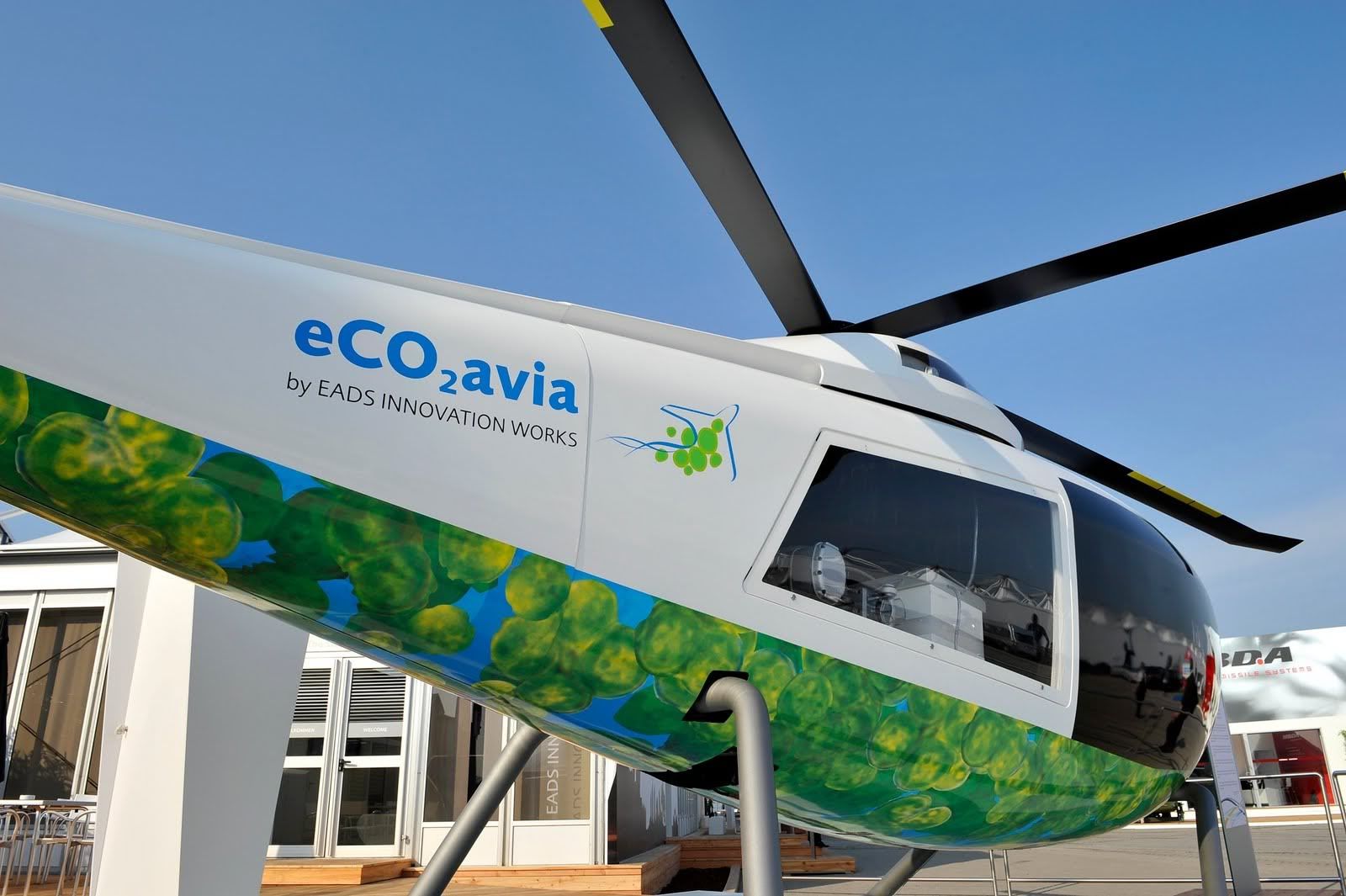
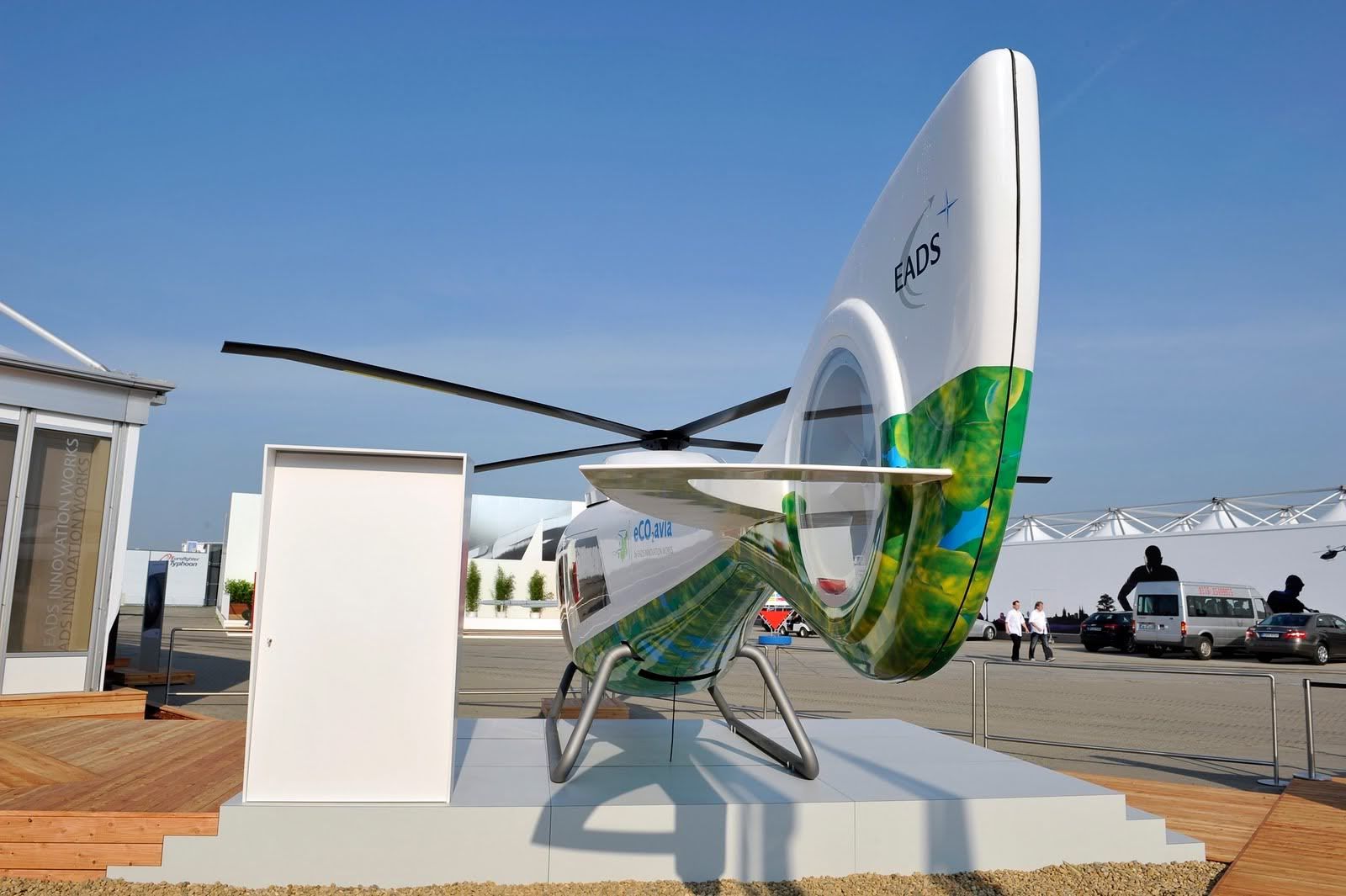
EADS presenta un innovador helicóptero hibrido diesel-eléctrico
Publicado originalmente en Blog.SandglassPatrol.com
El principal componente de este sistema híbrido patentado es el motor-generador diesel-eléctrico, un par de baterías de altas características y una unidad electrónica de gestión de energía para ontemer la mejor eficiencial El motor diesel OPOC (Opposed Piston, Opposed Cylinder) ofrece una economía de combustible de hasta un 30%, en comparación con los turboejes de los helicópteros actuales. La potencia del OPOC se transmite a través de sus ejes a unos generadores, cuyo peso ha sido altamente optimizado, que suministran energía a las unidades eléctricas de potencia, que gestionan la distribución de energía eléctrica a los motores eléctricos del rotor principal y del rotor de cola, y a las baterías, así como a otros sistemas del helicóptero.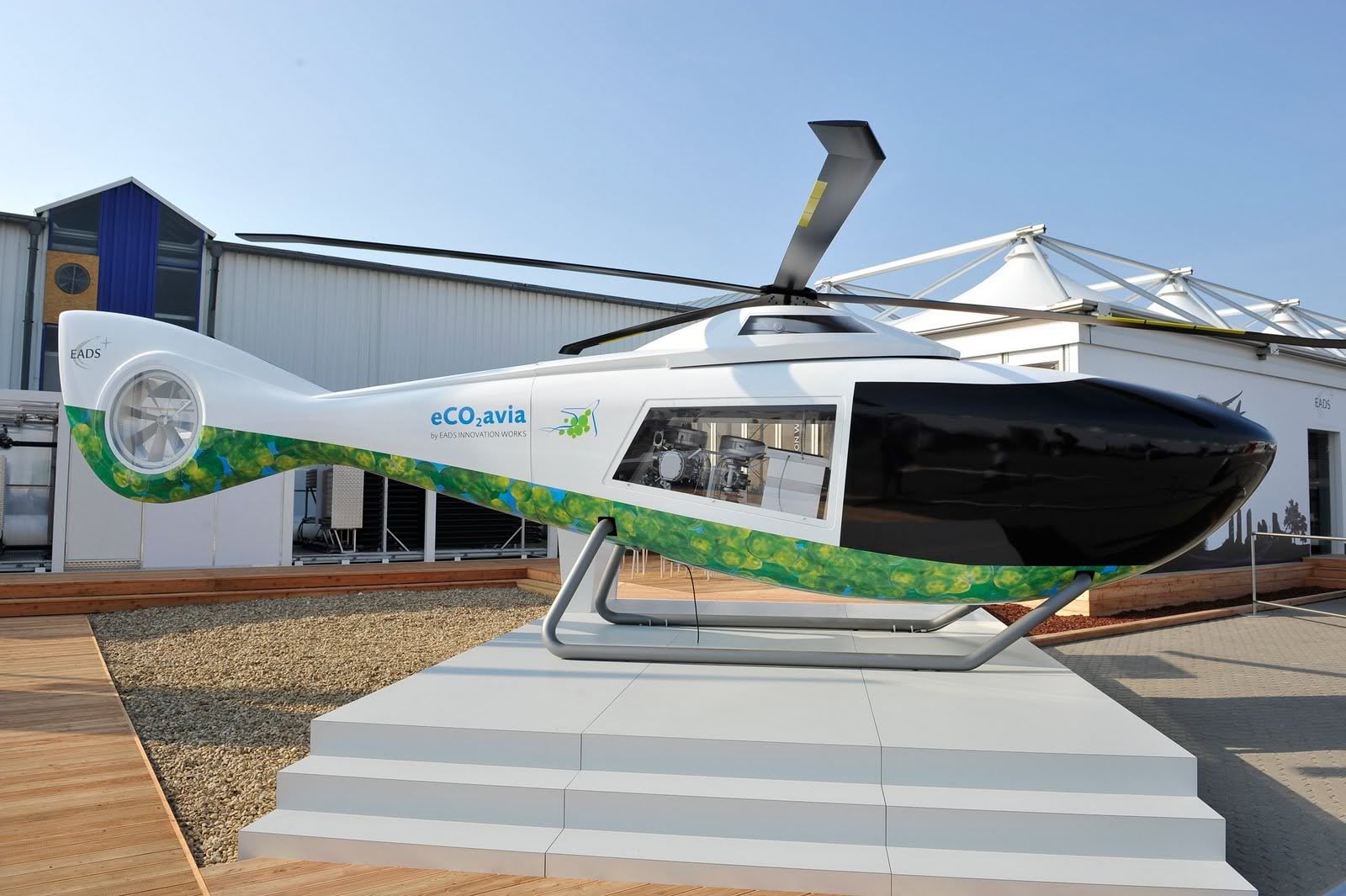
Las cuatro fuentes de energía independientes de sistema motor asegura altos niveles de seguridad y eficacia. Además, muchos tipos de motores de combustión pueden ser integrados en este sistema híbrido.
La arquitectura de sistema híbrido permite oscilar el rotor principal así como su motor eléctrico durante el vuelo de crucero, para permitir que el fuselaje mantenga el ángulo adecuado respecto a la corriente de aire, minimizando la resistencia aerodinámica y por tanto reduciendo la demanda de potencia, y así el consumo de combustible. Como el rotor de cola no tiene unión mecánica con el rotor principal ni con su motor, puede ser apagado en vuelo de crucero, sustituyendo su efecto antipar por las fuerzas aerodinámicas generadas por el estabilizador de cola y el timón de dirección. La ausencia de elementos mecánicos reduce la complejidad mecánica del helicóptero, y su peso.
Este es un de los proyectos agrupados bajo el nombre de CO2avia, del grupo de innovación de EADS. El sistema híbrido junto con la mejora de la aerodinámica de los helicópteros llevará a impresionantes mejoras en términos de consumo de combustible y emisiones.
Nota de Prensa EADS
Todas las fotografías son propiedad de EADS. EADS tiene el (c) de las fotografías.
- Sistema motor híbrido diesel-eléctrico
- Hasta un 50% menos de emisiones
- Menos ruido
- Mayores márgenes de seguridad
El principal componente de este sistema híbrido patentado es el motor-generador diesel-eléctrico, un par de baterías de altas características y una unidad electrónica de gestión de energía para ontemer la mejor eficiencial El motor diesel OPOC (Opposed Piston, Opposed Cylinder) ofrece una economía de combustible de hasta un 30%, en comparación con los turboejes de los helicópteros actuales. La potencia del OPOC se transmite a través de sus ejes a unos generadores, cuyo peso ha sido altamente optimizado, que suministran energía a las unidades eléctricas de potencia, que gestionan la distribución de energía eléctrica a los motores eléctricos del rotor principal y del rotor de cola, y a las baterías, así como a otros sistemas del helicóptero.
Las cuatro fuentes de energía independientes de sistema motor asegura altos niveles de seguridad y eficacia. Además, muchos tipos de motores de combustión pueden ser integrados en este sistema híbrido.
La arquitectura de sistema híbrido permite oscilar el rotor principal así como su motor eléctrico durante el vuelo de crucero, para permitir que el fuselaje mantenga el ángulo adecuado respecto a la corriente de aire, minimizando la resistencia aerodinámica y por tanto reduciendo la demanda de potencia, y así el consumo de combustible. Como el rotor de cola no tiene unión mecánica con el rotor principal ni con su motor, puede ser apagado en vuelo de crucero, sustituyendo su efecto antipar por las fuerzas aerodinámicas generadas por el estabilizador de cola y el timón de dirección. La ausencia de elementos mecánicos reduce la complejidad mecánica del helicóptero, y su peso.
Este es un de los proyectos agrupados bajo el nombre de CO2avia, del grupo de innovación de EADS. El sistema híbrido junto con la mejora de la aerodinámica de los helicópteros llevará a impresionantes mejoras en términos de consumo de combustible y emisiones.
Nota de Prensa EADS
Todas las fotografías son propiedad de EADS. EADS tiene el (c) de las fotografías.
Thales desarrolla un centro de coordinación de defensa antiaérea
http://www.defensa.com/index.php?option=com_content&view=article&id=1911:thales-desarrolla-un-centro-de-coordinacion-de-defensa-antiaerea-&catid=57:otan&Itemid=186
Thales Air Systems desarrolló un nuevo sistema integrado de coordinación de operaciones de defensa antiaérea, designado como ECS (Engagement Control Station), capaz de seguir 200 blancos aéreos simultáneamente en un extenso área de 250 km. de radio a 360º. Permite diversas funcionalidades, como la clasificación de objetivos, como helicópteros, aviones, misiles y sistemas aéreos remotamente operados; interrogación amigo-enemigo; ...
Thales Air Systems desarrolló un nuevo sistema integrado de coordinación de operaciones de defensa antiaérea, designado como ECS (Engagement Control Station), capaz de seguir 200 blancos aéreos simultáneamente en un extenso área de 250 km. de radio a 360º. Permite diversas funcionalidades, como la clasificación de objetivos, como helicópteros, aviones, misiles y sistemas aéreos remotamente operados; interrogación amigo-enemigo; ...
Indra presenta a nivel internacional el helicóptero no tripulado Pelícano en Eurosatory
http://www.infodefensa.com/esp/noticias/noticias.asp?cod=2474&n=Indra-presenta-a-nivel-internacional-el-helic%F3ptero-no-tripulado-Pel%EDcano-en-Eurosatory
Indra acude a Eurosatory 2010, dentro del Pabellón español, con sus últimos avances en sistemas de Seguridad y Defensa en vehículos no tripulados, defensa áerea, tecnologías para responder a amenazas NRBQ, así como sus últimos desarrollos en soluciones de defensa electrónica y simulación de vuelo. La multinacional española aprovechará la feria parisina, entre el 14 y 18 de junio, para presentar a nivel internacional el helicóptero no tripulado Pelícano.
Indra acude a Eurosatory 2010, dentro del Pabellón español, con sus últimos avances en sistemas de Seguridad y Defensa en vehículos no tripulados, defensa áerea, tecnologías para responder a amenazas NRBQ, así como sus últimos desarrollos en soluciones de defensa electrónica y simulación de vuelo. La multinacional española aprovechará la feria parisina, entre el 14 y 18 de junio, para presentar a nivel internacional el helicóptero no tripulado Pelícano.
Antonov Unveils New Military Transport
http://www.aviationweek.com/aw/blogs/defense/index.jsp?plckController=Blog&plckBlogPage=BlogViewPost&newspaperUserId=27ec4a53-dcc8-42d0-bd3a-01329aef79a7&plckPostId=Blog:27ec4a53-dcc8-42d0-bd3a-01329aef79a7Post:acf27c6d-7a6f-4f51-9780-bc704c72cfab&plckScript=blogScript&plckElementId=blogDest
Ukraine’s Anotnov aircraft designer plans to introduce a military transport version of its brand-new An-158 regional jet that made its first flight at the end of April. The new transport, dubbed An-178, will have a payload of 15 tons and is intended to replace the aging fleet of An-12 transports, said Dmitry Kiva, president and general designer of Antonov Group, at ILA 2010.
Ukraine’s Anotnov aircraft designer plans to introduce a military transport version of its brand-new An-158 regional jet that made its first flight at the end of April. The new transport, dubbed An-178, will have a payload of 15 tons and is intended to replace the aging fleet of An-12 transports, said Dmitry Kiva, president and general designer of Antonov Group, at ILA 2010.
French Rafale Gets A New Engine At Sea
http://www.aero-news.net/news/military.cfm?ContentBlockID=5f4308c7-ac1c-48f2-9080-a46e577fa9ce&Dynamic=1
French Squadron Performs Jet Engine Swap-Out Aboard U.S.S. Truman
As part of interoperability operations with the French Navy, a maintenance crew for the French aircraft Rafale F3 performed a jet engine swap-out on board USS Harry S. Truman (CVN 75) June 4. The Rafale, a fourth generation fighter jet capable of performing both air-to-air and air-to-ground missions attached to CVN Charles de Gaulle (R 91), was conducting carrier qualifications on board Truman.
Rafale Fighter Jet Lands Aboard U.S.S. Truman
"The French have conducted many carrier qualifications (CQs) with U.S. aircraft carriers in the past. However, this is the first time that an engine swap-out with a foreign navy has been done on a U.S. carrier," said Cmdr. Tim Hill, the VFA-32 executive officer and air wing liaison for French interoperability exercises. "This is a big step in working towards the ability to operate a French squadron on a U.S. carrier."
French Squadron Performs Jet Engine Swap-Out Aboard U.S.S. Truman
As part of interoperability operations with the French Navy, a maintenance crew for the French aircraft Rafale F3 performed a jet engine swap-out on board USS Harry S. Truman (CVN 75) June 4. The Rafale, a fourth generation fighter jet capable of performing both air-to-air and air-to-ground missions attached to CVN Charles de Gaulle (R 91), was conducting carrier qualifications on board Truman.
Rafale Fighter Jet Lands Aboard U.S.S. Truman
"The French have conducted many carrier qualifications (CQs) with U.S. aircraft carriers in the past. However, this is the first time that an engine swap-out with a foreign navy has been done on a U.S. carrier," said Cmdr. Tim Hill, the VFA-32 executive officer and air wing liaison for French interoperability exercises. "This is a big step in working towards the ability to operate a French squadron on a U.S. carrier."
ALPHA UNMANNED SYSTEMS PRESENTA EL NUEVO UAV SNIPER XL


Presentación oficial por vez primera en el mundo del Snipner XL en el stand de Eurosatory de UAVNavigation y Alpha Unmanned Systems
Communiqué de Press - Press Information - Press Release - Comunicado de Prensa
Madrid, 10 de junio de 2010
En el marco de su política de expansión internacional, UAV Navigation, empresa española
líder en el diseño y fabricación de equipos de aviónica, acude por vez primera al salón
Eurosatory, compartiendo stand con su firma vinculada Alpha Unmanned Systems,
especializada en el desarrollo de aeronaves no tripuladas, que mostrará públicamente,
por vez primera, su más novedosa plataforma, el Sniper XL.
Nacida con el apoyo de UAV Navigation, Alpha Unmanned Systems, que ha marcado un hito
con sus desarrollos en el ámbito de las aeronaves no tripuladas AVTOL (Automatic Vertical
Take Off Landing), helicópteros de reducidas dimensiones y enormes capacidades, expondrá
en Eurosatory tres de sus modelos de aeronaves no tripuladas: Comando, Sniper y el novedoso
Sniper XL.
Las posibilidades del helicóptero no tripulado Sniper XL en el ámbito de la defensa y la seguridad
son enormes. Con unas dimensiones de 2 metros de largo por 2,5 de ancho (longitud de las
palas del rotor), un peso máximo al despegue de 25 kg. Ycarga de pago de 5 kg., el Sniper XL
está preparado para portar una cámara dual, de identificación térmica y visual, lo que convierte a
esta aeronave, dotada de todas las ventajas de operación en cuanto al despegue y aterrizaje que
permite un helicóptero de estas dimensiones, en un UAV único para labores de vigilancia. La
cámara dual permite no sólo identificar al objetivo térmicamente, sino, gracias a la opción visual,
ofrecer su imagen real, identificando a cualquier sujeto perfectamente por sus rasgos físicos.
El Sniper XL ha sido desarrollado a partir del Sniper, que con sus 15 kilos de peso y despegue
rápido, tiene capacidad de medio alcance, en torno a 20 ó 30 Km. Permite ir al campo de
batalla y dar perfectamente las coordinadas precisas del objetivo. A nivel civil, para misiones
de vigilancia marítima es un vehículo perfecto, no sólo rastrea la zona, que se observaría
tranquilamente desde un despacho a golpe de ratón, detectando cualquier navío o persona
y ofreciendo el punto exacto en que se encuentra, las coordenadas precisas. El manejo es
tan sencillo y tanta su efectividad que no admite comparaciones: una antena, un portátil y
el pequeño helicóptero, nada más. Muestra del amplio abanico de misiones a que puede
destinarse, es el actual proyecto con Iberdrola para la inspección de tendidos eléctricos.
Junto a estos dos helicópteros no tripulados, en Eurosatory se mostrará también el Comando,
un helicóptero eléctrico autónomo que está siendo utilizado por las fuerzas de operaciones
especiales de policía y ejércitos. Muy silencioso, está destinado a observar a muy corto alcance
sin ser visto, la ventaja del helicóptero es que despega y aterriza desde cualquier sitio. En los
actuales escenarios bélicos en operaciones urbanas no tiene competencia en cuanto a su
efectividad, puede despegar desde el techo de un vehículo y ser enviado al área que debe
reconocerse, sobrevuela las calles, realiza un reconocimiento completo y regresa para aterrizar
en el mismo techo desde el que despegó.
Por su parte, UAV Navigation mostrará en el salón de la defensa francés sus pilotos
automáticos para aeronaves no tripuladas, que la han hecho merecedora de la confianza de los
grandes fabricantes de este tipo de aeronaves en todo el mundo. El AP04 de la empresa
española es un autopiloto de reducidas dimensiones para UAV de ala fija y helicópteros, que
permite el despegue y aterrizaje automático, realizar el plan de vuelo de manera
completamente autónoma y que es capaz de controlar gran variedad de cargas de pago.
Junto a éste, la empresa mostrará su último desarrollo, el AP040EM2, el piloto más pequeño y
ligero del mundo, con un peso de tan solo 20 gramos, que hereda el diseño de la arquitectura
y fiabilidad del AP04. Es una solución perfecta para los diseñadores de sistemas que necesiten
integrar en sus equipos aviónica miniaturizada. Puede ser utilizado en diversas aplicaciones,
desde el control de mini UAVs eléctricos, hasta la giro-estabilización y geo-referencia de cargas
de pago. AP040EM2 es la solución ideal para los diseñadores de sistemas EFIS que buscan
un paquete de sensores. Suministra la posición, trayectoria, velocidad aerodinámica, altitud,
posición, velocidad horizontal y vertical, así como otras variables que, gracias a su pequeño
tamaño, pueden ser fácilmente integradas según las necesidades de cada cliente.
www.uavnavigation.com
www.alphaunmannedsystems.com


El Ministerio de Transporte de Turquía y Eurocopter confirman el contrato por dos EC145 en ILA 2010 Berlín,

En el salón aeronáutico ILA 2010 de Berlín, la Administracíón Estatal de Aeropuertos de Turquía (DHMI, siglas en turco), organismo dependiente del Ministerio de Transportes de ese país y el Grupo Eurocopter confirmaron hoy el contrato de compra de dos helicópteros EC145. Los aparatos, los primeros de su clase destinados al Gobierno turco, están equipados para misiones de seguridad en aeropuertos y a transporte corporativo. La entrega de las máquinas se prevé para el último trimestre de 2010.
El EC145, un helicóptero ligero biturbina de última generación, satisface perfectamente los nuevos requisitos de misión en el segmento ligero y medio en cuanto a flexibilidad y versatilidad, así como a costes óptimos de inversión y operacionales. La aeronave tiene capacidad para uno o dos pilotos y hasta para nueve pasajeros. Por su alta velocidad de vuelo en crucero (135 nudos) y su autonomía de tres horas y media, es el aparato perfecto para operaciones de búsqueda y salvamento, misiones policiales y de seguridad nacional, así como para el mercado de transporte corporativo y VIP.
El EC145 es uno de los helicópteros de mayor éxito de la gama civil de Eurocopter. En la actualidad vuelan en todo el mundo 186 EC145 en version civil, 121 de ellos especialmente equipados para fines de evacuación sanitaria (EMS, siglas en inglés), rescate, búsqueda y salvamento (SAR, siglas en inglés). Numerosos clientes de prestigio confían en Europa y en el resto del mundo en este aparato utilitario ligero: la Securité Civile (organismo francés de defensa civil y preparación para emergencias), la Gendarmería Nacional francesa, la empresa suiza de salvamento aéreo REGA, las alemanas ADAC y DRF (Deutsche Rettungsflugwacht), también de salvamento aéreo, además del Ministerio para Emergencias de Ucrania, diversas fuerzas policiales alemanas, la Policía Metropolitana de Londres y la Policía de Devon y Cornwall. Los helicópteros de esta última están equipados para misiones de seguridad nacional y para operaciones de fuerzas especiales. Así mismo, en la actualidad se está produciendo la entrega de aparatos EC145 al Ejército de Estados Unidos para cubrir necesidades de helicópteros utilitarios ligeros.
Este ilustre grupo de clientes altamente exigentes – al que a partir de ahora Eurocopter se siente orgullosa de sumar el DHMI - ponen a prueba el EC145 a través de misiones que comprenden desde el salvamento en montaña, pasando por operaciones de fuerzas especiales, transporte EMS y de cuidados intensivos de pacientes, hasta tomas de tierra en la cima más alta de Europa, el Mont Blanc, a una altura de 4.807 metros.
El objetivo de Eurocopter es prestar apoyo al desarrollo de la flota de helicópteros de transporte de la DHMI para fines de seguridad de aeropuertos y sistemas de radar, así como satisfacer sus crecientes necesidades de transporte corporativo. El afianzamiento del empleo del helicóptero en misiones de seguridad pública, crea nuevas exigencias en materia de mantenimiento al más alto nivel, vigilancia y transporte en situaciones críticas.
miércoles, 9 de junio de 2010

Airbus Military: acumulamos 10 años de experiencia en MRTT
Este año, Airbus celebra 10 años de experiencia en el negocio de los aviones cisterna de transporte multifuncional (Multi Role Tanker Transport – MRTT), después de la decisión de la Luftwaffe, en 2000, de convertir hasta cuatro de sus aparatos Airbus A310 en MRTT. Para celebrar este aniversario, Tom Enders, CEO de Airbus, y Domingo Ureña, CEO de Airbus Military, van a entregar una placa conmemorativa al mayor general Manfred Lange en el Salón Aeronáutico de Berlín.
A través de sus empresas matrices, la experiencia de Airbus en la construcción de aviones cisterna se remonta hasta 35 años atrás. En 1976, a solicitud de las fuerzas aéreas francesas, Aerospatiale, MBB y VFW (todas ellas parte de Airbus actualmente) presentaron el C160 Transall NG con posibilidades de reabastecimiento en vuelo. Poco después, en 1978, la RAF decidió adquirir los aviones de reabastecimiento VC10, que fueron fabricados por British Aerospace en su fábrica de Filton, que ahora también forma parte de Airbus. Estos productos no salieron al mercado internacional, pero la tecnología y los conocimientos que incorporaban los convirtieron en fiables aviones cisterna que siguen en servicio hoy día.
A partir de los noventa se despertó en Europa el interés por un producto de mayor capacidad, más flexible y capaz, para adaptarse al cambiante escenario geopolítico que exigía mayor alcance y posibilidades de transporte de combustible para mantener la operatividad en lugares remotos, además de ser capaz también de transportar tropas y otro personal. El Airbus A310 sería la plataforma inicial para este uso. La Luftwaffe fue la primera en comprometerse con este avión cisterna de transporte multifuncional. EADS MTA (ahora parte de Airbus Military) se encargó del sistema de reabastecimiento de manguera y cesta. Canadá fue la siguiente, con dos A310 MRTT. Estos aparatos siguen en funcionamiento hoy día.
Pero, para responder a la inminente demanda, EADS MTA se lanzó a desarrollar a toda velocidad el sistema de pértiga de reabastecimiento más avanzado hasta la fecha, el sistema ARBS (Aerial Refuelling Boom System) de control “fly-by-wire”. Este trabajo se basaba en el estudio de una pértiga iniciado por Intertechnique y Aerospatiale en 1995 para su integración en futuros derivados militares de Airbus. En 2000, MTA se hizo cargo del proyecto e introdujo una nueva tecnología de control “fly-by-wire”, con el objetivo de conseguir una capacidad de transferencia de 1.200 galones por minuto. Se construyó un banco de pruebas en las instalaciones de la empresa en Getafe (Madrid) en 2004 y, en 2006, el sistema ARBS hizo su primer vuelo en una plataforma de pruebas A310-300.
Así comenzó un intenso programa de pruebas y desarrollo que culminó en los primeros contactos en seco a finales de 2007 y en las primeras transferencias de combustible en marzo del año siguiente. En julio de 2009 se realizó la primera transferencia nocturna con el repostaje de un F-16 de las Fuerzas Aéreas portuguesas.
Mientras, las Fuerzas Aéreas australianas, de los Emiratos Árabes Unidos y de Arabia Saudí, además de la RAF del Reino Unido, han elegido el A330 MRTT. La RAAF encargó cinco en 2004. Después, Arabia Saudí hizo un pedido de tres aparatos.
También fue el primer cliente que hizo un segundo pedido de tres aparatos más en 2009. Los Emiratos Árabes Unidos encargaron tres a principios de 2008. Después, la RAF adquirió catorce aparatos a través del consorcio AirTanker, también a principios de 2008. El número total de pedidos del A330 MRTT es de 28 hasta la fecha.
El desarrollo, la conversión y las pruebas de vuelo del A330 MRTT han progresado con éxito. La certificación civil del avión modificado con sus nuevos sistemas se obtuvo de EASA en marzo de este año, y actualmente se encuentra en curso el proceso de certificación militar en España con el Instituto Nacional de Tecnología Aeroespacial (INTA).
Se espera que los dos primeros A330 MRTT se entreguen a la RAAF en el último trimestre de este año, después de someterlos a pruebas y de haber demostrado sus capacidades.
Nota de Prensa EADS
A través de sus empresas matrices, la experiencia de Airbus en la construcción de aviones cisterna se remonta hasta 35 años atrás. En 1976, a solicitud de las fuerzas aéreas francesas, Aerospatiale, MBB y VFW (todas ellas parte de Airbus actualmente) presentaron el C160 Transall NG con posibilidades de reabastecimiento en vuelo. Poco después, en 1978, la RAF decidió adquirir los aviones de reabastecimiento VC10, que fueron fabricados por British Aerospace en su fábrica de Filton, que ahora también forma parte de Airbus. Estos productos no salieron al mercado internacional, pero la tecnología y los conocimientos que incorporaban los convirtieron en fiables aviones cisterna que siguen en servicio hoy día.
A partir de los noventa se despertó en Europa el interés por un producto de mayor capacidad, más flexible y capaz, para adaptarse al cambiante escenario geopolítico que exigía mayor alcance y posibilidades de transporte de combustible para mantener la operatividad en lugares remotos, además de ser capaz también de transportar tropas y otro personal. El Airbus A310 sería la plataforma inicial para este uso. La Luftwaffe fue la primera en comprometerse con este avión cisterna de transporte multifuncional. EADS MTA (ahora parte de Airbus Military) se encargó del sistema de reabastecimiento de manguera y cesta. Canadá fue la siguiente, con dos A310 MRTT. Estos aparatos siguen en funcionamiento hoy día.
Pero, para responder a la inminente demanda, EADS MTA se lanzó a desarrollar a toda velocidad el sistema de pértiga de reabastecimiento más avanzado hasta la fecha, el sistema ARBS (Aerial Refuelling Boom System) de control “fly-by-wire”. Este trabajo se basaba en el estudio de una pértiga iniciado por Intertechnique y Aerospatiale en 1995 para su integración en futuros derivados militares de Airbus. En 2000, MTA se hizo cargo del proyecto e introdujo una nueva tecnología de control “fly-by-wire”, con el objetivo de conseguir una capacidad de transferencia de 1.200 galones por minuto. Se construyó un banco de pruebas en las instalaciones de la empresa en Getafe (Madrid) en 2004 y, en 2006, el sistema ARBS hizo su primer vuelo en una plataforma de pruebas A310-300.
Así comenzó un intenso programa de pruebas y desarrollo que culminó en los primeros contactos en seco a finales de 2007 y en las primeras transferencias de combustible en marzo del año siguiente. En julio de 2009 se realizó la primera transferencia nocturna con el repostaje de un F-16 de las Fuerzas Aéreas portuguesas.
Mientras, las Fuerzas Aéreas australianas, de los Emiratos Árabes Unidos y de Arabia Saudí, además de la RAF del Reino Unido, han elegido el A330 MRTT. La RAAF encargó cinco en 2004. Después, Arabia Saudí hizo un pedido de tres aparatos.
También fue el primer cliente que hizo un segundo pedido de tres aparatos más en 2009. Los Emiratos Árabes Unidos encargaron tres a principios de 2008. Después, la RAF adquirió catorce aparatos a través del consorcio AirTanker, también a principios de 2008. El número total de pedidos del A330 MRTT es de 28 hasta la fecha.
El desarrollo, la conversión y las pruebas de vuelo del A330 MRTT han progresado con éxito. La certificación civil del avión modificado con sus nuevos sistemas se obtuvo de EASA en marzo de este año, y actualmente se encuentra en curso el proceso de certificación militar en España con el Instituto Nacional de Tecnología Aeroespacial (INTA).
Se espera que los dos primeros A330 MRTT se entreguen a la RAAF en el último trimestre de este año, después de someterlos a pruebas y de haber demostrado sus capacidades.
Nota de Prensa EADS
EADS to Showcase Innovative Hybrid Helicopter Concept at ILA 2010
- Diesel-Electric Hybrid Propulsion System
- Up to 50 Percent Less Emissions
- Lower Noise Levels and Improved Safety Margins
EADS a global leader in aerospace, defence and related services, is presenting an innovative hybrid helicopter concept at ILA Berlin Airshow 2010.
EADS Innovation Works, the corporate research and technology network of EADS, develops diesel-electric hybrid concepts as part of the Group’s research to make helicopters more environmentally friendly. Highly efficient electrical motors driving the rotors, combined with diesel engines, reduce fuel consumption and emissions by up to 50 percent. The EADS Innovation Works Eco2Avia research platform will open up new possibilities for cleaner, safer and more quiet helicopter and aviation operations”, says Dr. Jean Botti, Chief Technical Officer (CTO) of EADS. Take-offs and landings are possible on electrical power alone, resulting in lower noise levels and improved flight safety.
The main components of this patented hybrid system are multiple diesel-electric motor-generator units, a pair of high-performance batteries and a power electronics unit controlling the energy flows for best efficiency. The OPOC (Opposed Piston, Opposed Cylinder) diesel engines offer a fuel economy improvement of up to 30 percent compared to today’s helicopter turbine engines. The OPOC engine’s power output shafts are fitted with advanced, weight-optimised generators delivering electrical current to the power electronics unit. This unit manages the distribution of the electricity to the electrical motors driving the main rotor and the tail rotor, to and from the batteries as well as to the other user systems on the helicopter.
The four independent energy sources of this kind of propulsion system ensure very high levels of flight safety and efficiency. Several different kinds of combustion engines could be integrated into such a hybrid system.
The hybrid system architecture allows the main rotor and its electrical drive to be tilted forward during cruise flight. This enables the helicopter’s fuselage to remain at its optimum alignment with the airstream, minimizing aerodynamic drag and thereby reducing the power demand and the fuel consumption. Since the tail rotor has no mechanical linkage to the main rotor and its power source, it can be turned off at higher speeds. During these flight phases, stability and control as well as balancing of the rotor torque are provided by the aerodynamic properties of the helicopter’s tail fin and rudder.
The model of a concept helicopter, showcased at ILA, exemplifies EADS Innovation Works’ research towards eco-efficient propulsion system solutions for future helicopters.
This is one of the projects that are grouped under the name of eCO2avia by EADS Innovation Works. The patented EADS Innovation Works hybrid propulsion technology combined with the improved helicopter aerodynamics will lead to impressively improved characteristics in terms of fuel consumption and emissions. The concept is one of many examples of the research efforts undertaken by the EADS Group towards achieving the aviation industry’s climate protection goals.
EADS Press Release
EADS flies world’s first plane powered with biofuel based on algae at ILA
- Use of biofuel from algae leads to reduced fuel consumption
- Emission of nitrogen and sulfur oxides reduced drastically
- Opens up opportunities to achieve carbon neutral flights
- No competition with food supply
At the ILA 2010 in Berlin, EADS is showcasing the world’s first flights of an aircraft powered by pure biofuel made from algae. A Diamond Aircraft DA42 New Generation powered by two Austro Engine AE300 engines takes part in the daily flight demonstrations
Due to the higher energy content of the algae biofuel, the fuel consumption of the Diamond DA42 New Generation is 1.5 litres per hour lower when compared to conventional JET-A1 fuel – while maintaining equal performance. Tests also proved that only relatively minor modifications and adjustments had to be made to the aircraft’s engines to qualify the biofuel from algae for the demonstration flights.
Algae are considered to be promising potential feedstock for biofuels, as certain species of algae contain high amounts of oil. This oil can be extracted, processed and refined for various uses. Grown for many years on a commercial basis for the development of products such as food supplements and cosmetics, microalgae have now emerged as one of the leading sources for alternative fuels. Microalgae reproduce rapidly and create at least 30 times more organic substance (biomass) per cultivation area than, for example, rapeseed. Their cultivation does not compete with food production. Algae can be grown on poor quality land using non potable or saltwater.
“Our pure bio fuel flight from algae is a world first and an exciting milestone in our research at EADS.” says Dr. Jean Botti, Chief Technical Officer (CTO) of EADS. “This opens up the feasibility of carbon-neutral flights and we will continue to focus our research in this exciting area. Third generation biofuels are more than just a replacement for fossil petroleum - they push the possibilities of future propulsion.”
The exhaust gas quality measurements indicate that biofuel from algae contains eight times less hydrocarbons than kerosene derived from crude oil. In addition, nitrogen oxide and sulfur oxide emissions will also be reduced (up to 40 percent less nitrogen oxides and ca. 10 ppm sulfur oxides vs. 600 ppm of conventional Jet-A1-fuel) due to the very low nitrogen and sulfur content of the biofuel compared to fossil fuel.
Algae can be produced in sufficiently large quantities without competing with food production for fertile land or potable water. EADS research shows that all necessary technologies to develop the production of biofuel from algae are known, but industrial size and economy require further development. EADS is working with partners towards a pilot project to develop the necessary industrial infrastructure. The project is led by EADS Innovation Works, the corporate research and technology network of EADS and supported by the Bavarian Ministry of Economics, Transportation and Technology through the Government of Upper Bavaria with funding from the Bavarian aerospace research and technology programme (Project Bay68 “Biofuel from Algae”). The project is carried out in partnership with IGV GmbH of Potsdam, Diamond Aircraft and Austro Engines of Austria. The algae oil for flight testing and demonstration flights was delivered by Biocombustibles del Chubut S.A. in Argentina and refined into biofuel by VTS Verfahrenstechnik Schwedt, Germany.
Currently it is significantly more expensive to produce oil from algae in comparison to sourcing crude oil. If algae-based fuel is to be able to compete with kerosene, research and development work must aim to establish a cost effective mass production of algae biofuels using industrial quantities of carbon dioxide.
“As a systems architect of aircraft and helicopters, we consider that it is our responsibility to foster research on biofuels, even if we are not directly involved in the energy business”, states EADS CTO Jean Botti. “Therefore, EADS pursues research for suitable alternatives to fossil fuels and works together with leading research institutes as well as state governments and stakeholder companies from around the world towards achieving the climate protection goals of the aviation industry.” The goals for the year 2020 set by the Advisory Council for Aeronautics Research in Europe (ACARE) include a carbon dioxide reduction by 50% and a nitrogen oxides reduction by 80%.
EADS Press Release
Boeing obtiene los derechos de AgustaWestland AW101 para el programa de helicópteros presidenciales VXX de la Armada estadounidense
RIDLEY PARK, Pensilvania, 7 de junio de 2010 – Boeing anunció hoy que obtendrá una licencia de AgustaWestland para la producción en Estados Unidos del helicóptero de carga media AW101 para entrar a formar parte del programa de helicópteros presidenciales VXX de la Armada de Estados Unidos. Esta licencia otorga a Boeing la plena propiedad intelectual, datos y derechos de producción sobre la aeronave para apoyar el programa VXX. Como consecuencia del acuerdo, la aeronave será un helicóptero Boeing, construido por personal de Boeing en una de sus instalaciones en los Estados Unidos. La compañía presentará antes de la fecha límite del 18 de junio, la información relativa esta aeronave en respuesta a la actual Solicitud de Información de la Armada.
Durante el anuncio del acuerdo, Phil Dunford, Vicepresidente y Director General de Boeing Rotorcraft Systems, afirmó, “Estamos orgullosos de poder ofrecer las ventajas de esta aeronave probada por el Departamento de la Armada para completar el Análisis de Alternativas para esta crítica misión. Como fabricante líder de equipos originales en el mercado de helicópteros militares y con nuestros casi 50 años de experiencia en el transporte presidencial, consideramos que contamos con una perspectiva única para sacar el mayor partido a la gran inversión de la Armada”
El AW101, un helicóptero trimotor de carga media con un rendimiento probado en combate, cuenta además con una distinción por su servicio en Bosnia, Irak y Afganistán. Más de 150 aeronaves están en servicio con cinco fuerzas militares de la OTAN y Japón. Asimismo, y la aeronave fue elegida por el anterior programa presidencial de helicópteros, por el cual se entregaron nueve aeronaves al contratista principal por AgustaWestland.
En el caso de que el helicóptero Boeing 101 sea elegido para el VXX, Boeing será el contratista principal y diseñará, construirá y entregará la aeronave. Un equipo industrial líder de proveedores, incluyendo AgustaWestland, trabajará con Boeing para desarrollar este programa para la Armada.
“Boeing mantiene una larga y exitosa relación con AgustaWestland, que ha fabricado tanto el AH-64 Apache en el Reino Unido y el CH-47 en Italia bajo la licencia de Boeing. Estamos encantados de contar con un participante de confianza en nuestro equipo con una perspectiva valiosa sobra la aeronave y el programa,” aseguró Dave Palm, Director de Desarrollo de Negocio y Estrategia de Boeing Rotorcraft Systems.
Nota de prensa Boeing
Durante el anuncio del acuerdo, Phil Dunford, Vicepresidente y Director General de Boeing Rotorcraft Systems, afirmó, “Estamos orgullosos de poder ofrecer las ventajas de esta aeronave probada por el Departamento de la Armada para completar el Análisis de Alternativas para esta crítica misión. Como fabricante líder de equipos originales en el mercado de helicópteros militares y con nuestros casi 50 años de experiencia en el transporte presidencial, consideramos que contamos con una perspectiva única para sacar el mayor partido a la gran inversión de la Armada”
El AW101, un helicóptero trimotor de carga media con un rendimiento probado en combate, cuenta además con una distinción por su servicio en Bosnia, Irak y Afganistán. Más de 150 aeronaves están en servicio con cinco fuerzas militares de la OTAN y Japón. Asimismo, y la aeronave fue elegida por el anterior programa presidencial de helicópteros, por el cual se entregaron nueve aeronaves al contratista principal por AgustaWestland.
En el caso de que el helicóptero Boeing 101 sea elegido para el VXX, Boeing será el contratista principal y diseñará, construirá y entregará la aeronave. Un equipo industrial líder de proveedores, incluyendo AgustaWestland, trabajará con Boeing para desarrollar este programa para la Armada.
“Boeing mantiene una larga y exitosa relación con AgustaWestland, que ha fabricado tanto el AH-64 Apache en el Reino Unido y el CH-47 en Italia bajo la licencia de Boeing. Estamos encantados de contar con un participante de confianza en nuestro equipo con una perspectiva valiosa sobra la aeronave y el programa,” aseguró Dave Palm, Director de Desarrollo de Negocio y Estrategia de Boeing Rotorcraft Systems.
Nota de prensa Boeing
ILA: Eurocopter reveals Chinook-style heavy transport helicopter design

http://www.flightglobal.com/articles/2010/06/09/343011/ila-eurocopter-reveals-chinook-style-heavy-transport-helicopter.html
Eurocopter's proposed future Heavy Transport Helicopter (HTH) design has changed dramatically, thanks to the company's fresh co-operation with US manufacturer Boeing.
On show in model form at Eurocopter's stand in the Heli Centre (hall 1, stand 130), the HTH now shows more than a passing resemblance to Boeing's iconic CH-47 Chinook, but with a massive 33t maximum take-off weigh
Exploring the existing and future potential of weaponised Unmanned Air Platforms
http://ucavconference.com/
2010 is a massive year for Unmanned Combat Air Vehicles and Systems. The first generation of programmes are beginning to amass vast amounts of operational experience, major international requirements for future platforms are being defined and progress with international technology demonstrators is gathering pace.
For the past eight years DefenceIQ has been at the forefront of UCAV development in Europe, facilitating the adoption of combat capable platforms and emerging as the continents leading event devoted to unlocking the undoubted potential of the market.
Our 2010 event will be the most important and well supported to date and will bring together military UAV/UCAV programme managers from a variety of international armed forces to address the most pertinent topics in this space, including:
UCAV 2010 Agenda Overview:
2010 is a massive year for Unmanned Combat Air Vehicles and Systems. The first generation of programmes are beginning to amass vast amounts of operational experience, major international requirements for future platforms are being defined and progress with international technology demonstrators is gathering pace.
For the past eight years DefenceIQ has been at the forefront of UCAV development in Europe, facilitating the adoption of combat capable platforms and emerging as the continents leading event devoted to unlocking the undoubted potential of the market.
Our 2010 event will be the most important and well supported to date and will bring together military UAV/UCAV programme managers from a variety of international armed forces to address the most pertinent topics in this space, including:
UCAV 2010 Agenda Overview:
- US Navy UCAS-D Programme: Northrop Grumman brief on their 2010 flight trials
- UK MOD perspective on delivering the optimum and most affordable Manned/Unmanned Force Mix
- MQ-9 Reaper: Operation Feedback from No. 39 Squadron RAF
- Insight into UAV & UCAV programmes from USA, Italy, UK, France & Germany
La ILA de Berlín, una feria con alas desplegadas
http://www.dw-world.de/dw/article/0,,5667485,00.html
La pista de aterrizaje mide 250.000 metros cuadrados. A ella han arribado 1.153 expositores de 47 países, en el año número 100 del Berlin Air Show (ILA), feria dedicada a la exposición de productos y tecnología aérea y aeroespacial.
La pista de aterrizaje mide 250.000 metros cuadrados. A ella han arribado 1.153 expositores de 47 países, en el año número 100 del Berlin Air Show (ILA), feria dedicada a la exposición de productos y tecnología aérea y aeroespacial.
martes, 8 de junio de 2010
El podcast aeronáutico Remove Before Flight llega a la radio

El podcast aeronáutico Remove Before Flight llega a la radio, en Cataluña, en Radio 90
La emisión será en Agosto sábados y domingos, a las 16 y 17h respectivamente
http://www.r90.org/?page_id=177
Remove Before Flight és un programa fet per aficionats i professionals de l’aeronautica que des de la perspectiva del lleure intenta aprofundir en tot el que te a veure amb els avions i d’altres artefactes que son capaços de volar.
Tot aquest entorn aeronàutic es explicat tant des del punt de vista real com del virtual, donat que actualment amb els ordinadors que tothom te a casa es pot arribar a un nivell de simulació de la realitat molt acurat que permet reproduir qualsevol situació real.
Xarxes de vol virtual per internet com IVAO on cada dia hi volen milers de persones amb els seus simuladors i d’altres que fan de controladors aeris, apropen aquest mon a persones que d’altra forma seria impossible que hi estiguessin en contacte.
El nom de Remove Before Flight fa referència a la inscripció que porten uns protectors que es posen en els avions i que s’han de treure abans d’iniciar un vol. En definitiva hi trobareu informació contrastada amb entrevistes a pilots, controladors aeris, enginyers aeronàutics, i d’altres professionals i aficionats, monogràfics, notícies i tot amb una excelent qualitat i producció.
El programa el podreu escoltar els dissabtes a les 4 i els diumenges a les 5 de la tarda del mes d’agost.
Superjet completes water ingestion trials
http://www.flightglobal.com/articles/2010/06/08/342980/picture-superjet-completes-water-ingestion-trials.html
The tests using Superjet MSN 95003 confirmed that the aircraft's two PowerJet SaM146 engines and auxiliary power unit continued to operate normally while travelling along the wet runway at a full range of speeds preceding take-off.
The tests using Superjet MSN 95003 confirmed that the aircraft's two PowerJet SaM146 engines and auxiliary power unit continued to operate normally while travelling along the wet runway at a full range of speeds preceding take-off.
NASA Seeks Research Proposals For Green Aircraft Concepts
WASHINGTON -- NASA is soliciting proposals for studies designed to identify advanced vehicle concepts and enabling technologies for commercial airliners to fly more economically, quieter and cleaner by 2025.
This research will support the Integrated Systems Research Program in NASA's Aeronautics Research Mission Directorate in Washington. The solicitation is the first of several expected under the directorate's "Research Opportunities in Aeronautics" announcement for 2010, released on Wednesday.
The total potential value of the research contracts is $36.6 million, and proposals are due by July 15.
NASA will select up to four teams for 12-month studies beginning in fiscal year 2011. The studies will define preferred concepts for advanced vehicles that can operate within the Next Generation Air Transportation System, or NextGen. The system is a U.S. government air traffic modernization effort that includes NASA.
The concepts must incorporate technologies enabling large, twin-aisle passenger aircraft to achieve ambitious environmental goals. Goals include 50 percent less fuel consumption and nitrogen oxide emissions compared with today's airliners and an approximately 80 percent reduction in the nuisance noise footprint around airports.
After nine months work on preferred systems' concepts, each team will be eligible to submit proposals for a subscale flight demonstrator design. NASA will select one or two concepts for 17 months of preliminary design work and risk reduction testing for completion by mid-2013.
This research is supported by the Environmentally Responsible Aviation Project within the Integrated Systems Research Program. It also will benefit an emerging new project related to the use of remotely-piloted aircraft in the national air space.
Because the subscale flight demonstrator will be capable of operating in autonomous and remotely-piloted modes, it will test environmental technology, other suites and techniques. Test areas may include separation assurance and collision avoidance; command, control and communications; remote pilot and vehicle interfaces; environmental hazards detection and avoidance that could enable routine operation of future unpiloted air vehicles. NASA anticipates conducting test flights with the demonstrator in 2015.
Specific evaluation criteria, deadlines and points of contact for this research topic and other project areas are available in the announcement at:
http://nspires.nasaprs.com
NASA anticipates amending this announcement to add research topics in other project areas. For more information about NASA's Aeronautics Research Mission Directorate, visit:
http://www.aeronautics.nasa.gov
NASA press Release
This research will support the Integrated Systems Research Program in NASA's Aeronautics Research Mission Directorate in Washington. The solicitation is the first of several expected under the directorate's "Research Opportunities in Aeronautics" announcement for 2010, released on Wednesday.
The total potential value of the research contracts is $36.6 million, and proposals are due by July 15.
NASA will select up to four teams for 12-month studies beginning in fiscal year 2011. The studies will define preferred concepts for advanced vehicles that can operate within the Next Generation Air Transportation System, or NextGen. The system is a U.S. government air traffic modernization effort that includes NASA.
The concepts must incorporate technologies enabling large, twin-aisle passenger aircraft to achieve ambitious environmental goals. Goals include 50 percent less fuel consumption and nitrogen oxide emissions compared with today's airliners and an approximately 80 percent reduction in the nuisance noise footprint around airports.
After nine months work on preferred systems' concepts, each team will be eligible to submit proposals for a subscale flight demonstrator design. NASA will select one or two concepts for 17 months of preliminary design work and risk reduction testing for completion by mid-2013.
This research is supported by the Environmentally Responsible Aviation Project within the Integrated Systems Research Program. It also will benefit an emerging new project related to the use of remotely-piloted aircraft in the national air space.
Because the subscale flight demonstrator will be capable of operating in autonomous and remotely-piloted modes, it will test environmental technology, other suites and techniques. Test areas may include separation assurance and collision avoidance; command, control and communications; remote pilot and vehicle interfaces; environmental hazards detection and avoidance that could enable routine operation of future unpiloted air vehicles. NASA anticipates conducting test flights with the demonstrator in 2015.
Specific evaluation criteria, deadlines and points of contact for this research topic and other project areas are available in the announcement at:
http://nspires.nasaprs.com
NASA anticipates amending this announcement to add research topics in other project areas. For more information about NASA's Aeronautics Research Mission Directorate, visit:
http://www.aeronautics.nasa.gov
NASA press Release
Photo: 747-8 vs Tow

Further details have emerged after one of Boeing's 747-8F flight test
aircraft struck an airport tug causing significant damage to the
exterior of the number four General Electric GEnx-2B engine.
The result of the impact was a 88.9 x 43.2cm (35 x 17in) hole on the
aircraft's inlet cowl then "tapering into a dent 12.7cm (5in) in
length on either side of the hole".
El Solar Impulse vuela con energía solar y además recarga sus pilas
http://www.aerotendencias.com/investigacion-espacial/1523-el-solar-impulse-vuela-con-energia-solar-y-ademas-recarga-sus-pilas
sábado 5 de junio el avión experimental suizo Solar Impulse (HB-SIA)
efectuó el octavo vuelo de prueba, que ha resultado ser el de más
duración y que ha servido para validar la tecnología consistente en
producir más energía que la que consumen sus cuatro motores eléctricos
gracias a las placas solares que lleva incorporadas en la parte
superior del ala.
sábado 5 de junio el avión experimental suizo Solar Impulse (HB-SIA)
efectuó el octavo vuelo de prueba, que ha resultado ser el de más
duración y que ha servido para validar la tecnología consistente en
producir más energía que la que consumen sus cuatro motores eléctricos
gracias a las placas solares que lleva incorporadas en la parte
superior del ala.
Emirates To Order 32 More A380s
Emirates To Order 32 More A380s
http://www.aviationweek.com/aw/generic/story_channel.jsp?channel=comm&id=news/awx/2010/06/08/awx_06_08_2010_p0-232591.xml
Emirates to have 90 A380s in 2017
http://www.flightglobal.com/articles/2010/06/08/342958/emirates-to-have-90-a380s-in-2017.html
http://www.aviationweek.com/aw/generic/story_channel.jsp?channel=comm&id=news/awx/2010/06/08/awx_06_08_2010_p0-232591.xml
Emirates to have 90 A380s in 2017
http://www.flightglobal.com/articles/2010/06/08/342958/emirates-to-have-90-a380s-in-2017.html
Los jóvenes, invitados de honor de Eurocopter para celebrar el décimo aniversario de EADS
Reproducimos a continuación la nota de prensa de Eurocopter:
Marignane, 8 de junio de 2010
Descubrir el fascinante universo de la aeronáutica, despertar su curiosidad y estimular la aparición de nuevas vocaciones entre los escolares son las metas de las jornadas de puertas abiertas "I dream up my future" que se han organizado con ocasión del décimo aniversario de EADS. En un evento pedagógico único, el Grupo invita a 10.000 alumnos de toda Europa, de entre 12 y 14 años de edad, a que vengan a conocer los diversos centros de EADS.
Así, 1.700 alumnos de primaria y secundaria europeos van a ser recibidos los días 10, 12, 21 y 24 de junio en las instalaciones de Eurocopter de La Courneuve, en Seine-Saint-Denis (Francia), Albacete (España), Donauwörth (Alemania) y Marignane (Francia), en Bouches-du-Rhône.
Las visitas –de carácter a un tiempo pedagógico y lúdico– harán posible que alumnos y profesores conozcan a los profesionales que conciben, fabrican, pilotan y mantienen los helicópteros. Con esos actos se quiere animar entre los jóvenes nuevas vocaciones en los oficios de la aeronáutica, al permitirles descubrir cómo es nuestra empresa y el entusiasmo de la gente que la compone.
"Este aniversario nos proporciona la oportunidad de destacar el know-how de los hombres y mujeres de Eurocopter, al tiempo que nos dirigimos a la próxima generación de jóvenes talentos, que son los que construirán nuestra industria del mañana. Me complace acoger en nuestros distintos centros, por iniciativa de EADS, a aquellos que quizá vayan a ser nuestros futuros ingenieros, ajustadores, moldeadores y, porqué no, nuestros especialistas de calidad, sin olvidar a nuestros técnicos en tierra y a los pilotos de pruebas", afirmó Lutz Bertling, presidente y director general de Eurocopter.
Marignane, 8 de junio de 2010
Descubrir el fascinante universo de la aeronáutica, despertar su curiosidad y estimular la aparición de nuevas vocaciones entre los escolares son las metas de las jornadas de puertas abiertas "I dream up my future" que se han organizado con ocasión del décimo aniversario de EADS. En un evento pedagógico único, el Grupo invita a 10.000 alumnos de toda Europa, de entre 12 y 14 años de edad, a que vengan a conocer los diversos centros de EADS.
Así, 1.700 alumnos de primaria y secundaria europeos van a ser recibidos los días 10, 12, 21 y 24 de junio en las instalaciones de Eurocopter de La Courneuve, en Seine-Saint-Denis (Francia), Albacete (España), Donauwörth (Alemania) y Marignane (Francia), en Bouches-du-Rhône.
Las visitas –de carácter a un tiempo pedagógico y lúdico– harán posible que alumnos y profesores conozcan a los profesionales que conciben, fabrican, pilotan y mantienen los helicópteros. Con esos actos se quiere animar entre los jóvenes nuevas vocaciones en los oficios de la aeronáutica, al permitirles descubrir cómo es nuestra empresa y el entusiasmo de la gente que la compone.
"Este aniversario nos proporciona la oportunidad de destacar el know-how de los hombres y mujeres de Eurocopter, al tiempo que nos dirigimos a la próxima generación de jóvenes talentos, que son los que construirán nuestra industria del mañana. Me complace acoger en nuestros distintos centros, por iniciativa de EADS, a aquellos que quizá vayan a ser nuestros futuros ingenieros, ajustadores, moldeadores y, porqué no, nuestros especialistas de calidad, sin olvidar a nuestros técnicos en tierra y a los pilotos de pruebas", afirmó Lutz Bertling, presidente y director general de Eurocopter.
Suscribirse a:
Entradas (Atom)